The Silly British Beer Trick That Made German Pilots Reveal All Their Secrets. nu

The Silly British Beer Trick That Made German Pilots Reveal All Their Secrets
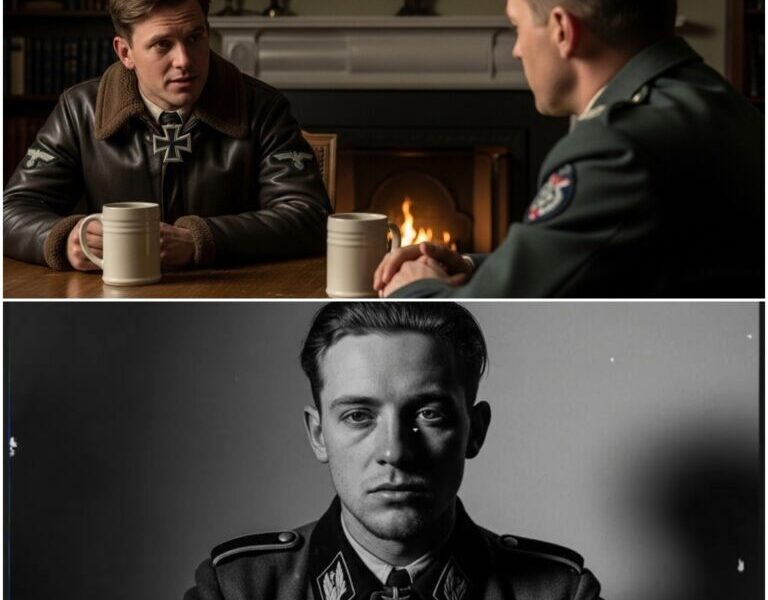
It is the summer of 1940 and somewhere in rural Buckinghamshire, a captured Luftwaffer pilot is sitting across a table from a man who seems completely harmless. The room is warm. There is a fire crackling in the grate. Someone has brought in two mugs of beer. And the German, still shaken, still in his flying jacket, still half convinced he might be shot, watches as the Englishman opposite him takes a long, unhurried sip, sets his mug down, and begins asking questions, not about the war, not about aircraft, about football, about food, about whether the beer in Bavaria is really as good as people say. Within an hour, this pilot will have revealed the designation of his squadron, the location of his airfield, the core signs used by his commanding officer, and the frequencies on which the Luftwaffer
communicate during bombing raids over England. He will not quite understand how it happened. He will not for some time realize that anything has happened at all. What took place in that room was not torture. It was not coercion. It was not even strictly speaking an interrogation.
It was something far more British, far more peculiar, and in the cold light of military intelligence history, far more effective than almost anything else the Allies attempted. It was a system so clever, so carefully constructed, and so extraordinarily well disguised that the Germans spent years trying to understand why their captured airmen kept talking and never, not once, figured out the answer.
The story of the Combined Services detailed interrogation center at Trent Park is one of the great hidden secrets of the Second World War. And the extraordinary thing is not merely that it worked. It is that it worked so brilliantly for so long on some of the most highly trained and ideologically committed military men in history using nothing more dangerous than comfortable rooms, generous hospitality, and a network of hidden microphones buried inside the walls.
To understand why the British needed something like Trent Park, you need to understand the particular crisis that confronted Allied intelligence in the first years of the war. The problem was not a shortage of prisoners. By the end of 1940, RAF Fighter Command and the various coastal and naval engagements had produced a steady stream of captured German airmen, pilots, navigators, gunners, officers of varying seniority.
The problem was that these men were almost without exception extraordinarily reluctant to talk. This was not accidental. The Luftvafer, like all branches of the German armed forces, had subjected its personnel to intensive training in what to do if captured. The answer was simple. Name, rank, and service number. Nothing more.
German airmen were told repeatedly and explicitly that any information they gave to the enemy could be used against their comrades. They were told that British interrogators would use sleep deprivation, threats, and psychological pressure to break them. They were told that resistance was a matter of personal honor and national duty.
Most of them believed it. Traditional interrogation methods, the kind that relied on direct questioning, confrontation, and the implicit or explicit threat of consequences, were producing almost nothing useful. What intelligence officers did extract was either maddeningly vague or worse, deliberately misleading.
The Germans had prepared for exactly this kind of interrogation and they were good at resisting it. Meanwhile, the need for accurate intelligence was becoming desperate. The Battle of Britain was burning through RAF squadrons at an alarming rate. Naval planners needed to understand Luftwafer communication systems and bombing patterns.
The Air Ministry wanted detailed technical information about German aircraft that simply could not be obtained any other way. Formal interrogation was failing. Something else was needed. Something that the Germans had not been trained to resist because they had never imagined it was possible. The question was, how do you get a highly trained, deeply ideologically motivated military prisoner to talk freely and honestly without him ever knowing he is doing it? The answer came from a man named Alexander Scotland working alongside a team of intelligence officers who had been quietly developing what they called the stool pigeon system. Though that term dramatically understates the sophistication of what was actually built. The facility they created was Trent Park, a Victorian country house
set in extensive grounds near Cogfosters in North London. From the outside and from the inside, it looked nothing like a prison. That was rather the point. The concept was elegant in its simplicity and almost absurd in its ambition. Rather than interrogating German prisoners in the traditional sense, M.
Eclar 19, the branch of British military intelligence responsible for prisoner of war questioning, would instead place captured officers in an environment so comfortable, so conspicuously unprison-like that the psychological defenses they had carefully constructed would gradually, imperceptibly dissolve.
Trent Park had proper bedrooms. It had a garden that prisoners were permitted to walk in. It had a library stocked with books. Officers were given appropriate rank courtesies. They were addressed correctly. Their complaints were taken seriously. Their requests for reading material or letterw writing supplies were accommodated where possible.
The food was by wartime standards remarkably good and there was consistently, generously, strategically beer. The beer mattered more than it might seem. Alcohol consumed in a relaxed social setting does several things to the human mind. It reduces inhibition. It creates a sense of warmth and mutual trust.
Most importantly, it makes people talk not about secrets specifically, about everything, about themselves, about their comrades, about the frustrations of their commanding officers and the technical peculiarities of their aircraft and the specific coordinates of the airfields they had flown from. The Germans at Trent Park were not drunk. They were comfortable.
and comfort, it turned out, was the most powerful interrogation tool ever devised. But the beer was only part of it. The truly extraordinary element, the piece of the puzzle that made everything else work, was the microphones. Beginning in 1942, MMI19 installed a network of concealed listening devices throughout Trent Park.
They were placed in the common rooms, in the garden areas, in the dining room, in the bedrooms. Prisoners who believed themselves to be having private conversations with fellow officers were in fact speaking directly into a carefully managed recording system staffed by fluent Germanspeaking intelligence officers working in shifts around the clock.
Every conversation was monitored. Every casual remark was transcribed. Every fragment of technical information, every reference to a unit, a commander, a location, an operation, all of it was captured, cataloged, and passed up the intelligence chain. The prisoners never knew. Many of them never found out, even after the war.
They believed throughout their captivity that they were in an unusually pleasant prisoner of war facility and that their conversations with fellow officers were entirely private. Some suspected occasionally that their English hosts seemed remarkably well-informed about Luftwafa operations. None guessed why.
The scale of what was extracted from Trent Park is only now, decades later, becoming fully understood as the relevant records have been declassified. Estimates suggest that by the end of the war, MY19 had processed several thousand prisoners through the facility and its associated sites, generating tens of thousands of intelligence reports from monitored conversations alone.
Some of the most valuable material concerned technical specifications. German prisoners speaking casually among themselves described in precise detail the performance characteristics of aircraft they had flown. The Fauler Wolf 19, the Messmid 109, the Junkers 88. They discussed the specific altitudes at which their engines performed most efficiently.
They described radar systems, navigation equipment, communication frequencies. In many cases, they provided information that British technical intelligence had been attempting to gather for months through far more laborious means. Other material was operational. Prisoners discuss the morale of their units, the personality and competence of their commanding officers, the locations of airfields that had not yet appeared on British maps.
One officer, in a conversation he believed to be entirely private, described in considerable detail the internal workings of a German night fighter unit that Allied planners had been attempting to understand for over a year. None of this was obtained through pressure. None of it was obtained through threats.
The men who provided it were in most cases simply talking amongst themselves and occasionally talking to the English staff who had become over weeks and months of enforced proximity something approaching familiar figures. If you are finding this interesting, a quick subscribe helps more than you know. To appreciate how remarkable the British approach was, it is worth considering what the Germans were doing with their own prisoners.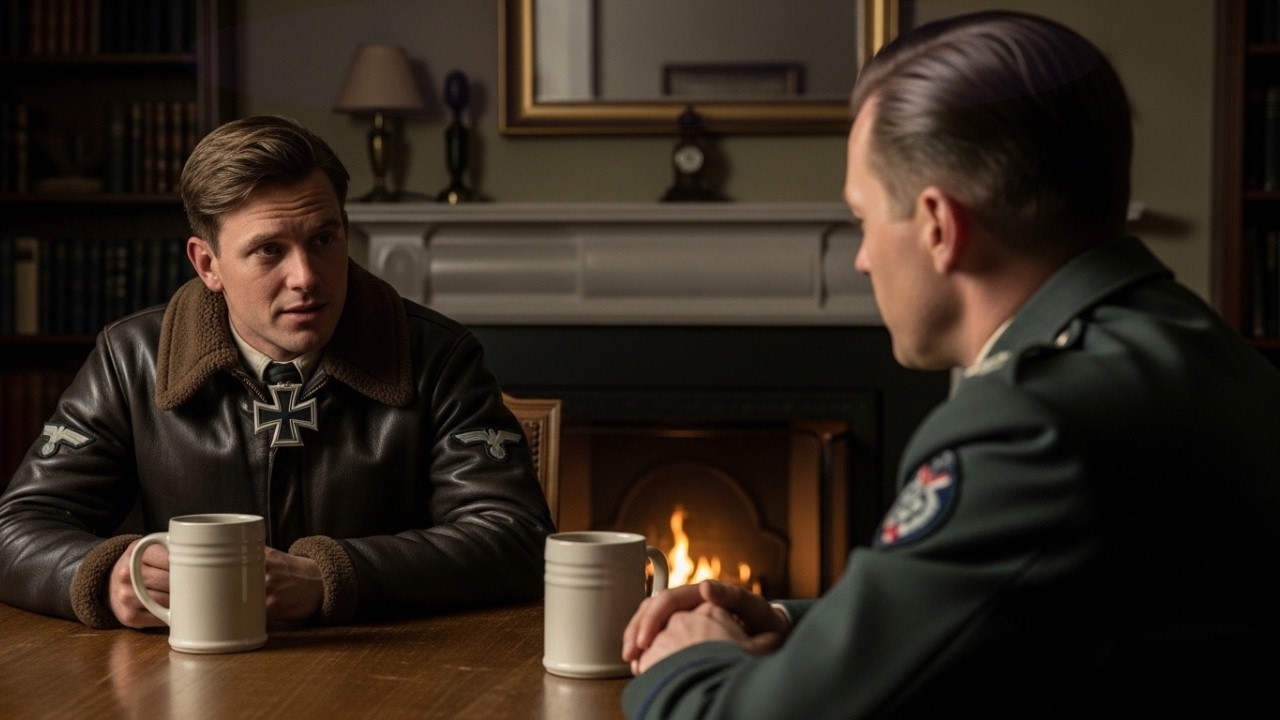
German military intelligence did operate prisoner of war facilities with interrogation functions, and some of these were reasonably effective by conventional standards. What they conspicuously lacked was anything resembling the systematic long-term environmental approach developed at Trent Park. American interrogation methods in the European theater, though sometimes effective, tended toward the more direct structured questioning by trained officers, sometimes combined with the strategic use of information the interrogator already possessed to imply greater knowledge than existed. The Americans were good at this. They were not, however, operating anything comparable to Trent Park’s hidden microphone network. The Soviet approach to prisoner interrogation was characteristically rather different and rather less
concerned with the comfort of the person being questioned. Results varied. What Soviet methods could not produce almost by definition was the kind of voluntary unguarded conversation that Trent Park reliably generated. A prisoner who is frightened does not talk freely. A prisoner who is comfortable, who believes he is safe, who has had a pleasant evening in agreeable company and a glass or two of decent beer.
That prisoner talks about everything. The British had understood something fundamental that most military intelligence organizations of the period had missed. That the hardest information to extract is not information that is carefully concealed, but information that the subject does not know he is giving away.
The Luftwaffer airmen at Trent Park were not being broken. They were not being tricked in any obvious sense. They were simply being placed in conditions where their natural human instinct to talk, to share, to connect, could express itself freely. The microphones simply listened. The legacy of what was developed at Trent Park is difficult to overstate.
And yet, it remains curiously under acknowledged in the popular accounts of wartime intelligence. The facility produced intelligence that contributed directly to the planning of RAF bombing operations, to the development of electronic countermeasures against Luftwafer radar systems, and to the broader Allied understanding of German military organization and morale.
Historians who have studied the declassified records have noted that some of the material obtained through monitored conversations at Trent Park and its associated facilities appears to have reached the highest levels of allied strategic planning. Though the exact chain of distribution remains in some cases unclear, what can be said with confidence is that the system worked consistently and over a sustained period in a way that no alternative approach came close to matching.
The physical structure of Trent Park survived the war and eventually became part of what is now Middle Sex University. In recent years, a museum has been established on the site specifically dedicated to the history of the interrogation center and the remarkable intelligence operation it housed.
Visitors can walk the same grounds where Luftvafer officers once strolled, believing themselves unobserved, while British intelligence officers listened to every word. Some of those officers interviewed in later life expressed a mixture of professional satisfaction and something approaching genuine affection for the men they had monitored.
The relationship between jailer and prisoner when conducted over months in conditions of relative comfort is a strange one. Several of the German officers held at Trent Park, remained in contact with their British hosts after the war, visiting England, corresponding by letter, meeting at reunions. They knew by then about the microphones.
They seemed largely to have made their peace with it. Return then to that room in the summer of 1940. the fire, the two mugs of beer, the Luftvafa pilot who has just finished explaining without quite intending to the precise communication frequencies used by his campf during bombing operations over southern England. He finishes his drink.
He is shown courteously to his room. It is a good room, better than he expected. There are books on the shelf. Someone has left a writing pad on the desk in case he wishes to compose a letter home which will be read carefully and thoroughly before it is posted. He lies on the bed and stares at the ceiling and thinks perhaps that the British are an odd people, polite, a little eccentric, strangely generous with their beer.
He does not think about what he said this evening. He has not by his own reckoning said anything significant. He has not given away secrets. He has simply had a conversation. The kind of conversation that two men might have anywhere in any country when the evening is mild and the company is agreeable.
Somewhere below him, in a room he has never seen and never will see, a German-speaking British officer is writing up his notes. the frequency, the call sign, the airfield designation, the name of the wing commander the pilot had complained about at some length, and who had apparently been making rather poor tactical decisions for the past 3 months.
The intelligence report will be on a desk in London within 24 hours. In the end, the most effective weapon in the British intelligence arsenal during the Second World War was not a codereaker, not a spy, not a sophisticated technical device. It was a comfortable chair, a warm room, and the profound human inability to sit in silence when someone nearby seems willing to listen.
They gave them beer and the Germans, never realizing what was happening, told them