
The One Australian Tactic The Viet Cong Couldn’t Counter
Vietnam was a listening war. Every footfall, every piece of equipment, every careless word carried through the canopy like a dinnerbell. The North Vietnamese Army and Vietkong were masters of sound. They could identify unit size by boot patterns. They knew the difference between an M16 being cocked and an M60 belt being loaded.
They sent ambushes based on what they heard, not what they saw. American platoon, brave, determined, well equipped, were loud, heavy packs, steel helmets, 30, 40 men moving in formation. Discipline was tight, but the jungle amplified everything. The sound of metal on metal, canvas against canvas, boots crushing vegetation, radio, canteen slloshing, a cough suppressed too late.
Each noise was a coordinate on the enemy’s mental map. The Americans knew they were loud. They tried to compensate. But when you’re carrying 70 lb of equipment through triple canopy jungle in 100° heat, silence becomes almost impossible. The gear itself conspired against them. The doctrine required it. The jungle punished it. But there was another force in Vietnam.
Smaller, quieter men who’d grown up in a different kind of wilderness. They’d learned to move through tea tree scrub after rabbits. To track wild pigs across hard pan, to read the bush the way you read a book quietly, carefully with respect. They brought something the Vietkong had never encountered before. Not tactics from a manual. Instinct.
Culture. a way of being in the bush that couldn’t be taught in a classroom. These were men who’d spent childhood summers walking barefoot through the scrub. Who knew that a cucur’s silence meant something was wrong? Who’d learned from fathers and uncles that the bush demanded respect, patience, and above all, awareness.
Growing up in the Australian outback meant learning to read the land. A shifted rock, a broken twig, the way birds reacted to movement. These weren’t academic exercises. They were survival skills passed down through generations. Skills that would prove invaluable half a world away. We didn’t make noise because, well, you just didn’t.
You didn’t crash through the scrub back home if you wanted to eat. Same principle applied in Vietnam. Just higher stakes. They called it different things. silent movement, ghost walking, freeze, and flow. But it came down to three principles, three skills that turned Australian patrols into something the enemy couldn’t counter. First, the walk itself.
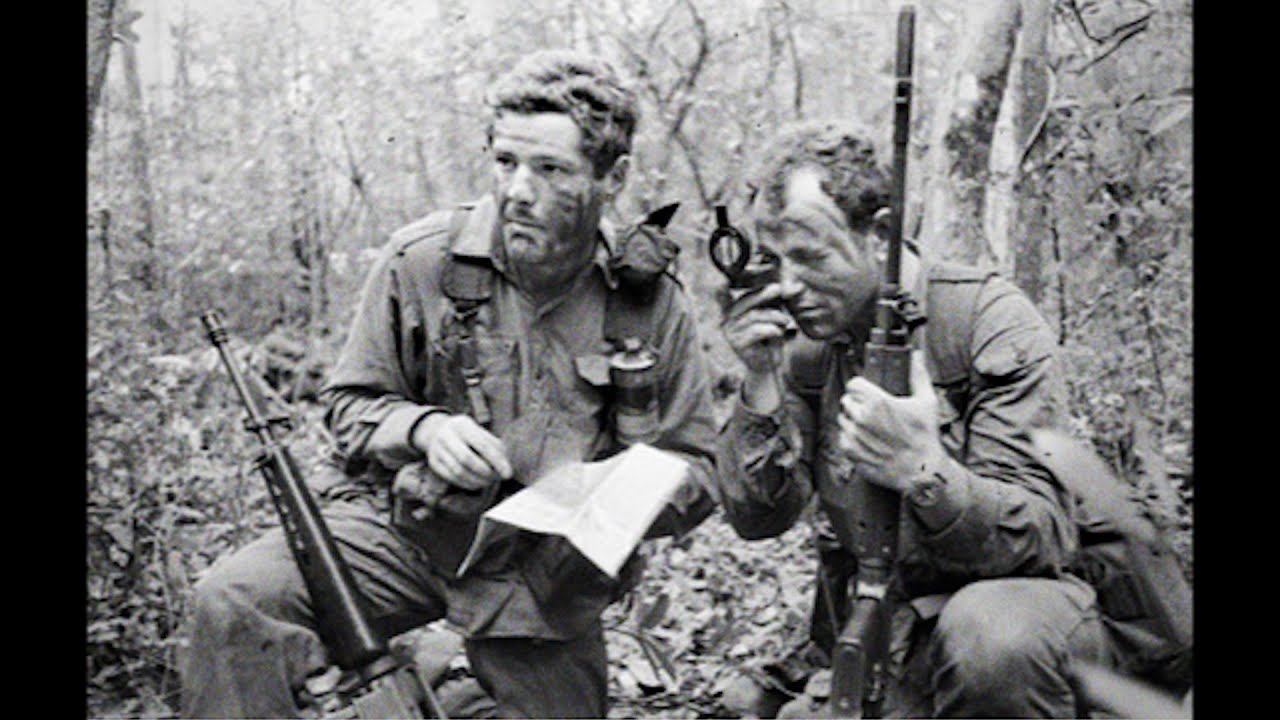
Place your foot sideways, outside edge first. Roll your weight slowly. Feel for branches before they snap. If you find one, shift. Try again. Push foliage aside with your hand. Don’t force through it. Breathing controlled, shallow through your nose when possible. And spacing, never bunch up. A clumsy mate 3 m back could give away the whole patrol.
Your weapon becomes part of your body. Held close, never allowed to swing free and strike something. Magazines taped reversed so there’s no rattling. Dog tags wrapped in rubber bands or tape. Every buckle, every strap, every piece of kit secured and silenced. The Australians carried less, much less. While Americans humped 70 lb packs, Aussies stripped down to essentials.
Water, ammunition, medical supplies, nothing else. Light meant quiet. quiet meant alive. Their boots were different, too. Worn in, broken down, the sole patterns less aggressive. Some men even modified their boots, cutting away excess tread that might catch on vines or make noise on hard surfaces. You’d spend 10 minutes moving 20 m.
Sounds mad, doesn’t it? But that’s how long it took to do it right. One snap, one rustle, and Charlie knew you were coming. The Vietkong relied on sound traps, early warning systems that didn’t need electricity or radios, a disturbed branch, animal movement that sounded wrong, the crack of a twig that shouldn’t have broken.
They’d hang empty cans from fishing line, arrange dry leaves in paths, position themselves where the echo of footsteps would carry. They understood their terrain intimately, and used it as an extension of their senses. Some trails had bells hidden in the canopy. Others had trip wires connected to sticks that would rattle.
The VC knew that even if you watched where you stepped, the jungle itself could betray you unless you moved like you belonged there. Silent movement defeated all of it. The Vietkong heard Americans coming and melted into the jungle. They never heard the Australians until it was too late. The psychological warfare aspect was profound.
VC units began reporting encounters with ghost soldiers who appeared without warning. Some believed the Australians used supernatural methods. The truth was simpler and more terrifying. They were just that good. Second, the freeze. The scout hears something. Maybe, maybe not. Doesn’t matter.
His fist goes up and the world ends. 30 seconds, 1 minute, 3 minutes. Sweat runs into your eyes. Mosquitoes feed. Your leg starts to cramp. You don’t move. You don’t shift your weight. You barely breathe. Your nose itches. A bull ant is crawling up your leg. You can feel it. Each tiny footstep a pin prick of sensation. The sweat stinging your eyes makes them water. You want to blink. You don’t.
I’ve stood frozen for 10 minutes. Mate next to me had a leech on his eyelid. Didn’t touch it. Couldn’t because somewhere out there someone was listening. The freeze wasn’t just physical discipline. It was mental warfare against yourself. Your body screaming to move. Your mind inventing threats in every shadow.
The primal urge to run, to shift, to do something all suppressed by pure will. Some men develop techniques. Count your heartbeats. Focus on a single point. Imagine yourself as stone. Whatever worked. Because the alternative was death. Yours and your mates. When Americans froze, the Vietkong could still hear them. Equipment settling.
Someone adjusting their grip. The faint rasp of cloth on cloth. The subtle shift of boot leather as weight redistributes. The tiny click of a safety being checked. The almost imperceptible sound of someone swallowing. These micro sounds, invisible in normal life, became beacons in the jungle silence. Even breathing was a giveaway.
The Americans tried to control it. But 40 men breathing, even quietly created a rhythm, a presence, something the VC could detect and track. Australians froze so completely that Vietkong scouts walked past them at arms reach. Felt something was wrong, but couldn’t identify why. The jungle should have felt alive.
Instead, it felt like holding your breath. And that fear, that sense that you’re being watched by something you can’t see, that stayed with them. The psychological impact was devastating. VC units operating in Australian areas of operation developed a kind of paranoia. They moved faster, less carefully, made mistakes.
The invisible threat was sometimes more effective than the visible one. Post-war interviews with VC veterans revealed the depth of this fear. They spoke of never feeling safe, of always sensing eyes on them, of the terrible moment when they’d realized they’d walked past an enemy patrol without knowing it, only discovering it when the shooting started from behind.
One captured VC officer described it as fighting shadows that kill. Another said the Australians made the jungle itself hostile. These weren’t poetic exaggerations. They were tactical assessments from men who’d survive the experience. Third, knowing where to go. Silent movement means nothing if you’re moving in the wrong direction.
Australian patrols didn’t just sneak. They read. Footprint still damp recent. Spiderweb broken but not rebuilt last few hours. Vegetation pressed down. Something heavier than an animal. Ant behavior disturbed. Moving away from a path. You learn to see what didn’t belong. A leaf that’s been stepped on has a sheen to it.
Mud on a route that shouldn’t be there. You notice these things when you grow up in the bush. In Vietnam, noticing kept you alive. The way vines hung. Which way grass bent. The color of disturbed earth versus undisturbed. Whether dew had settled naturally or been disrupted, the smell of the jungle, smoke, cooking, even human sweat carried differently than animal scent.
Australian scouts developed an almost six sense. They could tell if someone had passed through an area hours before. Not just that they’d been there, but how many, which direction, how fast they were moving, whether they were carrying heavy loads. The heat signature of footprints. Seriously, on damp Earth, a fresh footprint retained warmth for up to 20 minutes.
Scouts would crouch down, hold their hand close without touching, and feel for that residual heat. It told them how far ahead the enemy was. This made silent movement deadly. The Vietkong expected patrols to follow trails, take predictable routes. Australians moved off track, appeared from impossible angles, and arrived exactly where the enemy least wanted them. They knew where to sneak to.
And that changed everything. Some patrols would spend an entire day moving 300 m, reading every sign, verifying every suspicion, moving only when certain. This patience, this refusal to rush saved countless lives and won countless contacts. The VC tried to counter track. They’d leave false trails, brush out real ones, create multiple paths to confuse pursuers.
But Australian trackers had grown up hunting animals far smarter than men. A kangaroo trying to evade pursuit was more cunning than most human attempts at deception. They learned to read disturbed spiderw webs. A web broken at shoulder height meant humans. Broken at waist height meant animals. The pattern of the break told you which direction they’d moved.
The freshness of the silk told you when they learned to read mud. Not just footprints, but splash patterns. Water displaced upward meant someone running. Smooth displacement meant careful movement. The depth of the impression told you weight supplies, weapons, equipment. They learned to read silence. The jungle was never quiet. If it went silent, something had disturbed it.
The trick was determining what birds went quiet for predators, human or animal. Monkeys went silent for ground movement. Different creatures, different warnings. After the war, captured documents revealed something remarkable. Vietkong commanders knew about the Australians. They’d written about them, warned about them. One regional commander reported that Australian patrols moved like ghosts and were difficult to predict.
Early warning systems that worked perfectly against American units failed against Australians. We’d hear stories from the intelligence boys. Charlie was frustrated. They’d set up ambushes along trails we should have used. We’d come from behind them instead. They’d plant sound traps. We’d spot them and go around.
Intelligence reports documented VC units refusing to operate in certain areas during certain times because Australian patrols were known to be active. This was psychological warfare at its finest. The enemy constraining their own operations out of fear. Some VC Kadres began moving in larger groups for security, which made them easier to spot.
Others moved faster, sacrificing stealth for speed, which made them noisy. The Australians had forced the enemy into an impossible choice. Move carefully and risk ambush or move quickly and be detected. There were reports of VC sentries being found dead at their posts. No struggle, no sound, just a body discovered hours later.
Silent kills by Australian patrols who’d approached undetected eliminated the threat and vanished. It was psychological operations at its most effective and most terrifying. The VC tried everything. They increased sentry rotations, positioned guards and trees, used dogs. Nothing worked consistently. The Australians adapted faster than the VC could counter.
When the VC used dogs, Australian patrols started carrying meat scraps, not to poison that would be discovered, but to distract. A piece of beef thrown 20 m away. Dog investigates. Patrol slips past. Simple. Effective. When the VC positioned centuries in trees, Australians started looking up. Seems obvious, but it wasn’t standard practice.
Americans rarely check the canopy. Australians did every time because they’d learned that death could come from anywhere. Operation Crimp. January 1966. Fiveman Australian patrol operating in the Hobo Woods northwest of Saigon. They’d been moving for 3 hours, covered maybe 2 km. The scout picked up signs, fresh footprints, many of them moving in formation.
The air smelled different here. Woodm smoke, faint, but present. Rice cooking somewhere ahead. The sounds of the jungle had changed. Fewer birds, as if the natural world was holding its breath. The scout raised his fist. The patrol froze. He moved forward alone just 5 m scanning. Then he saw it a scuff mark on a tree trunk.
Someone had brushed against it recently. The bark was still damp where sap had been disturbed. He followed the sign slowly placing each foot with surgical precision. The smell of smoke grew stronger. Rice, fish sauce, human odor, that distinctive smell of people living rough in close quarters. ahead. Voices movement.
The patrol closed to within 30 m. Still undetected. 23 Vietkong preparing an ambush for an American patrol expected to pass through at dusk. The Australians had walked into their rear assembly area. And the enemy had no idea. They could see the VC clearly now, relaxed, smoking. One man laughing at something another had said. Weapons stacked.
Nobody facing the direction the Australians had come from. Why would they? No one ever came from that direction. The Australian patrol leader took it all in. Counted targets, identified threats, plans, fields of fire, all in seconds, all in silence. He could see the VC ambush position from here where they planned to hit the Americans.
A perfect L-shaped setup on a trail junction. Textbook professional. It would have been devastating, but the ambushers were about to become the ambushed. Radio whisper artillery plotted. Exit route marked. Then the moment the scouts hand drops. 7 seconds, 12 VC down. The others scatter running into pre-plotted artillery zones.
The violence was shocking in its speed. One moment, peace, the next controlled fury. The Australians fired in disciplined bursts. Each man had his designated zone. No wasted ammunition. No panic. Pure professional execution. First man back. Second, third, counting each other, moving inbounds, still disciplined, still silent when they need to be.
15 minutes later, they’re gone. No casualties, no trace except the bodies left behind and the terrible realization for the survivors that they’ve been hunted by something they never heard coming. The VC ambush force that arrived 2 hours later found nothing. No patrols, no enemy, just their own dead. And the growing realization that something in their tactical doctrine had failed.
They found Australian bootprints leading to the killing ground. Bootprints that had passed within meters of their centuries. Centuries who never raised an alarm because they never heard anything. The implications were terrifying. The VC officer who filed the report described it as a phantom assault. The Americans they’d been waiting for never showed.
Instead, death came from a direction they hadn’t even considered securing. The tactical assumption that patrols would use trails had been lethal. The Vietkong adapted constantly. They were brilliant, flexible fighters. But there were some problems they couldn’t solve. Americans moved in lines.
Fire teams in formation. Predictable intervals. Easy to hear. Easier to plot. Australians zigzagged. Did cloverleaf sweeps, doubled back on their own trails, set their own ambushes for anyone following them. The cloverleaf was particularly effective. A patrol would move forward, then circle back through adjacent terrain, essentially checking their own rear.
Anyone following would suddenly find themselves walking into an ambush from behind. It was exhausting. A patrol might cover 5 km of ground to advance 1 km forward, but it made them nearly impossible to track or ambush. The VC never knew if they were following a patrol or walking into a trap. The VC used sound lures, fake signs, bait. Americans sometimes fell for it.
Australians didn’t. If it felt wrong, it was wrong. You learn to trust that. A trail too clear, probably trapped. Movement too obvious, probably a lure. Charlie was clever, but so were we. There’s a sense you develop. Can’t really explain it. The bush talks to you if you know how to listen. And sometimes it screams that something’s wrong.
A trail that’s too well-maintained. A clearing that’s too convenient. Sign that’s too easy to follow. These are all warnings. Stay behind snipers. Track-based interceptions. Sound triggered ambushes. All standard VC tactics. All effective against everyone except the Australians. The VC tried countertracking following Australian patrols to ambush them, but Australians expected this and incorporated anti-tracking measures.
They’d walk through streams, step on rocks, use hard ground. Some patrols even walked backwards for short distances to confuse trackers about their direction. They’d split up and recombine, leave false trails. One man would break off, create obvious tracks leading away, then carefully double back and rejoin the patrol.
The VC tracker would follow the false trail and find nothing. They’d use terrain ruthlessly, walk along fallen logs to avoid leaving footprints, step on rocks in streams, use hard pan earth when possible, choose routes that made tracking nearly impossible. Australian patrol doctrine made the enemy’s assumptions useless. They couldn’t predict where Australians would be, when they’d arrive, or how they’d move.
And you can’t ambush what you can’t hear, see, or predict. The VC tried massing forces to simply overrun Australian positions when they found them. But Australians rarely stayed in one place long enough to be fixed. They’d hit, move, hit again from a different angle. Mobile, unpredictable, lethal. There’s something about growing up in a place that doesn’t forgive mistakes.
Where water’s scarce, distances are brutal, and the bush doesn’t care about your problems. Australian soldiers brought more than training. They brought independence, initiative, the ability to solve problems without asking permission. We didn’t need an officer telling us what to do every 5 minutes. That’s not how we grew up. You see a problem, you fix it.
You see danger, you handle it. Simple as that. This wasn’t insubordination. It was trust. Australian officers trusted their NCOs. NCOs trusted their men. Everyone understood the mission. Everyone understood their role. And everyone was empowered to make decisions at their level. Patience, quiet confidence, mates that didn’t need words, and humor.
The kind that kept you sane when everything else wanted you dead. Bloke next to me once froze midstep for two minutes, leg in the air like a bloody flamingo. After we moved on, he whispered, “Thought I heard something.” We didn’t stop laughing for a week. Quietly, mind you. The humor was essential. Dark, dry, utterly Australian. It broke tension.
It built bonds. It reminded you that you were still human in a place trying to make you something else. This wasn’t just tactics. It was identity. And it made them devastating. The Australian way of war was personal. Small units, tight bonds, shared hardship. You didn’t fight for abstract ideals or distant politicians.
You fought for the bloke next to you. And that made all the difference. There was a saying, “Australians will do anything for their mates, nothing for their officers, and judge both on whether they’re worth it.” It was crude, but accurate. Respect was earned, not given, and once earned, it was absolute. Kungra, the name still makes veterans wse.
Jungle Warfare School. The real one, where they broke you down and built you back into something that could survive. They didn’t teach you to fight in the jungle. They taught you to be the jungle, move like it, think like it, disappear into it. The training was brutal by design, days without sleep, constant movement, ambushes at dawn, attacks at midnight.
Instructors who’d been there, done it, and had zero patience for mistakes that would get you killed. You learned to sleep standing up, eyes closed for 30 seconds while your mate watched. Then you watched while he slept. You learned to eat cold rations in complete darkness. You learned to navigate by feel and memory when you couldn’t see your hand in front of your face.
Patrol formations drilled until they were instinct. Noise discipline practiced until silence became automatic. NCOs who’d catch you making a sound from 20 m away and make you do it again and again until you got it right. Initiative was trained down to the scout level. Every man needed to think, decide, act, because in the jungle, waiting for orders meant dying.
They taught you to trust your instincts but verify them, to be aggressive but not reckless. to kill efficiently but never unnecessarily and above all to look after your mates because they were looking after you. The night navigation exercises were legendary. Dropped in the jungle at midnight with a compass and a destination.
No lights, no talking, just you and the bush and your ability to read terrain you couldn’t see. Men who failed were recycled, sent back to do it again. There was no shame in it, but there was determination. You didn’t want to let your mates down. You didn’t want to be the weak link. The most important role, the loneliest role.
You walk first, you see first, you die first. If you make a mistake, every step is a decision. Left or right, fast or slow, stop or keep going. and four men behind you are trusting that decision with their lives. You don’t forget that weight ever. The pressure, the responsibility, the quiet fear that lives in your chest every moment. You’re on point.
And the pride because you’re the best. You have to be. Your mates need you to be. Scouts developed almost supernatural senses. They could feel danger before seeing it. smell an ambush before walking into it. Hear the absence of sound that meant something was wrong. Some scouts claim they could feel eyes watching them. Whether real or imagined, that sensation kept them alert, kept them careful, kept them alive.
You learn to trust your subconscious. If something felt wrong, it probably was. Your brain picked up on things your conscious mind missed. A shadow that didn’t belong, a smell that was out of place, a sound that broke the jungle’s rhythm. The scouts relationship with the rest of the patrol was unique. He operated semi-independently, but in complete coordination.
He made decisions that affected everyone, but made them alone. It was a paradox that required absolute trust on both sides. The silent man of Vietnam, leading from the front, one careful step at a time. Being a scout changed you. Even after the war, many scouts found themselves walking point in civilian life, always checking corners, always planning exit routes, always aware of their surroundings.
The training never left you. Fuoktui province. March 1967. Six-man patrol. Routine reconnaissance turned into something else. They’d been moving for 90 minutes. Seen nothing. Heard nothing. The heat was oppressive. Humidity near 100%. Uniforms soaked through with sweat. Water discipline. Strict small sips. Only make it last. The scout stopped.
Not a freeze, just stopped. The patrol stopped with him. No signals needed. They’d worked together long enough to read each other. Sign. Fresh bootprint. Still damp. Maybe 10 minutes old. Then another. And another. A line of them. Moving with purpose. The scout counted the different tread patterns. At least 10 men, maybe 12.
He knelt, examined the prince more carefully. The depth was even not carrying heavy loads. The stride length was long, moving fast, not carefully. The pattern was military disciplined formation regular intervals. VC at least 10, maybe more. Setting up the decision takes 5 seconds. Silent communication. Perfect understanding.
Hand signals pass back. Weapons readied. Safety’s off, but fingers off triggers. Move forward. Weapons free. The patrol shifted formation from file to extended line. Each man knew his zone of fire without being told. They’ done this a 100 times in training. Now it mattered. Closing. 20 m 15. They can hear voices now. Quiet. Casual. The enemy feels safe.
The VC were speaking in low tones. Vietnamese, which only one Australian understood, but the tone was clear, relaxed, no tension. They had no idea death was approaching. 10 m. They can see faces. Equipment. Weapons stacked against trees. One VC is eating. Another cleaning his rifle. A third smoking. eyes half closed in relaxation.
None of them facing the right direction. None of them expecting death to be standing 10 m away watching them. The Australian patrol leader takes it all in, counts targets, identifies threats, plans, fields of fire, all in seconds. All in silence. He sees the VC leader identified by the others, deferring to him.
Primary target, two men with rifles at ready. Secondary threats. The rest scattered, relaxed, tertiary. The patrol leader’s hand moves slowly, points. Each man understands his target. No confusion, no hesitation. One more signal. On my command, the world holds its breath. 7 seconds. 12 VC down. The others scatter running into pre-plotted artillery zones.
The violence is shocking in its suddenness. The jungle quiet shatters. The VC who survived the initial volley scatter in panic. Exactly the wrong response. They should have returned fire immediately. Forced the Australians to go to ground. Instead they run. And the Australians had predicted this. Had plotted their likely escape routes.
had called in artillery coordinates before firing a shot. First man back, second, third, counting each other, moving in bounds, still disciplined, still silent when they need to be. They withdraw through their pre-planned route. No confusion, no panic. One man covers while two move. Then those two cover while the first and another move. Leaprogging.
Professional clean. 15 minutes later they’re gone. No casualties, no trace except the bodies left behind and the terrible realization for the survivors that they’d been hunted by something they never heard coming. This wasn’t luck. This wasn’t chance. This was discipline, training, culture, a tactic the Vietkong never found an answer for.
Years later, captured VC fighters described that action. They spoke of ghosts, spirits, soldiers who appeared from nowhere and vanished just as quickly. They weren’t wrong. That’s exactly what Australian patrols had become. One survivor described hearing nothing before the firing started. No footsteps, no equipment noise, no breathing, just instant, overwhelming violence from an enemy that shouldn’t have been there.
Another described the terror of realizing they’d been watched for how long? Minutes? Hours? The Australians could have killed them at any moment. The psychological impact was devastating. 521 Australians died in Vietnam. Each one a volunteer. Each one trained. Each one trusted with carrying forward something larger than themselves. We did our job. Did it well.
That’s all you can ask. Charlie adapted to everything. Brilliant fighters they were. But this this they couldn’t crack. The Vietkong adjusted, changed tactics, tried new approaches, but they never solved the Australian problem. Never found a reliable way to detect, predict, or counter patrols that moved like shadows and struck like lightning.
Some VC units requested transfers out of Australian operational areas. Others demanded additional support before conducting operations there. The psychological impact of facing an enemy you couldn’t hear or predict took its toll. Intelligence assessments from both sides paint a clear picture. The Americans had firepower and mobility.
They could dominate terrain through sheer force. But the Australians had something else. The ability to win the close fight. The jungle fight. The silent fight. These skills didn’t survive Vietnam. The soldiers who carried them home tried to teach the next generation, but something was lost.
The Australia they’d grown up in, harsh, rural, demanding, was changing. And with it went the instincts that turned ordinary men into silent hunters. Modern soldiers are good, professional, well-trained, but they learn from manuals. We learned from the land. There’s a difference. The veterans who returned tried to pass it on.
They taught bushcraft courses, wrote training manuals, spoke at military schools. But you can’t teach instinct. You can’t create in a classroom what takes a lifetime in the bush to develop. You can teach someone to place their foot carefully. You can teach them to freeze on command. But you can’t teach them to feel the bush, to sense danger, to read terrain they’ve never seen before.
and know instinctively which way to move. That comes from growing up in a landscape that demands it. From learning as a child that carelessness means going hungry, that impatience means failure. That respect for the land is reciprocated with survival. The jungle was supposed to be the Vietkong’s greatest advantage, home ground, their element, where they’d beaten the French, worn down the Americans, and earned their reputation as some of the finest guerilla fighters in history, but for one group of soldiers.
It became home, too. They brought the Australian bush with them. The patience of waiting for kangaroo at dawn. The silence of stalking through ty tree. The awareness learned from a childhood spent reading tracks and signs. The silent men of Vietnam. Ghosts in the green. Lest we forget.
They deserve to be remembered not just for their sacrifice but for their skill. For the mastery they brought to an impossible war. for showing that sometimes the old ways, the patient ways, the quiet ways are still the best ways. Their war is over. Their story remains. A reminder that in the end, it wasn’t technology or firepower that made the difference.
It was men, silent men, Australian men, who brought the bush to the jungle and made it their own. And in doing so, they earned something the Vietkong gave to very few respect. Not as enemies to be defeated, but as warriors to be feared. That respect was hard one, bought with patience, discipline, and blood. But it was real, and it endures.
The silent men of Vietnam walked into history one careful step at a time, and the jungle remembers them
Note: Some content was generated using AI tools (ChatGPT) and edited by the author for creativity and suitability for historical illustration purposes.