THE HIMMLER WOMEN AFTER 1945: WHERE MARGARETE AND GUDRUN WENT WHEN THE REICH COLLAPSED. NU

THE HIMMLER WOMEN AFTER 1945: WHERE MARGARETE AND GUDRUN WENT WHEN THE REICH COLLAPSED
Heinrich Himmler died on 23 May 1945 in British custody, ending his life by biting a hidden cyanide capsule. The man who had led the SS and helped organize Nazi Germany’s system of terror escaped trial, but the consequences of his power did not vanish with him. His body was buried in an unmarked grave on the Lüneburg Heath, and even that burial was meant to erase a symbol rather than memorialize a person.
For his wife, Margarete, and his teenage daughter, Gudrun, the war was not over when the shooting stopped. It turned into a long, uneasy struggle to survive, to explain, and—especially in Gudrun’s case—to defend a legacy the world had already condemned. This is not a story of courtroom guilt in the narrow sense. Neither Margarete nor Gudrun was convicted as a war criminal. But they were not anonymous civilians swept up by history either. They had lived within the inner orbit of one of the regime’s central perpetrators, enjoying the privileges of his rank and, according to surviving records, sharing at least some of the ideological loyalties of their milieu. Their post-war lives reveal how the collapse of a dictatorship can leave families stranded between legal categories and moral realities. They also show how, long after 1945, networks of denial and loyalty continued to function in private, even as West Germany rebuilt itself as a democracy. The question “Where did Himmler’s wife and daughter go?” has a simple geographic answer. The deeper answer is about what they carried with them: a name, a narrative of victimhood, and an unresolved relationship to mass violence.
Between Himmler’s arrest and their capture, the family story split into two tracks: his attempt to vanish under false papers and their flight south. For investigators, the timing mattered. It raised the possibility of coordinated plans—money, documents, contacts—making Margarete and Gudrun valuable not as culprits, but as leads in those chaotic days after surrender.
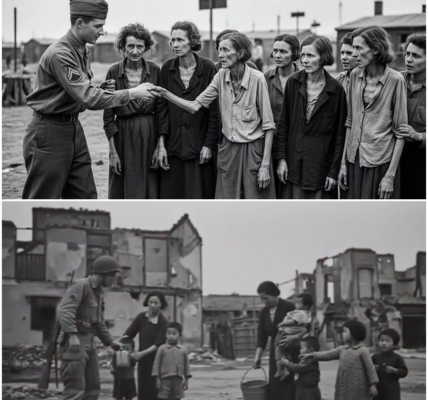
In the final weeks of the Third Reich, Margarete and Gudrun were in Bavaria as Allied forces closed in. Like many in the Nazi elite, they tried to flee south toward the Alps and Italy, imagining they might reach a safer zone or a sympathetic contact. On 21 May 1945—one day before Heinrich Himmler was arrested—American troops stopped them near Bolzano in northern Italy. Gudrun was sixteen years old. Mother and daughter were taken into custody and entered the post-war world through barbed wire.
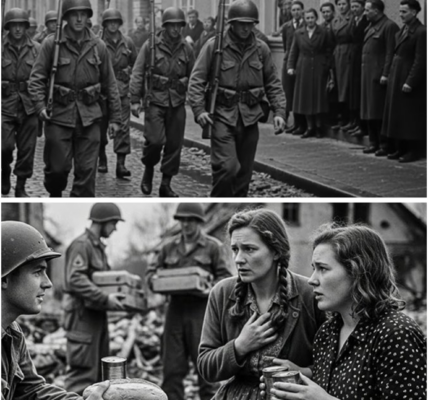
Their captors had practical reasons for holding them. Allied investigators feared that top Nazis had hidden documents, money, and networks that might fuel sabotage or help fugitives escape. Himmler, more than most, symbolized that fear: he had built vast police and intelligence structures, and the Allies wanted to know what might remain underground. Margarete and Gudrun were interrogated repeatedly by American and British officers, questioned about contacts, caches, and any hint of a surviving SS apparatus.
The questioning did not happen in one place. Over the following months, they were transferred between internment camps in Italy, France, and Germany. They were moved as investigators compared notes, pursued leads, and tried to sort genuine intelligence from the fog of rumor that always follows defeat. The camps were not extermination sites, but they were still captivity: regulated schedules, limited freedom, constant scrutiny, and the knowledge that the outside world now saw them through one lens only—the lens of Heinrich Himmler.
Margarete presented herself as a private woman: loyal, reserved, and angry at her treatment. In questioning, she insisted she had been “only a wife and mother” and claimed she knew nothing of her husband’s official business. Interrogation summaries described her as bitter and defensive, convinced she was being punished for politics she did not understand. Yet even at the time, her claim was contentious. Himmler’s role in the Nazi state was not a secret inside Germany, and Margarete enjoyed the privileges that came with proximity to power. Later evidence, including correspondence and diaries, would deepen suspicion that she was more ideologically aligned than her self-portrait suggested.
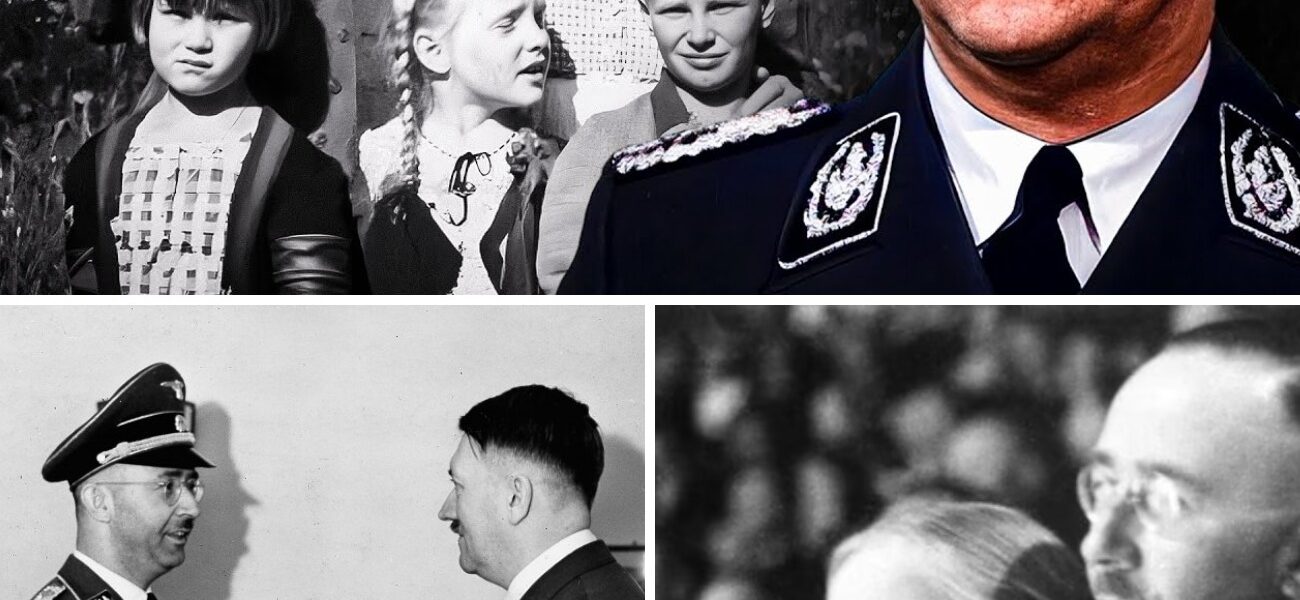
Gudrun’s responses were less cautious and, in some ways, more revealing. Known in SS circles by the childhood nickname “Püppi,” she had been photographed beside her father at official events, a carefully curated image of domestic normalcy attached to a man directing mass persecution. In captivity, she reportedly showed open hostility toward Allied officers and defended her father’s reputation. She spoke of him as a great man and rejected the mounting evidence of SS crimes. While held in Rome, she even went on a hunger strike until she became physically weak, a gesture that captured both her youth and her defiance.
As the Allies prepared and conducted the Nuremberg trials, they sought witnesses who could clarify personnel networks and institutional structures. Margarete and Gudrun were questioned in that atmosphere of documentation. They were not defendants at the main tribunal, but they were not treated as ordinary Germans either. In 1946, they were photographed in Nuremberg waiting to testify, a stark image of the Reich’s domestic circle reduced to paperwork and scrutiny.
In November 1946, after roughly eighteen months in custody, the Allies concluded that neither woman posed an immediate security threat. They were released and allowed to return to Germany. Freedom, however, did not mean restoration. They returned to a country that despised the name they carried, a landscape of ration cards and ruins where many families were mourning victims of the very system Heinrich Himmler had helped build. Their property in Gmund had been seized, their accounts frozen, and their social standing erased.
Release did not mean they immediately had a home. With their Bavarian property confiscated and their finances restricted, Margarete and Gudrun moved through temporary arrangements. For a time they found shelter at the Bethel Institution in Bielefeld, a Protestant social-welfare complex that assisted displaced people in the chaotic post-war years. Even that refuge drew controversy: many Germans questioned why a family tied to the SS should receive institutional support when countless victims and refugees were still searching for food, shelter, and missing relatives.
When they eventually resettled near Munich, they entered a society rebuilding faster than it was reckoning. Black markets thrived, food and fuel were rationed, and families repaired bombed apartments with scavenged materials. In that world, the Himmler name was both an obstacle and, in certain private circles, a password. Most neighbors wanted distance; some former SS families offered quiet help. Margarete’s bitterness grew partly from this daily humiliation. She believed defeat had stripped her life of security and status, and she blamed the victors and the public rather than the regime that had empowered her household.
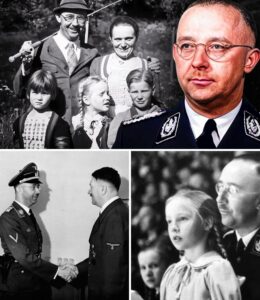
Gudrun felt the stigma differently. She was young enough to want a future, but old enough to grasp that her surname could close doors before she spoke a word. Friends were hard to make, jobs harder to keep, and every encounter carried the risk of recognition. Yet she resisted any path that required disavowal. Loyalty to her father became an identity anchor, a way to turn social rejection into proof that the world was unjust. Transforming condemnation into martyrdom helped her endure, and it hardened her worldview rather than softened it.
Margarete and Gudrun settled in the Munich area. Their survival depended on small pensions and the discreet help of sympathetic acquaintances, including former SS families who maintained private loyalties. These circles were rarely formal organizations in the late 1940s; they were more often gatherings, favors, and quiet exchanges of support. West Germany was rebuilding, and the new order had competing impulses: to punish the past and to move beyond it. That tension created space in which compromised networks could survive without advertising themselves.
Denazification tribunals tried to impose categories on that messy reality. Across occupation zones, Germans were classified by degree of involvement, from major offenders to “followers.” The categories were not merely symbolic. They shaped voting rights, employment, pensions, and social rehabilitation. Margarete’s case did not fade. It was reopened repeatedly as new documentation surfaced and as authorities reassessed how much ideological loyalty counted as participation.
In 1951, Margarete was classified as a Mitläuferin—a follower—one of the mildest categories. The label implied passivity: someone who went along rather than someone who actively shaped policy. But her file did not stay settled. Evidence of her participation in Nazi welfare organizations and the tone of her correspondence prompted further review. In January 1953, British occupation authorities upgraded her classification to Belastete (Category II), an “activist” or “profiteer” status that carried sharper consequences.
The consequences were harsh by post-war German standards. Margarete was ordered to complete special work duty, stripped of the right to vote, and temporarily lost pension privileges. The sanctions struck at precisely the self-image she presented: a private woman unfairly punished for her husband’s sins. She wrote letters protesting her treatment and framing herself as a victim of Allied hatred. Her insistence clashed with the moral record of the SS and with the practical fact that her household had benefited from a system built on violence and exclusion.
Margarete’s later years remained constrained and resentful. She did not become a prominent figure in post-war political movements, and she largely avoided the press. Her significance lies in what her denazification record illustrates: the limits of administrative justice, and the ease with which many Germans attempted to recast themselves as victims after defeat. She died in 1967, still convinced that history had treated her unfairly.
Gudrun’s trajectory diverged. Where Margarete sought obscurity, Gudrun carried her father’s memory like a banner. In the 1950s she trained as a dressmaker and later worked as a secretary in Munich. At times she used different surnames to avoid attention. Yet she never publicly renounced Nazism or expressed remorse for the crimes committed under the SS. She disputed the widely accepted account of her father’s suicide and insisted instead that he had been murdered, a claim that reinforced her broader narrative that the post-war verdict had been imposed by enemies rather than earned by evidence.
Her private world kept her close to former SS families. These gatherings were not always overtly political; sometimes they were reunions, shared meals, and the exchange of photographs, stories, and grievances. But the emotional center was political: a refusal to accept that the SS had been a criminal organization, and an effort to portray convicted perpetrators as misunderstood patriots. In a society trying to rebuild, such circles often survived by staying quiet, using coded language, and presenting the past as personal loss instead of public crime.
One of the most consequential pathways for those commitments was a mutual-aid organization that became known as Stille Hilfe für Kriegsgefangene und Internierte—“Silent Help for Prisoners of War and Interned Persons.” Officially founded in 1951, it presented itself as humanitarian assistance for Germans convicted or detained after the war. Critics, historians, and anti-extremist observers described it differently: a support network for unrepentant Nazis, raising money for legal defense, providing welfare to families of convicted SS men, and—in some accounts—helping fugitives avoid accountability.
Within that world, Gudrun Burwitz became a visible figure. She attended SS reunions, wrote letters to imprisoned war criminals, and helped raise funds, while largely avoiding mainstream media. Reports linked Stille Hilfe to assistance for figures such as Klaus Barbie and Anton Malloth, names associated with atrocities and post-war trials. The organization operated in legal gray zones, presenting itself as a charity while channeling help toward men convicted by Allied tribunals.
Stille Hilfe’s self-presentation relied on carefully chosen language. “Aid” and “humanitarian” sounded neutral, even compassionate, in a society exhausted by war. Yet its practical work often centered on people convicted of crimes that had nothing to do with ordinary soldiering. Fundraising helped pay lawyers, cover family expenses, and—in some cases—provide discreet support to fugitives living under false identities. The group’s secrecy and its habit of framing perpetrators as “prisoners” encouraged a narrative in which the problem was not mass murder, but the humiliation of Germans by victors.
Gudrun’s role was rarely administrative in a conventional sense, but it was potent symbolically. In gatherings of former SS families, the daughter of the Reichsführer-SS offered legitimacy and continuity. Her presence suggested that the SS elite had not accepted the post-war verdict; it also offered younger extremists a link to an “authentic” past. Scholars who studied the organization described her as a bridge between older perpetrator networks and new sympathizers.
The gatherings themselves were often mundane on the surface: dinners, reunions, commemorations, quiet speeches. What made them politically significant was the shared refusal to name the crimes plainly. In those settings, the Holocaust and the SS camp system could be displaced by talk of “suffering,” “honor,” and “lost comrades.” That pattern of selective memory mattered because it shaped how denial survived without needing to win public elections. It only needed to preserve small pockets of loyalty, funding, and mutual protection.
For West Germany, that survival posed a persistent challenge. The state could prosecute specific crimes, but it could not legislate remorse. Denazification had categorized people, yet categories could be appealed, revised, ignored, or outlived by private belief. Over time, German public culture shifted—through new trials, education reforms, and generational debate—yet the Himmler daughter remained a reminder that some families treated the end of the Reich as a personal tragedy rather than a moral collapse.
The persistence of those networks reveals a tension in post-war West Germany. The Federal Republic aligned itself with Western democracy and rebuilt institutions rapidly. The Cold War added pressure to recruit anti-communist expertise, and early intelligence and security structures sometimes drew on people whose careers had begun under Nazism. That environment produced morally compromised continuities that historians still debate: whether these choices were pragmatic necessities of a new geopolitical struggle or failures of moral imagination.
Gudrun’s brief employment with West Germany’s foreign intelligence service, the Bundesnachrichtendienst (BND), became one of the most striking examples. From 1961 to 1963, she worked under an assumed name as a secretary at the BND headquarters in Pullach near Munich. Decades later, the agency confirmed her employment, acknowledging publicly that it had hired Heinrich Himmler’s daughter during the early Cold War.
To some observers, the episode was symbolic: a reminder that the young West German state was not built on a clean slate. To others, it was administrative coincidence: a low-level employee with a notorious surname in a sprawling bureaucracy. The debate matters because it points to a broader truth: post-war democracies often inherit personnel, habits, and social ties from the systems they replace, and the boundary between “continuity” and “complicity” is rarely tidy.
After leaving the BND, Gudrun deepened her involvement in far-right and revisionist circles. She continued to defend her father’s reputation, accused Allied historians of distorting the past, and treated war-crimes verdicts as propaganda. She also remained a connector—an important link between older perpetrator networks and younger sympathizers drawn to mythologized versions of the Reich. Over the decades, German authorities watched extremist movements rise, fracture, and rebrand, but private support networks proved resilient because they could blend into ordinary social life.
Gudrun Burwitz died in Munich on 24 May 2018 at age eighty-eight. Obituaries noted the defining feature of her life: she never disavowed her father, never expressed remorse, and remained a symbolic figure for some nostalgic and neo-Nazi circles. Her death closed the most direct familial line between the SS leadership and a living defender, but it did not erase the long struggle Germany has faced against denial and revisionism.
The Himmler family story, however, also contains an internal counterpoint that reflects a generational shift. Later descendants confronted the name differently. Heinrich Himmler’s great-niece, Katrin Himmler, a political scientist and writer, chose to face the legacy publicly rather than defend it. In 2005, she published a detailed family history tracing Heinrich and his brothers and asking how an ordinary middle-class family could produce a central perpetrator of Nazi Germany. Her work did not seek to cleanse the name; it sought to understand the social pathways that made Nazism possible.
That contrast—Gudrun’s loyalty versus Katrin’s confrontation—mirrors Germany’s broader post-war journey. In the immediate aftermath of 1945, many Germans focused on rebuilding and preferred silence about the recent past. Over time, new generations demanded deeper accountability, pushing institutions, schools, and families to name victims and perpetrators more honestly. Margarete and Gudrun sit at the darker edge of that arc: beneficiaries of SS privilege who experienced defeat as humiliation, and who responded not with remorse but with resentment and denial.
To ask “where did they go” after the war is, in one sense, straightforward: from a failed flight south, into Allied custody, through internment camps, then into the Munich area, into lives of diminished means and constant suspicion. The deeper question is what they carried with them. They carried a surname associated with organized mass crime. They carried a private narrative of being wronged by history. And, in Gudrun’s case, they carried a mission to protect a father’s memory by rejecting the victims’ testimony and the documentary record.
Their story matters because it shows that the end of a regime does not automatically end its afterlives. Leaders can die while networks persist. Institutions can be dismantled while attitudes survive inside families and friendship circles. Democracies can be built while still wrestling with remnants of dictatorship embedded in personal loyalty and selective memory. The post-war lives of Margarete and Gudrun Himmler are not an aside to history; they are part of the long shadow Nazism cast over Germany and the long work required to confront it.
In the end, Margarete died bitter and largely invisible, convinced she had been treated unfairly. Gudrun died publicly loyal to her father, sustaining circles that sought to rehabilitate perpetrators. Neither woman rebuilt the name; they prolonged its burden. Their trajectory—from internment to obscurity and activism—remains a reminder that accountability is not only a legal process. It is also a generational struggle over memory, denial, and the responsibility to face what was done.
Note: Some content was generated using AI tools (ChatGPT) and edited by the author for creativity and suitability for historical illustration purposes.