Outrage follows ‘deport all Muslims’ remark as UK grapples with hate-speech boundaries. n1

Outrage follows ‘deport all Muslims’ remark as UK grapples with hate-speech boundaries.
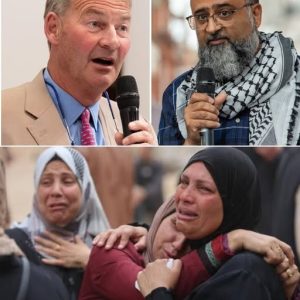
A highly provocative statement calling for the deportation of all Muslims from the United Kingdom has provoked widespread condemnation across political parties, faith communities and civil-society organisations, reigniting intense debate over the limits of free expression, the definition of hate speech and the government’s role in safeguarding social cohesion.
The remark, made publicly by a prominent far-right activist during a live-streamed discussion on immigration and national identity, was swiftly denounced by senior figures from all major parties. Prime Minister Keir Starmer described the language as “utterly unacceptable and deeply damaging,” emphasising that it stood in direct opposition to the values of tolerance and rule of law that define modern Britain. Home Secretary Yvette Cooper issued a statement affirming that ministers would examine whether the comment crossed the criminal threshold for incitement to racial or religious hatred under the Public Order Act 1986 and associated legislation.
Opposition leaders were equally unequivocal. Conservative shadow home secretary Chris Philp called the remark “repellent and un-British,” while Reform UK leader Nigel Farage distanced his party from the comment, stating that while migration policy required urgent reform, collective targeting of entire religious communities had no place in serious political discourse. Liberal Democrat leader Ed Davey and Scottish National Party Westminster leader Stephen Flynn both urged swift police investigation and underlined the importance of protecting Muslim citizens from the chilling effect of such rhetoric.
The Muslim Council of Britain (MCB) and other faith organisations reported a sharp increase in reported incidents of verbal abuse and intimidation in the hours following the statement’s viral spread. MCB secretary-general Zara Mohammed said the words had created “real fear in communities already anxious about rising Islamophobia,” citing Home Office hate-crime statistics that show anti-Muslim incidents consistently ranking among the highest categories recorded each year.
Metropolitan Police confirmed that officers were reviewing the full context of the statement to determine whether it met the legal test for a criminal offence. Under current law, prosecution for stirring up hatred requires intent or likelihood that the words will incite violence or hatred against a group defined by religion or race. Senior officers stressed that while freedom of expression remains a protected right, it is not absolute when speech is deemed to cross into incitement or targeted harassment.
The controversy has also placed renewed pressure on social-media platforms. The original video was shared widely on X, YouTube and alternative networks before being removed or restricted on several mainstream services. Ofcom and the newly empowered Online Safety Act regulator have signalled that they will monitor how platforms handle the content under duties to mitigate the spread of harmful material. Civil-liberties groups, including Index on Censorship and Article 19, cautioned against over-reaction that could inadvertently narrow the space for legitimate policy critique, while acknowledging that the specific phrasing in this case appeared designed to provoke rather than inform.
Public opinion remains deeply divided. YouGov polling conducted in the immediate aftermath showed 68 percent of respondents condemning the remark as unacceptable, with only 14 percent viewing it as legitimate political speech. However, when the question was reframed around concerns over high net migration and integration pressures — without the deportation call — agreement rose significantly, suggesting that the underlying anxieties driving the debate persist even when extreme solutions are rejected.
The episode occurs against a backdrop of sustained political focus on immigration and community relations. The government’s Border Security, Asylum and Immigration Bill, currently moving through Parliament, includes provisions to strengthen enforcement against illegal entry, expand detention capacity and accelerate removal of foreign national offenders. Ministers have repeatedly insisted that the legislation targets unlawful migration rather than any religious or ethnic group, yet critics argue that inflammatory rhetoric from fringe voices can poison the wider atmosphere and make reasoned discussion more difficult.
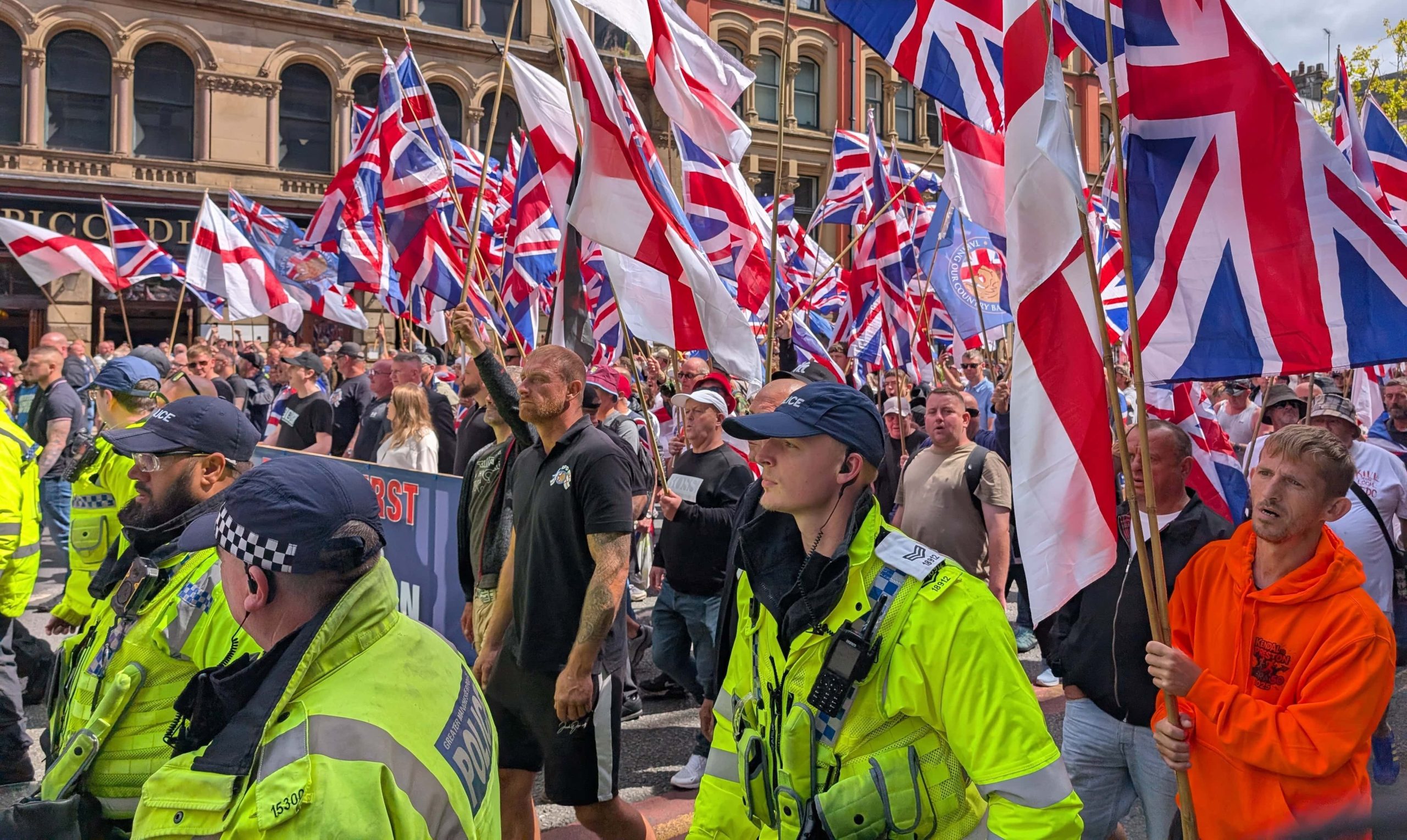
Several MPs have used the controversy to call for fresh legislation or updated guidance on hate speech in the digital age. Labour backbencher Naz Shah tabled an early-day motion urging stronger protections for minority communities online, while Conservative MP Miriam Cates highlighted the need to distinguish between policy criticism and collective vilification. Cross-party voices have also pressed for renewed investment in community-cohesion programmes, which have seen funding reductions in recent years.
The Crown Prosecution Service has yet to announce whether a formal investigation will be launched. Past high-profile cases involving similar language have produced mixed outcomes: some individuals have been convicted of stirring up hatred, while others have seen charges dropped on free-speech grounds or after demonstrating lack of intent to incite violence.
For the Muslim community, the episode has reinforced long-standing concerns about normalisation of anti-Muslim sentiment in public discourse. Mosque leaders in several cities have increased security measures and encouraged congregants to report incidents of hostility. Interfaith organisations have organised emergency meetings to coordinate responses and reaffirm shared commitment to mutual respect.
The prime minister, speaking during a scheduled visit to a multi-faith community centre in Birmingham, reiterated that Britain’s strength lies in its diversity and that no group should feel targeted or unwelcome. He avoided direct reference to the individual who made the remark but made clear that government policy would continue to be guided by fairness, security and economic need rather than prejudice.
Legal scholars note that the case will test the evolving application of hate-speech laws in an era of instant digital dissemination. Courts have previously ruled that online statements carry the same potential to cause harm as spoken or printed words, and that context — including audience size and foreseeability of reaction — is relevant when assessing likelihood of incitement.
Whether or not criminal charges are brought, the political and social fallout is already substantial. The remark has dominated news cycles, parliamentary questions and broadcast debates for days, diverting attention from other government priorities and reinforcing perceptions of polarisation. For many MPs the episode serves as a stark reminder that migration-related issues remain among the most emotionally charged in British politics — and that extreme voices, even when marginal, can rapidly dominate the conversation when mainstream parties appear slow to respond.

As the police review continues and the public awaits a decision on prosecution, the broader question remains: how does a liberal democracy protect both freedom of speech and the equal dignity of all citizens when the two principles appear to collide? The answer, in this instance, will be determined not only in courtrooms but in the tone and substance of the national conversation that follows.