
Japanese Mothers Wept When American Nurses Saved Their Dying Children
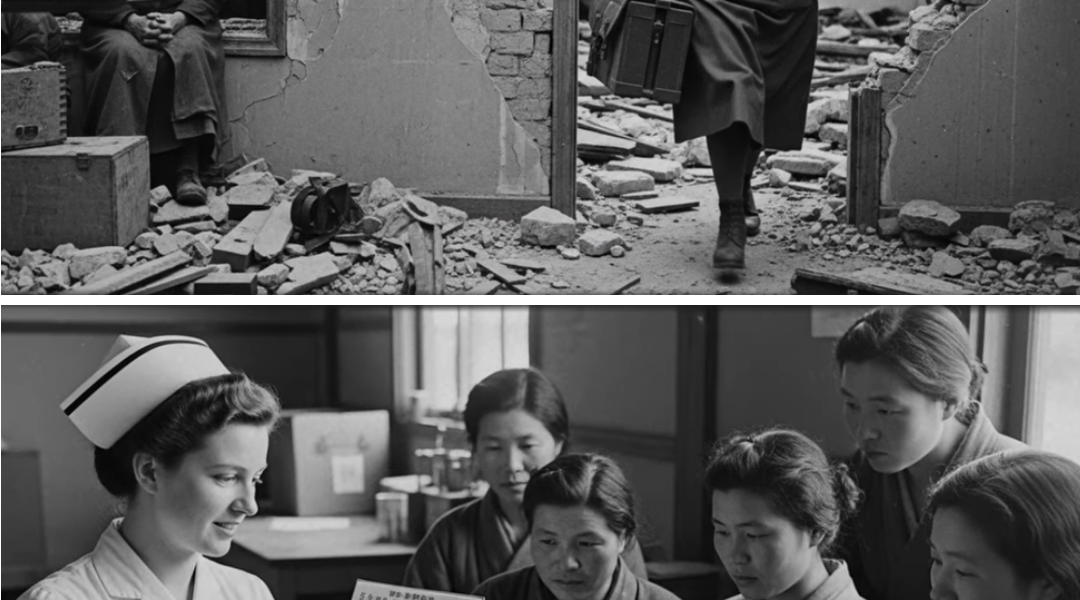
In August 1945, the war was finally over, but peace did not feel like peace for the people of Japan. The sound of bombs had faded, yet silence itself felt threatening. Cities lay in smoldering ruins, streets were choked with ash, and the air carried the scent of burned wood, metal, and loss. For civilians who had endured years of firebombing, hunger, and propaganda, surrender brought not relief but uncertainty. Survival was no longer about air raid sirens or shelters—it was about food, disease, and the terrifying question of what the enemy would do next.
Across Japan, hospitals barely deserved the name. Many were half-destroyed buildings with shattered windows and straw mats laid on the floor. Doctors were scarce, supplies almost nonexistent. Disease spread rapidly through weakened populations. Children suffered the most. Malnutrition left their bodies fragile, while pneumonia, dysentery, and tuberculosis moved unchecked. Mothers watched helplessly as fevers climbed and breathing grew shallow, knowing that prayer was often the only tool left to them.
For years, Japanese propaganda had prepared civilians for this moment. Americans were portrayed as demons—brutal, heartless, and eager to harm women and children. Mothers whispered warnings to their sons and daughters: if the Americans come, hide. Better death than capture. These beliefs did not disappear when the emperor announced surrender. Fear lingered, deeply embedded in the human instinct to protect one’s family at all costs.
Yet history often turns on moments no one expects. In the ruins of postwar Japan, such a moment arrived not with soldiers shouting orders, but with the quiet footsteps of women in white uniforms. American nurses, many barely in their twenties, entered shattered villages carrying medical kits instead of weapons. To Japanese mothers watching from the shadows, the sight was confusing and terrifying. These were Americans—the enemy. And yet they came with medicine, water, and calm hands trained to heal.
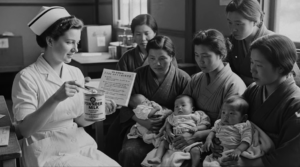
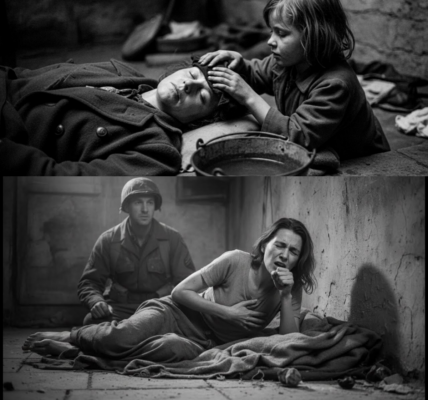
One mother knelt beside her feverish son in a ruined clinic, convinced she was about to lose him. His skin burned, his breathing was weak, and she had already buried other children during the war. When American nurses approached, her instinct was to shield him, to pull him away from those she had been taught to fear. Hatred and desperation collided in her chest. But desperation won. As a nurse gently placed a cool cloth on the child’s forehead and prepared a dose of penicillin—medicine almost unheard of in Japan at the time—something inside the mother shifted.
This was not the story she had been told. The hands touching her child were gentle. The voice was soft, even if the words were foreign. There was no cruelty, no anger, no triumph—only focus and care. Hours later, the boy’s breathing steadied. By morning, his eyes opened. The mother collapsed in tears, bowing deeply, overwhelmed by gratitude that felt almost shameful after years of hatred.
Scenes like this repeated themselves across Japan. In Yokohama, Osaka, Nagoya, and countless villages reduced to rubble, American nurses treated children suffering from starvation, infections, and war-related injuries. They administered vaccines, cleaned wounds, taught mothers how to prepare powdered milk and protein rations, and stayed through the night to sponge feverish foreheads. Each recovered child became a quiet miracle, whispered about from one household to another.
For Japanese mothers, these encounters created profound psychological conflict. Gratitude clashed with guilt. How could they thank the enemy who had burned their cities? How could they reconcile years of propaganda with the undeniable reality that these Americans had saved their children’s lives? Psychologists call this cognitive dissonance—the painful collision between belief and experience. In postwar Japan, it played out not in classrooms or debates, but in hospital rooms filled with tears.
The American nurses themselves were undergoing their own transformation. Many had served on battlefields, stitching up soldiers under fire and learning to suppress emotion amid relentless death. Now they were caring for civilians who had once been labeled enemies. Kneeling beside Japanese mothers, holding dying children who reminded them of siblings back home, they could no longer think in terms of sides. There were only patients—and patients needed help.
Language barriers made communication difficult, but compassion filled the gaps. A smile, a nod, a reassuring touch spoke louder than words. Cultural misunderstandings were common. Japanese mothers bowed deeply in gratitude, while American nurses instinctively tried to lift them up, embarrassed by the display. Yet these awkward moments only highlighted a deeper truth: empathy did not require translation.
As trust slowly spread, fear began to loosen its grip. Mothers who had once hidden their children at the sight of Americans now carried them openly to clinics. Lines formed outside makeshift hospitals. Desperation turned into cautious hope. Each child who survived rewrote the narrative, proving that the enemy was not a monster, but human.
These acts of compassion struck at the very heart of wartime propaganda. For years, Japanese civilians had been taught that surrender meant annihilation. But lived experience shattered that illusion. When mothers saw American nurses rocking infants, wiping tears, and refusing to leave a bedside until a fever broke, the entire architecture of fear collapsed. The supposed devils behaved like caregivers. The psychological impact was enormous.
On the American side, the effect was equally powerful. Soldiers who had spent years fighting a ruthless enemy now witnessed civilians bowing in gratitude, tears streaming down their faces. Dominance could have been expressed through cruelty, but instead it was wielded through care. This choice reshaped how occupation was perceived and laid the foundation for a fragile but growing trust.
The healing of Japan did not happen overnight. Ruins still stood, food was still scarce, and the trauma of war lingered deeply. But within this devastation, something remarkable began to grow. Clinics became centers of recovery. American nurses worked alongside Japanese midwives, sharing knowledge, introducing modern medical practices, and helping rebuild a shattered healthcare system. Each lesson passed on became an investment in the future.
For mothers, the survival of their children restored more than health—it restored meaning. After years of loss, watching a child play again in rubble-strewn streets felt like defiance against despair. Gratitude slowly replaced grief. Trust, though fragile, took root where fear once ruled.
Years later, many Japanese mothers would still speak of these moments in hushed voices. The day the enemy saved their child. The moment hatred dissolved into gratitude. These stories were passed down through families, becoming part of Japan’s collective memory. Trauma shaped a generation, but so did compassion.
In the end, this is not a story about politics or military strategy. It is a story about what happens after the fighting stops, when ordinary people are left to confront the human cost of war. It is about mothers, children, and nurses whose quiet acts of mercy achieved what bombs never could. In the ruins of postwar Japan, American nurses did more than save lives—they changed hearts, proving that even after unimaginable destruction, humanity could still choose compassion over vengeance.
And that choice, made one child at a time, helped a defeated nation begin to breathe again.
Note: Some content was generated using AI tools (ChatGPT) and edited by the author for creativity and suitability for historical illustration purposes.