The Letter from Switzerland
Chapter I – Winter at Camp Gruber
January 1944 arrived in Oklahoma with a hard, slicing wind. At Camp Gruber, the cold swept across the open plains and rattled the windows of the commandant’s office like a warning from the wider world at war.
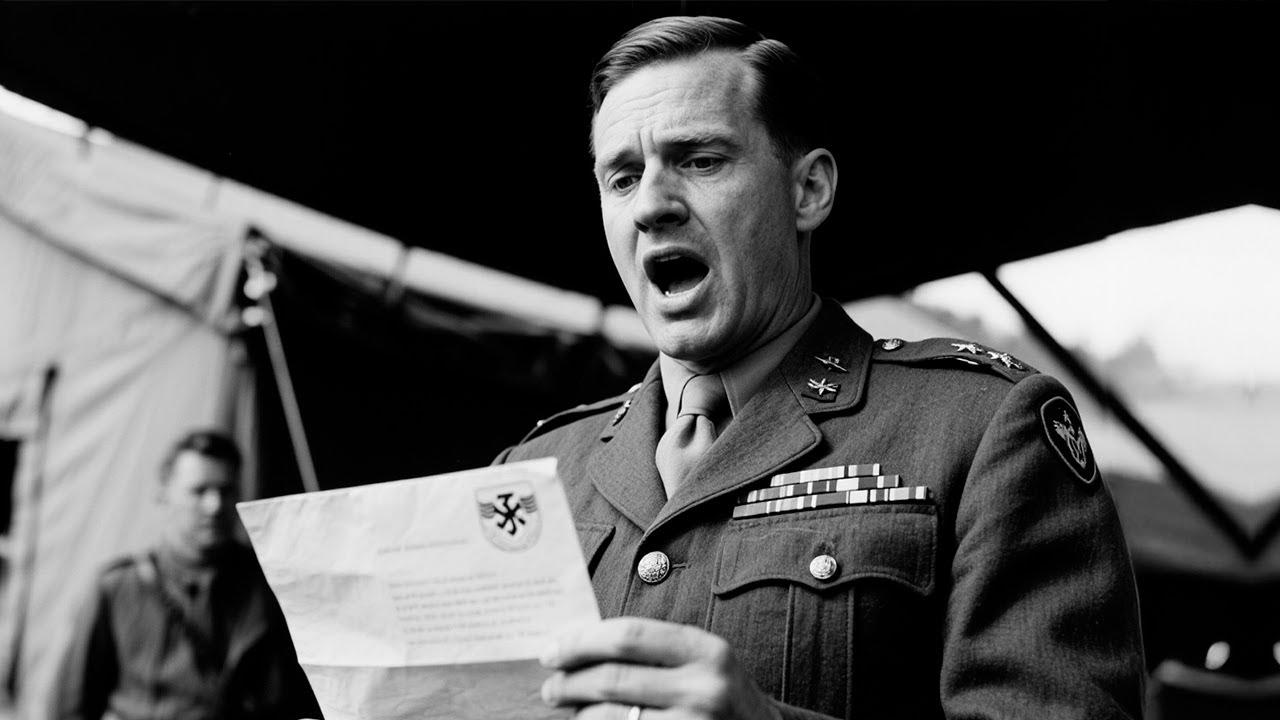
Colonel Robert Hayes sat at his desk beneath the steady hum of military routine. At fifty-one, he was a career officer shaped by two wars. He had survived the Meuse–Argonne offensive in the First World War and spent the uneasy years between conflicts teaching military science and discipline. Now, while younger men fought overseas, Hayes commanded Camp Gruber, a sprawling prisoner-of-war facility housing nearly three thousand German soldiers captured in North Africa and Italy.
Hayes believed in order. Regulations were followed precisely. Geneva Convention standards were met without deviation. Prisoners were fed, clothed, housed, and medically treated as required. They worked under supervision, attended classes if they wished, and lived under firm but controlled discipline. Hayes took pride in this balance. Humane treatment, he believed, was not sentiment—it was strategy. It protected American prisoners abroad, upheld national values, and preserved order.
Yet he maintained distance. These men were enemies. He did not hate them, but he did not know them either. He managed them as one manages logistics: carefully, efficiently, without emotional involvement.
That morning, among routine reports and Red Cross communications, one envelope stood out. It was heavier than most, postmarked from Switzerland.
Hayes opened it expecting official correspondence. Instead, he found a letter written in careful, imperfect English. It was addressed simply:
To the Commander of the Prisoner of War Camp, Camp Gruber, Oklahoma, United States of America.
The signature at the end read: Wilhelm Hartman.
Hayes began to read.
Chapter II – A Father’s Words
Wilhelm Hartman wrote not as an official, nor as a petitioner for favors, but as a father.
He explained that he lived in Switzerland, having left Germany in 1938 for reasons of conscience. His son, Oberfeldwebel Peter Hartman, had been conscripted into the German army despite neither father nor son supporting the regime. Now Peter was a prisoner at Camp Gruber.
Wilhelm did not ask for release. He did not question the legitimacy of captivity. He acknowledged military necessity and international law. Instead, he wrote something far simpler—and far more unsettling.
He asked Colonel Hayes to remember that every prisoner was someone’s son.
That each man behind the wire had a father who worried, a family that grieved, a life that existed before the war and hoped to exist after it. Wilhelm described his own pain—years without seeing his son, watching him age through Red Cross photographs, knowing the war had stolen something neither of them could recover.
“If you have children,” the letter said, “you will understand.”
Hayes read the letter twice. Then a third time.
Only after that did he notice his hands were trembling.
He had two sons. One served in the Pacific, the other trained to lead men in combat. At any moment, either could become a casualty—or a prisoner. And if that happened, Hayes knew exactly what he would want from their captors: not kindness born of weakness, but recognition of their humanity.
The letter did not accuse him. It did not demand change. It simply asked him to see.
And once seen, it could not be unseen.
Chapter III – Command and Conscience
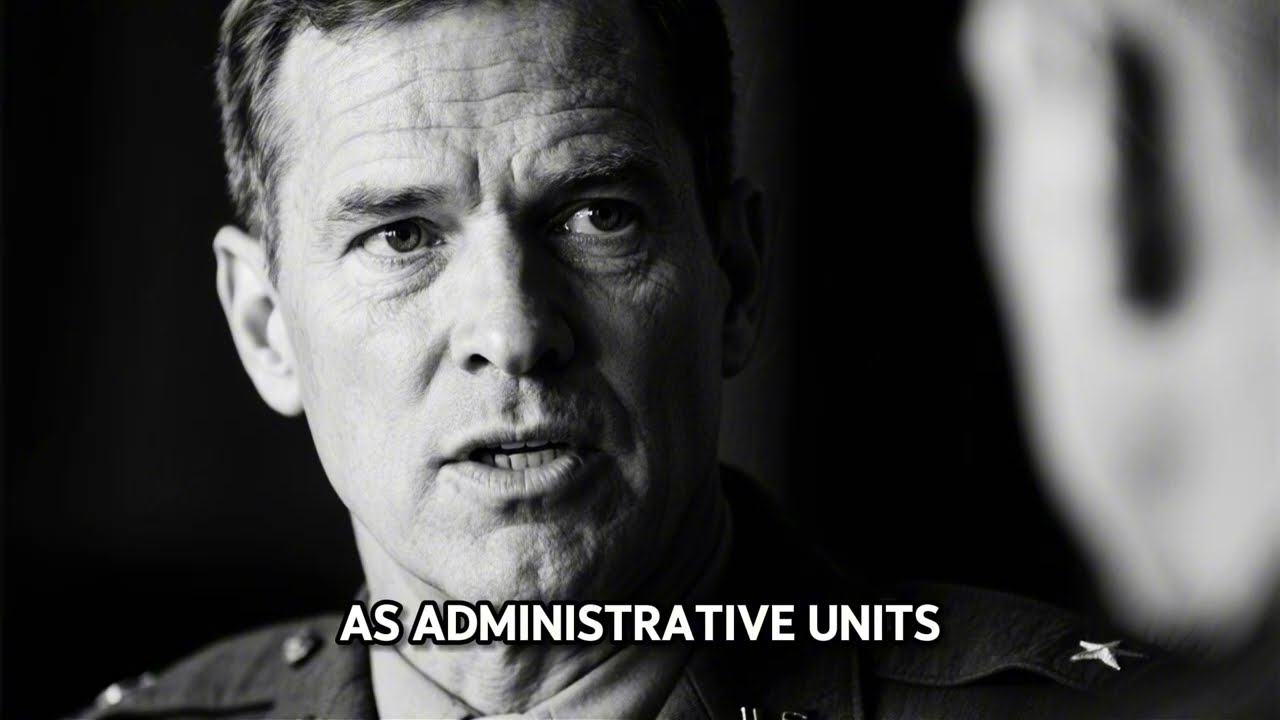
That afternoon, Hayes called Major Thomas Crawford, his executive officer, into the office. Crawford was younger, capable, and precise—a man who believed deeply in procedure.
Hayes handed him the letter.
“What do you think?” Hayes asked.
Crawford read carefully. “It’s moving, sir,” he admitted. “But we already follow the Geneva Convention. We’re doing our job.”
“Yes,” Hayes replied. “But are we seeing the men—or just managing them?”
They spoke for more than an hour. Crawford raised valid concerns. Emotional involvement could cloud judgment. Security depended on discipline and distance. Hayes agreed with every point—yet the letter would not loosen its hold.
Later that week, Hayes convened his senior staff: the chaplain, the medical officer, the security chief, and program supervisors. Each read the letter.
The chaplain spoke first. “We meet physical needs,” he said, “but not the spiritual or emotional ones. Many of these men are breaking quietly.”
The doctor confirmed it. Stress manifested as illness. Depression hid behind routine complaints.
Even the security chief conceded that professionalism did not require indifference.
By the end of the meeting, Hayes had reached a decision.
Camp Gruber would not change its mission. But it would change its perspective.
Policies were adjusted carefully. Prisoners would be allowed to write two letters per week instead of one. Educational programs would expand beyond language instruction to vocational training. Recreational activities would include music, reading, and discussion—not merely labor and exercise. Guards would receive training emphasizing firm authority paired with basic human acknowledgment.
None of this weakened security. None violated regulation.
But everything changed how the camp felt.
That evening, Hayes wrote back to Wilhelm Hartman.
“I cannot promise special treatment,” he wrote, “but I can promise that your letter has changed how I think about my responsibilities.”
Chapter IV – The Human Effect
The prisoners noticed immediately.
More letters meant more connection—more proof that the world beyond the wire still existed. Education gave purpose to days that had once felt empty. Simple greetings from guards—acknowledgment rather than silence—restored dignity in small but powerful ways.
Peter Hartman understood more than most. When Hayes told him about his father’s letter, Peter stood silently, absorbing the weight of it.
“My father is a good man,” he said quietly. “He believes words matter.”
He wrote to his father soon after, describing the changes and their effect.
“Your letter reminded them that we are human,” he wrote. “It reminded me as well.”
The changes at Camp Gruber drew attention. Hayes documented them carefully and sent reports to Army headquarters. Other camps requested copies. Some commanders resisted. Others followed.
By summer 1944, similar policies appeared across multiple American POW facilities.
What began as one father’s letter had become a quiet reform.
Chapter V – After the War
The war in Europe ended in May 1945. Camp Gruber continued operating through the long months of repatriation.
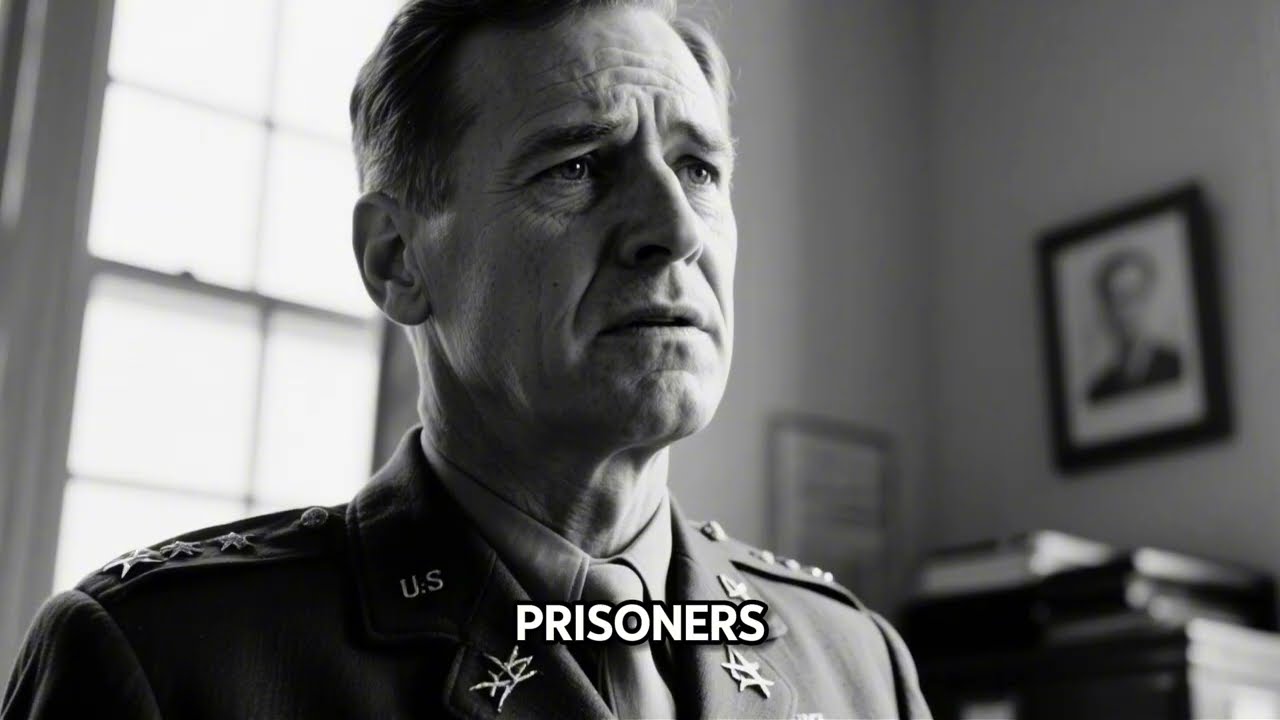
Before leaving for Europe, Peter Hartman asked to see Colonel Hayes.
“I wanted to thank you,” Peter said. “Your camp was different—not easier, but more human.”
Hayes shook his hand. “Your father reminded me of something I should never have forgotten.”
Peter left for Switzerland, not Germany. He would rebuild his life beside the man who had refused to surrender his conscience.
Hayes retired the following year. He returned to Massachusetts, where he gardened, read, and wrote letters—many of them to Wilhelm Hartman. Their correspondence lasted nearly two decades, two former enemies bound by shared belief in dignity.
When Wilhelm died in 1962, Hayes traveled to Switzerland for the funeral. In his eulogy, he said only this:
“He wrote me one letter. It asked for nothing except remembrance of humanity. That letter changed how I commanded, how I understood duty, and how thousands of men were treated. That is no small legacy.”
Colonel Robert Hayes died in 1975. His obituary mentioned Camp Gruber and the reforms he introduced. Historians would later note the influence of one letter in shaping humane prisoner policy.
But for the men who lived through it, the legacy was simpler.
They had been seen.
And sometimes, in war, that is everything.