When 600 Germans Surrounded Him — He Called Artillery on Himself to Save Them All. NU

When 600 Germans Surrounded Him — He Called Artillery on Himself to Save Them All
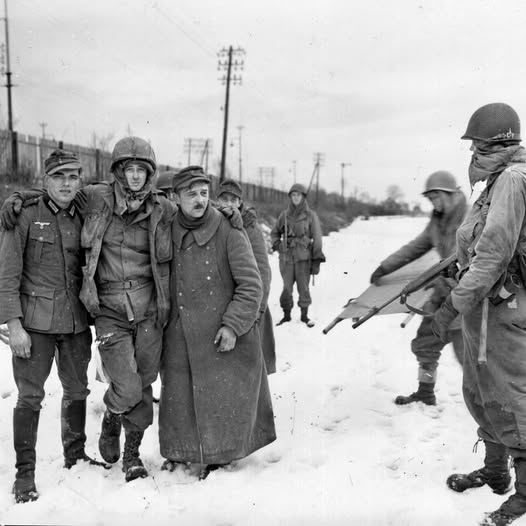
At 0700 on January 24th, 1945, the world around Houssen, France looked like it had been carved out of ice and ash. The trees stood bare and splintered, their trunks scarred by months of shellfire. Snow lay in dirty, wind-sculpted sheets over frozen fields, and the air had that brutal, metallic bite that makes every breath feel like it’s scraping the inside of your lungs.
Inside a cramped battalion command post—half dugout, half miracle of sandbags and stubbornness—First Lieutenant Garlin Murl Conner stood with a map spread under a weak light, listening to the rhythm of war outside. He was only 25 years old, an intelligence officer by assignment, and he’d been back from a hospital bed for barely two days, wounds still healing. (army.mil)
Conner didn’t look like the kind of man history chooses for moments like this. He was small—about five-foot-six and light enough that his winter gear looked like it might swallow him. He came from rural Kentucky, from a tobacco-farming life where school was a luxury and distance was a daily fact. Yet the Army had shaped him into something else entirely: a soldier who had lived through years of combat that should have broken him and instead forged a reflex—when things turned desperate, he moved toward the danger, not away from it. (Wikipedia)
Outside, German artillery shells were ripping into the treeline roughly 400 yards ahead, detonating with heavy, blunt force. Trees cracked and burst as if struck by invisible hammers. Frozen earth geysered into the air in dirty fountains. Conner watched the pattern, watched the way the shells “walked” across the front—an old tactic, a moving curtain of explosives designed not just to kill, but to disorient and pin defenders down right before the real blow landed.
And Conner already knew what that meant.
The German forces in this sector—part of the fighting tied to the bitter winter battles in Alsace—were desperate. The Colmar Pocket was the last substantial chunk of German-held ground in France west of the Rhine, and it had become a frozen trap full of exhausted men who had been ordered to hold on far longer than logic said was possible. (nationalww2museum.org)
In late 1944 and early 1945, the Germans launched what is widely described as their last major offensive in the West—Operation Nordwind—trying to fracture Allied lines in Alsace even as the last waves of the Battle of the Bulge still echoed to the north. The offensive failed in its grand aims, but it left behind vicious local counterattacks—sudden, violent attempts to punch holes in the Allied front and buy time for a collapsing war effort. (Wikipedia)
That morning, intelligence reports were blunt: the Germans were massing about 600 infantry and six Mark VI tanks—Tigers—against the American line near Houssen. (army.mil)
Six Tigers.
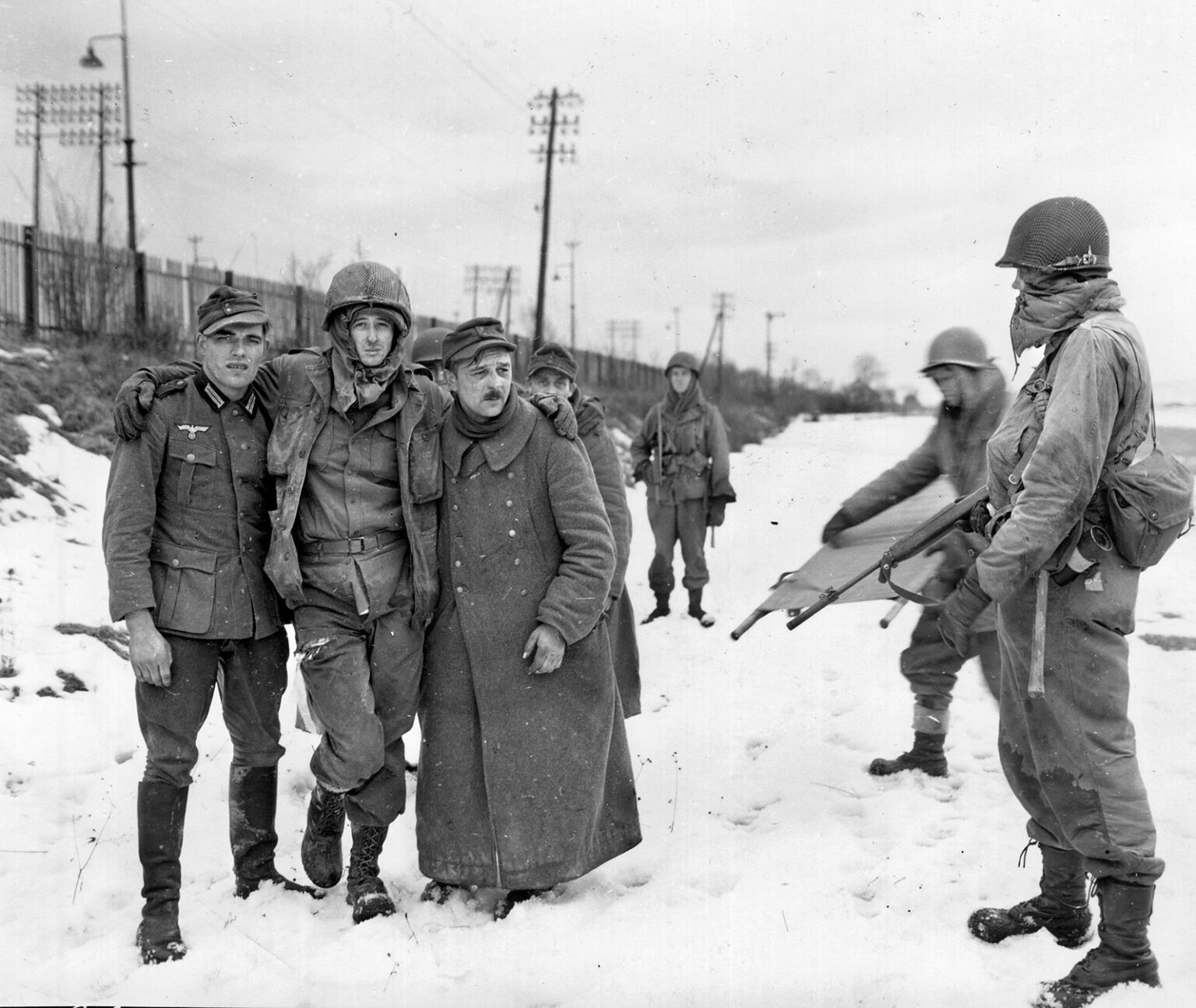
If you had never seen one up close, it was easy to think of them as simply “tanks,” another piece on the board. But anyone who had watched an 88mm gun fire knew better. A Tiger didn’t just kill. It erased. A shell from that gun could turn a foxhole into a grave with the casual indifference of a boot crushing an insect. And in January’s frozen ground, the usual American answers—tank destroyers, mines, maneuver—weren’t guaranteed to be there in time.
The battalion commander—Company K, 3rd Battalion, 7th Infantry Regiment, 3rd Infantry Division—looked at the map and saw the same thing Conner did: if those Tigers reached the American positions, they’d roll right through the line, crushing foxholes, scattering men, and turning a defensive sector into a rout. (Congressional Medal of Honor Society)
There were no American tanks in immediate position to meet them head-on.
No tank destroyers waiting like silent wolves.
Only one thing could stop a heavy armored thrust quickly enough: artillery.
But artillery in a winter forest is only as good as the eyes that guide it. Guns miles behind the lines could throw shells with terrifying power, but without someone forward—someone who could see the enemy advance, correct the fall of shot, walk fire onto target—the barrage would be guesswork.
And on this morning, the forward observation post had been smashed by that opening artillery preparation. The observers were dead or wounded. The command post couldn’t see the German advance through the trees.
The battle had created a problem so simple it was almost stupid:
If nobody can see the enemy, you can’t stop the enemy.
Conner studied the map again. He didn’t speak for a moment. He simply reached for a field telephone and a spool of wire.
The commander looked at him, and for a second the command post filled with the kind of silence that happens when everyone understands what’s about to be volunteered, but nobody wants to say it out loud.
To observe the attack, a man would have to cross roughly 400 yards of open ground, under enemy eyes, toward the direction of the German assault. Then he’d have to stay there—exposed, ahead of the American line—while six Tigers and hundreds of infantry advanced.
It was not a task for an intelligence officer.
It wasn’t even a task most combat officers would accept unless ordered.
Conner picked up the telephone anyway.
Then he stepped out into the snow.
At first, the world outside the command post felt eerily calm—calm in that unnatural way that always arrives between barrages, when both sides are inhaling before the next strike. The earlier German shelling had stopped, but Conner knew the pattern: preparation fire, silence, then the armored punch. The Germans would let their infantry close, then open up again to keep defenders pinned while the tanks moved.
Conner ran.
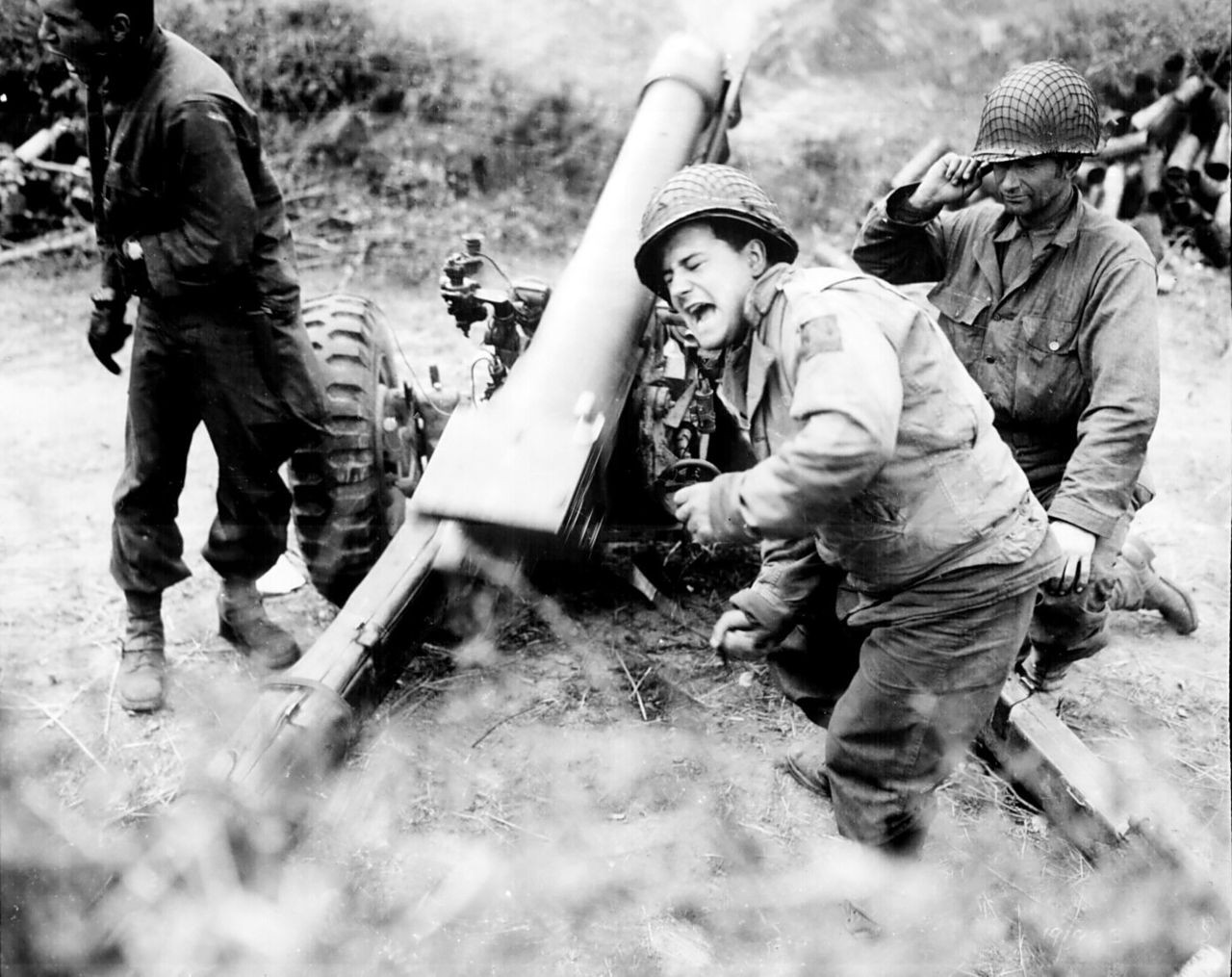
The wire unspooled behind him like a thin lifeline—fragile, absurd, the only connection between a single man in the open and twelve American 105mm howitzers waiting to speak. (army.mil)
At 100 yards, the German guns opened up again.
Shells landed left, then right—bracketing him, feeling for the exact range. Someone was watching. Someone had spotted the lone figure crossing the white field and decided that he needed to die before he reached wherever he was trying to go.
A shell hit a tree ahead, and the trunk burst into splinters. Frozen wood fragments rained down. Conner kept running.
Another shell landed behind him. The concussion slapped his back and shoved air out of his lungs. He stumbled, recovered, kept moving. The wire kept unspooling.
At around 250 yards, a shell shattered another tree directly in his path. The trunk split and half crashed across the snow. Conner vaulted over it without stopping, boots skidding on frozen crust.
Shrapnel hissed into the snow like hot insects.
Then, finally, he hit the American forward line—foxholes carved into frozen earth. Men stared up at him, shocked: an intelligence lieutenant sprinting toward the enemy with a telephone wire trailing behind like a ribbon of insanity.
He didn’t stop to explain.
He ran past them.
Thirty yards ahead of the line, he found a shallow ditch—barely deep enough to lower his silhouette and give him an angle through the trees.
It wasn’t protection. Not really.
But it was a view.
He dropped in hard, breath tearing in his throat, fingers already numbing from cold. The wire held. He cranked the handset. The line buzzed, then a voice came through—an artillery fire direction center miles behind the front.
In that moment, Conner became the battalion’s eyes.
Everything depended on what he could see, and whether he could stay alive long enough to keep speaking.
He raised his head above the ditch’s rim.
The German infantry were moving through the trees in disciplined formations, advancing in rushes—one element moving, another covering. These were not panicked boys. These were experienced soldiers executing an attack like men who had done it before.
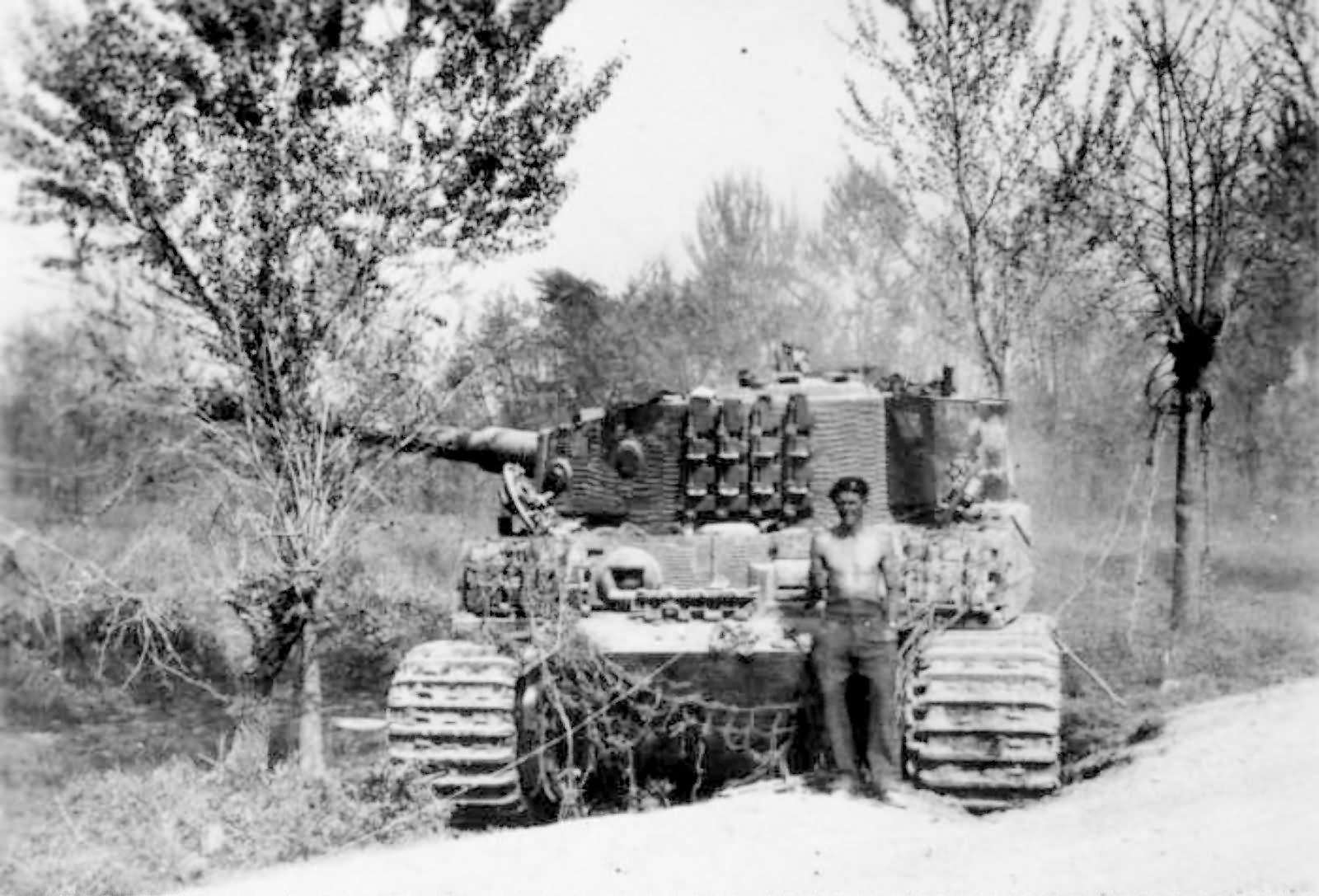
And behind them, the Tigers pushed forward—massive shapes, forcing through smaller trees, engines sounding like a low growl that you could feel in your ribs.
Conner lifted the handset and called the first fire mission.
Coordinates. Enemy infantry. Adjusting.
He watched the seconds, knowing that if he was spotted before the shells landed, he’d be shot, and if the shells landed too close, he’d be shredded anyway.
The first salvo hit long—roughly behind the enemy formation.
Too far.
Conner didn’t hesitate.
He corrected. Dropped the fire. Called again.
The second salvo landed in the middle of the advancing infantry, and the forest turned inside out.
Trees disintegrated. Shrapnel screamed through branches and bodies. High explosives detonated among tightly packed men and made the air itself deadly.
The advance stopped.
Conner called repeat fire. Same coordinates. Then again. Then again.
Now the American guns were firing for effect at a punishing rate, turning a section of forest into a continuous storm. The German infantry scattered, cohesion breaking as survival instincts fought discipline.
And for a moment, it looked as if artillery alone might shatter the assault.
But then the Tigers emerged.
All six.
They broke out of the treeline and advanced into open ground in a wedge formation, their commanders scanning, their guns beginning to fire.
An 88mm crack split the air.
A foxhole to Conner’s right vanished under an explosion of dirt and snow.
Another shot. Another foxhole erased.
The Tigers were closing to within a few hundred yards. In minutes, they would reach the line. And while artillery could shred infantry, it wasn’t designed to kill heavy tanks outright. A 105mm shell could break tracks, damage optics, jar a turret ring—but penetrating Tiger armor was a different problem.
Conner shifted fire anyway. If he couldn’t destroy them, he could cripple them.
Shells fell around the tanks. The Tigers kept coming.
He dropped the fire closer.
The next salvo landed among them.
A shell smashed a track on a lead Tiger. The tank lurched, slewed, and stopped—immobilized, but still lethal, its turret still able to traverse.
Another shell struck near an engine deck. Smoke poured from the rear.
But four Tigers were still advancing, and now something else happened—something that made Conner’s skin tighten even before he fully understood it:
The Tigers began angling toward him.
They had spotted the telephone wire. Or they’d followed the pattern of the artillery corrections. Or their commanders simply guessed that the observer was forward and close.
Whatever the reason, they were coming to kill the man who was calling down the thunder.
Conner checked his ditch—barely eighteen inches deep.
Eighteen inches.
Against an 88mm gun, that was nothing.
The German infantry were closer now too, using the tanks as moving fortresses, sheltering behind armor as they tried to regain momentum. Conner kept walking fire—dropping shells on infantry when they massed, dropping shells in front of tanks to slow them, shifting left and right like he was painting the battlefield with explosions.
A Tiger took a hit that didn’t penetrate but damaged the turret ring. Another lost a track. A crew abandoned one vehicle and ran, only to be met by American machine-gun fire.
Still, three Tigers remained operational. German infantry crawled through snow and shell craters, getting close enough that Conner could see faces—young men, hard eyes, breath steaming.
The wire was everything. If the Germans cut it, the barrage would stop. If the barrage stopped, the Tigers would reach the line.
Conner had been in that ditch for a long time now. Cold had crept into his joints. Hands numb. His mouth tasted like dirt and metal. Every close blast showered him with frozen earth. Somewhere, counter-battery fire began landing near him—German shells trying to bracket his position. The ditch became a focal point for two artillery storms at once.
And still he stayed.
German infantry pushed forward again, close enough that Conner could hear commands. Close enough to hear the metallic click of bolt actions. He dropped artillery closer—dangerously close—building a wall of explosions between himself and the attackers.
Then the Tigers pressed again.
And Conner understood, with terrifying clarity, that the enemy had almost reached the point where no adjustment would matter. Once the tanks were in the foxholes, the line would collapse in panic and slaughter.
He lifted the handset, voice tight, and did the unthinkable.
He called artillery on his own position.
The fire direction center repeated the coordinates back, stunned. They asked him to confirm. This wasn’t standard procedure. It meant the observer might die under his own shells.
Conner confirmed.
Then confirmed again.
Forty seconds later, shells landed so close the concussion felt like being hit by a truck. The pressure compressed his lungs. His vision blurred. Shrapnel screamed overhead. The sound wasn’t just loud—it was total, as if reality itself was cracking.
He stayed in the ditch, handset pressed to his ear, correcting fire even as explosions slammed the ground around him.
He dropped it closer. Repeat fire.
Closer still.
Close enough that he felt heat on his face. Close enough that fragments shredded air just feet above his head.
Close enough that if he stood, he’d be cut apart instantly.
The Tigers stopped advancing. Their commanders buttoned up, hatches slammed shut. Even a Tiger crew didn’t want to be exposed when shells detonated at point-blank range.
German infantry tried to rally behind the tanks. Conner walked the barrage back and forth, punishing any cluster that tried to move. He shifted fire from tank to tank, targeting tracks and optics, trying to blind and cripple.
One Tiger took a direct hit that didn’t penetrate but jammed mechanics. Another was immobilized. Another crew abandoned their vehicle.
The battlefield became a place where German courage met an unrelenting, perfectly directed storm.
Hours passed like that—Conner in the ditch, frozen and battered, calling fire, correcting, shifting, repeating. Men in American foxholes watched in disbelief: one lieutenant—an intelligence officer—lying ahead of the line with nothing but a telephone and a shallow ditch, holding back an assault that should have crushed them.
Eventually, the Tigers were no longer moving.
The last operational tank got close—close enough to murder positions with its 88mm and machine guns—until Conner’s “danger close” corrections finally forced shells to land around it so tightly that it became blind and trapped. A crew bailed out. American rifles cut down some as they ran.
The armor threat ended.
Without the Tigers, the German infantry—still dangerous, still professional—began to withdraw under the relentless barrage and the hard reality of impossible ground. They dragged wounded when they could. They left dead where they fell.
The counterattack stalled and broke.
By the time Conner finally stood, legs stiff and refusing to bend properly after hours in frozen earth, the field between his ditch and the German line looked like the surface of the moon—overlapping craters, shredded trees, smoke drifting low. The battle’s sound had faded to distant cries and wind.
What Conner had done that morning—running forward to observe under fire, directing artillery from an exposed position, and calling fire on his own location when the enemy closed—would become the defining act of his war. It was later credited with stopping the German counterattack near Houssen and saving his unit from being overrun. (army.mil)
He was awarded the Distinguished Service Cross for the action, presented by Lt. Gen. Alexander Patch, commander of Seventh Army. Decades later—after a long push led largely by his widow, Pauline—his DSC was upgraded, and he was posthumously awarded the Medal of Honor, presented at the White House on June 26, 2018. (U.S. Department of War)
But if you strip away the medals and speeches, what remains is the raw shape of that morning:
A man small enough to be overlooked.
A ditch barely deep enough to hide him.
A wire thin enough to snap.
And a decision so violent in its logic that it sounds like madness until you understand the alternative.
Because sometimes “calling artillery on yourself” isn’t a death wish.
Sometimes it’s the only way to put the wall of fire exactly where it has to be—between your people and the moment everything breaks.
Note: Some content was generated using AI tools (ChatGPT) and edited by the author for creativity and suitability for historical illustration purposes.