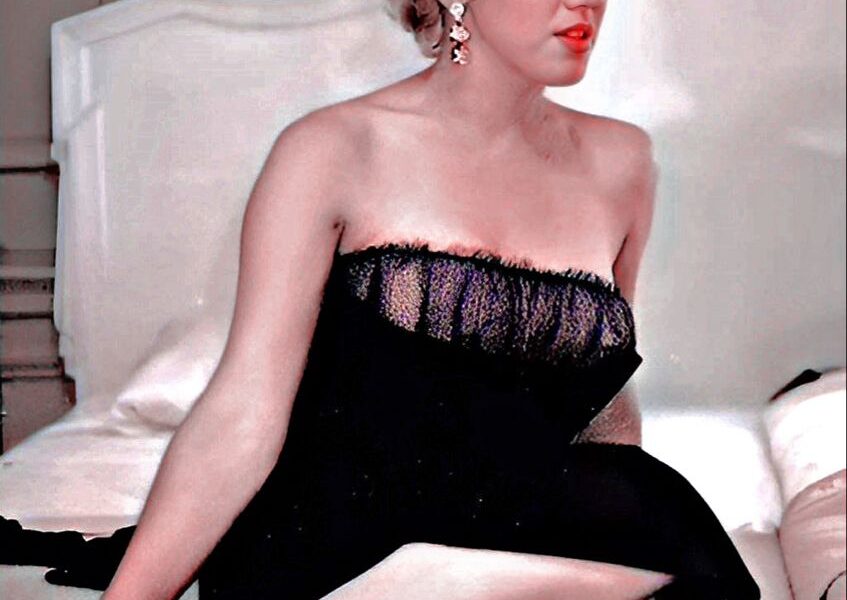

There are moments in cinema history that exist beyond film reels—moments captured not on screen, but in stillness. Among the most intimate and haunting images of a film actress ever recorded are the photographs taken of Marilyn Monroe in July 1957 on the quiet beach of Amagansett, New York. Shot by renowned New York photographer Sam Shaw, these images reveal Marilyn Monroe not as a glamorous Hollywood fantasy, but as a woman on the edge of hope, vulnerability, and transformation.
At the height of her fame, Monroe was the most recognizable movie star in the world. Yet in these photographs, she is stripped of spectacle. No studio lights. No scripted dialogue. Only wind, sand, sea—and a two-month pregnancy that the world would never get to see fulfilled.
A Hollywood Actress at the Peak of Her Career
By 1957, Marilyn Monroe was no longer simply a star—she was an institution of American cinema. Her performances in iconic films such as Gentlemen Prefer Blondes, The Seven Year Itch, and Bus Stop had cemented her status as one of the most influential film actresses of the 20th century.
Audiences adored her screen presence: playful yet sensual, comedic yet deeply human. Directors understood that behind her magnetic beauty lay a serious commitment to acting. Marilyn was actively fighting to be taken seriously as a dramatic performer, studying at the Actors Studio and seeking roles that challenged the shallow stereotypes imposed on her by Hollywood.
It was during this pivotal moment—professionally triumphant yet personally fragile—that Sam Shaw captured her on the beach.
The Amagansett Photo Session: Silence Between the Frames
In July 1957, Sam Shaw photographed Marilyn Monroe on the shores of Amagansett, Long Island. The images are deceptively simple. Marilyn wears a modest bathing suit or loose clothing, her posture relaxed, her expression serene but introspective.
What makes these photographs extraordinary is not merely their composition, but their context. Marilyn Monroe was two months pregnant.
The pregnancy was known only to a few. Shaw, a trusted friend who had previously worked with her on film sets, was granted rare access. The result is a collection of photographs that stand among the most intimate in the history of vintage Hollywood photography.
Unlike the highly stylized promotional images tied to her films, these photos show Marilyn as she truly was—unguarded, natural, and quietly radiant.

Marilyn Monroe
Beauty Beyond the Camera Lens
Marilyn Monroe’s beauty has been endlessly discussed in film history. But the Amagansett photographs redefine that beauty. There is no overt seduction, no performative smile designed for audiences. Instead, there is softness. A calm presence. A woman momentarily free from the relentless expectations of the film industry.
Her pregnancy subtly reshapes her body, lending a new dimension to her image as a movie actress. It is a beauty rooted in humanity rather than fantasy—a reminder that even the most mythologized figures of cinema lived complex inner lives.
These images challenge the traditional Hollywood narrative. They invite viewers to see Marilyn not as a symbol, but as a person.

Marilyn Monroe
A Tragic Turn: Loss Behind the Glamour
Just one month after the Amagansett photo session, tragedy struck. In August 1957, Marilyn Monroe suffered a miscarriage.
The loss was devastating.
For a woman who longed for stability, love, and family—things Hollywood never truly provided—the miscarriage marked another painful chapter in a life already shaped by emotional hardship. Though she continued to work and appear radiant in films, those close to her noted that the grief left a deep mark.
This event was never part of her public image. Studios promoted her films. Magazines celebrated her beauty. But the emotional cost remained hidden behind the carefully constructed façade of the Hollywood film star

Marilyn Monroe
Photography as Cinematic Memory
Sam Shaw’s photographs are often described as some of the most valuable images in celebrity history—and for good reason. They function almost like a lost film: a silent narrative of what might have been.
In the context of cinema, these photographs expand our understanding of Marilyn Monroe’s legacy. They add emotional depth to her performances, casting new light on her later films, where vulnerability and melancholy often surfaced beneath comedic timing.
For film historians, these images are essential artifacts—bridging the gap between Marilyn Monroe the actress and Marilyn Monroe the woman.

Marilyn Monroe
Marilyn Monroe in 1957: Between Stardom and Solitude
The year 1957 was a crossroads. Marilyn had proven her box-office power. She was establishing creative independence. Yet she was also navigating immense pressure, emotional instability, and personal loss.
The Amagansett photographs freeze this fragile balance in time.
Looking at them today, it is impossible not to feel the weight of what followed—her continued struggles, her iconic performances in Some Like It Hot and The Misfits, and her untimely death in 1962.
Yet these images resist tragedy alone. They hold something gentler: possibility.

Marilyn Monroe
Enduring Impact on Film and Culture
Decades later, Marilyn Monroe remains one of the most influential figures in film history. Her image continues to inspire filmmakers, photographers, fashion designers, and actors across generations.
The Amagansett pregnancy photographs occupy a special place in that legacy. They are frequently cited in exhibitions, documentaries, and academic discussions about celebrity, femininity, and the human cost of fame.
They remind us that behind every legendary film actress is a life shaped by moments unseen by audiences.

Marilyn Monroe
Why These Images Still Matter
In an era saturated with celebrity exposure, these photographs stand out precisely because of their restraint. They do not explain. They do not dramatize. They simply exist.
And in that quiet existence, they tell a powerful story—of love, loss, hope, and fragility.
Marilyn Monroe’s films made her immortal. But images like those taken on the beach of Amagansett make her unforgettable.
They invite us to look beyond the screen and remember that even Hollywood’s brightest stars cast shadows—and that within those shadows, there is profound beauty.

Marilyn Monroe

Marilyn Monroe

Marilyn Monroe

Marilyn Monroe