100 Controversial Historical Photographs: What Was Really Hidden, and What Did Time Simply Forget?
A collection of one hundred old photographs begins circulating online under a provocative claim: these are images someone tried to hide. Among them are scenes associated with war, political unrest, famous figures, and unusual moments in the history of science. Some appear familiar. Others seem to have emerged from forgotten corners of the past. Yet the collection arrives without a clearly identified archive, complete captions, or a documented history of how the photographs were obtained. Millions of views are claimed, and debate follows. But behind the promise of forbidden history lies a more important question: were these images deliberately suppressed, or have we mistaken the silence of an incomplete historical record for evidence of a secret?
The answer is not as simple as the collection’s title suggests.
History has always been shaped by what survives.
A photograph preserved in a national archive may become part of the world’s collective memory. Another image, taken on the same day, may disappear into a private album, a newspaper office, or a box that remains unopened for decades. One photograph may be reproduced in books and documentaries until it becomes instantly recognizable. Another may never reach a public audience, even though it records something equally significant to the people who experienced it.
Between those two outcomes lies a complicated history of human decisions, institutional priorities, technological limitations, and sometimes deliberate censorship.
That is the territory into which the online collection, presented as “100 Controversial Old Photos They Tried To Hide,” attempts to lead its audience.
According to the account accompanying the collection, the images span decades and continents, reaching from the late nineteenth century into the middle of the twentieth. They reportedly include wartime scenes, moments of political unrest, embarrassing incidents involving prominent individuals, and unusual episodes associated with scientific development.
The collection is described as having appeared without a formal announcement or official press release, spreading instead through online sharing and discussion.
Its presentation claims that some photographs were deliberately concealed while others were quietly removed from public view.
But a crucial problem appears almost immediately.

The account does not identify a single authoritative institution responsible for assembling the images. It provides no complete catalogue, no established chain of custody, and no documentary proof that the photographs were systematically suppressed.
Even the reported scale of the collection’s online popularity remains unverified without identifiable platform statistics.
This does not mean the photographs are necessarily false.
It means that the story being told about them cannot yet be accepted as established history.
And that distinction becomes increasingly important as we examine the period from which many of the images supposedly originate.
During the late nineteenth and early twentieth centuries, photography was becoming an increasingly powerful method of recording human experience.
The camera could preserve details that written descriptions might overlook: the appearance of a street, the condition of a building, the clothing worn by ordinary people, or the visible consequences of a major event.
Yet photographs were never independent of the societies that produced them.
A photographer decided where to stand.
Someone determined when to press the shutter.
An editor could select one image and reject another.
A publisher could alter the meaning of a photograph through its caption.
And governments, military authorities, institutions, and private individuals could influence whether particular images reached the public.
The photograph itself might be genuine while the story surrounding it remained incomplete, selective, or misleading.
That problem became especially significant during the two world wars.
War transformed photography into a powerful instrument of documentation, communication, and public persuasion.
Military photographers, journalists, civilians, and government agencies produced images for different purposes. Some recorded operations or damage. Others documented civilian conditions, military personnel, official ceremonies, or the effects of conflict on everyday life.
But the ability to photograph an event did not guarantee that the resulting image would be published.
Military security could restrict the release of photographs revealing operational information.

Governments could seek to influence how wartime events were represented.
Editors faced decisions about whether disturbing images should appear before civilian audiences.
And photographers themselves worked within the practical and political constraints of their time.
These were real historical conditions.
They help explain why certain wartime photographs were restricted, delayed, or circulated only within limited audiences.
However, they do not prove that every unpublished wartime photograph was deliberately hidden.
That distinction matters because the collection’s central claim rests on the idea that someone actively attempted to prevent the public from seeing its contents.
To establish such a claim, historians would need more than an unusual image.
They would need evidence of the decision to suppress it.
A surviving censorship order.
Correspondence between officials and publishers.
A documented restriction on distribution.
An archival record explaining why a photograph was withheld.
Without such evidence, the phrase “they tried to hide” remains an allegation rather than a historical conclusion.
And the absence of that evidence raises another question.
Why does the allegation remain so compelling?
Part of the answer lies in the emotional power of historical photographs.

A written account can explain that a city experienced wartime destruction. A photograph may show the damaged streets, broken buildings, and altered surroundings left behind.
A military report can record that soldiers endured difficult conditions. A photograph may preserve visible signs of fatigue, the condition of their uniforms, or the landscape in which they served.
A historical study can describe the social inequalities of an earlier period. A photograph may reveal details of living conditions that make those inequalities easier to visualize.
Images can bring the consequences of historical events into immediate view.
But that immediacy creates a danger.
Because a photograph feels direct, viewers may assume that its meaning is equally direct.
It is not.
A camera records what appears within its frame. It does not automatically explain why the scene occurred, what happened immediately before it, or how those present understood the moment.
Even a photograph that seems unmistakably connected to war may require extensive investigation before its precise circumstances can be established.
A damaged building might have suffered destruction during combat, bombardment, demolition, or another event.
A crowd gathered in a street might be celebrating, protesting, evacuating, or observing something outside the frame.
A soldier’s expression may suggest exhaustion, but it cannot reveal his private thoughts.
The image offers evidence.
Its interpretation requires context.
And that is where the story of the hundred photographs becomes more complicated than its dramatic title suggests.
The original account describes images that appear to show major historical events from unexpected or unflattering perspectives.
Some reportedly challenge familiar ideas about political authority, social conditions, or technological progress.
Others are said to expose moments that official accounts overlooked.
These descriptions invite curiosity, but they do not provide enough information to identify the individual photographs.
No specific wartime event is named.
No particular political demonstration is established.
No scientific discovery is linked to a verifiable image.
The account therefore offers a broad description of a collection rather than an authenticated record of one hundred distinct historical discoveries.
That limitation cannot be solved by inventing the missing details.
Instead, the larger historical question becomes more revealing.
What happens when an old photograph loses its original context?
Imagine a photograph preserved for decades without a date, caption, or photographer’s name.
The image may remain physically intact. Faces, buildings, vehicles, and clothing may still be visible.
But the information needed to understand the scene has disappeared.
A future viewer may be able to estimate the period from the objects shown.
A researcher may identify a location by comparing architectural features.

An archivist may discover a related image elsewhere.
Yet even after careful examination, some questions may remain unanswered.
Who commissioned the photograph?
Was it intended for publication?
Was it ever published?
If not, why not?
The missing answers matter because the same image can support very different narratives depending on its caption.
A photograph described as “never seen by the public” might simply have remained in a family collection.
The same photograph described as “banned by the government” implies a specific act of authority.
And if that second claim is unsupported, the photograph has been given a history that the surviving evidence does not establish.
This is not merely a technical concern.
It changes how people understand the past.
A genuinely suppressed image may reveal something important about censorship, political control, or institutional responsibility.
An unpublished image may instead tell us about editorial selection, private ownership, or the limitations of historical preservation.
Both can be historically valuable.
But they are not interchangeable.
The original account acknowledges this distinction through a criticism of the collection’s title.
The phrase “they tried to hide” suggests an organized effort by an unnamed group to prevent information from becoming public.
Yet it does not identify who “they” were.
Nor does it explain whether the supposed concealment occurred through government action, institutional policy, private ownership, or simple neglect.
This ambiguity is central to the collection’s appeal.
It encourages viewers to imagine a hidden struggle over historical truth.
But the existence of a mystery does not establish the existence of a conspiracy.
Sometimes, the explanation is far less dramatic.
A photograph was misplaced.
A collection was never catalogued.
A newspaper chose another image.
A photographic negative deteriorated.
A private owner never donated the material to an archive.
A caption was separated from its photograph.
A box remained unopened.
These are ordinary processes through which historical information can become difficult to recover.
Their consequences can be profound.
A photograph that loses its provenance may also lose much of its value as evidence of a specific event.
And when that happens, even the most careful researcher may be unable to reconstruct the original circumstances.
The history of the Second World War offers a particularly important context for understanding this problem.
The war generated enormous quantities of documentation, including photographs, films, correspondence, administrative records, military reports, and personal testimony.
These materials have helped historians reconstruct campaigns, occupations, civilian experiences, persecution, resistance, displacement, and the consequences of military decisions.
Yet the surviving record remains uneven.
Different institutions preserved different kinds of material.
Some photographs were created for official purposes.

Others were taken privately.
Some reached newspapers or public exhibitions.
Others remained within military, governmental, or personal collections.
The fact that an image remained outside public circulation did not necessarily mean it was deliberately suppressed.
But there were also genuine restrictions on photography and publication.
The challenge is to distinguish one situation from another.
During wartime, information could carry military consequences.
Photographs showing sensitive locations, equipment, or operational details could potentially reveal information to an enemy.
Authorities therefore had reasons to regulate the release of certain material.
At the same time, wartime governments understood that photographs could influence public morale and perceptions of the conflict.
The relationship between photography, censorship, and propaganda was consequently complex.
Images could document events.
They could support official messages.
They could challenge public assumptions.
And they could be withheld for reasons that varied from legitimate security concerns to political interests.
Understanding those differences requires attention to specific cases.
It is not enough to assume that every photograph absent from wartime newspapers was banned.
Nor is it reasonable to assume that every restriction was harmless.
The historical circumstances must determine the conclusion.

This principle becomes particularly important when photographs concern human suffering.
Images of civilians affected by war, military personnel under difficult conditions, or communities experiencing political repression can be powerful historical documents.
But their emotional impact can also make them vulnerable to misuse.
A photograph associated with one conflict may be mistakenly attributed to another.
A scene may be described as evidence of a particular policy without documentation connecting the two.
An image may circulate with a dramatic caption that exaggerates what can actually be established.
Such mistakes do more than mislead viewers.
They risk distorting the experiences of real people.
When discussing the consequences of the world wars, accuracy is a form of respect.
The individuals who lived through those events were not characters created for a dramatic narrative.
Their experiences were real.
Their suffering, decisions, and circumstances deserve careful treatment.
A historically responsible account should therefore avoid using an unidentified photograph as proof of a specific atrocity, military action, or act of censorship.
The evidence must come first.
Only then can the broader meaning be explored.
The collection’s description also includes photographs associated with political unrest.
This introduces another dimension of historical photography: the relationship between public demonstrations and the images through which later generations remember them.
Photographs of political gatherings can preserve visible evidence of participation, public space, police presence, banners, clothing, and the physical arrangement of a crowd.
Such details may help historians reconstruct the circumstances surrounding a demonstration.
But a single photograph cannot necessarily explain the motivations of everyone present.

Nor can it establish the full sequence of events.
An image taken at the beginning of a gathering may look very different from one taken hours later.
A photograph showing a small section of a crowd may not represent the entire event.
A dramatic moment may attract more attention than the long periods in which nothing unusual occurred.
And an image selected for publication may influence how the public remembers the demonstration.
These are not reasons to distrust photography altogether.
They are reasons to treat photographs as historical sources that must be interpreted alongside other evidence.
A newspaper report, official record, participant testimony, or series of photographs may help establish what a single image cannot.
This process is especially important when a collection claims to challenge an accepted historical account.
A genuine discovery can alter historians’ understanding of an event.
But a photograph does not overturn established scholarship merely because it appears surprising.
The discovery must be authenticated.
Its date and location must be established.
Its relationship to the event must be demonstrated.
And its significance must be assessed in the context of existing evidence.
Without those steps, an image may be visually compelling without supporting the conclusion attached to it.
The original account also mentions photographs involving celebrities and embarrassing incidents.
At first, these may seem far removed from the serious historical questions raised by war and political unrest.
Yet their inclusion reveals something important about the way controversial images are marketed.

The collection brings together subjects that may have very different historical significance.
A photograph connected to a military event may have documentary value for understanding conflict.
An image of a public figure in an awkward moment may be interesting primarily because it contrasts with a carefully managed public reputation.
A scientific photograph may require specialized knowledge to interpret.
When such images are assembled under a single title, the collection can create an impression that all were suppressed for comparable reasons.
But that conclusion does not follow.
Different photographs have different histories.
Their publication, preservation, and interpretation may have been shaped by entirely separate circumstances.
Grouping them together can encourage comparison.
It can also obscure important distinctions.
A collection is not automatically a coherent historical argument.
The person assembling it creates a narrative through selection and arrangement.
Which photograph appears first?
Which images are placed beside one another?
What captions are used?
What claims are repeated?
And what information is omitted?
These decisions shape the viewer’s experience.
A familiar image can seem mysterious when placed beside photographs described as forbidden.
An ordinary archival discovery can appear politically significant when introduced through language suggesting concealment.
A genuine historical controversy can lose its complexity when reduced to a dramatic headline.
The original account suggests that some photographs in the collection may already be well known to historians and may have appeared in books or documentaries for decades.
If that criticism is accurate, it raises an obvious problem with the claim that the images were hidden.

A photograph that has circulated publicly for many years cannot accurately be described as completely suppressed throughout that period.
It may once have faced restrictions.
It may have been difficult to access.
It may have been unfamiliar to modern audiences.
But those possibilities require different explanations.
A photograph can be unfamiliar without being secret.
It can be controversial without being banned.
And it can be historically important without having been deliberately concealed.
The distinction may seem less exciting than the promise of a forbidden archive.
But it offers a more meaningful understanding of how historical memory develops.
An image may be well documented in academic publications while remaining unknown to the wider public.
That gap does not necessarily indicate suppression.
It may reflect the distance between specialized historical research and popular media.
The internet can reduce that distance.
Digitized archives, museum collections, historical databases, and online communities can make materials accessible to people who might never visit a physical archive.
This has changed how historical photographs are discovered, discussed, and shared.
A photograph once examined mainly by researchers can now reach a large audience within hours.
People from different countries can compare details, identify locations, and exchange information.
An obscure image may attract attention from someone who recognizes a building, a uniform, or a family connection.
That possibility is one of the internet’s genuine strengths.

But the same speed that helps information circulate can also spread errors.
An incorrect caption can be copied thousands of times.
A photograph may be cropped so that important context disappears.
An image from one decade may be presented as belonging to another.
A speculative interpretation may be repeated until it begins to resemble an established fact.
The original account describes online users attempting to verify the dates, locations, and photographers associated with individual images.
Such collaborative research can be useful.
But the quality of its conclusions depends on the evidence participants find.
Recognition alone is not always enough.
A visual resemblance may suggest a location without proving it.
A uniform may indicate a broad historical period without identifying a particular military unit.
A photograph’s apparent age may not establish when the original scene was recorded.
Reliable verification may require comparison with archival catalogues, contemporary publications, original negatives, or documented collections.
And sometimes, the available evidence will remain insufficient.
The responsible response is then to acknowledge uncertainty rather than invent a conclusion.
This may seem unsatisfying to viewers expecting a dramatic revelation.
But historical research often advances through small, careful discoveries rather than sudden solutions.
A date is corrected.
A photographer is identified.
A location is confirmed.
A caption is shown to be inaccurate.
A photograph previously attributed to one event is connected to another.

Each correction changes how the image should be understood.
And collectively, such work strengthens the historical record.
The preservation of photographic materials is therefore not simply a matter of storing old pictures.
It involves protecting both the image and the information that gives it meaning.
Photographic prints and negatives can deteriorate over time.
Environmental conditions, physical handling, and the materials used in their production can affect their survival.
An image may fade.
A negative may become damaged.
A paper print may tear or stain.
But the loss of accompanying documentation can be equally serious.
A photograph with a reliable date, location, and description can help researchers answer specific historical questions.
The same photograph without those details may become difficult to interpret.
Digitization can help preserve visual information and broaden access.
It does not automatically restore lost context.
Nor does it guarantee that an image’s accompanying description is correct.
The process of creating a digital copy is only one part of historical preservation.
The provenance of the original material remains essential.
That becomes particularly significant when an online collection has no clearly documented source.
Viewers may encounter the images as isolated objects, separated from the archives or collections in which they were originally preserved.
They may see a caption written by someone who did not take the photograph and may not have examined the original.
They may have no way to determine whether the image was cropped, altered, or reproduced from an earlier publication.
Under those circumstances, even a genuine photograph can acquire a misleading history.
The danger is not always deliberate deception.
Sometimes, errors accumulate through repetition.

One person guesses a date.
Another repeats it as a fact.
A third adds a dramatic explanation.
Eventually, the image circulates with a story that may have little connection to its original circumstances.
And because the photograph itself looks old, the caption can appear credible.
This is one of the paradoxes of historical imagery in the digital age.
The more widely a photograph circulates, the more familiar it becomes.
But familiarity does not guarantee accuracy.
A widely shared image may still be poorly understood.
The original account also connects the collection’s popularity to growing public interest in transparency and institutional accountability.
That connection is understandable.
People are naturally interested in information that appears to have been withheld from them.
The possibility of discovering something overlooked by official accounts can be compelling.
Historical research has, in some cases, revealed evidence that institutions failed to disclose or sought to control.
But that reality should not become a reason to accept every claim of concealment.
Skepticism must work in both directions.
Official explanations should be examined against evidence.
Claims that official explanations are false should face the same scrutiny.
Otherwise, the search for hidden truth can become another form of uncritical belief.
A dramatic alternative narrative is not necessarily more accurate than a conventional one.
And a photograph does not become more authentic because its caption challenges authority.
The historical record is strengthened through verification, comparison, and careful interpretation.
This is especially important when discussing the world wars, whose histories have been extensively documented but also repeatedly distorted through propaganda, misinformation, and selective presentation.
The human consequences of those conflicts deserve more than simplified narratives.
Photographs can help preserve memory.
They can illuminate overlooked experiences.

They can contribute to a more complete understanding of events.
But they should not be used to create unsupported accusations or fictional episodes.
A responsible historical account must distinguish between established facts and later interpretations.
For example, it is historically established that wartime authorities imposed restrictions on certain kinds of information and imagery.
It is also established that photography played important roles in documentation, propaganda, and public communication during the twentieth century.
These facts provide a legitimate framework for examining censorship.
But they do not establish that the specific hundred photographs in the online collection were all suppressed.
That claim would require evidence concerning the individual images.
Similarly, it is reasonable to observe that photographs can reveal aspects of historical life absent from familiar narratives.
But it would be misleading to claim that an unidentified image disproves an accepted historical account without showing precisely what it depicts and how its authenticity has been established.
The difference between these statements is fundamental.
One describes a documented historical context.
The other makes a specific claim that remains unverified.
Confusing the two can transform historical interpretation into speculation.
And once speculation is presented as fact, the people and events represented in the photographs risk being misunderstood.
The most meaningful turning point in the story of this collection is therefore not a newly identified photograph or a dramatic revelation about a secret archive.
No such discovery is documented in the supplied account.
Instead, the turning point lies in the public response to the collection’s central claim.
The images were introduced as photographs someone tried to hide.
But the debate surrounding them raised a different question.
What evidence would actually prove that claim?
That change in perspective matters.
It shifts attention from the emotional impact of the photographs to the history of the photographs themselves.
It asks viewers to consider not only what an image appears to show, but how it came to survive, who preserved it, how it was described, and whether the accompanying story can be verified.
The same photograph may become more historically meaningful once those questions are answered.
An image believed to have been suppressed may turn out to have been widely published.
Another may be connected to a documented restriction.
A photograph initially thought to show a major event may instead depict an unrelated occasion.
And an obscure image may reveal valuable details about everyday life without having any history of censorship at all.
Each outcome is worth understanding.

None should be predetermined by a headline.
This is where the wider significance of the collection becomes clearer.
Its value may lie less in the unverified claim that one hundred photographs were deliberately hidden and more in the questions it encourages people to ask about the survival of historical evidence.
Why do certain images become famous?
Why do others remain obscure?
Who decides which photographs are preserved?
What happens when archives are incomplete?
And how can modern audiences distinguish authentic discoveries from misleading presentations?
These questions reach beyond one online gallery.
They concern the way societies remember their past.
Historical memory is not simply a collection of everything that happened.
It is shaped by the evidence that survives and the methods used to interpret it.
Some events are documented extensively.
Others leave only scattered traces.
Some individuals appear repeatedly in official photographs.
Others are represented by a single surviving image, if any.
The unevenness of the record can influence what later generations believe was important.
But historians do not address that problem by inventing missing evidence.
They investigate the surviving material, identify its limitations, and compare it with other sources.
The result is not always a complete story.
Sometimes, the most responsible conclusion is that a question cannot yet be answered.
That uncertainty can be difficult to accept.
People naturally prefer narratives with clear beginnings, decisive turning points, and satisfying conclusions.
A photograph described as forbidden promises exactly that kind of story.
There is an image.
Someone supposedly concealed it.
The image has now been discovered.

And the truth can finally be revealed.
But genuine historical discoveries are often more complicated.
A photograph may have been restricted for a limited period.
It may have circulated privately before entering a public collection.
It may have been published in an obscure source that later researchers overlooked.
Its original caption may be inaccurate.
Its supposed controversy may have emerged only long after it was taken.
These possibilities do not make the photograph less interesting.
They make its history more complex.
And complexity is not an obstacle to meaningful storytelling.
It is part of what makes history worth studying.
The people who lived through the late nineteenth and twentieth centuries did not experience their lives as a completed historical narrative.
They lived through uncertainty.
They made decisions without knowing their long-term consequences.
They witnessed events whose significance might become clear only years later.
They were photographed for reasons that varied from official documentation to personal remembrance.
Some images were carefully arranged.
Others were taken unexpectedly.
Some were distributed widely.
Others remained private.
And many were eventually separated from the people who could explain them.
When those photographs reach us today, they carry traces of lives that can no longer be fully reconstructed.
A face may survive after a name has disappeared.
A building may remain recognizable after its original purpose has changed.
A moment of public unrest may be preserved without a complete account of what happened before or afterward.
These are not necessarily hidden secrets.

They are reminders of the distance between the past as it was lived and the past as it can now be documented.
The photographs may invite emotional responses, but they also demand intellectual humility.
We can recognize the visible details.
We can investigate their context.
We can compare evidence.
But we cannot assume that every question has an answer.
And we should not fill every gap with a dramatic explanation.
The original account ends by suggesting that some historical fragments were deliberately hidden while others were simply forgotten.
That distinction is perhaps its most important insight.
Both possibilities exist within the history of photography.
Some images have been restricted or suppressed.
Others have disappeared from public attention through ordinary processes of loss, neglect, limited distribution, or changing interest.
Still others have remained accessible but unfamiliar to people outside specialist communities.
The challenge is to identify which explanation applies to each photograph.
That work cannot be completed through a title alone.
It requires sources.
It requires context.
And sometimes, it requires the willingness to admit that the evidence is incomplete.
For those interested in the history of the world wars, this lesson has particular significance.
The conflicts are remembered through vast collections of photographs, films, documents, and personal accounts.
These sources preserve evidence of military operations, civilian experiences, destruction, survival, and the consequences of decisions made during extraordinary circumstances.
They also remind us that no single photograph can contain the full meaning of such events.
A wartime image may reveal something important.
But its significance becomes clearer when connected to the people, places, and circumstances it actually documents.
The purpose of historical storytelling should be to bring those connections into view.
Not to manufacture secrets.
Not to exaggerate uncertainty into conspiracy.
And not to turn the suffering or experiences of earlier generations into entertainment detached from evidence.
There is already enough complexity in the genuine historical record.
There are already unanswered questions.
There are already forgotten individuals whose lives deserve closer attention.

And there are already authentic photographs whose meanings can change as new documentation becomes available.
The past does not need invented mysteries to remain compelling.
Its surviving fragments are remarkable precisely because they are real.
As the online collection continues to be discussed, its central promise may remain attractive: one hundred photographs that someone supposedly wanted to keep out of sight.
But the more enduring question is not whether the images appear shocking.
It is whether their stories can withstand careful examination.
A photograph’s historical importance should not depend on how dramatically it is introduced.
It should depend on what it can reliably tell us.
A genuinely suppressed image deserves to be understood in the context of the restriction imposed upon it.
A forgotten photograph deserves careful efforts to recover its provenance.
A familiar image deserves accurate attribution, even when it is presented to a new audience.
And an unidentified photograph deserves an honest acknowledgment of what remains unknown.
These are different responsibilities, but they serve the same purpose.
They protect the integrity of historical memory.
Looking at the collection from this perspective, the most valuable discovery may not be a secret that has suddenly emerged from the shadows.
It may be the realization that the survival of history is itself a complicated process.
Photographs do not preserve the past automatically.
People create them.
People select them.
People store them.
People lose them.
People recover them.

And later generations decide how to interpret them.
At every stage, information can be preserved, altered, separated, or forgotten.
The image that eventually reaches the public may therefore carry two histories.
The history of the moment it depicts.
And the history of its own survival.
Understanding both is essential.
A photograph of a wartime scene may tell us something about the conditions in which people lived.
Its archival record may tell us something about how that scene was documented and remembered.
A photograph associated with political unrest may preserve evidence of public participation.
Its publication history may reveal how editors or authorities presented the event.
A photograph of an unusual scientific demonstration may show equipment or procedures from another era.
Its accompanying documentation may establish whether the event was routine, controversial, or misunderstood.
Without that second layer of information, interpretation remains incomplete.
And this is why the hundred photographs, however they are eventually authenticated, raise questions that extend far beyond their immediate visual appeal.
They remind us that historical understanding is not created simply by seeing.
It is created by connecting what we see to what we can establish.
In the end, the collection’s greatest lesson may be a quieter one than its title promises.
Not every forgotten image was deliberately concealed.
Not every controversial photograph was banned.
Not every dramatic caption tells the truth.
But every authentic historical photograph has the potential to contribute something to our understanding of the people and circumstances it records.
Some contributions are substantial.
Others are modest.
A few may change established interpretations.
Many simply help restore detail to lives and experiences that might otherwise remain distant.
All deserve to be approached with care.
From my perspective, the real responsibility of looking at historical photographs is not to search for a conspiracy behind every missing image. It is to recognize how easily context can disappear, how power can sometimes influence what becomes visible, and how essential evidence is when reconstructing the past. The most meaningful act of remembrance is not always uncovering something shocking. Sometimes, it is refusing to replace an incomplete historical record with a story that cannot be proved.
When an old photograph is presented as something history tried to hide, what should matter more to us: the possibility of discovering a forgotten truth, or the responsibility to establish exactly what the image shows before accepting its story?
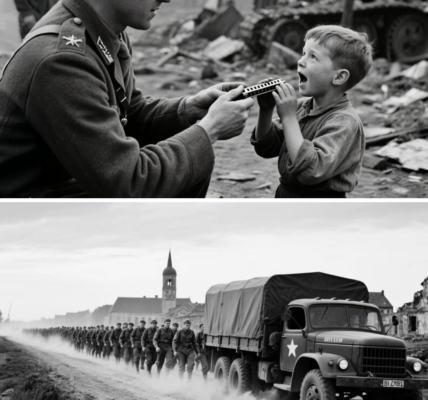
“Some content was generated using AI tools (including ChatGPT) and edited by the author for creativity, storytelling, and historical illustration purposes. Historical facts and key details should be verified against reliable historical sources. Any AI-generated or reconstructed visuals are intended for illustrative purposes and should not be interpreted as original historical photographs or archival evidence.”