150 Vintage Photos That Capture a World That No Longer Exists
The photographs of the American West rarely show the whole story. A military camp stretches across the plain at Pine Ridge. Miners disappear beneath mountains of snow. Chinese railroad workers live beside tracks pushing westward. Native families stand silently before the camera while towns, railroads and ranches rise around them. At first, these seem like separate moments. But look longer, and a darker question emerges: what kind of country was being built—and what was being lost while it was built?
On January 19, 1891, the Seventh Cavalry was photographed at Pine Ridge Agency in South Dakota. The Library of Congress identifies the image as a military camp containing tents, horses and wagons, photographed by W. R. Cross. The date places the photograph only weeks after the massacre at Wounded Knee, during a period of intense military presence and political tension on the Pine Ridge reservation.
The photograph itself is remarkably quiet.
Rows of white tents stretch across the landscape. Horses stand among wagons. Nothing in the image moves. Yet the silence is misleading. The camp represented the presence of the United States Army at a moment when relations between federal authorities and Lakota communities had reached one of the most painful points in the history of the American frontier.
The camera does not show what happened at Wounded Knee.
It shows what remained afterward.
That distinction matters.
Photographs can preserve evidence without explaining everything that evidence means. They can show a military camp, but they cannot automatically tell us what every person in that camp believed, feared or intended. The historical record must do that work.
And beyond Pine Ridge, another West was already taking shape.
In an open corral, cowboys wrestled with cattle as branding irons marked animals with the symbols of ownership. The scene was part of a ranching culture that depended upon identification, movement and control of enormous herds across territories where fences were still limited or absent.
The work was practical.
It was also physically demanding.
A calf had to be restrained. The branding iron had to be heated. The mark had to be applied quickly. There was little romance in the process itself.
Yet later generations would transform such scenes into one of the defining images of the American West.
The cowboy became a symbol.
The cattle became an industry.
The open range became a memory.
And somewhere between those three ideas was the ordinary labor that made the system possible.
Mining presented another version of the same reality.
At Warren in Idaho County, miners posed near the entrance of an excavation surrounded by rail carts, barrels and rough wooden supports. The photograph records a world in which extracting valuable material from the earth required enormous physical effort.
There were no modern machines waiting underground.
Timber had to be positioned.
Ore had to be moved.
Supplies had to reach workers.
The deeper the excavation became, the more complicated the work became.
The image therefore reveals something that romantic stories about gold and silver often conceal. Mining was not simply the discovery of wealth. It was a logistical struggle against rock, weather, distance and exhaustion.
Then came winter.
In Colorado’s high country, photographs from the late nineteenth century show settlements buried beneath enormous accumulations of snow. In some mining communities, roofs and chimneys were among the few visible signs that people were still living beneath the frozen landscape.
Imagine what such a photograph actually means.
The snow is beautiful.
The circumstances were not.
For miners and their families, winter could determine whether supplies arrived, whether transportation remained possible and whether work could continue. A mountain settlement might appear almost frozen in time, but underground and inside those wooden structures, people still had to eat, work, repair equipment and survive.
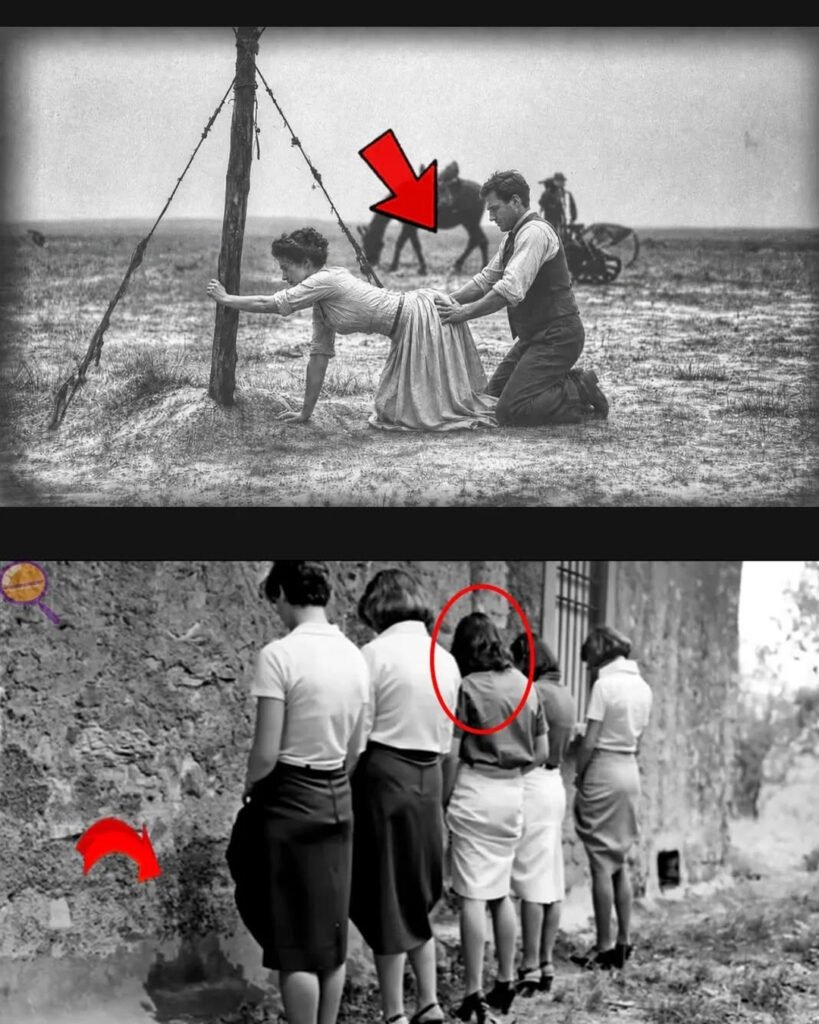
The pursuit of precious metals had brought them there.
The mountains decided how long they could stay.
Farther north, the search for gold became even more extreme.
Around the turn of the century, miners in Alaska worked with sluice boxes, pans and other relatively simple equipment to separate gold from gravel. The methods were physically demanding but understandable: water, gravity and human labor were used to separate heavier gold from surrounding material.
Every pan contained a possibility.
Most contained very little.
That uncertainty was part of the attraction.
Gold rushes were built not only on gold but on hope—the possibility that the next pan, the next claim or the next riverbank might change everything.
That promise drew thousands of people into landscapes that offered few guarantees.
In the Yukon, transportation could become a problem almost as serious as finding gold.
One photograph shows two men repairing a boat after a leak. The overturned craft appears almost vulnerable beside the river, while supplies wait nearby.
It is an unglamorous image.
But it tells the truth about frontier logistics.
A broken boat could mean lost time.
Lost time could mean lost supplies.
And lost supplies could mean real danger in an isolated settlement.
The gold rush was therefore not simply about prospectors standing over shining nuggets. It depended upon boats, animals, tools, food, clothing and people capable of moving all of them through difficult country.
Even gold itself required administration.
Near Nome, Alaska, two miners are shown weighing gold nuggets and dust in a rough cabin around 1900. The scale transformed something found in the ground into something measurable.
Before the scale, gold was a promise.
After the scale, it became a value.
That small object represented an entire economic system developing in remote settlements.
A few particles could mean money.
A larger nugget could mean opportunity.
And a miner who had spent months searching could finally discover whether his labor had produced anything worth carrying home.
But the West was never built by miners alone.
On ranches and farms, workers performed another form of labor that was equally essential.
At Stockdale Ranch in California, workers used a pulley system to move alfalfa hay. Draft animals supplied the power while mechanical devices increased the amount that human workers could handle.
This was a transitional age.
The old West depended upon muscle and animals.
The modern West would increasingly depend upon machines.
The change did not happen overnight.
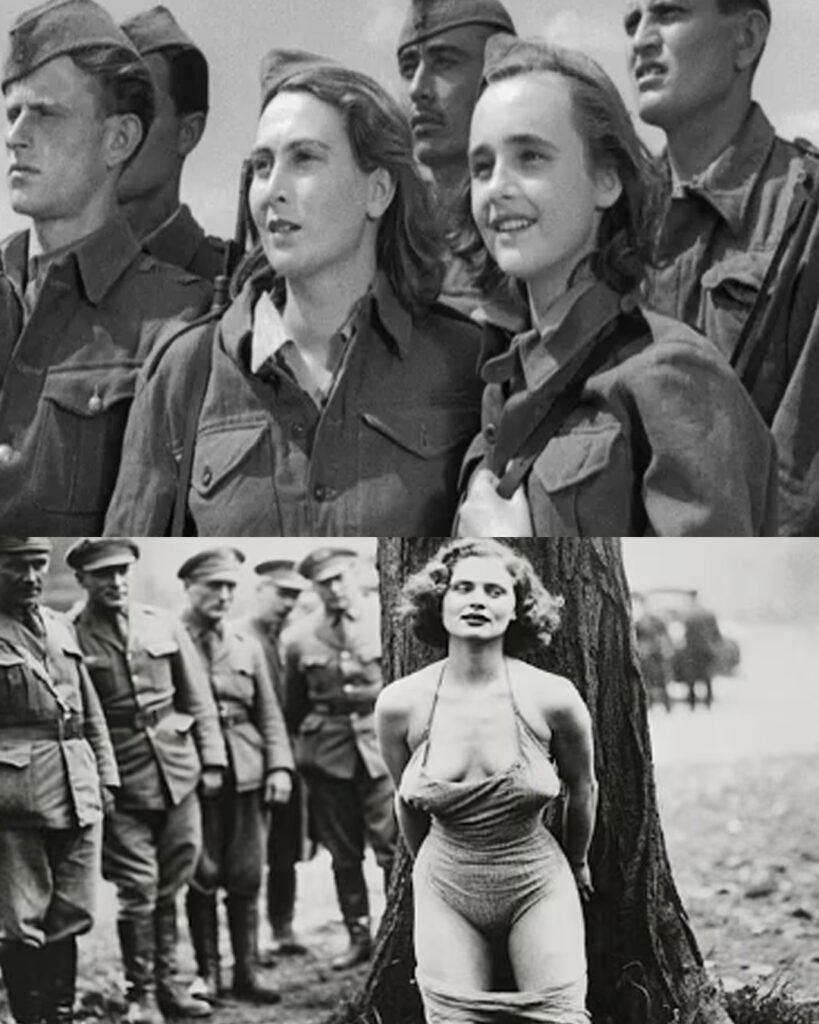
It appeared first in small mechanisms—pulleys, conveyors, improved agricultural equipment and transportation systems.
Then it became an entire economic transformation.
Coal mines revealed another side of this process.
Workers and draft animals operated in open-pit mining environments in the territories of the late nineteenth century. Behind the photographs was an expanding demand for fuel and industrial materials.
The West was becoming connected to a larger national economy.
Mines fed railroads.
transformation.
They can, however, prevent us from pretending those questions did not exist.
Perhaps that is why the photograph of a Native family standing before a traditional tipi feels so different from a photograph of a railroad locomotive.
Both represent movement through time.
But only one is usually described as the future.
The other is often described as the past.
That distinction itself reflects the assumptions of later generations.
The people in those Native photographs were not living in an obsolete world.
They were living in their present.
They were making decisions.
They were raising families.
They were adapting.
They were trying to survive a political and economic transformation they had not created.
Some leaders appear on horseback in ceremonial clothing.
Some families stand in front of tipis.
Some individuals wear medals or objects representing status.
Some appear at military posts.
Some content was generated using AI tools (including ChatGPT) and edited by the author for creativity, storytelling, and historical illustration purposes. Historical facts and key details should be verified against reliable historical sources. Any AI-generated or reconstructed visuals are intended for illustrative purposes and should not be interpreted as original historical photographs or archival evidence.