Forgotten Photographs Resurface After Decades — And Reveal the Human Stories Official History Left Behind
A forgotten photograph can survive for decades without anyone knowing what it contains. It may lie inside a dusty box, remain hidden among old negatives, or sit unnoticed in an archive while the world outside changes beyond recognition. Then, one day, someone opens the box, examines the image, and discovers a fragment of the past that had nearly disappeared. A face emerges from the shadows of time. A street once thought unfamiliar becomes recognizable. A scene absent from familiar historical accounts suddenly demands a second look. But what happens when these rediscovered photographs reveal not only what people once saw, but also what history may have overlooked?
The first thing a rediscovered photograph offers is not necessarily a revelation. Sometimes it is simply a moment that survived when almost everything surrounding it was lost. A street vendor pauses beside a customer. Children gather near a landmark still under construction. A laborer takes a brief rest during a working day. These scenes may appear ordinary, yet their survival gives them an unusual significance. The people in them were not necessarily famous, and the moments they experienced may never have been considered worthy of preservation. Nevertheless, the camera recorded them, leaving behind evidence of a world that once existed beyond the boundaries of official accounts.
History is often remembered through its most visible events: wars, political upheavals, famous speeches, industrial achievements, and the decisions of powerful individuals. Such events deserve careful study, but they represent only part of the human experience. Beneath them lies another history, composed of daily routines, private struggles, neighborhood relationships, and lives that rarely entered the written record. Rediscovered photographs can bring portions of that quieter history back into view.
Their importance does not depend on every image changing what historians know. Most photographs will not overturn an established interpretation or reveal an entirely unknown event. Their value often lies in something subtler: they allow us to examine familiar periods from a different angle, reconsider assumptions, and recognize the people who existed beyond the best-known narratives of their time.
And sometimes, the smallest detail is the one that changes the questions we ask.

The Forgotten Lives Hidden Inside Ordinary Photographs
Consider an old photograph of a street market. The buildings may be recognizable, but the signs above the shops have changed. The road may still exist, although its surface, traffic, and surrounding architecture look different. Near the center of the image, a vendor stands beside a customer, perhaps in the middle of a transaction.
There may be no record of either person’s name. The photographer might be unknown, and the date may have been written on the back decades after the image was taken. Yet the photograph preserves a brief encounter between two people who could never have imagined that strangers in the future would examine their ordinary working day.
This is where historical photography becomes more than an illustration of a period. It gives visible form to the everyday activities that sustained communities.
Written records frequently preserve the concerns of institutions: laws, commercial transactions, property ownership, military operations, and government decisions. Such documents can tell us much about how societies functioned, but they do not always capture the texture of ordinary life. A photograph of a market, workshop, or residential street may reveal how those larger systems appeared in a particular place.
The vendor’s clothing, the goods displayed nearby, the arrangement of the storefront, and the presence of other pedestrians may all offer clues. Together, these details can help researchers understand the local economy, available technology, and appearance of the built environment.
However, the image must be approached carefully. It cannot reveal the vendor’s thoughts or establish the nature of the relationship with the customer. It does not prove that the neighborhood was prosperous simply because the street appears busy. Nor can a single photograph establish what everyday life was like for an entire population.
What it can do is provide a specific piece of evidence that can be compared with other records.
That comparison matters. A photograph becomes more informative when researchers can connect it to maps, business directories, census records, newspapers, personal accounts, or other images from the same location. Details that initially appear insignificant may become meaningful when viewed alongside independent evidence.
A sign might identify a business. A building might establish a street corner. A date might connect the photograph to a documented construction project or public event. Each discovery can narrow the distance between an unidentified image and the world that produced it.
Even when no definitive identification is possible, the photograph still has value. It preserves evidence that people worked, traded, gathered, and maintained relationships in places that have since changed.
The past was not made exclusively by people whose names entered textbooks. It was also made by people who opened shops, repaired equipment, carried goods, prepared meals, and performed the small tasks that allowed communities to function.

Their photographs remind us how much history exists beyond the names we already recognize.
When an Unofficial Photograph Challenges the Familiar Story
The challenge becomes more significant when a rediscovered photograph appears to contradict a familiar historical narrative.
Official photographs and newsreels were often created for specific purposes. Governments, military organizations, newspapers, and other institutions selected images to communicate particular messages. Some documented events with considerable accuracy. Others were shaped by censorship, editorial choices, propaganda, or the practical limitations of what photographers could access.
A photograph taken outside those official channels may preserve a different perspective.
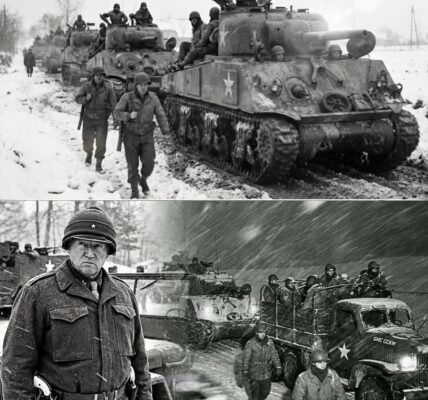
During wartime, for example, publicly distributed images often concentrated on military movements, leaders, weapons, ceremonies, and scenes intended to communicate the progress or purpose of a conflict. These images could be valuable records, but they were not necessarily comprehensive representations of the experience of war.
Amateur photographs and private collections may contain different kinds of evidence: ordinary surroundings, damaged buildings, improvised living conditions, moments of waiting, or the daily routines of people caught up in extraordinary circumstances.
Such images can broaden our understanding because they show details that official coverage may not have emphasized.
But the distinction between official and unofficial photography should not be treated as a simple division between falsehood and truth. An official photograph can be authentic and informative. An amateur photograph can be incomplete, miscaptioned, staged, or misunderstood. The photographer’s identity alone does not establish whether an image provides an accurate account.
What matters is the relationship between the photograph, its origin, and the evidence surrounding it.
Suppose a private photograph appears to show a street during a period of conflict. The image may reveal people moving through the area, buildings that remain standing, or objects that do not appear in better-known photographs. Those details could be historically significant. Yet the image alone may not establish when it was taken, what happened immediately before it, or whether the visible scene was typical of the wider situation.
Researchers would need to investigate its provenance, compare it with other records, and distinguish what can be observed directly from what remains uncertain.
This is not a weakness of historical photography. It is part of the process that makes historical interpretation reliable.
A photograph can challenge an assumption without automatically disproving it. It can reveal a missing perspective without providing a complete replacement for the existing account. Its strongest contribution may be to demonstrate that the story deserves a closer examination.
In that sense, rediscovered photographs are not always answers. Sometimes they are better questions.
The Communities That History Failed to Show Clearly
Some of the most consequential historical photographs are those that bring overlooked communities into view.
A rediscovered collection may show people whose lives were poorly represented in the surviving records of their time. It may reveal the presence of a community in a particular neighborhood, document a local organization, or preserve a public gathering that received little attention from contemporary newspapers.
Such photographs can prompt historians to reconsider how communities developed and how their members experienced the societies around them.
For example, images from the early twentieth century may reveal people of different backgrounds working, shopping, traveling, or gathering within the same urban environment. These scenes can add detail to historical discussions about migration, social relationships, and the organization of city life.
But a photograph showing a diverse group of people does not, by itself, prove that the surrounding society was integrated or free from discrimination. Individuals might have shared a workplace while experiencing unequal treatment elsewhere. People might have gathered in the same public space without enjoying equal rights or opportunities. A single scene cannot establish the full character of an entire neighborhood.
The correct interpretation depends on the circumstances in which the image was taken and the wider evidence available.
Even so, the photographs may reveal something that broader summaries overlook. They can show the presence and activity of people who were part of a community but absent from many prominent historical accounts.

A group photograph of a local club, for instance, may preserve the names and faces of people whose contributions were never widely recognized. A street scene may document businesses operated by migrants. A family portrait may provide a rare visual record of a household whose history survived mainly through oral accounts.
For descendants, the significance can be deeply personal. A photograph may confirm that an ancestor lived in a particular neighborhood, belonged to an organization, or participated in a community event. What had been an uncertain family memory can acquire a visible point of reference.
For historians, the same image may offer evidence about patterns of settlement, local institutions, or the ways people built social networks.
These two forms of value are connected but not identical. A photograph can be profoundly meaningful to a family without transforming the broader historical record. Conversely, an image with little known personal significance may become important when it helps document a larger social change.
Both deserve attention.
The larger lesson is that historical visibility is not the same as historical importance. Some people were extensively documented because they held power or attracted public attention. Others left fewer records because their lives were not considered significant by the institutions that preserved the past.
Rediscovered photographs can help narrow that imbalance, although they cannot eliminate it completely.
Children, Workers, and the People Outside the Frame
A photograph of children playing near a building under construction may initially seem like a charming scene from another era. The children stand in the foreground while workers, materials, or unfinished structures occupy the background.
Yet the image may contain several overlapping histories.
The children belong to the story of family and community life. The construction site belongs to the history of urban development. The workers represent the labor required to transform a plan into a physical structure. The photographer’s decision to capture the scene provides another clue about what someone considered worth preserving.
A single frame can therefore connect childhood, employment, architecture, and the changing appearance of a city.
The photograph cannot tell us everything about any of these subjects. We cannot assume that the children enjoyed carefree lives or that the workers experienced fair conditions. Their visible presence does not establish their personal circumstances.
Nevertheless, the image invites questions that can be explored through additional evidence.
What was being built? How did the project change the neighborhood? Who worked on it? What opportunities or disruptions did construction create for local residents? Did the completed structure become a significant landmark, or was it later demolished?
The answers may emerge from planning records, newspapers, building permits, employment documents, or other photographs. The original image becomes the starting point for a broader investigation.
The same approach applies to photographs of laborers taking breaks, repairing machinery, carrying materials, or standing outside factories.
Industrial history is often told through inventions, production figures, business leaders, and technological advances. Those elements matter, but they can make the process of industrial change seem almost automatic, as though factories and infrastructure appeared through engineering alone.
Photographs of workers restore the human presence within that process.
They remind us that development depended on people performing physical tasks, applying practical knowledge, and adapting to working environments that varied greatly in safety and quality. Some workers possessed specialized skills. Others carried out repetitive or physically demanding jobs. Many operated within economic systems that gave them limited control over their circumstances.
A single photograph cannot establish the conditions of a particular workplace. But it can help researchers identify what to investigate and can make the human dimensions of economic history more visible.
The same is true of images documenting children in public spaces. A photograph of children playing should not be treated as proof that childhood was universally safer or more independent in the past. Other historical evidence may reveal child labor, poor housing, limited schooling, and significant health risks in the same period.
The photograph and the broader record must be considered together.
What emerges is not necessarily a simpler or more comforting picture of the past. It is a more complete one, in which leisure and hardship, development and inequality, ordinary routines and major changes can exist side by side.
The Unexpected Places Where Photographs Survive
The rediscovery of an old photograph often begins with an ordinary activity: clearing a house, renovating a building, organizing a family archive, or examining the contents of a storage room.
A box may have remained untouched for decades because its owner died, moved away, or simply forgot what it contained. A photographer’s studio may close, leaving behind negatives and prints whose subjects are no longer identified. An institution may uncover materials that were never fully cataloged.
In other cases, photographs survive because someone recognized their value long before anyone else did.
These different circumstances create different problems for researchers. A family album may preserve names and dates in handwritten notes, but the handwriting could be difficult to read. A commercial archive may contain hundreds of negatives without a complete index. A collection acquired from an unknown source may have little information about its ownership history.
The physical location where an image is discovered can be interesting, but the circumstances of discovery do not automatically make the photograph historically significant.
An image found behind a wall might be an important record of a lost building, or it might be an ordinary print left there during a renovation. A box recovered from a closed studio may contain valuable photographs, but it may also include duplicates, damaged negatives, and images whose subjects cannot be identified.
The task is to determine what the materials actually contain.

That process can take considerable time. Researchers may need to sort images by format, examine handwritten annotations, identify photographic processes, compare buildings and clothing, and search for related records. Sometimes the result is a clear identification. Sometimes the evidence remains inconclusive.
The unknown photographer can be especially challenging. Without a name, researchers may struggle to establish the original purpose of the photograph or locate other images taken during the same period.
Yet anonymity does not make the image meaningless.
An unidentified photographer may have recorded a street that later disappeared, a business that closed, or a gathering whose participants were never formally documented. Even when the photographer’s identity remains unknown, the image can contribute to a larger historical collection.
The important distinction is between mystery and evidence. The absence of an explanation may invite further research, but it should not be filled with invented details.
Sometimes a photograph survives without a story attached to it. Recovering that story requires patience, not speculation.
How Social Media Turns Private Discoveries Into Public History
For much of the twentieth century, access to historical photographs depended heavily on physical collections. A person interested in a particular town or historical event might need to visit a local archive, contact a museum, consult a specialist, or locate a private collector.
Digitization has changed that process.
Archives, museums, libraries, historical societies, and private collectors can now share high-resolution images with audiences far beyond their local communities. Social media platforms such as Instagram, Facebook, and X allow photographs to circulate rapidly, often reaching people who would never have encountered them through traditional research.
This has opened new opportunities for identification and discussion.
Someone viewing a photograph of an unfamiliar street may recognize a building from childhood. Another viewer may identify a family business, a uniform, or a local event. A descendant may recognize a relative whose image had not been seen outside the family for generations.

When such contributions are supported by reliable evidence, the result can be a collaborative form of historical investigation.
People who live in a location may know details that are difficult to identify from a photograph alone. Local historians may possess maps or records that help establish a date. Family members may provide names or explain the significance of an object visible in the image.
The photograph becomes a meeting point between different kinds of knowledge.
However, online collaboration also creates risks. A confident comment can be mistaken for a verified identification. An incorrect caption may be copied across multiple accounts until repetition makes it appear authoritative. A photograph can be cropped, edited, or separated from the information that originally accompanied it.
Popularity does not establish accuracy.
A photograph shared millions of times may still be incorrectly dated. An image presented as a newly discovered wartime record may have been available in an archive for years. A dramatic caption may attribute the photograph to a famous event without providing evidence for the connection.
The speed of online circulation makes careful source checking more important, not less.
Whenever possible, viewers should look for the original collection, archival catalog, photographer’s records, or a credible institution that explains the image’s provenance. If the date or identity remains uncertain, that uncertainty should be acknowledged.
The most valuable online discoveries are not necessarily those that produce the greatest surprise. They are the ones that lead to better questions, stronger evidence, and a more accurate understanding of the past.
Preserving Images Before Time Erases Them
Rediscovery is only the beginning. Once a photograph has been found, it must often be preserved before its physical condition deteriorates further.
Old prints may suffer from fading, discoloration, scratches, cracks, or damage caused by poor storage. Film negatives can deteriorate, and some photographic materials require specialized handling. Heat, humidity, light, and unsuitable storage conditions can gradually destroy information that has survived for generations.
Digitization offers an important way to reduce the risk of losing access to an image. A high-quality scan can capture details that may be difficult to see in a small print and can allow researchers to study the image without repeatedly handling the original.
But digitization is not a complete substitute for preservation. A scan cannot preserve every physical characteristic of the original photograph, and a digital file can itself be lost if it is stored carelessly or in a format that becomes difficult to access.

Long-term preservation requires planning.
Institutions and collectors may need to maintain suitable storage conditions, keep multiple digital copies, document the source of each image, and ensure that files remain accessible as technology changes. Metadata—the information describing when, where, and by whom an image was created—can be just as important as the image itself.
Without reliable metadata, a photograph may survive visually while losing much of its historical usefulness.
Imagine discovering a clear photograph of a building that no longer exists. If the location and date are known, the image may help reconstruct the appearance of a neighborhood. If the photographer and collection are also identified, researchers may be able to locate related views or understand why the photograph was taken.
If all contextual information disappears, the same image may become difficult to place within a specific historical setting.
This is why archival work involves more than scanning and publishing. It also requires recording, organizing, describing, and maintaining the information that connects images to the world from which they came.
There are also questions of ownership and privacy. A photograph may be physically held by one person while the rights to reproduce it belong to someone else. Images of vulnerable individuals or sensitive historical circumstances may require particular care in how they are presented.
Making a photograph accessible does not remove the need to consider its source, legal status, and human significance.
The goal is not simply to save an image from physical destruction. It is to preserve the possibility of understanding it.
When a Rediscovered Photograph Changes a Family’s Memory
For historians, the significance of a photograph may depend on what it reveals about a community or a historical period. For families, the meaning can be more immediate.
A descendant may discover a portrait of a grandparent they never met. A family album may contain an image of a childhood home that has since been demolished. A photograph may show relatives standing together before migration, war, or other events separated them.
Such discoveries can create a powerful connection across generations.
The image gives a face to a name. It can make an old family story feel more tangible. It may help relatives understand where their ancestors lived, how they dressed, or who belonged to a particular household.
Sometimes, a photograph also challenges what a family believed about its own history. A person previously known only through a brief anecdote may appear in a professional setting, among friends, or beside an unfamiliar location. A handwritten note may identify someone whose existence had been forgotten.

These discoveries can be meaningful, but they must be approached with the same caution applied to broader historical claims.
A photograph cannot establish every detail of a person’s life. A uniform may suggest an occupation or affiliation without proving the precise circumstances. A group portrait may show people together without revealing the nature of their relationships. An image taken in a particular location may not establish how long someone lived there.
Family memories, official records, letters, and other photographs can help supply the missing context.
Even when the original story cannot be fully recovered, the image may still become an important part of a family’s shared memory. It provides something concrete to preserve and pass on, while reminding later generations that every family history contains gaps.
Those gaps are not necessarily failures. They are part of what happens when lives extend beyond the surviving record.
A photograph may preserve one afternoon while leaving the rest of a lifetime unknown. Recognizing that limitation does not make the image less valuable. It reminds us how much of any human life exists beyond what can be documented.
The Limits of What a Photograph Can Prove
The excitement surrounding rediscovered images can sometimes encourage exaggerated claims. A photograph is described as evidence that historians were wrong, that an entire community has been forgotten, or that a familiar event unfolded in a completely different way.
Occasionally, new visual evidence does lead to important revisions. More often, its contribution is incremental: it adds a detail, clarifies a location, identifies a person, or reveals a perspective that had received limited attention.
That distinction matters because historical knowledge does not rest on photographs alone.
Researchers examine written records, physical evidence, eyewitness accounts, maps, official documents, and the circumstances in which sources were created. Each type of evidence has strengths and limitations. A photograph may show what was visible in a particular frame, but it cannot independently explain everything that happened before or afterward.
The photographer chose where to stand, what to include, and when to press the shutter. The resulting image excludes as much as it records.
A crowded public square may appear peaceful even if a confrontation occurred outside the frame. A damaged building may be visible without revealing when or how the damage happened. A photograph of a smiling group cannot establish the private feelings of everyone pictured.

Even an apparently straightforward date may require verification.
Photographs can be mislabeled, especially when collections pass between owners. A later caption may confuse the date of an event with the date a print was produced. Similar-looking buildings or uniforms may lead to mistaken identifications. Digital editing can also remove context or combine material in ways that create a misleading impression.
For these reasons, the rediscovery of a photograph should be treated as an invitation to investigate rather than a reason to abandon established evidence immediately.
The most responsible historical interpretation asks three questions: What can be observed directly? What can be inferred from the available evidence? What remains unknown?
Those questions may seem less dramatic than a claim that a single image has rewritten history. But they protect the very quality that makes rediscovered photographs valuable: their ability to bring us closer to the past without replacing evidence with imagination.
A photograph does not need to overturn an entire historical narrative to matter. Sometimes, showing that a person existed, a building stood in a particular place, or a community gathered at a particular time is an important contribution in itself.
The past becomes richer not only when old beliefs are disproved, but also when missing details are carefully restored.
History as a Mosaic of Individual Perspectives
No single photograph can contain the full complexity of a historical period. Even a large collection has limits. Some people were photographed frequently, while others rarely appeared in surviving images. Some communities preserved extensive archives, while others lost their records through migration, conflict, neglect, or the passage of time.
The surviving record is therefore uneven.
This unevenness shapes what future generations can see and what they may struggle to reconstruct. Famous individuals may be surrounded by photographs, letters, and official documents, while the lives of ordinary workers, children, migrants, and local residents may be represented by only a handful of images.
Rediscovery can help correct that imbalance, but it cannot guarantee a complete picture.
Each new photograph contributes one more piece to a larger mosaic. A street scene may illuminate the appearance of a neighborhood. A family portrait may identify people missing from public records. A private wartime photograph may provide a different view of an event usually remembered through official imagery. A collection of amateur photographs may preserve the rhythms of daily life across several decades.
The cumulative effect can be substantial, even when no single image is revolutionary.
Over time, the record becomes more textured. Familiar events can be understood through a wider range of experiences. Communities that were previously represented only indirectly may become more visible. Researchers can compare official accounts with private records and ask whether the surviving evidence supports the assumptions inherited from earlier interpretations.
This does not mean that history becomes less reliable every time a new photograph appears. It means that reliable history remains open to additional evidence.

Historical understanding is strongest when it can accommodate new information without discarding standards of proof. The goal is not to make the past permanently uncertain. It is to develop explanations that account for as much trustworthy evidence as possible.
That process requires patience, and sometimes it requires accepting that a question cannot yet be answered.
A rediscovered photograph may leave us with more questions than we had before. That is not necessarily a disappointment. It may be the beginning of a more careful understanding.
What We Choose to Remember
The most moving aspect of a rediscovered photograph may be the simple fact that it survived.
The people in the image may have assumed that the moment would be remembered only by their families or by those who happened to be present. They could not have known whether the print would be preserved, misplaced, or eventually discovered by strangers decades later.

The photograph passed through time without knowing what it would mean to anyone.
Today, we can examine the clothing, buildings, faces, and objects it contains. We can compare it with other records, search for names, and attempt to reconstruct its context. We may identify the location or discover that it documents an event whose details were previously unclear.
But even after the research is complete, the photograph retains a quality that no description can fully replace. It presents us with an actual fragment of a moment, preserved beyond the lives of the people who experienced it.
That fragment is not the whole story. It is a beginning.
The history revealed by rediscovered photographs is not necessarily more dramatic than the history already known. It is often more human. It brings attention back to ordinary people whose work, relationships, and experiences formed the background against which larger events unfolded.
It reminds us that official records and celebrated milestones are only part of the historical landscape. Behind them were families, neighborhoods, workplaces, and individuals whose lives mattered whether or not they became widely remembered.
The digital age has made it easier to find and share these fragments, but the responsibility remains the same: to preserve them carefully, investigate them honestly, and resist the temptation to make them say more than the evidence allows.
A photograph can correct a mistaken assumption. It can recover a forgotten face. It can reveal a detail that changes how we understand a place or an event. And sometimes, it can simply remind us that the past was populated by people who experienced their own lives as fully and urgently as we experience ours.
Perhaps that is the greatest value of these rediscoveries. They do not make history less human by revealing that our knowledge was incomplete. They make it more human by showing how much remains to be understood about the people who came before us.
If you discovered an old photograph with no names, date, or explanation, would you be more interested in uncovering the exact historical facts behind it—or in preserving the mystery of the lives it captures?
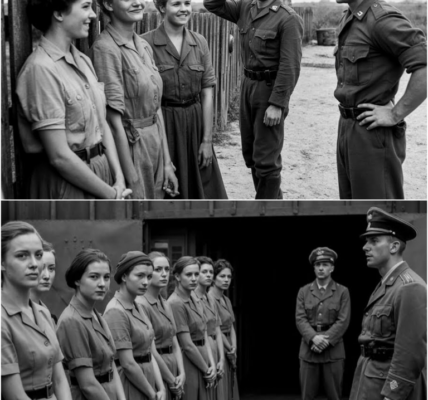
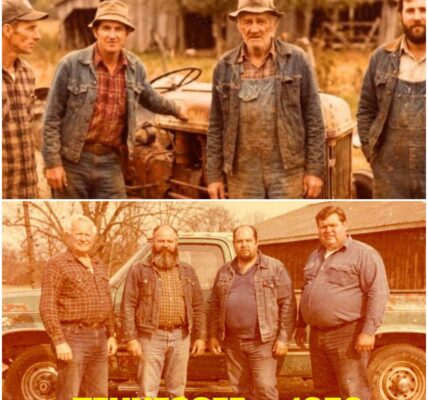
Some content was generated using AI tools (including ChatGPT) and edited by the author for creativity, storytelling, and historical illustration purposes. Historical facts and key details should be verified against reliable historical sources. Any AI-generated or reconstructed visuals are intended for illustrative purposes and should not be interpreted as original historical photographs or archival evidence.