Old Photographs That Changed How We See History — The Forgotten Details Hidden in the Faces of the Past
A soldier sits beside a local child in a landscape shaped by war. Neither the uniform nor the unfamiliar surroundings can tell us everything about the moment, yet the photograph invites us to look beyond the conflict itself. Somewhere outside the frame, military operations continue. Here, for a brief instant, the image appears to preserve something different: an encounter between two human beings living through a time they did not choose. But what can a single photograph truly reveal about the past? And how often have the images we remember most clearly concealed the lives, contradictions, and overlooked details that history is still trying to understand?
In an age when millions of digital images pass before our eyes every day, it is easy to forget the extraordinary power of a photograph that has survived for a century. We scroll past pictures, glance at familiar scenes, and move on. Yet an old photograph can interrupt that habit. Its faded surface, unfamiliar surroundings, and unmistakably human faces can make a distant historical period feel suddenly close.
The images that have the greatest impact are not always photographs of famous leaders, decisive battles, or historic ceremonies. Sometimes they show workers leaving a factory, families standing outside modest homes, women performing tasks that contradict familiar assumptions about their era, or children playing in streets that have long since disappeared beneath modern development.
These ordinary scenes can be remarkably revealing. They show that the past was not simply a sequence of events arranged in textbooks. It was a world inhabited by people who had their own responsibilities, ambitions, relationships, and uncertainties. They did not know how later generations would interpret their lives. They were simply living them.
A collection of rediscovered photographs can therefore do more than awaken nostalgia. It can encourage us to reconsider what we believe about earlier societies, how we remember periods of conflict, and whose experiences are preserved in the historical record.
But there is an important distinction between a photograph that challenges our assumptions and one that proves a particular claim. Images can reveal details that written accounts overlook, yet they can also mislead when separated from their original context. Their power comes not from making every question disappear, but from giving us a reason to ask better ones.
The Human Face Behind the Uniform
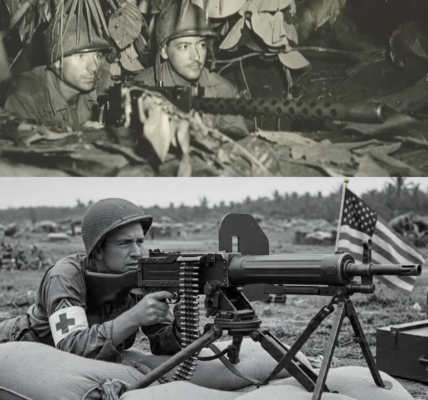
For many people, the visual history of war begins with familiar images: soldiers standing in formation, commanders inspecting troops, flags raised over captured positions, and military vehicles moving across devastated landscapes.

Such photographs can document important events. They show equipment, uniforms, locations, and moments that help historians reconstruct the course of a conflict. But when military history is presented mainly through these images, the people involved can begin to look like parts of a larger machine.
Candid photographs sometimes reveal a different perspective.
A soldier might be shown resting beside a wall, sharing food with companions, writing a letter, or sitting quietly during a pause in military activity. These images do not erase the violence of war or suggest that every moment was peaceful. Instead, they show that military life also consisted of waiting, routine, exhaustion, uncertainty, and the relationships formed among people living under difficult conditions.
The distinction matters because a soldier was never only a uniform.
Each serviceman had entered the conflict with a personal history. Some had been workers, farmers, students, or apprentices. Some had left partners, children, parents, and siblings behind. Their reasons for serving differed, as did their experiences of military life.
A photograph rarely tells us all of this. A face cannot establish a person’s private thoughts, and an expression captured for a fraction of a second should not be treated as a complete record of emotion. Nevertheless, the image can remind us that the people involved in military operations were individuals whose lives extended beyond the events in which they participated.
Consider the hypothetical example of a photograph showing a young soldier sharing a meal with a local child in a war zone. Unless the image has been identified through a reliable archive or contemporary record, we cannot assign it a particular battle, country, date, or personal story. We should not invent a name for the soldier or claim to know what either person was thinking.
Even without those details, the scene invites a legitimate historical question: what did ordinary encounters look like in places transformed by conflict?
War brings military organizations into contact with civilian communities. Soldiers may pass through villages, occupy buildings, receive supplies, or encounter people whose lives have been disrupted by events beyond their control. The circumstances of these encounters vary widely, and an isolated photograph cannot represent every relationship between military personnel and civilians.
Some interactions may have involved assistance or cooperation. Others took place amid fear, coercion, hostility, and profound inequality. The historical context is essential.
Yet an image of an ordinary encounter can remind viewers that civilians did not disappear when armies entered their communities. They continued to exist within the same landscapes, often facing consequences they had little power to prevent.

Children still needed food. Families still needed shelter. People still had to find ways to carry out daily tasks, even when the world around them had become dangerous or unfamiliar.
This is one reason human-centered photographs are important in the study of war. They do not replace operational records, eyewitness testimony, or official documents. They add another dimension to the evidence.
A map may show the movement of an army. A report may record the outcome of an operation. A photograph may reveal something about the people who occupied the same place at the time.
Together, these sources can provide a fuller understanding of what conflict meant in practice.
The most responsible interpretation does not turn one encounter into a universal lesson about war. It recognizes the limits of the image while acknowledging what it makes visible: military history unfolded in places where ordinary human lives continued, often under extraordinary pressure.
The Photograph That Contradicts the Familiar Story of Women in the Past
Old photographs can also challenge assumptions about social roles.
For much of the popular imagination, women in the late nineteenth and early twentieth centuries are represented through domestic interiors, formal family portraits, and carefully arranged scenes of respectability. These images reflect genuine aspects of social life, but they do not tell the entire story.
Other photographs show women working in factories, operating machinery, managing businesses, participating in public life, and performing physical labor that is often missing from simplified accounts of the period.
Imagine a photograph of several women standing inside an industrial workplace around the turn of the twentieth century. Their sleeves are rolled up, their clothing is practical, and the equipment around them bears the marks of regular use. They are not posed as decorative figures in a domestic scene. They are present as workers.
Such an image can immediately complicate the idea that women of the era belonged exclusively to the private sphere.
But it is important to understand what the photograph can and cannot establish. It may document women working in a particular industry, but it cannot show that all women had the same opportunities or that traditional expectations had disappeared. Nor does the presence of women in a factory automatically tell us whether their working conditions were safe, whether they received equal pay, or how their employment affected their lives outside work.
Those questions require additional evidence, including labor records, contemporary newspapers, company documents, legislation, and personal accounts.
The broader historical context is nevertheless significant. Women have long contributed to agriculture, manufacturing, trade, domestic service, and other forms of work. The visibility of their labor changed across societies and periods, and the distinction between paid employment and unpaid domestic work often shaped how their contributions were recorded.
Industrialization created new forms of employment while also transforming existing occupations. In some places, factories provided wages and opportunities for women who needed or wanted paid work. At the same time, women often faced restrictive employment practices, unequal compensation, and social expectations that continued to place much of the responsibility for household work on them.
A single factory photograph cannot resolve those contradictions. It can, however, make them harder to ignore.
The women in the frame are evidence that the world was more varied than a narrow collection of formal portraits might suggest.
Their presence also reminds us that historical visibility is not the same as historical participation. Women may have played significant roles in their communities without receiving the same recognition as men. Photographs, when correctly identified, can help restore some of that missing visibility.
The same principle applies to other aspects of social history. Images of women riding bicycles, attending educational institutions, participating in public demonstrations, or working in commercial settings may challenge assumptions about what was possible during a particular period.
Yet each image must be understood in context. A photograph of a woman performing an activity does not prove that the activity was equally accessible to women across social classes, regions, or communities.
Historical change rarely happened uniformly.
The real value of these photographs is that they invite us to replace sweeping assumptions with more precise questions. Who were these women? What work were they doing? What opportunities were available to them? What obstacles did they face? And how did their experiences differ from those of other women living at the same time?
The answers may be complicated. That complexity is precisely what makes the evidence valuable.
Harlem, Community, and the Power of Being Seen
Photographs can also preserve moments of cultural expression that challenge the way entire communities are remembered.

Images associated with the Harlem Renaissance, the flourishing of African American artistic and intellectual life centered in Harlem and extending beyond it during the 1920s and into the 1930s, offer an important example.
The period is associated with literature, music, visual arts, performance, publishing, and debates about Black identity and cultural expression. Its history cannot be reduced to a single neighborhood or a narrow collection of famous names. It involved a wide network of artists, writers, musicians, intellectuals, and communities whose work influenced American culture.
Photographs from this period can document public performances, portraits, social gatherings, and everyday settings. They preserve evidence of people participating in cultural life, building institutions, and expressing identities that were often misrepresented or marginalized in wider society.
Their significance extends beyond documenting individual artists.
A portrait of a musician, a group of friends gathered outside a venue, or a scene from a cultural event can reveal a world of relationships and activity. These images help place artistic achievement within the communities that supported it.
They also challenge the habit of viewing Black history only through the lens of oppression.
Discrimination and racial inequality were fundamental realities of the period, and they must not be minimized. Yet African American communities were never defined solely by the barriers imposed upon them. They also created art, developed businesses, formed organizations, maintained social networks, and pursued new forms of expression.
Photographs that preserve those activities provide a more complete picture.
The same principle applies to images associated with the early civil rights movement. Photographs of marches, meetings, demonstrations, and community organizing can document collective action, but images of daily life and social connection are also important. They remind us that movements were sustained by people who continued to work, study, care for families, and organize within their communities.
The photographs should not be treated as interchangeable symbols. Each has its own location, date, subjects, and circumstances. To understand a particular image, researchers must establish who took it, what it depicts, and how it relates to the events surrounding it.
Still, their wider significance is clear.
A photograph can change the way a community is remembered by making visible aspects of its life that a narrow historical narrative leaves out.
It can preserve dignity without denying hardship. It can document struggle without reducing people to their suffering. And it can show cultural achievement as part of a broader human experience rather than as an isolated exception.
The result is a more balanced understanding of the past—not because the photograph tells the whole story, but because it gives us another part of the story to investigate.
When an Ordinary Market Exists Inside a War Zone

One of the most striking contrasts in historical photography appears when images of everyday activity are placed alongside the familiar visual record of conflict.
News coverage of a war-torn city often focuses on destruction, military movements, damaged infrastructure, and the immediate consequences of violence. These subjects are important, but they can also create an incomplete impression if they become the only images through which a place is understood.
A photograph of a busy market can reveal a different dimension.
Vendors arrange their goods. Customers examine produce. People move through narrow spaces, carrying baskets or speaking with one another. The buildings may show signs of age or damage, yet the market remains a place where people exchange goods and maintain daily routines.
If the photograph has been reliably identified as showing a community affected by war, the contrast can be powerful. But the image’s exact date and circumstances matter. A market photograph should not be connected to a particular conflict merely because the setting appears old or the surrounding buildings look damaged.
Once its context is established, however, such a scene can challenge the assumption that a place experiencing conflict consists only of violence.
People continue to live in affected communities. They may try to obtain food, maintain livelihoods, care for relatives, attend school, or preserve familiar social relationships. The extent to which these activities remain possible depends on the circumstances, and daily life may be profoundly disrupted by insecurity, shortages, displacement, and damage to essential services.
A market photograph cannot establish that life was safe or stable. It captures only a moment.
Nor should a scene of apparent normality be used to suggest that the surrounding conflict was less serious than other evidence indicates. An ordinary activity can continue amid severe hardship, and the ability to carry out one task does not reveal the full conditions faced by the community.
The photograph’s value lies in showing that human experience is rarely as simple as a single visual narrative suggests.
A city can contain fear and routine, destruction and repair, uncertainty and determination at the same time. People may adapt to circumstances without accepting them as normal or harmless.
This is an important distinction when looking at photographs from conflict zones.
The continuation of everyday life does not make war less destructive. It reveals another dimension of what war affects.
A market is not simply a collection of stalls. It is part of a social system that allows people to obtain necessities, earn income, exchange information, and maintain relationships. When that system is disrupted, the consequences extend beyond the physical space.
Conversely, when some form of activity continues, it can show how communities attempt to sustain themselves despite difficult conditions.
The people in such photographs should not be romanticized as symbols of unbreakable resilience. They may have faced severe constraints, and a single image cannot tell us how they experienced them. But their presence reminds us that civilians remain active participants in their own lives even when larger political and military events place them in circumstances they did not choose.
That is a perspective easily lost when history is viewed only from the level of armies, governments, and territorial changes.
The Landscape Before and After
Some of the most revealing historical photographs work through comparison rather than a single dramatic moment.
A forest is photographed before development and then again decades later. A city street appears first as a route used by horse-drawn vehicles and later as a crowded modern road. A glacier is recorded from one viewpoint and photographed again after a long period of retreat.
When the images are authentic and their dates and locations are established, the comparison makes change visible in a way that abstract descriptions often cannot.

A written account may explain that a forest was cleared or that a city expanded. A pair of photographs allows viewers to see the physical difference.
The effect can be immediate. A familiar landscape becomes evidence of a process that may otherwise seem gradual and difficult to imagine.
Yet before-and-after photographs require careful handling. The images must depict the same place, or a clearly comparable location, and the differences in camera position, season, lighting, and framing must be considered. A different angle can make a landscape appear substantially changed even when the underlying transformation is smaller than it seems.
Dates also matter. Two photographs taken a few years apart may reveal a different pattern from images separated by several decades.
When these factors are established, photographic comparison can contribute to research into urban development, deforestation, coastal change, glacial retreat, and other long-term transformations.
The photographs do not necessarily explain why the change occurred. A forest may have been cleared for agriculture, timber, settlement, or another purpose. A city street may have changed because of transport planning, commercial development, or reconstruction after a disaster. A glacier’s retreat must be examined through the wider evidence about climate and environmental conditions.
The images are evidence of visible change, but the causes require additional investigation.
This distinction is especially important when photographs are used in debates about environmental responsibility. Visual comparisons can help make long-term changes understandable, but a convincing explanation must draw on appropriate scientific and historical evidence.
The emotional effect of these images can nevertheless be valuable. They make time tangible.
A landscape that appears permanent during a human lifetime may change dramatically across several generations. A street familiar to one person may become unrecognizable to another. A forest may be reduced, restored, or replaced by a different land use.
The camera gives us a way to compare those moments.
It also invites a difficult question: what responsibilities do people have toward places that will outlast them, and what will future generations see when they look back at the landscapes we leave behind?
The photograph cannot answer that question by itself. It can make the consequences of human choices more visible.
The Photograph of a Great-Grandparent
Not every image that changes a person’s perspective belongs to a famous historical event.
Sometimes it is a faded family photograph showing a great-grandparent as a child, standing outside a home that no longer exists. The child may hold a small toy, wear unfamiliar clothing, or stand beside relatives whose names have been lost from family memory.
The image can create an unusually direct connection between the present and the past.
Historical distance often makes earlier generations seem abstract. We know that our ancestors lived in different conditions, but it can be difficult to imagine them as children who played, learned, became frustrated, made plans, and wondered about the future.
A photograph can interrupt that distance.
The child in the image is not simply an ancestor or a name in a family tree. They were once a person at the beginning of a life whose later course had not yet unfolded.
The photograph does not tell us what happened next. The person may have moved to another town, entered a particular occupation, married, raised a family, or lived through major events. Those details must come from family records and other reliable sources.
But even when the later story is known, the childhood image can alter the way the person is remembered.

It reminds us that adults whose lives we know only through family stories once occupied the same uncertain stage of life that children occupy today.
The house in the background may have been demolished. The toy may have become an antique. The clothing may look unfamiliar. Yet the basic act of preserving a childhood moment is recognizable across generations.
This is one reason family photographs can carry such significance even when they have little apparent importance to anyone outside the family.
Their value does not depend on historical fame. It comes from their connection to people whose lives helped shape the present.
For researchers, family photographs can also provide evidence of migration, domestic life, clothing, architecture, and social relationships. When combined with letters, census records, birth certificates, and other documents, they can help reconstruct aspects of a family’s history.
Still, family photographs can be misinterpreted, too. A person may be incorrectly identified, a date may be estimated rather than documented, and relationships may be assumed from the way people are positioned.
Preserving uncertainty is better than turning a guess into a family fact.
The most meaningful discoveries often emerge when photographs are treated as part of a larger body of evidence rather than as complete explanations on their own.
Even without a full identification, a childhood portrait can remind us that every generation begins with individuals who cannot know what the future will hold.
The people we now regard as part of history once lived in a present that was as immediate to them as ours is to us.
The Details That Change the Meaning of an Image
A photograph can appear to tell a straightforward story until a small detail changes the interpretation.
A street scene may seem to show an ordinary crowd, but a sign in the background might identify a particular event. A portrait may appear to depict a wealthy family until other records reveal that the clothing was borrowed for the occasion. A photograph of a building may be assumed to show its original condition, only for archival evidence to establish that it was taken after reconstruction.
These examples illustrate why historical photographs must be read carefully.
The visible content matters, but so do the circumstances in which the image was created. Who commissioned it? What did the photographer intend to show? Was it taken for a family album, a newspaper, a government report, a commercial advertisement, or a private collection?

The purpose of the photograph can influence the composition.
A formal portrait may emphasize respectability. A commercial image may present a product in the most favorable light. A news photograph may focus on a particular event while excluding the wider surroundings. An official photograph may document a procedure or institution from a perspective chosen by the organization involved.
None of these possibilities automatically makes the image false. They remind us that a photograph is a record created under particular conditions.
Even the absence of movement can be significant. Long exposure times in earlier photographic processes often encouraged subjects to remain still, and formal posing became a familiar convention. A solemn face may reflect the demands of the camera rather than a person’s emotional state.
Similarly, an apparently candid scene may have been arranged. The people might have been asked to stand in a particular place or repeat an activity for the photographer.
Without supporting evidence, it is difficult to know.
This does not mean photographs should be distrusted entirely. It means their evidentiary value depends on the question being asked.
A photograph may reliably show that a particular object or person was present in a particular setting, while offering little evidence about motive or emotion. A series of images may establish a sequence more clearly than a single frame. An original caption may provide useful context, but it too may need to be compared with other sources.
The most productive approach combines close observation with verification.
Look at the image. Record what is clearly visible. Separate those observations from assumptions. Then seek documents or other photographs that can confirm, refine, or challenge the interpretation.
In that process, an image can become more revealing without becoming more dramatic.
Sometimes the detail that changes our understanding is not a shocking discovery. It is a small correction that makes the story more accurate.
How Digital Archives Are Giving Old Photographs a Second Life
Many historical photographs survive because someone preserved a physical copy long after its original purpose had passed.

They may have remained in family albums, newspaper collections, institutional archives, or boxes stored in attics. Some were cataloged carefully. Others became separated from their captions or were preserved without clear information about their subjects.
Digitization has made it easier to bring these images into public view.
Institutions such as the Library of Congress and the U.S. National Archives maintain extensive photographic collections, while museums, universities, local historical societies, and other organizations also provide access to historical images. Their holdings differ in scope, and not every photograph in a public collection is available online.
Digitization can make research easier by allowing viewers to search for subjects, compare images, and inspect details without handling the original materials. A high-quality scan may reveal a sign, a piece of equipment, or a building feature that is difficult to see in a small printed reproduction.
Online access also allows people outside formal institutions to contribute useful knowledge.
Someone familiar with a neighborhood may recognize a street. A descendant may identify a relative. A specialist may notice a uniform or machine associated with a particular period. These contributions can help archivists refine catalog descriptions and connect isolated images with broader historical records.
The process resembles a form of collaborative historical investigation. Each new observation may provide a clue, but it needs to be checked before it becomes a confirmed identification.
Social media has made this work more visible. Historical photographs can circulate widely, reaching people who would never encounter them through traditional research channels. Discussions can lead to new identifications, renewed interest in local history, and sometimes the recovery of family connections.
But online circulation also introduces risks.
An image may be copied without its original caption. A speculative date may be repeated until it appears authoritative. A photograph from one conflict may be incorrectly associated with another. Cropping or editing may remove details that would help establish its context.
The popularity of a photograph is not evidence that its accompanying story is accurate.
Nor does the appearance of an image online necessarily mean that it has only recently been discovered. It may have been held in a public archive for decades before reaching a wider audience.
Responsible digital preservation therefore involves more than uploading an image. It requires recording where the image came from, preserving any available metadata, distinguishing confirmed information from uncertainty, and correcting errors when new evidence emerges.
This work may seem less exciting than the discovery of a dramatic secret, but it is essential to historical understanding.
A photograph without reliable context can be misunderstood. A photograph with a documented source can become part of a lasting record that researchers and future generations can use.
When a Photograph Becomes a False Story
The power of a photograph creates a particular danger: people may believe that what they see is self-explanatory.
A striking image can appear to provide direct proof of a claim, especially when the caption offers a simple explanation. Yet photographs can be misdated, staged, cropped, edited, or assigned to the wrong event.
A real image can be used to tell a false story.

This is why historical verification matters even when the photograph appears convincing. The first question should not be whether the image looks authentic, but whether its origin and interpretation can be established.
The distinction is important in discussions of war, social change, and political history. An image may be used to support a broad claim about a country, a community, or an entire historical period. If its context is incorrect, the conclusion may be equally unreliable.
A photograph showing people of different ethnic backgrounds at a public event, for example, cannot by itself establish that a society was free from segregation or discrimination. It documents a particular scene, not every aspect of the society in which it occurred.
Likewise, a photograph of women performing industrial work does not prove that women had equal access to employment. An image of a busy market in a conflict-affected city does not establish that the population was safe. A photograph of an apparently damaged building does not, on its own, identify the cause of the damage.
The broader claim requires broader evidence.
This does not reduce photographs to minor supporting details. On the contrary, it clarifies their value. A photograph can be exceptionally strong evidence for some questions and insufficient evidence for others.
Its limitations should guide the investigation rather than end it.
The same caution applies to emotional interpretation. A solemn expression does not automatically reveal grief, and a smile does not prove contentment. People can experience complex emotions that a single frame cannot capture.
The temptation to invent a complete story is understandable. Human beings naturally seek meaning, especially when faced with an image that appears to invite explanation. But the most responsible historical storytelling acknowledges where the evidence ends.
If the identity of a person is unknown, say so. If the date is approximate, do not present it as exact. If the photograph’s origin cannot be established, distinguish the visible scene from the claims made about it.
This approach may leave some questions unanswered. It also protects the people represented in the photograph from being turned into characters in a story that has no reliable foundation.
Historical curiosity is strongest when it remains willing to change its mind.
The Past Was More Complicated Than We Remember
The photographs that most strongly alter our perspective often do so by revealing a contradiction.
A soldier is shown in an ordinary moment rather than a heroic pose. Women appear in workplaces that challenge a narrow picture of domestic life. A cultural community is represented through creativity and everyday social activity rather than only through accounts of discrimination. A market continues to operate in a place associated with conflict. A family photograph makes an ancestor seem suddenly recognizable as a child.
None of these images overturns history by itself.
Instead, each complicates a simplified narrative.
The past is often easier to remember when it is arranged into clear categories: peace and war, progress and decline, tradition and change, famous people and anonymous crowds. Such distinctions can help organize information, but they rarely capture the full range of human experience.

A single person may have lived through several different realities. A community may have experienced hardship while developing new cultural institutions. An industrial workplace may have provided employment while exposing workers to difficult conditions. A city may have expanded economically while displacing some of its residents.
History contains these contradictions because people live within overlapping systems of opportunity, constraint, belief, and circumstance.
Photographs can make that complexity visible.
They can show details that challenge a familiar assumption, but the challenge is only the beginning. The next step is to ask what the image establishes, what remains uncertain, and how it fits within the evidence from other sources.
This is a more demanding approach than simply accepting the most dramatic interpretation. It is also more rewarding.
The goal is not to replace one oversimplified story with another. It is to develop a more accurate understanding of how people lived and how their circumstances changed.
That is especially important when examining difficult historical subjects. Images of war, inequality, or disaster should not be used merely to shock viewers. They should help us understand the conditions people faced, the choices available to them, and the consequences of decisions made at different levels of society.
The human stories preserved in photographs deserve more than a moment of attention. They deserve careful interpretation.
What Remains When the Names Are Gone
A photograph may survive after the people who understood it have died.
The family members who knew the names of everyone in an album may no longer be alive. The building in the background may have been demolished. The business where a person worked may have closed. The original photographer may have left no surviving records.
In such cases, the image can become separated from the information that once made it ordinary.
For the people who first kept it, the photograph may have required no explanation. They knew who was standing in the doorway, why the family had gathered, and which street appeared behind them.
For later viewers, those facts may be lost.
This loss is not unusual. Historical collections often contain photographs whose subjects, locations, or dates remain unidentified. Archivists may be able to estimate a period from clothing or photographic technique, but estimates are not the same as confirmed dates.
Sometimes a small clue helps restore the missing context. A building can be matched to a historical map. A uniform can be compared with military records. A handwritten inscription can connect a portrait to a family document. A related photograph may reveal that several images were taken during the same event.
Other images remain unresolved.
The inability to identify a person does not mean that the photograph has no value. It can still document material culture, photographic practices, architecture, or a particular type of social activity. It can also preserve a visible record of someone whose name has disappeared from the surviving evidence.
That anonymity can be uncomfortable. We may want to know who the person was, what happened to them, and whether anyone still remembers their story.
But it is important not to fill the gap with invention.
Respecting an unidentified person means acknowledging both their presence and the limits of our knowledge. We can recognize that they were part of a real human world without pretending to know their private history.
There is a quiet dignity in that distinction.
The photograph does not have to provide every answer to deserve preservation. It only needs to be treated as evidence worth protecting and investigating.
The Moment We Become Part of the Record
Every generation leaves behind photographs that later viewers will interpret.
The images we create today may one day be examined as evidence of clothing, public spaces, technology, family relationships, and social habits. Buildings that seem ordinary now may become landmarks of a vanished landscape. Objects that appear unremarkable may reveal how people worked, traveled, or communicated.
We cannot know which photographs will matter most to future historians.
A picture taken casually may preserve an important detail in the background. A family portrait may document a relationship that would otherwise be difficult to reconstruct. An image created for commercial purposes may later reveal how a product was marketed or how a public space was used.
The same uncertainty that makes historical photography fascinating applies to our own lives.
We take pictures within the limits of what we notice and what we consider worth preserving. We rarely understand the full significance of the moment while it is happening.
That does not mean every image will become historically important. Most photographs will remain personal records, and many will eventually be lost. But the possibility of future interpretation gives preservation a wider significance.
Keeping original files, retaining accurate dates and locations, identifying people when possible, and maintaining context can help ensure that photographs remain useful beyond their immediate purpose.
These practices also remind us that an image is more than its visible content. Its history includes the person who created it, the people who preserved it, and the information that allows later viewers to understand it.
The survival of a photograph is often the result of many small decisions. Someone chooses not to discard an album. An archivist records a collection. A family member writes a name on the back of a print. A researcher connects an image with a document. Each action can help preserve information that might otherwise disappear.
When old photographs resurface, we are seeing the result of that process, even if the full chain of preservation is no longer known.
The images remind us that the past does not survive automatically. It survives because traces of it are kept, described, studied, and passed on.
Looking Again at the Faces of History
The most powerful historical photographs do not necessarily reveal a secret that changes everything we know. Often, they change our perspective in a quieter way.
They encourage us to look beyond familiar symbols and consider the people who lived within them. They show that soldiers had lives beyond their uniforms, that women participated in a wider range of work and public activity than simplified accounts may suggest, and that communities affected by conflict continued to contain ordinary human relationships and routines.
They also reveal the limits of what a single image can tell us.
A photograph can preserve a moment without explaining the events that preceded it. It can show a face without identifying the person. It can document a street without telling us how every resident experienced life there.
That is why careful research remains essential. Archival records, contemporary documents, related photographs, and historical scholarship help distinguish what is visible from what can reasonably be concluded.
The collection described here is not tied, on the information provided, to one verified event or a single identified group of photographs. Its examples illustrate the wider value of historical photography, but individual images should be checked against reliable sources before being assigned specific dates, identities, or historical meanings.
This caution does not diminish their emotional power. It allows that power to rest on something more durable than speculation.
An old photograph can remind us that people who are now anonymous once occupied the center of their own lives. They worked, cared for relatives, built communities, and faced uncertainties about the future. Some lived through war and social upheaval. Others experienced quieter changes that nevertheless shaped the world inherited by later generations.
They could not know how their lives would eventually be summarized, or whether anyone would preserve a record of their existence.
Yet a photograph may have survived.
And now, long after the original moment has passed, someone can look at it and begin asking questions.
That is where historical understanding begins—not with the assumption that an image explains everything, but with the willingness to look carefully, investigate honestly, and recognize the humanity behind the frame.
Perhaps the deepest lesson of forgotten photography is that history is never only about the people whose names are remembered. It is also about the countless individuals whose lives left smaller traces, waiting for someone to notice them.
When we examine those traces with patience and respect, the past becomes more than a distant sequence of events. It becomes a human world, complicated and unfinished in the same ways that our own world is.
If you discovered an old photograph of an unknown person, what would matter more to you: uncovering the person’s identity, or preserving the image even if their story could never be fully recovered?
Some content was generated using AI tools (including ChatGPT) and edited by the author for creativity, storytelling, and historical illustration purposes. Historical facts and key details should be verified against reliable historical sources. Any AI-generated or reconstructed visuals are intended for illustrative purposes and should not be interpreted as original historical photographs or archival evidence.