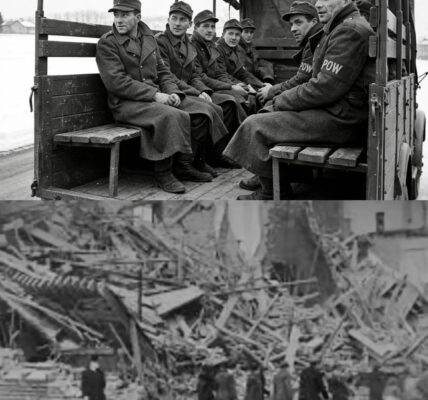
Some photographs capture a moment so ordinary that nobody present could have imagined it would survive for generations. A child waits for a puppy. Two girls continue talking across a barrier that divides their city. A soldier whispers goodbye to someone he loves before leaving for the front. Elsewhere, crowds celebrate the end of a war, workers risk their lives high above a growing metropolis, and political leaders sign agreements that may shape the future of millions. These images come from different countries, cultures, and decades, but together they reveal something remarkable: history is not made only by the people whose names appear in textbooks. It is also made by those who endure its consequences, celebrate its brief moments of peace, and continue living while the world around them changes.
In 1988, Cassandra Peterson appeared as Elvira, Mistress of the Dark, the dark-haired horror hostess whose theatrical appearance combined camp humor, gothic imagery, and a deliberately exaggerated sense of mystery. Elvira became a distinctive figure in American popular culture, transforming the presentation of horror films into a performance of its own. Her image belonged to a tradition in which television personalities could build lasting identities through costumes, humor, and an unmistakable visual style.
A very different kind of physical discipline appeared in a photograph of the 1952 United States Olympic weightlifting team. The athletes represented years of training, strength, and preparation for international competition. Olympic sport was more than a collection of individual contests: during the Cold War, it also became a stage on which countries sought to demonstrate national ability and prestige. Behind each competitor stood a world of coaches, training routines, and personal sacrifices that a single photograph could only hint at.
In Belfast, Northern Ireland, two girls continued chatting and spending time together despite the barbed wire separating them. The image is a small but powerful representation of life during a period of intense political and sectarian division. Barriers erected in Belfast became physical reminders of fear, mistrust, and the difficulty of maintaining everyday relationships across contested boundaries. Yet the girls’ conversation suggests that ordinary human connections did not always obey the divisions imposed upon the city. The photograph cannot explain their identities or the precise circumstances of their encounter, but its central contrast is unmistakable: a barrier designed to separate people stands beside two young people determined, at least for that moment, to continue their lives.
A childhood photograph of Jeffrey Dahmer, taken around 1965 according to the supplied caption, presents a different challenge in the way we remember notorious individuals. Dahmer later became known as an American serial killer whose crimes caused profound suffering to victims and their families. Looking at a childhood photograph can tempt viewers to search for clues that supposedly predict what a person will become. But a photograph of a child cannot establish future violence, and it would be misleading to claim that a later criminal identity is visibly encoded in an innocent-looking face. The image is a reminder of how hindsight changes the way people interpret the past, sometimes encouraging certainty where the evidence offers none.
At Ascot during the 1970s, Mrs. Gertrude Shilling became known for the extravagant hats she wore to the races. Her appearances helped turn fashion into part of the spectacle surrounding one of Britain’s most recognizable sporting traditions. Ascot was never only about horses and betting; it was also a place where clothing, social status, and public performance attracted attention. A striking hat could become a conversation piece in its own right, transforming an attendee into a familiar part of the event’s visual identity.
An unusually bizarre scene occurred when a house being transported to a new location slipped off the truck carrying it. The result was the kind of mishap that makes an ordinary engineering operation suddenly look surreal. Moving an entire house requires careful coordination, secure supports, and suitable transport. When something goes wrong, the structure itself becomes an unexpected object in the road, disrupting the normal relationship between buildings and the places where they stand. Without further information, the photograph does not establish the exact location or extent of the damage, but it preserves a moment when a routine relocation became an extraordinary sight.
In Moscow in 2000, Russian President Vladimir Putin and United States President Bill Clinton exchanged agreements establishing a joint warning center for sharing information about missile launches. The meeting belonged to a period in which both countries were trying to manage the dangers inherited from the Cold War. Nuclear weapons remained a central concern, and early warning systems were essential to reducing the risk that a mistaken interpretation of an event could trigger a catastrophic response. The photograph of the two leaders signing and exchanging documents represents an effort to make communication part of strategic stability. It did not erase the deep disagreements between their countries, but it illustrated the importance of cooperation when the consequences of miscalculation could be enormous.
A photograph of a young Woody Harrelson offers a glimpse of an actor before his career became familiar to international audiences. Images of performers early in their lives can be especially revealing because they preserve a period before fame reorganizes the way the public sees them. The young person in the photograph exists outside the roles, interviews, and public narratives that later become attached to a celebrity’s name.
One of the simplest scenes in this collection captures the moment just before a little boy receives a puppy. The anticipation is the heart of the image. A gift can be more than an object; it can become the beginning of a relationship that shapes a child’s memories for years. The photograph preserves the instant before the outcome becomes familiar, when surprise and expectation still occupy the same small space.
That ordinary tenderness stands in devastating contrast to April 20, 1999, the date of the Columbine High School massacre in Colorado. The attack killed twelve students and one teacher, in addition to the two perpetrators who died by suicide. Frightened people fled the school as emergency responders moved toward the scene. Photographs from that day preserve the confusion and fear experienced by students, teachers, families, and the wider community. The massacre became a defining event in American discussions about school safety, firearms, youth violence, and how the media covers mass shootings. Its consequences cannot be reduced to a single image or a single explanation. At the center of the tragedy were the victims and the people whose lives were permanently changed.
A photograph described as showing a mother in a relaxed moment with her newborn offers a quieter image of the care that continues even amid the broader history of violence. New life does not erase suffering, but it reminds us that human experience is never defined by tragedy alone. Across generations, parents and caregivers have continued the demanding, intimate work of feeding, protecting, and raising children while societies have moved through war, economic hardship, and political upheaval.
Roller skating in the 1920s represents a world of popular recreation in which public streets, parks, and skating spaces offered opportunities for movement and social interaction. The equipment and fashions of the era differ from those of today, but the appeal remains recognizable. Skating gave people a way to combine exercise with play, and it turned balance, speed, and skill into entertainment.

In the 1990s, Mikhail Kalashnikov, the Soviet designer associated with the AK-47 rifle, was photographed wearing an AK-47 tie pin while standing beside Libyan leader Muammar Gaddafi on the shores of Tripoli. The image brings together two figures connected to the political and military history of the late twentieth century. Kalashnikov’s design became one of the most widely recognized firearms in the world, used in conflicts across many regions. Its global spread turned the rifle into both a symbol of military power and a reminder of the devastating persistence of armed conflict. The photograph’s unusual tie pin compresses that complicated legacy into a small personal accessory.
A photograph of young Japanese girls with their younger siblings from 1901 presents family life in Japan at the beginning of a century of extraordinary transformation. Japan was modernizing rapidly, with changes in education, industry, military power, and social organization. Yet the responsibilities of caring for younger children remained a familiar part of daily life. The photograph records a moment before the upheavals of the twentieth century reshaped the country through war, defeat, reconstruction, and economic growth.
On Missouri Avenue Beach in the 1950s, people posed for the camera with the easy confidence of a summer outing. Beach photographs capture more than leisure: they preserve clothing, body language, and changing ideas about public recreation. In postwar America, beaches and swimming areas became important settings for family outings, courtship, and social life.
A passport photograph of an American Romani woman from 1917 reminds us that official documents have long shaped the way people are represented by governments. A passport image is usually designed to identify rather than tell a story. It removes the background, minimizes personal expression, and reduces a human being to a standardized portrait. Yet the person behind the photograph had a life that extended far beyond the requirements of the document. Images of Romani people should be approached with care, recognizing the long history of discrimination and stereotyping they have faced across Europe and elsewhere.

On January 20, 1990, Baku woke to the aftermath of the entry of Soviet troops. The events, remembered in Azerbaijan as Black January, followed escalating tensions over the future of the Soviet Union, the conflict surrounding Nagorno-Karabakh, and growing Azerbaijani demands for political self-determination. Soviet forces entered the city during the night of January 19–20, and civilians were killed and injured. Photographs taken afterward record a city confronting the consequences of military force used against its own population. The morning after such an event can be especially haunting: the immediate violence has passed, but the streets, families, and public life must confront what has been done.
In 1945, army nurses were photographed sunbathing beside a 40-millimeter gun aboard a Coast Guard troopship. The scene combines military equipment with a moment of relaxation during wartime service. Nurses played essential roles in caring for wounded personnel, often working in demanding conditions far from home. The photograph does not tell us the full circumstances of the voyage, but it captures the strange coexistence of duty and ordinary human needs. Even aboard a vessel equipped for military operations, people still sought moments of rest.
In 1967, the Patrouille Suisse, the Swiss Air Force’s aerobatic team, performed a loop in front of the Alps. The photograph turns military aviation into a display of precision and coordination. Aerobatic formations demand trust between pilots, careful timing, and repeated practice. The mountains provide a dramatic backdrop, reminding viewers how aviation can transform the sky into a public stage.
A soldier from Reserve Infantry Regiment No. 243 of the Imperial German Army, photographed in 1914, belongs to the opening period of the First World War. In the summer of that year, the assassination of Archduke Franz Ferdinand helped trigger a crisis that drew the major European powers into war. Mobilization sent enormous numbers of men into military service, often with little understanding of how long or destructive the conflict would become. The uniform in a photograph can appear formal and orderly, but behind it was a young person entering a war that would transform Europe.
A photograph captioned as showing a male couple in America in 1875 provides a glimpse into the history of intimacy and representation. Without more information about the subjects or the photograph’s provenance, it is not possible to establish how they understood their relationship. Historical images of men posing together must be interpreted carefully rather than automatically assigned a modern identity. Still, such photographs can open valuable questions about friendship, affection, social expectations, and the range of relationships that existed even when public recognition was limited.

The caption describing a terrorist attack in Manchester on June 15, 1999, as an IRA attack during the European Championship requires verification. It does not correspond clearly to a well-established major incident in Manchester on that date, and it should not be repeated as confirmed history without a reliable source. This is an important reminder that a dramatic caption can be inaccurate even when it accompanies a convincing photograph. Historical storytelling must distinguish between what an image shows, what its caption claims, and what independent records can confirm.
A nineteenth-century photograph of Kandyan aristocrats in Sri Lanka preserves the clothing and presentation of an elite social group during a period of colonial rule. The Kandyan kingdom had been annexed by the British in 1815, bringing a major political transformation to the island’s interior. Portraits of aristocrats can document status and costume, but they also belong to a society negotiating the relationship between inherited institutions and colonial authority.
A photograph of Carey’s ice cream truck, numbered 40, evokes the history of street vending and neighborhood entertainment. Ice cream trucks transformed a simple food into an event, bringing treats directly to residential streets and creating familiar sounds associated with summer. Such vehicles reveal how commercial life can become woven into childhood memory and the everyday geography of a community.
At Coney Island in New York in 1904, beachgoers gathered for a day beside the water. Coney Island had become a major destination for leisure, drawing crowds eager to escape the density of city life. The photograph records a public culture of amusement and recreation at a time when urban workers were increasingly seeking accessible places to spend their free time.
A photograph labeled “Witches from 1875” draws attention to the changing history of costume, superstition, and popular imagery. Without further context, it is difficult to know whether the subjects were performers, participants in a staged scene, or people dressed for a particular event. The image nevertheless reflects the enduring fascination with witches as figures in folklore and entertainment. The history of witchcraft accusations is much darker than the playful imagery often used in later popular culture, so the distinction between costume and historical persecution matters.

During New York City’s May Day parade in 1936, residents highlighted the harsh realities of slum life. The parade took place during the Great Depression, when unemployment, poverty, inadequate housing, and economic insecurity affected millions. Public demonstrations gave people a way to make visible conditions that were often ignored by those outside affected neighborhoods. The photograph belongs to a broader history of labor activism and campaigns for social reform during a period when many Americans questioned whether the existing economic system could meet the needs of ordinary families.
A childhood photograph of Joseph Goebbels, taken when he was around ten according to the caption, offers a stark reminder of how later historical knowledge can change the way an early image is perceived. Goebbels became Adolf Hitler’s propaganda minister and one of the central figures in the Nazi regime. His role in promoting antisemitism, war, and genocidal ideology is well documented. But a childhood photograph does not explain how a person came to participate in such a regime. The danger lies in treating the later historical figure as if his future were already visible in the child.
In Drenthe, the Netherlands, occupants of a sod house stood outside their home in 1936. A sod house used earth and vegetation as building materials, reflecting the resources and practical knowledge available in particular rural environments. The photograph offers a view of housing and daily life that differs sharply from the modern assumption that a home must be built from industrial materials. It also preserves the people who inhabited the structure, keeping the image from becoming merely an architectural curiosity.
Two Ainu men from Hokkaido in northern Japan, photographed in the early 1900s, represent another part of the region’s Indigenous history. Ainu communities faced policies of assimilation and discrimination as the Japanese state expanded its control over Hokkaido. Historical photographs of Ainu people can provide visual evidence of clothing and appearance, but they should not be separated from the political circumstances in which they were made. The subjects were individuals within a living community, not simply examples of an unfamiliar culture.
In August 1955, fashion photographer Richard Avedon created the famous image Dovima with Elephants, featuring the model Dovima in an evening dress designed by Christian Dior at the Cirque d’Hiver in Paris. The photograph became a landmark of fashion photography, contrasting elegant couture with the immense bodies of the elephants. Its composition transformed a fashion image into something theatrical and memorable. It also belongs to a period when luxury fashion photography increasingly used unusual settings to construct visual narratives rather than merely document clothing.

On the New York City subway in 1978, passengers occupied the shared space of a system that carried millions through the city. Subway photographs often preserve the small interactions and solitary expressions of urban life: strangers sitting close together, people absorbed in their own thoughts, and the constant movement of a city that rarely stops. The subway is both transportation infrastructure and a cross-section of society.
Theda Bara, the silent-film actress known for her vamp persona, became one of early cinema’s most recognizable images of dangerous glamour. Her screen identity helped establish the “vamp” as a popular archetype: a woman portrayed as seductive, mysterious, and capable of threatening male respectability. The persona was partly a publicity construction, demonstrating how the film industry could turn a performer into a carefully managed legend.
In Antwerp on November 11, 1918, citizens took to the streets to celebrate the surrender of Germany and the end of the First World War. The armistice brought relief after more than four years of devastating conflict, but it did not immediately restore normal life across Europe. Cities faced shortages, damaged infrastructure, political instability, and the enormous human consequences of the war. The celebration was real, yet it stood at the beginning of another uncertain period rather than at the end of history’s troubles.
A photograph from around 1910 depicts the use of high-frequency electrical current for treatment, reflecting the period’s fascination with new medical technologies. Electrical devices were promoted for various therapeutic purposes, some based on legitimate emerging science and others on claims that were poorly supported. The image is a useful reminder that medical history includes both genuine innovation and treatments that later fell out of favor. The presence of a machine in a clinical setting does not, by itself, establish that a treatment was effective.
A photograph of the bedroom where Marilyn Monroe was found dead, dated August 6, 1962, belongs to the aftermath of the actress’s death. Monroe died on August 5, 1962, and her death was officially ruled a probable suicide from a barbiturate overdose. The image of the bedroom turns attention away from her famous public persona toward the private space in which her life ended. Yet the photograph cannot explain all the circumstances of her death, and it should not be used to turn unanswered questions into unsupported claims. Monroe’s legacy extends beyond the circumstances of her final hours: she was an influential performer whose image continues to shape popular culture.
In January 1983, British Prime Minister Margaret Thatcher visited British troops in the Falkland Islands following the 1982 conflict between Britain and Argentina. The war had begun after Argentine forces occupied the islands, which Britain administered and Argentina claimed as the Islas Malvinas. The conflict ended with Argentine surrender in June 1982, but it left casualties and continued political disagreement over sovereignty. Thatcher’s visit was a public expression of support for the British military presence and a reminder that the consequences of war continue long after the fighting stops.

In Germany in 1945, Soviet Marshal Ivan Konev presented a horse to American General Omar Bradley, according to the supplied caption. The image evokes the relationship between Allied commanders near the end of the Second World War in Europe. The Soviet Union and the United States had fought on the same side against Nazi Germany, but their wartime cooperation was already complicated by competing political systems and strategic interests. The horse, a traditional gift, offers a personal gesture within a military relationship that would soon be overshadowed by the emerging Cold War.
On February 22, 1935, a three-wheeled car passed a sign marking where the London North Orbital Road would be constructed near West Hyde Lodge, close to Rickmansworth. The image captures transportation at a moment when road networks were expanding to accommodate changing patterns of travel. Infrastructure projects can be difficult to appreciate once they become familiar parts of the landscape. A photograph taken before construction preserves the transitional moment when a future road existed only as a plan and a sign.
Civil-defense drills at a school in Novosibirsk in the Soviet Union during the spring of 1989 reflect the continuing concern about emergencies and military conflict late in the Cold War. Civil-defense education prepared civilians for potential threats, including those associated with nuclear warfare. By 1989, political changes were rapidly reshaping Eastern Europe and the Soviet Union, but the systems and habits built during earlier decades remained part of public life. The photograph documents how geopolitical anxieties could reach into classrooms and influence the routines of children.
A portrait of two unidentified women from the 1870s reminds us that the historical record is filled with people whose names have been lost. Their faces survive, but without identities or biographies, much of their personal history remains inaccessible. The photograph is still valuable. It preserves clothing, posing conventions, and the appearance of two individuals who lived in a world very different from our own. Their anonymity is not evidence that their lives were insignificant; it reflects the limits of the records that survived.
An Omaha police officer was photographed holding Herbert Cochran in a headlock during the processing of Cochran’s mugshot after an arrest for burglary on November 24, 1899. The image belongs to the history of policing and criminal identification at the end of the nineteenth century. Mugshots were becoming important tools for documenting arrests and identifying suspects, but a photograph taken during an arrest records an allegation and an encounter with police, not by itself proof of guilt. The image captures a moment of physical control and institutional authority, raising questions about how the law was enforced and how people were represented in official records.

A photograph captioned “Presley, Elvis A.” recalls Elvis Presley’s transformation from a young musician into one of the most influential figures in popular music. His performances brought together country, rhythm and blues, gospel, and other musical traditions, while his public image provoked both admiration and controversy. Photographs of Presley are often treated as pieces of celebrity history, but they also document the changing sound and social boundaries of mid-twentieth-century America.
At Muscle Beach in Santa Monica during the 1940s, a couple posed in a setting associated with physical fitness and public display. Muscle Beach became an important gathering place for bodybuilders, acrobats, and people interested in strength and athletic performance. The beach offered a public arena where physical culture was practiced in view of others, helping turn exercise into both recreation and spectacle.
On May 23, 1928, workers at New York’s Fulton Fish Market showed off a giant sturgeon weighing 750 pounds, caught off the coast of Virginia. The photograph reveals a world in which large fish could become public attractions as well as commodities. Fish markets were essential parts of urban food distribution, linking fishermen, wholesalers, retailers, and consumers. A catch of extraordinary size naturally drew attention, but it also belonged to the labor and logistics required to bring food into a major city.
Marie Curie, photographed in her Paris laboratory in 1912, represents a landmark in the history of science. Curie was the first woman to receive a Nobel Prize and the first person to receive Nobel Prizes in two different scientific fields. Her work on radioactivity helped transform physics and chemistry, while her career challenged the barriers women faced in scientific institutions. The laboratory setting is more than a backdrop: it is a reminder that discoveries emerge through sustained experimentation, careful measurement, and years of work.
On December 1, 1918, Romania’s King Ferdinand and Queen Marie returned to Bucharest. The date became associated with the consolidation of Greater Romania after the First World War, a period when borders and political identities across Europe were being redrawn. The royal couple’s return symbolized national hopes and the restoration of public authority after wartime upheaval. Yet the new political order also contained complexities and tensions that could not be resolved by a ceremonial appearance alone.
On July 27, 1966, Demo Rinpoche Lobsang Jamphel Lungtok Tenzin Gyatso, described in the supplied caption as a reincarnate lama associated with Tengyeling Monastery, and his wife were led through a struggle session by Red Guards during China’s Cultural Revolution. The Cultural Revolution, launched under Mao Zedong’s leadership in 1966, brought political persecution, public denunciations, attacks on religious and cultural institutions, and widespread upheaval. Struggle sessions forced targeted people to endure public humiliation and ideological accusations. For religious figures, these campaigns could threaten both personal safety and traditions that had been maintained over generations. The photograph preserves an episode within a much larger campaign of coercion that profoundly affected Chinese society.
Oil drillers at Dingman No. 1 in Turner Valley, Alberta, in 1914 represent the early development of Canada’s petroleum industry. Oil exploration involved considerable uncertainty: drilling could be expensive and physically demanding, and a successful discovery could transform a region’s economic prospects. The image records workers at the frontier of an industry that would become increasingly important to modern transportation, manufacturing, and national economies.
A childhood photograph of Keanu Reeves captures the actor before the international success of his film career. Like many childhood portraits of later celebrities, the image acquires a new significance through hindsight. At the time it was taken, it was simply a record of a young person growing up, long before the public attached a familiar name and a series of film roles to his face.
The German battleship Gneisenau was photographed at the Kiel shipyard in 1940 showing damage from a torpedo fired by the British submarine HMS Clyde. The damage illustrates the dangers faced by major surface warships during the Second World War, when submarines could threaten even heavily armed vessels. Naval warfare involved a constant struggle between armor, detection, maneuver, and weapons capable of striking from concealment. A shipyard photograph also shows that damage did not end a vessel’s story: repair, inspection, and decisions about its future were part of the broader machinery of war.
Early twentieth-century beach clothing looked very different from modern swimwear. The change reflected shifting ideas about modesty, health, recreation, and the public display of the body. As seaside holidays became more accessible, swimwear evolved alongside changing social expectations. Historical beach photographs can therefore reveal broader cultural change through something as seemingly simple as the cut of a garment.
Virginia Hill, often described in accounts of American organized crime as a prominent figure associated with mob circles, became famous for her relationships with underworld figures and her public testimony. Claims that she was the mob’s principal money launderer or courier should be treated cautiously unless supported by reliable historical documentation. Her story belongs to the larger history of organized crime, sensational journalism, and the complicated role played by women who were linked to powerful criminal networks. The public fascination with Hill also reveals how the media could transform a person’s private associations into a lasting legend.
A photograph labeled “Kitchen Swan, 1963” is difficult to interpret without additional context. The caption may refer to a person, an object, a performance, or a title that has been detached from its original source. Rather than invent a story around the phrase, it is more responsible to preserve the uncertainty and recognize that historical captions can become corrupted as images circulate online.
A protest against the miniskirt reflects the broader cultural debates that surrounded changing fashion in the 1960s and beyond. Shorter skirts became associated with youth culture, changing gender expectations, and greater freedom in personal presentation. Opposition to new fashions often revealed anxieties about social change, especially when young women claimed more control over how they dressed and appeared in public. Clothing became a visible site of disagreement about respectability, sexuality, and generational authority.
In New York City in 1949, Jacob Hudson, described as a seven-foot-eight-inch Santa Claus, appeared in a photograph associated with the holiday season. The image combines the commercial traditions of Christmas with public fascination for extraordinary physical stature. Department stores and city streets had long used seasonal characters to attract families and create festive spectacles. The photograph also demonstrates how a person’s unusual height could become part of a public performance, even when the role itself was familiar and cheerful.
Frederick Park and Ernest Bolton, Victorian men associated with cross-dressing and known in the press as Fanny and Stella, became subjects of public attention in nineteenth-century Britain. Their story belongs to a period when gender presentation was increasingly scrutinized through legal and social conventions. Accounts of their lives reveal how public attitudes toward gender nonconformity could intersect with sensational journalism, policing, and the law. Their historical significance lies not simply in the clothes they wore, but in what their treatment reveals about the boundaries society attempted to enforce.
Children playing with water in the street in 1975 offer a simple scene of summer recreation. In neighborhoods where formal play spaces were limited, ordinary streets could become places for games and improvised entertainment. The photograph preserves the resourcefulness of children making their own fun from what was available.
At a Brooklyn watermelon-eating contest in 1935, a champion was celebrated for an activity that combined appetite with public amusement. Contests of this kind transformed ordinary food into a spectacle, attracting crowds through a combination of competition and comedy. The image belongs to a long tradition of fairs and public events in which unusual skills or challenges became forms of popular entertainment.
A Jewish Berber woman in Morocco in the 1930s represents a community whose history connected North African Jewish life with Amazigh, or Berber, cultural settings. Jewish communities in Morocco developed over centuries, with distinctive local traditions shaped by language, religion, trade, and regional life. A single portrait cannot describe that diversity, but it can preserve the appearance of a person whose identity belongs to a much wider history of coexistence, cultural exchange, and changing political circumstances.
A German soldier aiming a weapon while standing on a trained horse in 1935 presents an unusual combination of military tradition and modern warfare. By the 1930s, motor vehicles and mechanized equipment were changing military organization, but horses still had roles in many armies. The photograph suggests a display of skill or training, although its precise circumstances are not clear. It serves as a reminder that military modernization rarely happens all at once; older methods and newer technologies often coexist.
During the Second World War, a woman walked through Times Square advertising a clothing drive with a barrel-themed outfit. The image shows how public campaigns used creative visual messages to encourage civilian participation in the war effort. Clothing collection and recycling were among the ways people could contribute materials to broader wartime needs. In a city filled with advertisements, an unusual costume could capture attention and turn a practical appeal into a memorable public image.
An Inuit woman ice fishing at Fullerton Harbor in Nunavut in 1905 preserves a glimpse of subsistence activity in the Arctic. Fishing in icy environments required detailed knowledge of local conditions, seasonal patterns, and techniques passed through communities. Historical images of Inuit life are especially important when considered alongside Indigenous knowledge and lived experience, rather than as isolated records of a supposedly remote world. The photograph reflects a relationship between people and the environment that demanded skill, patience, and adaptation.
Around 1930, steeplejacks worked near the top of New York’s Woolworth Building. Working at height required specialized skill and considerable courage, particularly before modern safety equipment became standard. The Woolworth Building, completed in 1913, had once been among the tallest buildings in the world and symbolized the ambitions of early twentieth-century skyscraper construction. The photograph shifts attention from the finished monument to the workers whose labor kept tall structures functioning.
At Roosevelt Girls High School around 1942, students practiced rifle shooting. During the Second World War, military training, civil defense, and patriotic activities entered many aspects of public life. The photograph should be understood within that wartime environment rather than treated as evidence that all schools followed the same practices. It records a particular form of preparation at a time when the United States was deeply involved in a global conflict.
Construction of Boulder Dam, now known as Hoover Dam, transformed the landscape near Boulder City, Nevada. In 1934, a rigger worked on the cableway head tower during construction. The project demanded large-scale engineering, organized labor, and the coordination of workers in dangerous conditions. The dam would provide flood control, water storage, and hydroelectric power, helping reshape the development of the American Southwest. Yet its construction also involved serious risks to workers and significant consequences for the surrounding environment and communities.
The creativity of children in the 1980s is often remembered through homemade toys, improvised games, and inventive uses of everyday objects. A photograph described simply as an example of children’s ingenuity reflects a broader truth: play does not require sophisticated equipment. Children frequently turn limited resources into elaborate adventures, creating rules and stories that make familiar surroundings feel new.
Car polo in the 1910s offers one of the more unusual examples of early twentieth-century sporting experimentation. By placing players in motor vehicles rather than on horseback, the game adapted the general idea of polo to the automobile age. Such spectacles reflected the excitement surrounding new technology and the desire to test its possibilities in public entertainment. The image also raises obvious questions about safety, because the combination of moving vehicles and competitive play created risks that modern sporting regulations would have to address.
In Toronto on March 2, 1931, four-year-old Elsie Wyley was recorded as a lost child at Number One Police Station. The photograph is a poignant reminder of the role police stations once played as places where lost children could be taken while authorities attempted to identify and reunite them with their families. The supplied caption does not reveal what happened afterward, and it would be wrong to invent a reunion or an unhappy outcome. What remains is the image of a very young child temporarily separated from the people responsible for her care.
At a state fair in 1936, a romantic moment was captured on a swing. The photograph belongs to a long tradition of fairs as places where entertainment, courtship, and community life intersected. Rides and attractions offered temporary escapes from routine, and a swing could turn an ordinary outing into a memory that lasted long after the fair had closed.
In 1969, photographer Leonard Freed captured the aftermath of New Year’s Eve at New York’s Grand Central Terminal. The station, normally a place of constant movement, could become a stage for the remnants of celebration: tired travelers, discarded decorations, and people returning to ordinary routines after the midnight excitement had passed. Such images are valuable because they record the moments when public spectacle ends and daily life resumes.
David Bowie in the 1970s wore an iconic stage costume designed by Japanese designer Kansai Yamamoto. Bowie’s stage persona repeatedly challenged conventional ideas about masculinity, glamour, and performance. The costumes were not incidental decorations; they helped create characters through which Bowie explored music, theater, and identity. The collaboration with Yamamoto also reflected the growing international exchange of ideas in fashion and popular culture.
Around 1900, four African-American women posed on steps at Atlanta University in Georgia. The photograph preserves a group of women within the context of Black education during the Jim Crow era, when segregation and racial discrimination severely restricted opportunity. Educational institutions serving African-American communities played vital roles in training teachers, professionals, and leaders. The women in the image are not merely representatives of a historical category; they are individuals whose names and stories deserve preservation wherever records allow.
On March 4, 1857, President James Buchanan was inaugurated on the East Front of the United States Capitol in Washington, D.C. His presidency began during a period of escalating conflict over slavery and the future of the Union. Within four years, the country would descend into civil war. An inauguration photograph or illustration preserves the ceremony of political continuity, but the historical context reveals how fragile the national system had become.
A photograph of an American horse around 1905 belongs to a world in which horses remained essential to transportation, farming, trade, and military activity. Automobiles were appearing more frequently, but they had not yet displaced animal power from everyday life. Horses occupied a central place in the economy and in the routines of many households, and their care demanded knowledge, labor, and resources.
A Roman gate described as Porta Interior represents the physical endurance of ancient architecture. Roman roads, walls, and gateways were built to serve practical needs as well as demonstrate political authority. Structures that survive for centuries connect modern viewers with the engineering and urban life of the ancient world. Yet even well-preserved ruins have histories of repair, reuse, and changing interpretation; their survival is rarely the result of a single uninterrupted purpose.
The phrase “Carpool San Miniato” appears in the supplied captions without enough context to establish a specific event or scene. San Miniato, in Tuscany, is a real historic town, but the label alone does not tell us what the photograph depicts. The responsible approach is to preserve the caption as uncertain rather than invent a narrative around it.
On January 20, 1990, the morning after Soviet troops entered Baku, residents faced the aftermath of violence and military intervention. This second reference to the event reinforces its place among the most consequential moments in late Soviet history. Black January became a symbol of the Azerbaijani independence movement and deepened public distrust of Soviet authority. Photographs from the aftermath show more than the consequences of a military operation: they preserve the experience of a population confronting the use of force at a moment when the political future of the Soviet Union was increasingly uncertain.
On May 11, 1995, Bill Clinton, Hillary Clinton, and Michael O’Neal, identified in the caption as a Coca-Cola regional manager in Russia, were photographed drinking Coca-Cola in a scene described as celebrating the triumph of American capitalism over Soviet communism. The image belongs to the post-Cold War moment when American brands expanded into markets once shaped by Soviet economic structures. A bottle of Coca-Cola became a familiar symbol of consumer culture and global commerce. Yet the meaning of the photograph depends on its context: it represents a particular interpretation of economic change rather than proof that one political or economic system had resolved every social problem.
In Amsterdam in 1968, a hippie father walked with his daughter. The image evokes the counterculture of the late 1960s, when some young adults challenged established norms around dress, family life, music, and authority. The presence of a child in the scene reminds us that cultural change did not take place only in protest crowds or music venues. It also entered homes and family relationships, shaping the ways people imagined raising children and living outside conventional expectations.
A caption describing how children listened to music in the 1970s points toward a time before digital streaming and wireless headphones. Young listeners relied on the technologies available to them, whether records, radios, cassette players, or shared listening devices. The exact equipment in the photograph would need confirmation, but the broader transformation is clear: each generation has developed its own habits around music, and those habits reveal the technology and social life of the era.
A German prisoner of war captured near Ubach in Germany wore a tag dated December 1, 1944, informing his captors that he had an injured back and should be handled carefully. The image offers a small detail of the administrative processes surrounding wartime captivity. Prisoners could carry identifying information, medical notes, or other markers intended to communicate their circumstances. Behind the tag was a person whose physical condition mattered in a system where transport, interrogation, and confinement could create additional risks.
In the 1960s, the Shah of Iran was photographed shooting a basketball. The image offers a glimpse of sport as part of the public presentation of political leaders. Mohammad Reza Shah Pahlavi ruled Iran during a period of modernization, political repression, economic change, and growing opposition that eventually culminated in the 1979 revolution. A photograph of a ruler playing sport can humanize a public figure, but it cannot by itself explain the political system over which he presided.
A Women’s March in New York City belongs to the long history of public demonstrations in which women have demanded political rights, workplace equality, bodily autonomy, or social change. The precise march and date are not specified in the caption, so its particular demands should not be assumed. Yet the broader tradition of women’s marches demonstrates how public assembly can turn individual concerns into visible collective claims.
A photograph of Queen, the British rock band, getting food in Japan in 1975 places internationally famous musicians within the ordinary rhythms of touring. Musicians on tour travel through airports, hotels, restaurants, and unfamiliar streets, often spending long stretches away from home. Images of such moments can reveal the everyday lives behind the performances, even when the people in the frame are recognized by millions of fans.
In 1921, striking miners surrendered their rifles to federal troops after the Battle of Blair Mountain in West Virginia. The confrontation was one of the largest labor uprisings in American history, emerging from fierce disputes over unionization, wages, working conditions, and the power of coal companies. Armed miners marched against forces aligned with mine owners and the authorities, and federal intervention helped end the conflict. The photograph represents the collision between labor demands and institutional power in an industry on which many communities depended for their livelihoods.
On April 18, 1906, a devastating earthquake struck San Francisco, followed by fires that destroyed large parts of the city. A photograph of ruins at the intersection of Sutter, Powell, and Stockton streets records the scale of the destruction. Buildings collapsed, fires spread through damaged neighborhoods, and thousands of residents lost their homes. The disaster transformed urban planning, construction practices, and emergency response. Yet its history is also one of community resilience, as residents and workers faced the enormous task of rebuilding a city from the wreckage.
A photograph of Danish soldiers in 1939 belongs to the uneasy period immediately before and during the opening of the Second World War. Denmark was invaded by Germany in April 1940, but the caption does not establish the exact circumstances of the soldiers’ photograph. The image nevertheless recalls the vulnerability of smaller European states as Nazi Germany expanded its military campaigns.
On May 8, 1945, British women working in the picture division of the London office of war information were photographed dancing in the street with American soldiers during Victory in Europe celebrations. The surrender of Nazi Germany brought immense relief after years of bombing, rationing, separation, and loss. Crowds gathered in streets across Britain to celebrate the end of the war in Europe. The joy was genuine, but it existed alongside grief for those who would never return and uncertainty about the rebuilding that lay ahead.
Yellow Magpie, an Arapaho man photographed in 1898, represents an Indigenous individual whose name survived in the historical record. Portraits of Native Americans from this period were often made within a larger context of expansion, displacement, and policies aimed at controlling Indigenous communities. Such photographs should not be treated as relics of a vanished people. They preserve individuals from living nations whose descendants continue to maintain cultural traditions, languages, and political identities.
A P-47D Thunderbolt named Fickle Flossy, flown by Charles Dozier of the 5th and 10th Fighter Squadrons of the 405th Fighter Group around 1944, belonged to the Allied air campaign during the Second World War. The P-47 Thunderbolt was a powerful fighter aircraft used for air combat and ground attack. Personal names painted on aircraft gave machines distinctive identities within a vast military system. Behind every aircraft stood a pilot, ground crew, mechanics, planners, and support personnel whose work sustained operations across dangerous skies.
In 1966, a mass rally in Tiananmen Square marked the beginning of China’s Cultural Revolution under Mao Zedong. The movement mobilized young people, including the Red Guards, and encouraged attacks on perceived political enemies, traditional customs, and cultural institutions. The consequences included persecution, public humiliation, violence, and disruption across schools, workplaces, families, and religious communities. A photograph of a huge rally can convey the scale of mobilization, but the crowd’s size alone cannot reveal the different motivations or levels of coercion experienced by those present.
A young geisha photographed in Japan in the early 1900s belongs to a long tradition of performance and apprenticeship. Geisha were trained in arts such as music, dance, conversation, and traditional entertainment. Their lives have often been misunderstood by outsiders, whose images of geisha have sometimes reduced a complex profession to exotic stereotypes. A historical portrait offers a starting point for learning about the individual and the cultural institutions surrounding her, not a complete explanation of either.
In Philadelphia during the 1950s, the Rocket Express monorail carried children around the toy department on the eighth floor of the John Wanamaker department store in Center City. Department stores were once major destinations for families, combining shopping with elaborate displays and attractions designed to make a visit memorable. The little monorail turned a commercial space into a miniature adventure, reflecting a period when retailers invested heavily in creating experiences that children would associate with the store.
Napoleon III, Emperor of the French, was photographed in 1857 during a period when photography was becoming increasingly important in the presentation of political authority. The nephew of Napoleon Bonaparte, Napoleon III ruled France first as president and then as emperor. His reign was associated with modernization, urban transformation, and imperial ambition, before ending in defeat during the Franco-Prussian War of 1870. A formal portrait conveys the authority he sought to project, while the wider historical record reveals how temporary even the grandest political images can be.
A World War I amputee played billiards with prosthetic legs in 1915. The photograph points toward the enormous number of soldiers who returned from the war with permanent injuries. Amputation did not necessarily end a person’s ability to participate in recreation or public life, but rehabilitation required medical care, new equipment, and adjustments to daily routines. The image challenges the assumption that people with disabilities belong only in stories of suffering. It also reminds us that the First World War accelerated developments in prosthetics and rehabilitation because so many people needed support after the fighting.
The Saint Louis Cotton Club Band played at the Cotton Club in 1925, part of a wider history of Black music and entertainment in the United States. Jazz bands helped shape the sound of the twentieth century, creating new musical forms through improvisation, rhythm, and collaboration. The history of clubs and performance venues is also inseparable from racial segregation and unequal access to the entertainment industry. Musicians created influential art within a society that often restricted where they could perform and how they could be treated.
After the Japanese attack on Pearl Harbor on December 7, 1941, people gathered at a United States Navy recruiting station. The attack led to the United States’ entry into the Second World War and transformed the lives of millions of Americans. Recruiting offices became places where individuals made decisions that would take them far from home, into military service and the uncertain demands of a global conflict. The photograph preserves a moment when the war moved from distant headlines into immediate national experience.
Conjoined twins Violet and Daisy Hilton, photographed in the mid-1920s, spent much of their early lives on the sideshow circuit. Their careers were shaped by a public entertainment industry that often presented people with unusual bodies as attractions. In the 1930s, they sought legal emancipation from those who controlled their work and earnings. Later, they worked in a grocery store in Charlotte, North Carolina. Their lives reveal the tension between public visibility and personal autonomy: they were widely seen by audiences, yet they had to fight for greater control over their own circumstances.
During the construction of the Empire State Building, workers operated at extraordinary heights with safety equipment far less comprehensive than modern standards. Photographs of steelworkers balancing on beams have become enduring symbols of the skyscraper era. They reveal both the skill required to assemble monumental structures and the dangers workers faced. The building represented technological ambition and economic power, but its construction depended on people who performed difficult labor in conditions that could turn a small mistake into a fatal fall.
In England in 1916, a factory worker stood beside a large artillery shell inside an ammunition plant. The image belongs to the industrial mobilization of the First World War, when factories expanded production to meet the enormous demand for weapons and ammunition. The war depended not only on soldiers in trenches but also on workers who manufactured the materials that sustained combat. Women and men in industrial workplaces became part of the wider war effort, often facing long hours, dangerous machinery, and exposure to hazardous substances.
The Dust Bowl in the Texas Panhandle in March 1936 captured one of the most devastating environmental and economic crises in American history. Severe drought, wind erosion, and damaging agricultural practices contributed to enormous dust storms across the Great Plains. Families lost crops, livestock, homes, and livelihoods, forcing many to migrate in search of work. Photographs of the Dust Bowl reveal a landscape transformed by environmental disaster, but they also preserve the human consequences of decisions about land use, economic vulnerability, and the limits of resilience.
In 1939, a British soldier whispered into the ear of a loved one as he departed for the front. The photograph captures the intimacy of a farewell at the beginning of another world war. Britain declared war on Germany in September 1939 after the invasion of Poland, and millions of people faced separation from family and friends. A whispered message is impossible to recover from the image alone, but the gesture communicates something familiar: the need to say something meaningful when there may be no certainty about the next meeting.
Circus performers in the 1930s belonged to a world of traveling shows, elaborate costumes, dangerous acts, and demanding schedules. Circus life required specialized skills that were developed through practice and often passed through families or professional networks. Performers could become celebrities within their communities, but they also lived with the practical uncertainties of travel and employment. The photograph offers a glimpse of an entertainment tradition that has changed considerably as audiences, regulations, and attitudes toward animal performances have evolved.
In Hiroshima in 1947, a survivor of the atomic bombing posed for a photograph two years after the attack. On August 6, 1945, the United States dropped an atomic bomb on Hiroshima, killing and injuring vast numbers of people and destroying much of the city. Survivors faced burns, radiation-related illness, bereavement, displacement, and the challenge of rebuilding their lives amid profound uncertainty. A photograph of a survivor two years later cannot convey every physical and emotional consequence of the bombing. It does, however, stand as a reminder that the effects of nuclear weapons do not end when the explosion has passed. They continue through bodies, families, communities, and generations.
Wrestler Mildred Burke was photographed filing her nails while restraining a reporter in 1947. Burke was a major figure in women’s professional wrestling, helping establish the sport at a time when female athletes faced substantial obstacles to recognition and opportunity. The scene combines athletic strength with a deliberately theatrical pose, reflecting wrestling’s mixture of competition, performance, and publicity. Burke’s career helped demonstrate that women could draw audiences and build professional identities in a sport that had often excluded them from equal standing.
Orville and Wilbur Wright, photographed on November 12, 1911, were the brothers whose experiments helped establish powered, controlled flight. Their work at the beginning of the twentieth century transformed the possibilities of transportation and military technology. The aircraft that followed would become central to commerce, exploration, rescue, and warfare. Their photograph preserves two individuals whose work helped change humanity’s relationship with distance, even though the later consequences of aviation extended far beyond what they could have anticipated.
In 1960, a crowd waited to catch a glimpse of the Beatles as the band returned to the United Kingdom from the United States. The Beatles’ growing popularity helped reshape popular music and youth culture, turning public appearances into events that attracted intense attention. Crowds gathered not merely to hear songs but to participate in a shared cultural moment. The image shows how celebrity could transform an ordinary arrival into a public spectacle, with fans seeking even a brief view of performers who had become symbols of a generation.
Acrobat J. D. Payne was described as being attached by rope to a flying airship at an altitude of 1,000 meters. If accurately captioned, the act would represent an extraordinary form of aerial spectacle, combining performance with serious physical risk. However, the exact circumstances and date need verification before the image can be treated as a fully established record. What is clear from the description is the broader appeal of early aerial demonstrations, when aviation was still new enough to inspire both wonder and daring public performances.
In Russia in 1998, designer Urania Burmistrova created an alternative fashion look that reflected the experimentation of the post-Soviet era. The 1990s brought dramatic economic and social changes across the former Soviet Union, and fashion became one of the visible arenas in which new identities and cultural influences emerged. Alternative styles challenged conventional expectations and expressed individuality during a period when older systems of cultural production were being reconfigured.
On May 6, 1994, Queen Elizabeth II and French President François Mitterrand crossed beneath the sea in a Rolls-Royce aboard Le Shuttle during the opening of the Channel Tunnel. The tunnel connected Britain and France through a rail link under the English Channel, a major engineering achievement that transformed travel between the two countries. The ceremony symbolized cooperation across a geographic boundary that had long shaped European history. The image of the leaders traveling together was a carefully staged public moment, but the infrastructure it celebrated would become part of everyday transportation for countless passengers.
A milkman photographed with his Ford delivery van in 1967 represents a trade that once formed part of the routine of many neighborhoods. Milk delivery brought essential household goods directly to people’s doors, relying on early starts, repeated routes, and relationships between local workers and residents. As refrigeration, supermarkets, and shopping habits changed, home delivery declined in many places. The photograph preserves a moment when this form of service was a familiar part of daily life.
In June 1944, members of the Chinese Communist Party in Yan’an celebrated the Normandy landings. The Allied invasion of Normandy on June 6, 1944, opened a major Western front against Nazi Germany. For people fighting Germany and its allies, the landings offered hope that the war in Europe was moving toward a decisive phase. The caption also refers to actors portraying Hitler and Goebbels learning of the landings, although the precise circumstances of that performance are unclear. The juxtaposition reminds us that news of major military events traveled around the world and was interpreted through different political perspectives.
A dancing bear in Sussex, England, around 1900 reflects an older form of street and fairground entertainment in which animals were trained to perform for audiences. Such spectacles were once common in parts of Europe, but modern animal-welfare standards have brought much greater scrutiny to practices that involve coercion or distress. The photograph preserves an entertainment tradition that later generations have come to view very differently.
Graham Chapman, George Harrison, and Terry Jones were connected through the production of Monty Python’s Life of Brian, the comedy film released in 1979. George Harrison helped finance the film after other financial support fell through, allowing the project to proceed. The story became one of the best-known examples of irreverent British comedy, challenging religious and political conventions through satire. The photograph recalls the unusual collaboration between musicians and comedians that made the film possible.
A final examination at the Academy of Physical Education in Paris in 1960 records the formal training of students in physical education. Such institutions helped professionalize the teaching of sport, exercise, and physical development. Examinations turned physical skill and knowledge into assessed qualifications, reflecting a broader movement toward structured education and specialized professions.
Lynda Carter’s portrayal of Wonder Woman in the 1970s became one of the defining images of the television superhero genre. The character combined physical strength with compassion and a clear moral purpose, becoming a recognizable figure for audiences around the world. The series also formed part of a wider history of women taking leading roles in action and adventure stories, although popular representations of female heroes continued to be shaped by the expectations of their time.
On May 4, 1970, four students at Kent State University in Ohio were shot and killed by members of the Ohio National Guard during a protest against the expanding American military involvement in Cambodia. Nine other students were wounded. The shootings occurred during a period of intense opposition to the Vietnam War and triggered protests across the United States. The deaths became a defining symbol of the conflict between antiwar demonstrators and state authority. Photographs from Kent State preserve the shock of a moment when a campus demonstration became a national tragedy, raising enduring questions about the use of force against civilians and the responsibilities of those entrusted with public safety.
Kelly Preston in the 1980s represents another face of the era’s film and television culture. Photographs of actors often preserve a particular style of fashion, makeup, and publicity that later becomes shorthand for a decade. They can also remind us that public careers develop over time, with performers moving between roles and projects as the entertainment industry changes around them.
A PSA flight attendant from the 1970s brings the story back to the changing experience of commercial air travel. Pacific Southwest Airlines became known for its distinctive public image and colorful approach to airline service. Flight attendants were central to the passenger experience, combining safety responsibilities with hospitality and the demands of working in a rapidly expanding transportation industry. Their uniforms and professional presentation also reflected the changing expectations placed on women in public-facing occupations.
Finally, Elizabeth Hurley on the set of the British television series Sharpe in the early 1990s offers a glimpse of film and television production at work. Historical dramas require actors, costumes, sets, props, and technical crews to reconstruct a world from the past. The finished production can make that world appear seamless, but the set photograph reveals the process behind the illusion. It captures a moment before the scene becomes part of a story watched by audiences.
These photographs span more than a century of human experience. They show leaders signing agreements, workers building towers, soldiers leaving for war, families caring for children, performers creating unforgettable public images, and communities confronting political division. Some capture moments of joy; others preserve violence, loss, or uncertainty. A few carry captions that require verification, reminding us that images can survive even when the information attached to them becomes confused.
What connects them is not a single historical theme but the presence of people moving through time. The girls separated by barbed wire in Belfast, the children waiting for a puppy, the miners surrendering their rifles, the survivor of Hiroshima, and the students at Kent State all belonged to circumstances far larger than themselves. Yet each photograph brings those circumstances down to a human scale, where history is experienced through a face, a gesture, a journey, or a moment of fear.
The past becomes more meaningful when we resist the temptation to treat every image as a complete explanation. A photograph can be authentic while its caption is wrong. A famous person may appear in a private moment that reveals little about the rest of their life. A scene that seems ordinary may conceal a story we will never fully recover. Looking carefully means asking what the image shows, what reliable records tell us, and what remains unknown.
And perhaps that is why historical photographs continue to hold our attention. They allow us to look across time without pretending that distance has disappeared. We can recognize the hopes, anxieties, ambitions, and ordinary routines of people who lived before us, even when we cannot know exactly what they thought or felt. Every image is a surviving fragment of a much larger story—and every fragment invites us to look closer.
Which photograph from this collection affected you the most: one that captures the resilience of ordinary people, one that reveals a turning point in history, or one that raises questions we still cannot fully answer?
Some content was generated using AI tools (including ChatGPT) and edited by the author for creativity, storytelling, and historical illustration purposes. Historical facts and key details should be verified against reliable historical sources. Any AI-generated or reconstructed visuals are intended for illustrative purposes and should not be interpreted as original historical photographs or archival evidence.