History is often remembered through its most recognizable images: soldiers advancing beneath national flags, powerful leaders standing before cheering crowds, and carefully composed portraits of people whose names would eventually appear in textbooks. These photographs shape how generations imagine the past, giving distant events a familiar visual identity. Yet beyond the celebrated images lies another record, less orderly and sometimes far more difficult to confront. In archives, family albums, private collections, and forgotten photographic boxes, ordinary people continue to emerge from the shadows of time. Their faces tell stories that official narratives can overlook: children working in crowded streets, soldiers enduring the long hours between battles, women challenging the expectations of their age, and communities whose suffering was rarely represented on their own terms. These rare photographs do not automatically overturn everything we know about history. Instead, they invite us to look again, examine the evidence more carefully, and recognize that the past was never experienced in the same way by everyone who lived through it.
A photograph of a nineteenth-century street market may initially appear unremarkable. Wooden stalls line a narrow road, vendors arrange their goods, and customers move between baskets, carts, and crowded storefronts. The buildings may look unfamiliar, and the clothing belongs unmistakably to another age. Yet the longer we examine the scene, the more details begin to matter. A child stands beside an adult, carrying a load that seems heavy for such a small frame. Another worker looks toward the camera, perhaps interrupted in the middle of a routine task. Faces in the background reveal a world that the photographer may never have intended to explain.

These details can make an ordinary street scene historically significant. The nineteenth century brought rapid urban growth and industrial expansion to many parts of Europe and North America. New transport systems, factories, commercial networks, and technologies changed how people worked and where they lived. But economic growth did not guarantee that everyone benefited equally. Crowded housing, poor sanitation, insecure employment, and child labor remained serious problems in many communities.
Photographs can help make these conditions visible, especially when combined with newspapers, census records, inspection reports, and personal accounts. A child carrying a basket in an old market photograph may prompt questions about the child’s age, working conditions, and family circumstances. However, the image alone cannot establish that the child was being exploited, how many hours the child worked, or whether the scene was typical of the entire city.
This distinction matters because the power of historical photography can encourage viewers to make assumptions. A picture feels immediate. Unlike a paragraph in a history book, it appears to place us directly in front of the people who lived through the event. Yet every photograph has limits. The camera captures a particular moment from a particular viewpoint, while the larger circumstances may remain outside the frame.
A market photograph becomes more revealing when its location and date can be established. Researchers can compare its visible streets and buildings with maps, identify businesses through directories, and investigate working conditions through contemporary reports. In some cases, the people themselves may remain unidentified. Even then, the image can offer valuable evidence about clothing, tools, transport, street design, and the physical organization of everyday life.
The ordinary scenes of history deserve this kind of attention because they reveal what grand narratives often leave behind. Political speeches explain what leaders wanted people to believe. Economic statistics describe broad trends. Photographs can bring the discussion back to the individuals whose lives were shaped by those decisions.
The same principle applies to the history of war. Popular images frequently emphasize the moments that appear decisive: troops crossing a battlefield, commanders studying a map, flags rising above captured positions, or soldiers returning home to celebrate victory. Such images can be historically important, but they represent only a fraction of what military life involved.

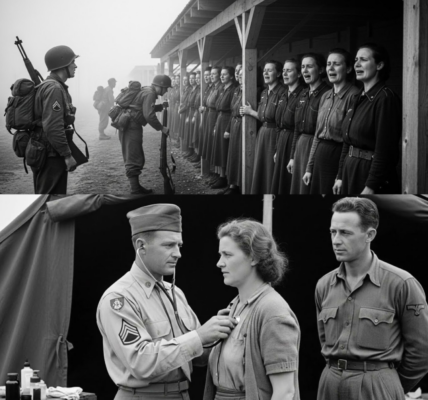
For most soldiers, war was not a continuous sequence of dramatic advances. It was also waiting, exhaustion, uncertainty, homesickness, and the repetitive work required to remain alive. Men and women serving in wartime environments had to eat, sleep, maintain equipment, care for the wounded, exchange messages, and endure long periods in which the next development remained unknown.
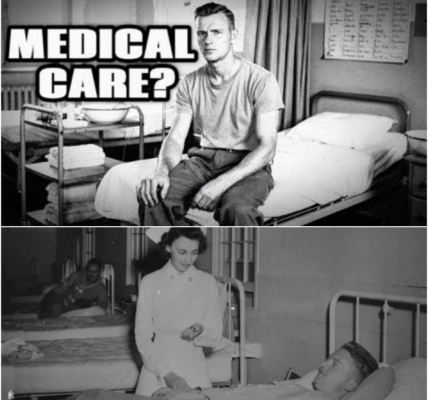
Photographs of these quieter moments can change how we understand military history. A group of soldiers gathered around a meal may reveal the importance of shared routines. A portrait of a serviceman holding a letter may point toward the communication that connected the front with families far away. An image of wounded men receiving treatment may show the logistical and human demands of caring for casualties.
But the specific stories sometimes attached to such photographs require verification. An image of a soldier looking down at a piece of paper does not prove that he was crying while writing to his family. A group gathered in a trench does not necessarily indicate that the men were sharing a final cigarette before an attack. Such interpretations may sound plausible, but they cannot be presented as established facts without supporting evidence.
Historical photographs are most powerful when we allow them to tell us what can genuinely be seen while investigating what cannot. The soldier’s posture, uniform, surroundings, and equipment may provide clues to the setting. A date, original caption, military record, or accompanying letter may reveal more about the moment. Without those sources, the photograph should remain an image with unanswered questions rather than become the illustration for an invented scene.
World War I offers particularly compelling examples of the distance between official representations of conflict and the realities experienced by those who served. The war involved industrial-scale weaponry, mass mobilization, and prolonged fighting across enormous areas. Its effects reached far beyond the front lines, shaping families, economies, medical services, and public attitudes toward warfare.
Photographs of soldiers resting, recovering, or waiting for orders help restore the human scale of that conflict. They remind us that military organizations were composed of individuals with different backgrounds, personalities, beliefs, and hopes. The uniform made them members of a larger institution, but it did not erase their individual lives.
The psychological effects of war are more difficult to reconstruct from photographs alone. A solemn expression may reflect fatigue, the conventions of portrait photography, or the simple fact that the subject was instructed to remain still. It cannot independently diagnose trauma or reveal exactly what a soldier was thinking. Nevertheless, the broader historical record, including medical documents, diaries, letters, and later testimony, shows that war could have profound psychological consequences.
The value of these photographs lies in their ability to connect that documented history with visible human presence. A letter home was not merely a detail of military administration. It was a way of maintaining a relationship across distance. A makeshift performance in a military hospital, where documented, could provide a brief interruption to the routine of treatment and recovery. Shared meals, music, games, and conversation helped people preserve fragments of ordinary life under extraordinary conditions.

Such moments do not make war less destructive. They show how people attempted to live within circumstances they could not fully control.
The American Civil War produced another important photographic record, one that reveals the relationship between military conflict, slavery, emancipation, and the lives of African Americans. Before and during the war, slavery shaped the political and economic structures of the United States, denying millions of people their freedom and separating families through sale and forced relocation.
Photographs from the period preserve the likenesses of soldiers, civilians, formerly enslaved people, and communities affected by the conflict. Some images became important historical documents because they challenged familiar representations of slavery and demonstrated the humanity of people whom pro-slavery narratives had attempted to reduce to stereotypes.
The end of slavery did not immediately produce equal rights or economic security. Emancipation unfolded through military developments, political decisions, legal changes, and the actions of enslaved people themselves, many of whom sought freedom by escaping bondage, reaching Union lines, providing information, or supporting the Union war effort in various ways. The Thirteenth Amendment, ratified in 1865, abolished slavery in the United States except as punishment for a crime after conviction.
Yet freedom was followed by new struggles. Reconstruction brought efforts to establish civil and political rights, while white supremacist violence, discriminatory laws, economic dependence, and political resistance undermined many of those gains. The photographs of the period must therefore be understood within a longer history, rather than treated as a simple visual record of a nation moving neatly from oppression to equality.
A portrait of a formerly enslaved person may carry extraordinary significance, but it cannot reveal every detail of that individual’s experience. The subject’s name, age, place of birth, family relationships, and circumstances of emancipation require documentary support. When these details are known, a photograph can help restore a personal identity to someone who might otherwise appear in history only as a statistic.
When those details are missing, the image still matters. It shows a person whose life existed beyond the boundaries of the surviving record. The challenge is to acknowledge that presence without inventing a biography the evidence cannot support.
Photography also complicates the history of women’s participation in public life. For generations, familiar narratives often emphasized women in domestic settings, presenting them primarily as wives, mothers, or spectators to political and economic change. Yet photographs from the nineteenth and early twentieth centuries document women working, organizing, studying, competing in sports, performing, and occupying public spaces in ways that challenge such narrow assumptions.
Images of women playing baseball or participating in other sports are especially revealing. Long before modern professional women’s leagues became widely established, women and girls took part in athletic activities through schools, clubs, colleges, community organizations, and exhibition teams. Their clothing often reflected the social expectations and practical limitations of their period. Long skirts and restrictive garments could make certain movements difficult, while public participation in sports challenged assumptions about femininity and physical ability.
A photograph of a women’s team does not, by itself, demonstrate that the players were widely accepted or that their participation was considered equal to men’s. It does, however, show that women were present in sporting spaces whose histories can sometimes be told primarily through male athletes and institutions.

The image becomes more meaningful when it is placed alongside records of the team, newspaper coverage, school histories, or accounts of the players themselves. These sources can help establish whether the photograph depicts a local club, a school activity, an exhibition, or a more organized competition.
The wider lesson is that the existence of an activity and its recognition by mainstream institutions are not the same thing. Women could participate in sports even when their achievements received less publicity, fewer resources, or less public respect than those of men. Photographs can preserve evidence of that participation long after the original event has disappeared from collective memory.
Similar discoveries can reshape the history of music, nightlife, and racial relations. Images associated with the Harlem Renaissance, the cultural movement centered in Harlem and extending into broader Black artistic and intellectual life during the early twentieth century, reveal a rich world of music, literature, theater, visual art, political debate, and community expression.
Photographs of performers, clubs, theaters, and social gatherings help show how cultural spaces operated and how artists created new forms of expression. They document the centrality of Black creativity to American cultural history and preserve glimpses of places where musicians, writers, dancers, and audiences came together.
However, photographs of interracial interaction must be interpreted carefully. The United States remained deeply shaped by racial segregation and discrimination during the Harlem Renaissance. The existence of a particular mixed-race gathering does not establish that the wider society was integrated or that racial barriers had disappeared. A photograph may document a specific social environment while leaving the surrounding legal, economic, and political realities outside the frame.

This does not diminish the significance of the image. It makes the interpretation more precise. A photograph of people dancing, listening to music, or sharing a public space can reveal moments of cultural exchange and social complexity without being used to erase the discrimination that existed beyond that particular setting.
History often contains contradictions that cannot be resolved by a single image. People can create extraordinary art within an unequal society. Communities can develop spaces of freedom while facing exclusion elsewhere. Individuals can find joy and connection without escaping the wider structures that constrain their lives.
Rare photographs help us see those contradictions because they preserve specific moments rather than a single, unified explanation. Their subjects may be celebrating, working, protesting, or simply passing through a street. The photograph cannot represent an entire era, but it can challenge the idea that the era was experienced uniformly.
Technology has greatly expanded the possibilities for discovering and studying these images. Photographic materials are fragile. Paper prints may fade, glass plates can break, and older negatives may deteriorate under unsuitable storage conditions. A photograph separated from its caption or original collection can also lose much of its historical value, even when its physical appearance remains intact.
Digitization offers a way to preserve and share many of these materials. High-resolution scanning can capture fine details, allowing researchers to examine clothing, printed signs, architectural features, and other visual information that may be difficult to see in a small reproduction. Digital collections can also link images to catalog records, related documents, and information about the photographer.
In some cases, modern imaging methods can improve the visibility of faded details. Careful restoration may correct certain forms of damage or make the contents of a photograph easier to examine. But restoration must be distinguished from interpretation. A clearer image is not automatically a more accurate account of the original event if missing details have been guessed or reconstructed without documentation.
Colorization introduces another layer of complexity. Adding color to a black-and-white photograph can make a historical subject feel unexpectedly contemporary. Skin tones, clothing, streets, and buildings may appear more familiar, encouraging viewers to imagine the people as individuals living in a recognizable world rather than as distant figures in a monochrome past.

Yet colorized images are not equivalent to original color photographs. Unless the colors are supported by reliable evidence, many choices must be estimated. The color of a garment, the shade of a building, or the appearance of a person’s eyes may be plausible without being certain. A colorized image should therefore be identified as a reconstruction, not presented as though the original photograph recorded those colors directly.
This distinction is particularly important when images circulate through social media. A restored portrait may be shared thousands of times without the information that it has been colorized, retouched, or digitally enhanced. Viewers may assume that every visible detail has the same evidentiary status as the original print.
The purpose of restoration should be to improve access to historical material, not to manufacture certainty. Where changes have been made, transparency allows audiences to distinguish the original record from the modern interpretation. Digital technology is most useful when it helps us ask better questions rather than making an image appear more definitive than the evidence allows.
Some of the most painful photographs in American history document racial terror, including lynchings. During the late nineteenth and twentieth centuries, lynching was used as a form of extrajudicial violence, particularly against Black Americans in the South, although racial terror and mob violence occurred in other places and affected other communities as well. These acts were not merely isolated crimes. They operated within broader systems of white supremacy and were often accompanied by failures of law enforcement, political complicity, and efforts to intimidate entire communities.
Photographs of lynchings are among the most disturbing documents in American visual history. Some were produced by photographers who documented the events; others were reproduced as postcards and circulated among people who treated the violence as a public spectacle. The existence and circulation of these images reveal a brutal contradiction: photography could record evidence of injustice while also being used to celebrate, normalize, or disseminate the very violence it documented.

Such photographs must be approached with particular care. Their historical value is undeniable, but their subjects were people whose lives and dignity were violently taken away. Reproducing the images without context can repeat the dehumanization inherent in their original circulation. A sensational caption may attract attention while obscuring the social structures and individuals responsible for the crime.
At the same time, removing these photographs from historical discussion altogether can conceal evidence of how racial terror operated. Researchers, museums, educators, and descendants have used documentary records, including photographs, to challenge denial, preserve memory, and identify the victims of racial violence.
The responsible approach is neither to treat such images as entertainment nor to assume that their disturbing content makes them unsuitable for all forms of public education. Their presentation should be guided by historical purpose, respect for the people depicted, appropriate context, and awareness of the harm that careless circulation can cause.
Where possible, researchers should identify the victim, establish the location and date, examine the original source, and explain the historical circumstances surrounding the photograph. A victim should not be reduced to an anonymous figure beneath a crowd. Their identity, family, community, and life beyond the moment of violence deserve attention.
The photographs also expose a difficult truth about historical evidence: a record can be produced by someone who does not share the values of the person examining it. The photographer’s purpose may have been commercial, celebratory, administrative, or propagandistic. That purpose affects how the image should be interpreted, but it does not necessarily eliminate its value as evidence.
A photograph created to glorify violence may later help historians document the attitudes and practices that made such violence possible. An official photograph intended to project strength may reveal the conditions officials sought to manage or conceal. A family image intended to preserve a cherished memory may unintentionally document social divisions, material hardship, or customs that later generations view differently.

The camera does not automatically tell the truth simply because it records a visible scene. But photographs can preserve details that complicate the intentions of those who created them. When paired with other evidence, even a carefully staged image may reveal more than its original maker expected.
This is why the phrase “history is written by the victors” needs to be treated as a starting point rather than a complete explanation. Historical narratives are shaped by power, access to records, political interests, educational institutions, and the choices of researchers and writers. Yet the past is not controlled by one group in every circumstance. Archives preserve documents created by governments, ordinary citizens, journalists, businesses, activists, soldiers, and families. These records sometimes agree, sometimes conflict, and sometimes leave questions unresolved.
Photographs form one part of this broader historical record. They can challenge an established narrative, but they can also reinforce it. A portrait of a powerful leader may be carefully staged to project authority. A photograph of a crowded workplace may be used to celebrate industrial productivity while omitting the dangers faced by workers. An image of a public celebration may convey national unity while excluding people who were denied equal participation.
Understanding a photograph therefore involves examining not only what it shows but also what it leaves out. Who selected the subject? Who controlled the camera? What was the intended audience? Was the image published at the time, and if so, how was it captioned? Has the photograph been cropped or altered since its creation? What other evidence supports the story now attached to it?
These questions become especially important when a rare photograph appears online with claims that it was deliberately hidden from the public. Some photographs were indeed restricted, censored, or withheld under specific circumstances. Military authorities have controlled the release of images during wartime, governments have attempted to manage public perceptions, and private owners have sometimes kept materials from wider circulation.
But a photograph that remained in a box for decades was not necessarily suppressed. It may have been forgotten, privately owned, poorly catalogued, or never considered significant by those who possessed it. The absence of widespread publication is not, by itself, proof of a deliberate cover-up.

The language used to introduce an image can create a misleading sense of mystery. Describing an ordinary archival discovery as something that “was never meant to be seen” suggests that someone feared its revelation. That may be true in a particular documented case, but it should not be assumed simply because the photograph is unfamiliar or emotionally powerful.
A careful researcher begins by tracing the image’s provenance: where it came from, who owned it, how it was transferred, and whether its earlier history can be established. Original captions, negative numbers, album pages, inscriptions, and accompanying documents can provide clues. Comparisons with independently documented images may help confirm the location or event. Where the evidence remains incomplete, the uncertainty should be stated clearly.
The growth of online history communities has made this process more collaborative. A photograph shared by an archive may be recognized by someone familiar with a building, uniform, landscape, or family name. Descendants may supply details that were missing from the original catalog. Researchers can compare versions held in different collections and identify errors that have persisted in captions for years.
However, online popularity is not the same as historical verification. A striking photograph may attract millions of views precisely because it is strange, emotional, or easy to misunderstand. Once a dramatic caption begins circulating, later posts may repeat it without returning to the original source. The result can be a story that feels established simply because it has been repeated.
The solution is not to dismiss popular interest in history. Curiosity can encourage people to discover archives, read primary sources, and learn about subjects they had never encountered before. The challenge is to turn that curiosity into informed investigation.
A photograph of a woman in an unfamiliar uniform, for example, may lead to questions about her occupation, social position, and the organization she belonged to. A group portrait of workers may reveal a forgotten business or a community’s economic history. An image of a public gathering may help researchers investigate local traditions, political movements, or changes in urban life.
Not every discovery will overturn an established historical interpretation. Sometimes the most valuable result is a small correction: a name restored, a date clarified, a location identified, or a misleading caption removed. These changes matter because historical understanding is built from many pieces of evidence, and even modest corrections can alter how a photograph is used in later accounts.
The people in these images rarely knew what the future would make of them. A worker who paused for a photograph might have considered it an ordinary interruption to the day. A woman standing with her teammates might have wanted a record of a season’s achievement. A soldier holding a letter might have been thinking about a conversation that had nothing to do with the war’s eventual historical significance.
Their photographs survived because of many different circumstances: a family preserved an album, an institution collected documentary records, a photographer stored negatives, or an archive acquired materials whose importance was not immediately obvious. The survival of an image is not necessarily evidence that its subject was famous or that the original moment was considered important. Sometimes it is simply the result of chance.

This makes archival photography both powerful and incomplete. The photographs that survive are not a perfectly representative sample of everyone who lived in the past. Some communities had greater access to cameras, photographers, and institutions capable of preserving images. Other people appear in the historical record mainly because someone else chose to photograph them. Still others remain absent because the materials were lost, destroyed, or never created.
The archive is therefore shaped not only by what happened but also by who had the means to document it and whose records were considered worth keeping. Recovering overlooked photographs can help broaden that record, but historians must remain aware that many voices cannot be restored through images alone.
Written testimony, oral histories, public records, archaeological evidence, and family documents may be needed to recover the context surrounding a photograph. In some cases, a person may remain unidentified despite extensive research. That absence should not be filled with invented certainty. Acknowledging what is unknown is part of respecting the evidence.
Rare old photographs do more than offer a glimpse into unfamiliar clothing, buildings, and customs. They challenge us to think about the difference between public memory and lived experience. A familiar historical period may look entirely different when seen from the perspective of a child worker, a wounded soldier, a woman pursuing a sport, a Black artist creating new cultural forms, or a family living under the threat of racial violence.
These perspectives do not make the larger events of history irrelevant. They give those events human dimensions. Industrialization becomes more than a sequence of inventions and economic changes. War becomes more than military strategy and territorial movement. Social reform becomes more than legislation. Each subject returns to the people whose choices, labor, suffering, and resilience shaped the world that followed.
The most meaningful photographs are not always the rarest or most visually dramatic. Sometimes they are ordinary images that acquire new significance when their context becomes known. A crowded street may reveal how a city developed. A workplace portrait may help document the history of a labor movement. A family album may preserve evidence of migration, changing social roles, or relationships that official records failed to capture.
Other photographs remain painful reminders of injustice. Their value lies not in the shock they produce but in the evidence they preserve and the questions they force society to confront. They require thoughtful presentation, careful sourcing, and respect for the individuals depicted. Their existence does not give viewers permission to treat human suffering as a spectacle.
As more collections become accessible, the history available to the public will continue to expand. New technologies will help researchers examine details, compare collections, and restore damaged materials. Digital tools may help identify locations or connect photographs with related documents. But technology cannot replace judgment. An image can be made clearer without becoming more complete, and a dramatic interpretation can spread more quickly than a careful correction.
The responsibility remains with those who publish, interpret, and share historical material. They must distinguish what is documented from what is inferred, identify reconstructions where they exist, and avoid presenting speculation as established fact. They must also remember that the people in photographs were not placed in the world for the entertainment of future audiences. They had their own lives, relationships, hopes, and fears.

Perhaps the greatest contribution of rare historical photographs is not that they reveal a secret past hidden from everyone else. It is that they remind us how incomplete any single account of history must be. A textbook can summarize a century, a museum can organize an exhibition, and a photograph can preserve a fraction of a second. None can contain the full experience of everyone who lived through that time.
The past becomes richer when these sources are brought into conversation with one another. A famous photograph can be reconsidered alongside a forgotten one. An official report can be compared with a private letter. A portrait can be connected to a name, a family, or a community. Through this process, history becomes less like a fixed monument and more like an ongoing investigation into the lives and choices of human beings.
Looking at a rare old photograph, we may initially be drawn to its unfamiliar appearance or the dramatic story attached to it. But the more important question is what the evidence can genuinely teach us. Who are the people in the frame? What circumstances shaped their lives? Whose perspective is missing? What can we verify, and what remains uncertain?
The answers will not always be complete. Some photographs will remain unidentified, and some histories will never be fully recovered. Yet even an incomplete image can remind us that the past was made up of countless individual experiences, many of which never entered the official narrative.
The people who lived through those experiences did not know how their world would eventually be described. They could not see the historical categories into which later generations would place them. They were simply living in their own time, making decisions, facing difficulties, celebrating achievements, and trying to understand the world around them.
When their photographs reach us, they offer an opportunity to look beyond familiar historical symbols and encounter the people who stood outside the spotlight. Their presence complicates easy narratives and challenges us to consider not only what societies remember, but also what they have overlooked.
The most honest view of history is not necessarily the most comfortable one. It is the one willing to examine the evidence, recognize contradictions, acknowledge suffering, and resist the temptation to turn uncertainty into a sensational story. Rare photographs can help us move toward that understanding, provided we treat them as historical records rather than unquestionable windows into the past.
As these forgotten faces emerge from archives and family collections, one question remains: when a photograph challenges the version of history we have always known, should we change our understanding immediately, or should we first investigate the evidence that explains what the image truly reveals?
Some content was generated using AI tools (including ChatGPT) and edited by the author for creativity, storytelling, and historical illustration purposes. Historical facts and key details should be verified against reliable historical sources. Any AI-generated or reconstructed visuals are intended for illustrative purposes and should not be interpreted as original historical photographs or archival evidence.