There are photographs that seem to hold something more unsettling than the moment they were taken. A solemn face behind the glass of an old portrait, a child standing beside dangerous machinery, a group of workers staring into a camera with expressions that time has never softened. At first glance, these images may appear strange, eerie, or even frightening. But their deepest power comes from something far more disturbing than the supernatural: the knowledge that the people inside them were real. They lived, suffered, worked, grieved, and faced uncertainties that many modern viewers can scarcely imagine. Hidden for decades in family albums, archival collections, and forgotten boxes, vintage photographs offer an uncomfortable reminder that history was never as orderly or reassuring as the stories we inherited. Behind the familiar dates and celebrated achievements lies another world, preserved in fragile images that invite us to look closer.
A faded photograph from the nineteenth century can be unsettling before its details are even understood. The people stand motionless, their clothing carefully arranged, their faces serious beneath the unblinking gaze of the camera. There may be no obvious tragedy, no visible danger, and no dramatic event to explain the atmosphere. Yet something about the image feels distant and unfamiliar. Part of that impression comes from the photographic technology of the time. Early processes required subjects to remain still, sometimes for several seconds or longer, depending on the equipment, lighting, and method used. A natural smile could be difficult to maintain. A relaxed posture might become uncomfortable. The resulting portraits often captured an appearance of solemnity that modern viewers associate with grief, fear, or something otherworldly.

But the people in these photographs were not necessarily unhappy. Their expressions reflected the conventions of their time as well as the practical limitations of photography. Portraits could be expensive, and a family might arrange a special visit to a studio for an image intended to last for generations. The occasion demanded composure. Looking directly at the camera was a way of preserving dignity, not necessarily an indication of emotional coldness.
Understanding this context does not remove the photographs’ strange atmosphere. Instead, it makes them more human. The faces that once seemed mysterious become evidence of people trying to preserve their identities in a world where even an ordinary portrait could require considerable effort and expense. Every stiff collar, carefully placed hand, and unwavering gaze belongs to a particular life, although the details of that life may now be lost.
Some nineteenth-century portraits are especially difficult for modern audiences because they are connected to mourning and death. In societies where infectious disease, childbirth complications, and other illnesses could claim lives with frightening speed, families often confronted bereavement as a more visible part of everyday existence than many people do today. Photography gradually became one way of preserving the likeness of relatives who had died, particularly when no earlier portrait existed.
These memorial photographs, commonly associated with Victorian-era mourning practices, can be deeply affecting. A family might gather around a deceased relative, or a child might be photographed after death. To contemporary eyes, the arrangement can appear unsettling, especially when the image has faded or the surrounding details have disappeared. Yet these photographs were not necessarily made to frighten anyone. They were often keepsakes created for grieving families, preserving a likeness that might otherwise have vanished entirely.
It is important not to assume that every solemn Victorian portrait depicts a dead person. Many online collections attach dramatic explanations to unidentified photographs, turning ordinary portraits into supposed evidence of forgotten tragedies. Without reliable documentation, such claims remain speculation. A strange expression, unusual pose, or blurred outline cannot establish that a subject was deceased or that something supernatural occurred.

The real historical significance of memorial photography lies elsewhere. It reveals how people attempted to maintain connections with loved ones when death had permanently interrupted their lives. The photograph became an object to hold, revisit, and pass down. It could preserve a face that a child might otherwise never remember or offer a grieving parent a tangible reminder of someone deeply loved.
What unsettles us is not necessarily the image itself, but the distance between the way people once confronted mortality and the way many of us encounter it today. The photograph forces us to recognize that grief is not a modern invention. The clothing, customs, and technology may be unfamiliar, but the emotional need to remember someone remains recognizable across generations.
If these portraits reveal the private struggles of families, other vintage photographs expose the dangers embedded in ordinary work. During the nineteenth and early twentieth centuries, industrialization transformed cities, factories, mines, transportation, and domestic life. New machines increased production and changed economies, but their benefits were not distributed equally. For many workers, industrial progress meant long hours, hazardous environments, and limited control over the conditions in which they earned a living.
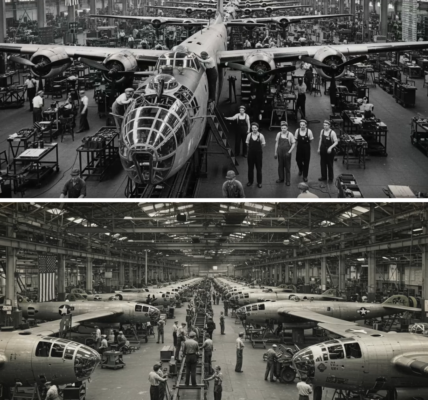
Photographs of factory floors can look almost unreal today. Enormous machines dominate cramped rooms. Belts, wheels, gears, and metal components occupy spaces where workers stand only a short distance away. The equipment appears powerful enough to overwhelm the people operating it. In some images, workers pose beside machinery as if demonstrating the scale of their workplace. Their expressions may be serious, and their clothing may be marked by the demands of the job.
A single photograph cannot tell us whether a particular worker felt afraid, proud, exhausted, or indifferent at the moment the shutter opened. It cannot establish how frequently accidents occurred at that factory or how many hours each person worked. Nevertheless, the visible environment can lead us toward documented questions about occupational safety, working conditions, and the unequal relationship between industrial productivity and human well-being.
In mines, the dangers could be especially severe. Underground workers faced risks from collapsing tunnels, explosions, flooding, poor ventilation, and exposure to harmful substances. The exact hazards differed according to the mine, its location, the minerals extracted, and the safety standards of the period. Photographs of miners emerging from underground or standing near industrial equipment preserve a glimpse of work that many people above ground rarely witnessed directly.
The camera could make these environments visible to the public, but a photograph alone could not explain every danger hidden beneath the surface. Some of the most serious threats were invisible. Harmful dust and toxic substances could damage health over time, while unsafe working practices might not produce an immediate injury that a photographer could capture.
Children also appeared in the records of industrial labor. Photographs associated with early twentieth-century reform movements documented young people working in factories, mills, mines, and other workplaces. In the United States, photographer Lewis Hine produced a substantial body of work documenting child labor for the National Child Labor Committee. His images helped make working children’s conditions visible to audiences who might otherwise have remained distant from them.
The power of such photographs came partly from their refusal to let the subjects remain abstract. A discussion about labor laws could sound technical and remote. A photograph of a young worker standing beside machinery made the human consequences more immediate. The viewer could see a child whose daily life was organized around work rather than the educational opportunities and protections increasingly associated with childhood.

It would be inaccurate to claim that every child in an old industrial photograph experienced the same conditions or that a single image proves a specific abuse. The historical record varies considerably across industries, regions, and decades. But the broader evidence of child labor, unsafe workplaces, and campaigns for reform is well established.
These photographs are frightening because they show how easily suffering can become ordinary when it is built into the structure of daily life. The workers are not necessarily looking at the camera with expressions of desperation. They may simply be standing where they were instructed to stand, performing a task that had become routine. The viewer, looking back from another century, knows that many of these conditions would later become subjects of legislation, labor organizing, public campaigns, and continuing disputes over workplace protections.
There is an uncomfortable difference between witnessing a dangerous environment and having the power to change it. The photograph can preserve the first without revealing how much influence the people inside it possessed over the second. That silence invites questions about responsibility, economic necessity, and the price paid by those whose labor helped build the modern world.
The industrial age also left behind images of medical practices that can appear almost unrecognizable to contemporary audiences. Early surgical theaters, crowded hospital wards, and medical demonstrations reflect periods when scientific knowledge was advancing but many of the safeguards now associated with modern medicine were not yet consistently available.
Some historic surgical photographs show physicians gathered around an operating table, wearing clothing that looks inadequate by present-day standards. Instruments are arranged nearby, and the patient lies at the center of a procedure whose details may not be apparent from the image alone. Such photographs can provoke an immediate reaction because viewers instinctively compare them with modern operating rooms, where sterile equipment, protective clothing, anesthesia protocols, monitoring systems, and infection-control procedures are central to practice.
That comparison requires care. Medical progress did not occur at the same speed everywhere, and practices varied across institutions and periods. Some nineteenth-century physicians helped develop procedures and standards that would become foundations of modern medicine. Others worked before the mechanisms of infection and the importance of antiseptic practice were fully understood or consistently accepted. The history is not simply a story of ignorant doctors replaced by enlightened successors. It is a record of experimentation, observation, disagreement, and gradual improvement.

Before reliable anesthesia became available in the nineteenth century, major operations could involve extraordinary pain. The introduction and wider adoption of anesthetic techniques transformed surgery, although their use developed unevenly and came with risks of its own. Antiseptic and aseptic methods later contributed to major reductions in certain surgical infections, changing what physicians could attempt and what patients might survive.
A photograph of an early operating theater cannot convey every medical development that made a procedure possible. It captures a moment, not the full body of knowledge surrounding it. Yet it offers a valuable reminder that modern medicine was built through generations of work, often in circumstances where the margin between successful treatment and catastrophe was far narrower than it is today.
The same principle applies to photographs of old hospitals, medical wards, and institutions for people with disabilities or mental illness. Images of crowded rooms or restrictive environments may reveal aspects of institutional life that later generations would question. However, identifying a particular institution, understanding its policies, and assessing the treatment of its residents require documentary evidence beyond visual appearance.
A photograph can show a room filled with beds. It cannot, by itself, establish what treatment the occupants received, how they were regarded by staff, or what alternatives were available to them. The image becomes historically meaningful when it is placed alongside medical records, institutional reports, personal testimony, and research into the standards of the time.
This is a recurring challenge in the study of unsettling historical photographs: the image may produce an intense emotional reaction long before the evidence needed to interpret it has been assembled. That reaction can be a starting point for inquiry, but it should never be mistaken for proof.
Some of the strangest vintage images owe their atmosphere to the limitations of photography itself. Before modern cameras made quick exposures routine, many photographic processes demanded careful preparation and substantial exposure time. Subjects needed to remain still, and photographers had to work within the constraints of available light, lenses, plates, and chemicals.
When a person moved during an exposure, the resulting image could contain a blurred outline or a partially transparent appearance. Moving figures might seem to fade into the background, while stationary subjects appeared sharply defined. In photographs of crowded streets, people who passed through the frame during a long exposure might leave little more than indistinct traces.
To a viewer unfamiliar with early photographic methods, these effects can look like unexplained apparitions. A shadow near a doorway may resemble a person who was not fully captured. A face obscured by movement may appear distorted. An object reflected in glass can seem to occupy a space where it does not belong.
Such effects are not evidence of ghosts. They are reminders that photographs are produced by physical processes, each with limitations and possible sources of error. The camera records light, but the resulting image depends on exposure, optics, composition, processing, and the conditions in which the photograph was made.

The mystery surrounding early photography became more complicated when some practitioners deliberately used its unfamiliar effects to create images of supposed spirits. During the nineteenth century, interest in spiritualism grew in various parts of Europe and North America. Séances, accounts of communication with the dead, and debates about the possibility of an afterlife attracted followers, critics, and curious observers.
Photography seemed to offer a new kind of evidence. Unlike a spoken account of a supernatural encounter, a photograph appeared to provide a visible object that could be examined by others. For people grieving the loss of relatives, the possibility that a camera might preserve or reveal something beyond ordinary sight could be deeply appealing.
Some photographers exploited that hope. They created spirit photographs in which a sitter appeared alongside a ghostly figure, a translucent face, or an indistinct human form. Techniques such as double exposure, staged compositions, and photographic manipulation could produce effects that seemed extraordinary to audiences still learning what the medium could and could not do.
Not every person who believed in spirit photography necessarily understood how such images were made, and historical attitudes toward spiritualism were diverse. Some participants approached it as a religious or philosophical practice, while others investigated its claims critically. But fraudulent spirit photographs became part of the history of the medium, illustrating how new technology could be used both to expand knowledge and to manufacture misleading evidence.
These images remain fascinating precisely because they sit at the intersection of belief, grief, entertainment, and technological change. The people who viewed them lived during a period when photography itself could seem miraculous. A machine capable of fixing a face onto a plate or sheet of paper already challenged familiar ideas about memory and representation. It was not difficult to understand why some viewers wondered whether it might reveal something more.
The lesson is not that every strange image conceals a fraud or that every historical belief can be dismissed with a modern explanation. It is that photographs need context. Their appearance can be compelling without their accompanying claims being true. A picture may be historically valuable as evidence of what people believed, even when it fails to demonstrate the supernatural phenomenon its creator claimed to capture.

Other photographs become unsettling because they document entertainment built around the human body. In the nineteenth and early twentieth centuries, travelling shows, circuses, and sideshows sometimes advertised performers whose physical characteristics, disabilities, or unusual skills were presented as spectacles. Promotional portraits and banners could emphasize dramatic poses, elaborate costumes, and descriptions intended to attract paying audiences.
Modern viewers may find some of these images disturbing because they expose the unequal relationship between performers and the public that watched them. Some performers exercised agency, negotiated contracts, built careers, and earned incomes through appearances that were among the limited opportunities available to them. Others faced exploitation, discrimination, invasive scrutiny, or restrictions on their ability to choose how their bodies were represented.
The experiences cannot be reduced to one universal story. It would be misleading to assume that every performer was helpless or that every sideshow followed identical practices. Their circumstances differed according to individual, employer, location, legal protections, and social attitudes toward disability and physical difference.
Nevertheless, the photographs reveal how entertainment could transform human difference into a commercial product. A carefully posed portrait might preserve the likeness of a performer whose name is now unfamiliar, while the accompanying promotional language reveals more about the audience’s expectations than about the individual being advertised.
When such images circulate online today, they are sometimes presented as grotesque curiosities, detached from the lives of the people depicted. That framing can repeat the very objectification the photographs once served. A more responsible approach asks who the subject was, how they understood their work, what choices they possessed, and how audiences were encouraged to view them.
The unsettling element is not simply that people once paid to see performances that modern audiences might question. It is that a person could become known primarily through a label, an appearance, or a staged image, while the rest of their identity disappeared from public memory.
Natural disasters and large-scale accidents also left behind photographs that can seem almost impossible to comprehend. A town reduced to rubble, a bridge twisted by structural failure, or a crowd standing beside the remains of a destroyed building can create an immediate sense of dread. Unlike portraits made in studios, these images show familiar spaces transformed by forces that ordinary people could neither predict perfectly nor control completely.

The photograph may show damaged streets and ruined homes, but it rarely explains the full chain of events that produced them. To understand a disaster, historians must investigate weather records, engineering decisions, emergency responses, eyewitness accounts, government reports, and the social conditions that influenced who was most exposed to danger.
The distinction matters because disaster photographs are frequently shared with misleading captions. A picture from one earthquake may be attributed to another. An image of a demolished building may be presented as evidence of a different conflict or accident. The emotional power of the scene can make the caption seem believable even when its claims have not been verified.
The same caution applies to photographs of skeletal remains, archaeological excavations, and paleontological discoveries. A group of men gathered around a large excavation may look ominous when the original caption has been lost. The tools, the shadows, and the scale of the bones can create an atmosphere that resembles a scene from a horror film. But the image might document a scientific excavation rather than a crime or a disturbing ritual.
Without identifying details, it is impossible to establish the origin of any particular photograph from a brief description alone. The location, date, names of the people involved, and original archival caption can make the difference between a meaningful historical record and a misleading internet mystery.
This is one reason the digitization of photographic archives matters. A photograph that once circulated without context in a private album can sometimes be reunited with records that explain where it was taken and why. Museum collections, historical societies, libraries, university archives, and national institutions preserve images alongside captions, catalog numbers, photographer information, and related documents.
Digitization makes many of these materials easier to discover. It also makes them easier to detach from their original context. Once an image is copied, cropped, reposted, and separated from its source, a careful historical record can become an anonymous picture accompanied by an invented story.
The growth of online communities devoted to unusual historical images has brought both opportunities and risks. Collectors can share photographs that might otherwise remain inaccessible. Researchers can identify unknown locations, compare visual details, and recover forgotten names. Descendants may recognize relatives in pictures that have circulated for generations without identification.
At the same time, algorithms often reward the most dramatic interpretation. A caption claiming that a photograph was hidden for a century, banned by authorities, or too disturbing for the public may attract more attention than a careful explanation of an ordinary but revealing historical scene. The words surrounding the image can shape the viewer’s response before the photograph itself has been examined.
Claims that a picture was deliberately suppressed should therefore be treated cautiously. Some historical images were censored, restricted, or withheld from publication for specific political, military, commercial, or ethical reasons. Other photographs remained unseen because they were never widely distributed, were poorly catalogued, belonged to private collections, or simply attracted little public interest.

Those circumstances are not interchangeable. A photograph that remained in a family album for eighty years was not necessarily concealed by a government. An image that was not published during wartime was not automatically evidence of a conspiracy. The reason a photograph was unavailable may be mundane, complicated, or impossible to establish without additional documentation.
The phrase “never meant to be seen” is powerful because it creates the impression that someone feared what the image would reveal. Sometimes historical records support that interpretation. In many other cases, it is a dramatic description rather than a verified fact.
A responsible investigation begins with questions. Who took the photograph? When and where was it made? What was the photographer trying to document? Is there an original negative, print, caption, or catalog entry? Has the image been altered? Do independent records support the story attached to it?
These questions do not diminish the emotional impact of the photograph. They protect it from being turned into something it never was. The truth can be disturbing enough without embellishment.
There is another reason some vintage photographs appear frightening: they reveal how ordinary people understood the world around them. Clothing, architecture, gestures, and household objects can make the past seem foreign. A person standing in a street a century ago may appear almost like a visitor from another reality, even though they experienced many of the same emotions and concerns that shape human life today.
The people in old photographs worried about their families, searched for work, celebrated important occasions, endured illness, and attempted to make sense of events beyond their control. They had their own ambitions, disagreements, loyalties, and private fears. The camera recorded only a fraction of their lives, often preserving the least revealing moment: the instant when they were instructed to stand still.
A photograph cannot tell us everything about a person, but it can challenge the temptation to think of earlier generations as characters in a distant story. Their lives were not lived with the knowledge of how history would eventually describe them. They did not know which inventions would transform their descendants’ lives, which social practices would later be rejected, or which seemingly ordinary day would become part of a historical record.
For the person behind the camera, a photograph might have been a practical record, a family keepsake, a commercial assignment, or a way to communicate a message. For the person in front of the lens, it might have been an unusual experience or an opportunity to preserve a carefully chosen image of themselves. Neither necessarily anticipated the strangers who would eventually examine the photograph decades or centuries later.
That distance in time changes how we look. We search faces for clues, inspect shadows for anomalies, and try to reconstruct what happened immediately before or after the shutter opened. Sometimes the evidence supports a compelling explanation. Sometimes the details remain unresolved.
There is nothing wrong with acknowledging that uncertainty. In fact, uncertainty is part of what makes historical research meaningful. An unidentified face should not automatically become a ghost. A blurred shape should not automatically become evidence of an unexplained event. A photograph of hardship should not be assigned a dramatic backstory without supporting records.
The same principle applies when images document genuine suffering. A historical photograph of a battlefield, a disaster site, or a crowded institution may show circumstances that are difficult to confront. Such material deserves more than a sensational caption. It deserves accurate identification, consideration of the people depicted, and an explanation of what the image can and cannot establish.
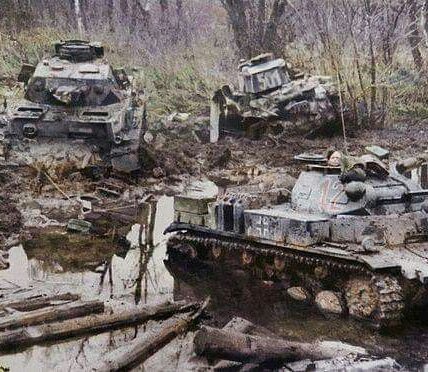
Photographs of war are particularly powerful because they place individual human experiences beside events that are often described through strategy, territory, and political decisions. A battlefield photograph may show damaged buildings, abandoned equipment, exhausted soldiers, or civilians attempting to continue their lives amid destruction. Even when the image contains no explicit violence, it can communicate the disruption of an entire community.

But the ethical responsibility of the viewer does not end with acknowledging that the image is disturbing. Historical photographs can involve people who never consented to becoming subjects of public curiosity. Their descendants may still feel a personal connection to the events depicted. Some images were created for official documentation, others for journalism, and still others for private remembrance. Their original purposes matter.
Displaying a photograph can serve an important public function. It may preserve evidence, challenge denial, document injustice, or give visibility to people who were ignored in contemporary accounts. Yet the same image can be used carelessly, stripped of context, or circulated as entertainment. The distinction lies not only in what the photograph shows but in how it is presented and why it is being shown.
Museums, archives, journalists, and educators face difficult decisions about photographs that depict death, humiliation, or severe suffering. There is no single rule that resolves every case. The historical significance of the image, the wishes and dignity of the people depicted, the needs of audiences, and the public interest all require consideration.
A photograph may be essential to understanding an event while still requiring a warning, a restricted display, or an explanation of its original purpose. Conversely, removing every uncomfortable image from public view can make it easier for societies to forget the consequences of their decisions. Responsible presentation requires judgment rather than either automatic exposure or automatic concealment.
For viewers encountering these photographs through social media, a similar responsibility applies. Sharing an image without its caption can erase the information needed to understand it. Adding an unverified claim can transform a historical document into misinformation. Treating the people depicted as anonymous props can obscure the human lives that made the image meaningful in the first place.
The most unsettling vintage photographs are not necessarily those that appear to contain unexplained shadows or impossible figures. Often, they are the ones whose origins and meanings can be established. A portrait of a child worker becomes more difficult to dismiss when the photographer’s notes identify the workplace and the wider records document the labor conditions. A memorial photograph becomes more moving when a family history restores the name of the person who died. An image of a damaged town becomes more significant when the circumstances of the disaster are known.
Facts do not always make an image less disturbing. They can make its implications clearer.
The past contains many things that modern societies would prefer to regard as distant, exceptional, or safely resolved. Dangerous workplaces, unequal treatment, preventable illness, public exploitation, and the misuse of technology have all appeared in different forms across history. Photographs cannot prove every aspect of these subjects, but they can provide valuable evidence when considered alongside written records and careful research.
They also remind us that progress is rarely as simple as the passage of time. Medical knowledge improves, safety standards change, and public attitudes evolve, but those advances often follow prolonged struggles. People campaign, organize, investigate, challenge accepted practices, and document conditions that others would rather ignore. The photographs that survive may preserve only one small part of that process.
An image of a worker beside dangerous machinery can remind us that workplace protections were not inevitable. A photograph of a crowded hospital can prompt questions about medical access and institutional responsibility. A portrait created during mourning can reveal how families sought comfort before the communication technologies and medical advances that shape life today. None of these photographs explains history on its own, but each can open a path toward a fuller understanding.
Perhaps the most important lesson is that the camera is not a window that reveals everything exactly as it happened. It is a tool that captures a limited view from a particular position at a particular moment. The photographer chooses where to stand, what to include, and when to take the picture. The surviving print may later be cropped, damaged, retouched, mislabeled, or separated from its original records.
Recognizing those limitations does not make photography useless as historical evidence. It makes careful interpretation essential. Photographs become more reliable when their origins can be traced, their captions checked, their details compared with independent sources, and their limitations acknowledged.
That approach allows us to appreciate the eerie atmosphere of an old photograph without surrendering to unsupported explanations. It allows us to feel sadness when confronted with suffering without confusing emotion with proof. Most importantly, it allows the people in these images to remain human rather than becoming props in a story designed only to shock.

A century from now, our own photographs may appear equally strange. Future viewers may question our clothing, our technology, the way we gather in public, and the objects we considered ordinary. They may study our expressions and wonder what we were thinking. Some images will preserve celebrations and achievements; others will document inequalities and dangers that we failed to recognize or address.
They, too, will have to decide whether to accept the first explanation attached to a photograph or investigate the evidence behind it.
When we look at unsettling vintage photographs, we are therefore doing more than exploring an unfamiliar past. We are examining the way human beings preserve memory, interpret evidence, and decide which parts of history deserve attention. The most haunting images may be those that reveal how easily an ordinary life can disappear from the record, leaving behind only a face, a workplace, a family gathering, or a moment that no one at the time expected to become significant.
These photographs do not need invented ghosts or exaggerated claims to matter. Their power lies in the lives they preserve, the conditions they expose, and the questions they leave unanswered. Some reveal genuine injustice. Some reflect unfamiliar customs. Others remain mysteries because the records needed to identify them have been lost. Each demands a different response, and not every mystery has a definitive solution.
The challenge is to look closely without assuming too much, to acknowledge discomfort without turning suffering into spectacle, and to remember that behind every historical image there was once a world continuing beyond the frame.
Perhaps that is what makes these photographs so difficult to forget. The people in them were not living in a horror story. They were living their lives, often without knowing how much their world would change or how their image would eventually be understood. We see the past through the knowledge of everything that came afterward, but they could only see the uncertain present in front of them.
When we encounter a strange or disturbing vintage photograph, should we prioritize making its story accessible to the widest possible audience, even when the evidence remains incomplete, or should we sometimes leave the mystery unresolved until more reliable historical information comes to light?
Some content was generated using AI tools (including ChatGPT) and edited by the author for creativity, storytelling, and historical illustration purposes. Historical facts and key details should be verified against reliable historical sources. Any AI-generated or reconstructed visuals are intended for illustrative purposes and should not be interpreted as original historical photographs or archival evidence.