Rupert Lowe Puts Grooming-Gang Scandal Back at the Centre of Westminster — But What Do the Testimonies Actually Tell Us? n1

Echoes in the Chamber: Inside Britain’s Grooming-Gang Reckoning and the Architecture of Silence
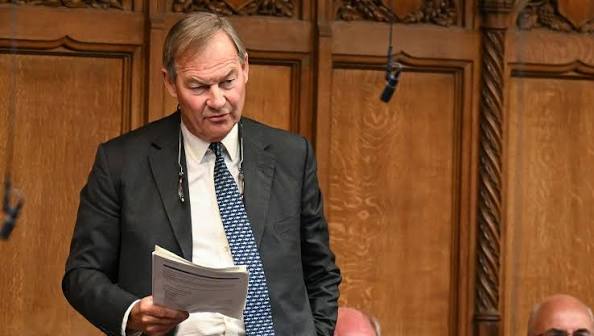
The architecture of the Palace of Westminster is engineered for grand oratorical tradition, but on June 1, 2026, during an otherwise procedural Westminster Hall debate on child sexual offender data, the chamber was confronted with the visceral horror of systemic collapse. Member of Parliament Rupert Lowe stood before his colleagues and did what conventional parliamentary etiquette has long resisted: he read the verbatim testimonies of sixteen survivors of organized child sexual exploitation into the permanent Hansard record.
The accounts were harrowing. They detailed violent rapes, systematic degradation, physical brutality, racial abuse, and an enduring pattern of betrayal by the public institutions legally and morally mandated to protect vulnerable children. Lowe stated plainly that he wanted “the world to hear” what had been brought to light during a two-week private inquiry he had initiated earlier that year.
The speech was not an introduction to the phenomenon commonly designated as “grooming gangs.” Britain has lived in the shadow of this crisis for decades. What Lowe’s intervention triggered, however, was an immediate, high-stakes collision between a populist political offensive, raw survivor testimony, and the slow, rigorous machinery of statutory state justice.
Background: Decades of Structural Collapse
To understand the volatile atmosphere in Westminster, one must look back at the trail of inquiries, trials, and administrative failures across northern and central England over the past two decades.
In towns like Rotherham, Rochdale, Oxford, Telford, and Derby, networks of adult men methodically targeted, coerced, and abused young girls—often children in foster care, fractured family environments, or profound poverty.
-
Rotherham (1997–2013): Professor Alexis Jay’s landmark 2014 independent inquiry revealed that an estimated 1,400 children were subjected to horrific sexual exploitation while police, social services, and the local council repeatedly looked away.
-
Rochdale (2012): The conviction of nine men for trafficking and abusing young teenagers exposed a culture where victims had been dismissed by police as “making lifestyle choices.”
-
Telford (2022): An independent inquiry led by Tom Crowther KC concluded that upwards of 1,000 children were groomed and abused across three decades, their plight ignored by authorities who blamed the children for their own degradation.
Across these cases, common structural themes emerged: vulnerable girls were labeled “troublemakers” or “promiscuous” rather than crime victims; public services worked in deep institutional silos; and in several jurisdictions, officials actively feared that acknowledging the disproportionate involvement of men of Pakistani heritage in specific group-based networks would trigger racial unrest or accusations of prejudice.
The Duel of Two Inquiries
Lowe’s June speech did not occur in an institutional vacuum. In 2025, following a national audit of group-based child sexual exploitation and abuse by Baroness Louise Casey, the British Government formally authorized the statutory Independent Inquiry into Grooming Gangs, which commenced on April 13, 2026. Chaired by Baroness Anne Longfield alongside panel members Zoë Billingham and Eleanor Kelly, this official body was granted legal power under the Inquiries Act to compel witness testimony, subpoena internal state files, and refer emerging criminal evidence directly to Operation Beaconport, a dedicated National Crime Agency initiative.
Simultaneously, Lowe—a vocal right-leaning political figure—had established an independent, privately run inquiry that held public hearings beginning February 2, 2026. Working alongside prominent survivor and campaigner Sammy Woodhouse, Lowe’s team heard from survivors, whistleblowers, and frontline professionals, eventually publishing a 219-page report on June 16.
The differences between the two entities are legally vast:
| Dimension | The Statutory Inquiry (Government) | The Private Inquiry (Rupert Lowe) |
| Legal Mandate | Inquiries Act 2005 (Statutory Powers) | Private Initiative / Civic Assembly |
| Chair | Baroness Anne Longfield | Rupert Lowe MP |
| Power to Subpoena | Can legally compel documents & witnesses | Relies entirely on voluntary participation |
| Criminal Referrals | Direct statutory link to Operation Beaconport (NCA) | Must refer claims to local police forces |
| Focus | Institutional accountability, criminal networks, policy | Survivor voice, public visibility, political pressure |
The tension between these two initiatives peaked when Lowe challenged Home Secretary Shabana Mahmood in the House of Commons. Lowe recounted testimony of a survivor allegedly raped by hundreds of men and subjected to overseas trafficking attempts, asking why the government was not pursuing wider investigations into missing children. Mahmood called the details horrifying and recognized the scandal as one of the darkest chapters in modern British history, but firmly reminded Lowe that genuine justice requires evidence to be submitted to police investigators, not weaponized on the floor of the House.
Soon after, a critical bridge was built: the statutory Longfield Inquiry formally requested the files, documents, and transcripts compiled by Lowe’s private initiative. Lowe agreed to share the data, provided survivors explicitly consented and police investigations were not compromised. Following the release of his report, Lowe tabled an Early Day Motion in Parliament, cementing his findings into the formal parliamentary paper trail.
Yet behind this administrative tug-of-war lie sixteen raw testimonies, a raging national debate over data methodology, and a public left wondering whether the state is finally ready to confront the truth.
2. My Professional Perspective
Over thirty years of investigating systemic corruption, human trafficking, and corporate and state cover-ups across the globe, I have observed a recurring, tragic pathology: The Architecture of Administrative Complicity.
When an individual commits a violent crime against a child, it is a matter for the criminal courts. But when hundreds of adults exploit thousands of children across multiple jurisdictions over three decades, under the very eyes of police chiefs, social workers, school principals, and municipal executives, it is no longer an isolated criminal problem. It is an administrative collapse.
Watching the debate in Westminster, it is clear to me that both the political left and right are engaged in a familiar dance that skirts the core reality. The sensational headlines, the culture-war sparring, and the dry legalistic retorts each offer a convenient exit ramp from confronting the terrifying reality of what happened—and what is still happening.
What Has Been Overlooked: The Bureaucratic Weaponization of “Vulnerability”
One detail consistently overlooked in the coverage of Lowe’s intervention and the government’s response is the perverse linguistic gymnastics used by public systems to absolve themselves of duty.
In reading the historical inquiry documents—from Alexis Jay’s findings in Rotherham to Tom Crowther’s devastating assessment in Telford—a distinct institutional vocabulary jumps off the page. Social workers and police reports did not refer to twelve-year-old girls as “children being raped by adult criminal rings.” Instead, they logged them as:
-
“Engaging in risky behavior”
-
“Experiencing lifestyle instability”
-
“Making conscious choices to associate with older men”
-
“Sexually active teenagers with behavioral compliance issues”
This was not poor grammar. It was administrative defense insulation.
By categorizing a drugged, frightened thirteen-year-old in a fast-food joint or a minicab base as an “agent of her own misfortune,” the bureaucrat removes the state’s obligation to protect her. If she is making a “lifestyle choice,” her case does not trigger an urgent multi-agency child-protection response. It does not threaten departmental key performance indicators (KPIs). It does not require a police inspector to deploy precious surveillance resources against local business owners.
Lowe’s reading of the sixteen testimonies stripped away this sanitized bureau-speak. When you listen to an adult woman recall being locked in a room at age twelve, passed among multiple men while local police cars drove past outside, the administrative shield shatters. That is why the establishment finds raw survivor testimony so uniquely terrifying. It exposes the fiction that the state was merely “overwhelmed” or “poorly trained.” In many cases, the state was willfully indifferent.
       [ Vulnerable Child ]
               │
               ▼
   [ Exploitation by Gangs ]
               │
               ├──────────────────────────────────────────┐
               ▼                                          ▼
   [ Criminal Act Occurs ]                      [ State Encounter ]
   (Violence, Coercion, Drugs)             (Police, Social Care, Schools)
               │                                          │
               │                                          ▼
               │                            [ Bureaucratic Re-labeling ]
               │                            * "Risky Lifestyle Choice"
               │                            * "Uncooperative Teenager"
               │                                          │
               ▼                                          ▼
   [ Cumulative Trauma ]  ◄───────────────   [ Systematic Inaction ]
   (Silence, Fear, Isolation)                 (Files Closed, No Safeguarding)
The Statistical Trap: Why the 250,000 Figure Obscures the Reality
Much of the media criticism directed at Rupert Lowe’s 219-page report centered on a specific, incendiary statistic: the claim that upwards of 250,000 white British girls may have been victimized by organized grooming networks over several decades.
Statisticians and critics swiftly tore into the figure, pointing out that extrapolating localized data from deeply compromised northern towns across the entire population of the United Kingdom over thirty years is methodologically unsound. They are correct. In investigative journalism, a flawed statistic is an unforced error. It gives your detractors an easy target to discredit your entire file.
+-------------------------------------------------------------------------+
|                  THE METHODOLOGICAL CROSSFIRE                           |
+-------------------------------------------------------------------------+
|  THE EXTRAPOLATION APPROACH           |  THE EMPIRICAL POLICING GAPS    |
|  * Applies localized town data        |  * Fragmented recording metrics |
|    nationwide.                        |  * Failure to code group-based  |
|  * Assumes uniform network presence.  |    exploitation uniformly.      |
|  * High political utility; low        |  * Institutional blind spots on |
|    evidentiary durability.            |    cross-jurisdictional networks|
+-------------------------------------------------------------------------+
Yet consider the deeper irony: while Westminster pundits argue over whether the number is 25,000, 50,000, or 250,000, they sidestep the verified number.
In Rotherham alone, 1,400 children were confirmed abused. In Telford, over 1,000. In Rochdale, dozens were identified, with hundreds more suspected.
If an investigative reporter discovered that 3,000 commercial aircraft had parts intentionally falsified by a state-run aerospace board, no one would delay criminal investigations to debate whether the theoretical maximum was 250,000. They would ground the fleet and arrest the executives. In the grooming-gang scandal, the obsession over national macroeconomic estimates serves as an intellectual smoke screen to avoid dealing with the specific, named institutional figures who allowed thousands of children to be preyed upon in plain sight.
The Elephant in the Room: Ethnicity, Culture, and the “Social Cohesion” Fallacy
No honest reporter who has spent time in northern mill towns can ignore the combustible question of ethnicity. It is the axis upon which the entire political debate pivots.
The competitor’s article accurately points out that several of the most notorious networks consisted almost entirely of men of Pakistani heritage, while the victims were almost exclusively white, working-class young girls. It also rightly observes that attributing collective guilt to millions of law-abiding British Muslims is both morally repellent and analytically false.
What mainstream commentary repeatedly misses, however, is the structural cowardice of the municipal elite.
For decades, Britain’s local governance model operated on an unwritten doctrine of “community management.” White middle-class local councilors and senior police executives deferred to self-appointed community elders to maintain peace and preserve voting blocs. When low-income working-class girls—who held zero economic or political power—began reporting that they were being abused by taxi drivers, take-out owners, and older men from these networks, the institutions made a cynical calculation.
They decided that the political cost of being branded racist, or the risk of igniting public disorder in divided post-industrial towns, was far more dangerous to their careers than the continued abuse of girls whom society had already discarded.
This was not anti-racism. It was a vicious form of class contempt fused with bureaucratic cowardice.
The victims were white, working-class, and broken; their parents were frequently dismissed as chaotic, uneducated, or neglectful. The institutions prioritized an illusion of communal harmony over their primary duty of child protection. By refusing to speak plainly about the specific cultural and religious attitudes held by some offenders—attitudes that openly viewed non-Muslim, non-Asian girls as disposable, sub-human targets—the state failed not only the victims, but also the overwhelming majority of British Muslims who were horrified by these crimes and whose own daughters were left vulnerable to predatory behavior by elements within their communities.
The Unanswered Questions
As the statutory Longfield Inquiry takes custody of Lowe’s materials and proceeds behind closed doors, several questions demand answers:
-
Where are the institutional prosecutions?Dozens of ringleaders have been sentenced to prison terms. But not a single senior director of children’s services, not a single council chief executive, and not a single police superintendent who signed off on burying these files has faced a criminal charge for misconduct in public office. Why does institutional immunity protect those whose negligence facilitated organized crime?
-
What happened to the missing girls?Lowe challenged the Home Secretary regarding allegations of cross-border trafficking. Did networks traffic British minors out of the country? If so, which border agencies were notified, what intelligence was generated, and why has there never been a coordinated National Crime Agency public accounting of cross-border trafficking linked to these networks?
-
How deep did police corruption run?In multiple testimonies read by Lowe—and highlighted in previous independent reports—survivors allege that police officers were not merely negligent, but were actively tipped off, frequenting the same takeaway venues or establishments where young girls were being held. Are these isolated survivor perceptions, or did local police units suffer active, criminal compromise?
-
Has the threat truly modernized, or simply diversified?While authorities scramble to address “online exploitation” and cyber-grooming, are the physical, face-to-face predatory networks still operating in de-industrialized towns? Have newer migrant populations, county lines drug networks, and street gangs simply adapted the playbook perfected in Rotherham and Rochdale?
The crisis surrounding Britain’s grooming gangs did not return to Westminster on June 1 because of a single speech, nor because of the political ambitions of Rupert Lowe. It returned because unresolved trauma does not dissipate with time. It festers beneath the surface of a society until the pressure becomes unbearable.
For thirty years, the story of organized child sexual exploitation in Britain has been framed as an impossible conflict between competing moral goods: child safety versus community cohesion, evidentiary rigor versus survivor empathy, individual accountability versus systemic failure.
It is an entirely artificial dilemma.
True justice does not fear data, nor does it flinch from the demographic facts of specific criminal networks. True compassion does not demand that we abandon rigorous rules of evidence, because sloppy evidence allows predators to walk free on appeal. And true social cohesion cannot be constructed on a foundation of buried police reports, silenced children, and state-sanctioned denial.
The sixteen survivor testimonies now echoing in the Hansard transcripts are an indictment of an entire governing class. They expose a state apparatus that repeatedly chose administrative self-preservation over the desperate pleas of its most vulnerable daughters.
As Baroness Longfield’s statutory inquiry gathers evidence and Parliament debates policy reforms, one fundamental question remains:
When the next vulnerable child stands before a police desk or a social worker, will the state see a life to be defended at all costs—or will it once again calculate the bureaucratic cost of looking away?