
The Dispersal Shift: Behind the Halving of Britain’s Asylum Hotels
The Headline Shift: Beyond the Hotel Perimeter
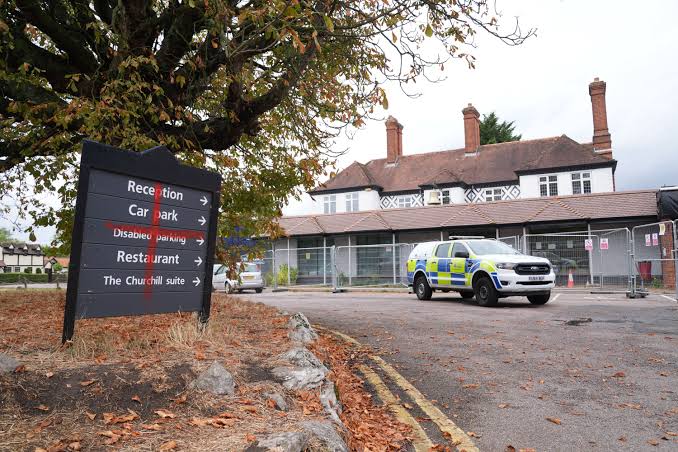
Across the United Kingdom, the visual markers of Britain’s contested asylum infrastructure are undergoing a quiet transformation. For years, Victorian seaside hotels, suburban motorway motels, and town-center inns served as the flashpoints of a fierce national debate. Today, the heavy steel security fences and private contractor vans parked outside these commercial venues are steadily disappearing.
Official figures published by the Home Office confirm a substantial milestone: the number of asylum seekers supported in temporary hotel accommodations has fallen by exactly half.
                       THE ASYLUM SYSTEM HEADLINE DATA

  HOTEL ACCOMMODATION           DISPERSAL HOUSING             TOTAL ASYLUM SUPPORT
  32,041 ──► 16,021            66,234 ──► 69,038             106,075 ──► 93,293
  (-50% / -16,020 people)       (+4.2% / +2,804 people)       (-12.0% / -12,782 people)
At the end of June 2025, exactly 32,041 individuals were housed inside commercial hotels. By the end of June 2026, that figure dropped to 16,021—a 50 percent reduction representing more than 16,000 people moved out of the hotel system.
Yet, contrary to the assumption that closing asylum hotels marks the resolution of local infrastructure pressures, the underlying operational reality tells a far more complex story. While hotels are shutting their doors to asylum contracts, the number of individuals accommodated within local neighborhoods through the UK’s dispersal accommodation network has climbed from 66,234 to 69,038—an increase of approximately four percent.
Concurrently, the total number of individuals receiving state-funded asylum support across all housing streams fell by 12 percent, dropping from 106,075 to 93,293. While these categories are distinct and not directly interchangeable, together they demonstrate an asylum apparatus that is contracting in aggregate volume while re-routing the bulk of its operational load away from high-visibility hotels into residential neighborhoods and large-scale state-managed facilities.
Understanding Dispersal Accommodation
To understand the implications of this shift, one must examine what dispersal accommodation actually entails in practice.
Unlike hotels—which operate as centralized, high-density, self-contained enclaves—dispersal accommodation consists predominantly of ordinary residential housing stock:
-
Shared Houses & HMOs: Houses in Multiple Occupation situated in residential neighborhoods across urban and suburban boroughs.
-
Flats & Private Rentals: Properties leased by central government contractors from private private landlords to house individuals and families while their legal claims are processed.
-
Geographic Proximity: Housing that embeds asylum seekers directly into established local communities rather than segregating them along commercial hotel corridors.
+---------------------------+-----------------------------------------------------------+
| Accommodation Stream      | Operational Characteristics & Public Impact               |
+---------------------------+-----------------------------------------------------------+
| Hotel Facilities          | High visual profile; centralized private security;         |
| (16,021 individuals)      | concentrated catering; high per-diem fiscal cost.         |
+---------------------------+-----------------------------------------------------------+
| Dispersal Housing         | Low visual profile; decentralized residential houses;     |
| (69,038 individuals)      | direct reliance on municipal clinics, schools & services. |
+---------------------------+-----------------------------------------------------------+
| Large-Scale / Military    | High-capacity ex-barracks; managed perimeter control;     |
| (Institutional Sites)     | aimed at absorbing rapid intake fluctuations.             |
+---------------------------+-----------------------------------------------------------+
The data point of 69,038 people in dispersal housing does not represent a simple, one-to-one transfer where every individual vacated a hotel room and walked into a suburban terrace house. The movement of claimants through the immigration pipeline involves multiple stages: initial screening, temporary reception, transfers into dispersal estates, claims processing, and eventual decisions leading either to refugee status or removal procedures.
However, moving thousands of people into the residential private rented sector shifts the logistical burden directly onto municipal councils, regional National Health Service (NHS) primary care practices, school admission boards, and local community service networks.
The Policy Strategy: Large-Scale Hubs and Hotel Exits
Government ministers have framed the ongoing drawdown of hotels as part of an overarching strategy to dismantle an expensive, emergency-response model in favor of sustainable, institutional accommodation.
Central to this strategy is the ongoing transfer of caseloads toward purpose-built, large-scale sites, including former military bases, airfields, and specialized holding centers. The policy objectives behind this model are threefold:
-
Fiscal Reduction: Slashing the multi-million-pound daily expenditure paid to private hotel chains and commercial holding firms.
-
Buffer Capacity: Establishing large, government-controlled sites capable of absorbing sudden seasonal surges in cross-Channel arrivals without overwhelming municipal hospitality sectors.
-
Political De-escalation: Eliminating the visible flashpoints in town centers that have fueled localized protests and civil unrest over the past three years.
Yet this transition presents a profound political and logistical paradox. The closure of an asylum hotel is an immediate, highly publicized event that yields positive local headlines. In contrast, the systemic impacts of dispersal accommodation are diffuse—distributed across hundreds of municipal streets, invisible in a single snapshot, but deeply felt in local housing supply and public service budgets.
The Operational Balance Sheet
The central conclusion supported by the latest data is neither that the asylum challenge has vanished, nor that the state has simply relocated the identical hotel cohort into neighboring streets:
                            THE STRUCTURAL REALITY

  [ HOTEL OCCUPANCY ]            [ OVERALL CASELOAD ]           [ DISPERSAL VOLUME ]
        -50.0%                         -12.0%                          +4.2%
  (Down by 16,020)              (Down by 12,782)               (Up by 2,804)
The real operational test for Whitehall is whether this structural re-engineering genuinely drives down state expenditure and relieves local civic pressure—or whether it simply fragments that pressure, rendering it less concentrated, less visible, and more difficult for the public to scrutinize.
2. My Professional Perspective
================================================================================
                        INVESTIGATIVE BRIEFING NOTE
  FILE: UK-MIGRATION-HOUSING-2026 / POLICY & IMMIGRATION DESK
  SUBJECT: Deconstruction of the Dispersal Model and Hidden Municipal Pressures
================================================================================
Having spent thirty years investigating bureaucratic institutions, displacement crises, and national security policies from the Mediterranean migration corridors to Whitehall committee rooms, I read these figures through a lens of hard-earned skepticism.
When a government department announces that hotel occupancy has dropped by 50 percent in twelve months, that statistic is technically accurate. But in public policy, a metric often conceals as much as it reveals. The critical journalistic task is not merely celebrating what is vanishing from public view, but tracking where the underlying operational burden has actually landed.
The transition from hotel rooms to dispersal housing represents an operational shift from acute, high-visibility containment to chronic, low-visibility municipal integration.
I. The Overlooked Reality: The Strain on the Private Rented Sector
The primary detail missing from the public conversation is the interaction between state-managed dispersal housing and Britain’s acute domestic housing shortage.
To accommodate 69,038 asylum seekers in dispersal housing, the Home Office relies heavily on large commercial outsourcing contractors—such as Serco, Mears Group, and Clearsprings Ready Homes. These corporate intermediaries enter local rental markets with vast balance sheets and guaranteed multi-year taxpayer funding, actively competing with ordinary citizens to secure residential stock from private landlords.
                  THE HOUSING SUPPLY BOTTLENECK

  +───────────────────────────────────────────────────────────+
  |              Home Office Dispersal Contracts              |
  |             (Guaranteed Long-Term State Leases)           |
  +───────────────────────────────────────────────────────────+
                                │
                                ▼
  +───────────────────────────────────────────────────────────+
  |       Private Landlords / Property Management Groups      |
  +───────────────────────────────────────────────────────────+
                                │
                                ▼
  +───────────────────────────────────────────────────────────+
  |             Local Housing Market Absorption               |
  |  - Reduction in available low-cost residential lets       |
  |  - Direct competition with local council waiting lists    |
  |  - Downstream pressure on local rent inflation            |
  +───────────────────────────────────────────────────────────+
-
Crowding Out Council Allocations: Local municipal councils, already grappling with record numbers of domestic families in temporary accommodation, find themselves bidding against central government contractors for the exact same low-cost residential properties.
-
Hidden Fiscal Transfers: When a hotel contract is terminated, central government spending drops on paper. But when dispersal tenants require specialized school places, mental health support, and local social services, the fiscal burden is effectively shifted from the Home Office’s central operational budget onto already strained local municipal balance sheets.
The hotel was an expensive, unsightly symbol of an emergency response. Dispersal housing, however, quietly integrates that demand into a housing market that is already operating at breaking point.
II. The Asymmetry of Dispersal Geography
A deeper systemic reality that rarely makes it into ministerial statements is the profound geographic inequality of where dispersal accommodation is situated.
Historically, dispersal housing has never been evenly distributed across the United Kingdom. Affluent rural shires and wealthy suburban constituencies rarely house significant dispersal populations. Instead, properties are concentrated heavily in post-industrial northern towns, former coastal resorts, and economically challenged urban boroughs in the Midlands and the North, where residential acquisition costs are lowest for government contractors.
+---------------------------+---------------------------------------------------------+
| Regional Dynamic          | Operational & Social Reality                            |
+---------------------------+---------------------------------------------------------+
| Lower-Cost Post-          | High concentration of HMO leases; disproportionate load |
| Industrial Boroughs       | placed on local GP surgeries, clinics, and schools.     |
+---------------------------+---------------------------------------------------------+
| High-Value Southern       | Virtually zero dispersal housing footprint due to high   |
| Shires & Suburbs          | private rental costs; insulated from day-to-day impacts.|
+---------------------------+---------------------------------------------------------+
| Fiscal Allocation Gap     | Section 95 / 98 asylum support funding remains fixed,   |
|                           | leaving local councils to absorb auxiliary care costs.  |
+---------------------------+---------------------------------------------------------+
This creates a structural paradox:
-
The communities asked to absorb the highest per-capita volume of dispersed asylum claimants are often the very areas with the longest municipal housing waiting lists, the most oversubscribed primary care practices, and the most fragile public service infrastructure.
-
By moving away from centralized hotels—where healthcare and security were largely provided by on-site private contractors—into the general community, the demand is absorbed directly by standard public services.
A mother trying to secure an emergency appointment at an overbooked GP surgery in a dispersal hub does not see a national 50 percent drop in hotel usage; she experiences the tangible reality of an overburdened local clinic.
III. The Strategic Dilemma of Large-Scale Sites
The government’s ambition to replace hotels with large-scale, austere holding sites—such as former RAF stations or repurposed military barracks—carries its own set of legal, operational, and humanitarian complications.
                           THE STRATEGIC HOUSING SPECTRUM

        [ HOTELS ]                 [ DISPERSAL HOUSING ]            [ MILITARY SITES ]
  - Politically toxic        - Diffuse and hidden             - High upfront capex
  - Financially ruinous      - Strains local rental stock     - Legal / Judicial hurdles
  - Flashpoint for unrest    - Stretches municipal services   - Remote logistical isolation
Large-scale containment sites are routinely subject to protracted legal challenges concerning human rights, fire safety, environmental standards, and planning compliance. In practice, building, securing, and maintaining large remote compounds often results in capital expenditure overruns that rival the very hotel contracts they were designed to replace.
Furthermore, these facilities create severe spatial isolation, separating individuals from legal counsel, language training, and community integration networks while their cases spend months or years navigating the bureaucratic backlog.
IV. The Crucial Unanswered Questions
As the British asylum apparatus pivots from one structural model to another, several critical questions remain unaddressed by policymakers:
                            CRITICAL POLICY INQUIRIES

           [ FISCAL AUDITING ]             [ HOUSING SUPPLY ]               [ INTEGRATION ROADMAP ]
                    │                                │                                │
        What is the net system saving    How many private homes have      What happens to individuals
        once municipal service grants    been removed from domestic       when claims are granted and
        are fully accounted for?         letting markets by contractors?  they enter the regular market?
-
What Is the True Net Fiscal Saving? When the Home Office calculates savings from closed hotel contracts, does the figure account for the downstream grants, healthcare subventions, and educational funding required to support 69,038 individuals in residential dispersal housing?
-
What Happens Upon Claim Resolution? When an asylum seeker in dispersal housing is granted refugee status, they are typically given 28 days to vacate their state-funded accommodation. With social housing depleted and private rents unaffordable without substantial deposits, how many are transitioning directly from dispersal accommodation into municipal homelessness?
-
How Will the System Withstand Future Intake Shocks? If small-boat arrivals or geopolitical disruptions surge during the late summer months, does the state have the institutional capacity to prevent a sudden return to emergency hotel procurement?
The reduction of asylum seekers housed in commercial hotels from 32,000 down to 16,000 is undeniably a significant logistical pivot for the British state. It dismantles an emergency setup that was fiscally unsustainable and politically combustible.
However, claiming that the pressure on communities has been resolved fundamentally misinterprets how public infrastructure operates. The reality is that the demand has not vanished; it has been redistributed.
By trading 16,000 hotel rooms for an expanded dispersal network of over 69,000 individuals embedded in shared housing, HMOs, and residential flats, the system has simply traded a high-visibility, acute crisis for a low-visibility, chronic challenge.
A mature, honest immigration debate requires moving beyond the optics of hotel exits. The real measure of success is not whether we can hide the operational strain behind closed residential doors, but whether we possess the institutional capacity, housing stock, and administrative competence to manage a humanitarian process with fairness, speed, and sustainability.
A Question for the Nation’s Civic Future
As Britain attempts to balance international legal obligations with the physical limits of local public services, every citizen and community leader must weigh a fundamental choice:
Is a public policy successful when it genuinely solves a structural crisis—or merely when it disperses that crisis so widely that it is no longer visible on the evening news?