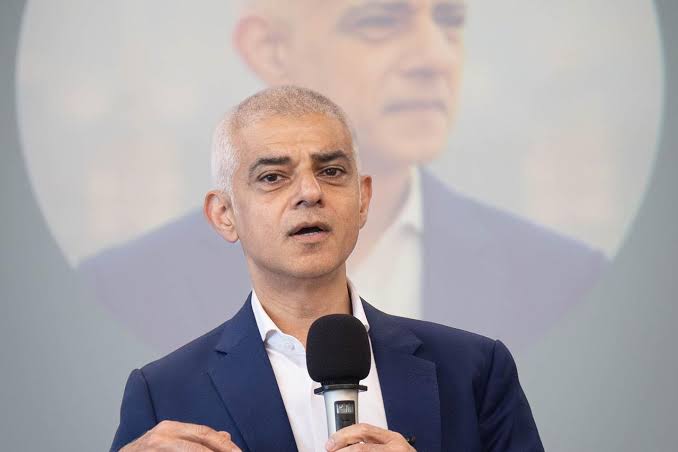
A newly released YouGov poll has delivered a significant blow to London Mayor Sadiq Khan, revealing that a clear majority of the city’s residents believe he should not stand for a fourth term. n1

The Decade-Long Shadow: Why 56% of Londoners Want Sadiq Khan to Step Aside
The Flashpoint
A comprehensive YouGov survey conducted across the capital has revealed that 56% of Londoners believe Mayor Sadiq Khan should stand down and allow another Labour candidate to contest the 2028 mayoral election.
================================================================================
               POLL SNAPSHOT: SADIQ KHAN'S 2028 MAYORAL PROSPECTS
================================================================================
  Should Sadiq Khan stand down for another Labour candidate in 2028?
  ------------------------------------------------------------------
  Step Down / Let Another Labour Candidate Run:     56%
  Run for a Fourth Term:                             24%
  Undecided / No Opinion:                            20%
--------------------------------------------------------------------------------
  Net Favorability: -9% (39% Favorable / 48% Unfavorable)
================================================================================
Khan, who has held City Hall since 2016 and secured a historic third term in May 2024, is confronting a deepening crisis of public dissatisfaction after a decade in power. The polling paints a stark picture of public fatigue, with more than half of the city’s population expressing the belief that London’s overall quality of life has systematically degraded under his stewardship.
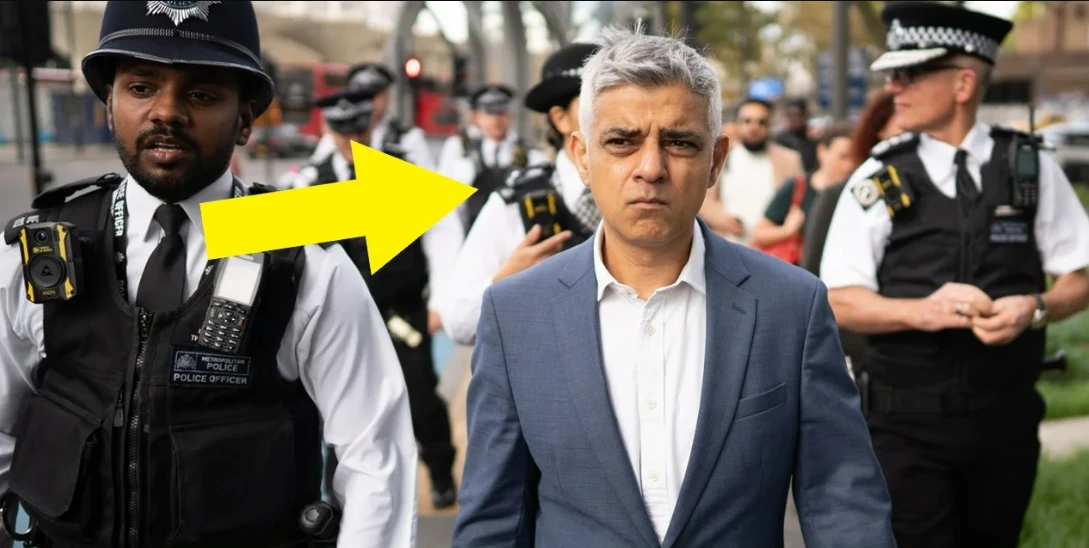
Background: A Decade at City Hall
When Sadiq Khan won the mayoralty in 2016, succeeding Boris Johnson, he did so with the largest personal mandate of any British politician. His tenure has overseen monumental shifts:
-
The post-Brexit realignment of London’s financial dominance.
-
The COVID-19 pandemic and the shift to hybrid working patterns.
-
The controversial city-wide rollout and expansion of the Ultra Low Emission Zone (ULEZ).
-
A decade under Conservative national governments followed by the return of a national Labour administration under Sir Keir Starmer.
Yet after ten years, voter tolerance has frayed into widespread skepticism.
                  LONDON QUALITY OF LIFE (PAST 10 YEARS)
  ┌─────────────────────────────────────────────────────────────┐
  │ Worsened:                                       55%         │
  │ Stayed About the Same:                          18%         │
  │ Improved:                                       19%         │
  └─────────────────────────────────────────────────────────────┘
  * Among 10+ year residents: 60% say London has deteriorated.
Key Findings: The Breakdown of Discontent
The survey uncovers structural vulnerabilities across several core areas of metropolitan governance:
-
The Longevity Effect: Dissatisfaction is heavily concentrated among long-term Londoners. Sixty percent of residents who have lived in the capital for more than a decade say conditions have worsened under Khan.
-
The Law and Order Deficit: 57% of respondents rate Khan’s handling of crime as poor, compared to only 31% who view it favorably. While City Hall consistently highlights reductions in homicides, public perception is dominated by surging reports of retail theft, mobile phone snatching, knife crime, and sexual offenses.
-
Housing and Public Spaces: Housing remains the mayor’s weakest issue—66% say he handles it badly, with only 5% seeing improvement in affordable housing stock. Furthermore, 62% reported worsening conditions in high streets, public spaces, and homelessness.
-
Selective Priorities & Public Criticism: Khan’s vocal public stance condemning online hate and anti-Muslim rhetoric on X (formerly Twitter) has drawn fierce blowback from political opponents, who accuse him of narrative curation while side-stepping street safety and systemic grooming gang inquiries.
-
Visible Urban Decay: The proliferation of visible encampments in central landmark locations—including Green Park in the shadow of Buckingham Palace—has become an emblem for critics arguing that public order in the heart of London is unraveling.
2. My Professional Perspective
================================================================================
                         INVESTIGATIVE MEMO // 30-YEAR BEAT
================================================================================
  SUBJECT: The Paradox of Incumbency Fatigue in London's Machine Politics
  ANALYST: Senior Metropolitan & Political Correspondent
  STATUS:  Deconstruction of the 2028 Electoral Trap
================================================================================
What People Overlooked: The “Incumbency Paradox”
In three decades of covering executive mayoralties—from New York and Chicago to London and Paris—I have seen this precise pattern play out. The headline screaming “56% Want Khan Gone” reads like a political death sentence. But that headline obscures the single most crucial rule of British metropolitan politics: Voters do not vote against a vacuum; they vote between alternatives.
   [ The Narrative: "Khan is Done" ]             [ The Mechanical Reality ]
   56% say "Time for someone new"                41% of 2024 Labour voters want a new face
   48% negative favorability                     BUT Labour still leads the city by double digits
   Crime & Housing dissatisfaction               Tory/Reform split leaves Labour the default frontrunner
When you examine the cross-tabs, 41% of those who voted Labour at the last general election believe Khan should step down. Almost a third of the people who voted him into City Hall just two years ago say he should not seek a fourth term.
Yet, if Khan defies this poll and runs again, he could still easily win.
Why? Because London’s structural demographics are so overwhelmingly progressive, diverse, and anti-Conservative that even an unpopular Labour incumbent possesses an immense systemic advantage against an opposition divided between Kemi Badenoch’s Conservatives and Nigel Farage’s Reform UK. The 56% figure is not an endorsement of the opposition; it is an internal plea from Londoners asking Labour to save them from a difficult choice.
The Deeper Meaning: The Rupture of the Social Contract
This poll is not merely about potholes, bus routes, or clean air zones. It reflects an emotional and psychological break in the city’s social contract.
For decades, Londoners accepted a fundamental bargain: The city is expensive, frantic, and exhausting, but in exchange, it offers unmatched dynamism, world-class opportunity, and clean, safe, vibrant public spaces.
That bargain is failing.
When 60% of decade-long residents state that living standards have worsened, they are reporting an erosion of the basics:
-
Walking home late without feeling vulnerable to opportunistic street robbery.
-
Being able to afford rent without sacrificing half of one’s take-home pay.
-
Expecting the Metropolitan Police to investigate a burglary rather than merely issue an automated crime reference number.
Khan’s defense has frequently rested on blaming the previous 14 years of Conservative national austerity. That defense held political weight in 2018 and 2022. But with a Labour government now sitting in Westminster, City Hall can no longer point across the river to Downing Street and claim complete powerlessness. The buck has officially stopped in the Mayor’s office.
Why This Story Matters Beyond London
London is often treated as an isolated bubble—a hyper-diverse, cosmopolitan city-state distinct from the rest of the UK. But what happens here serves as a weather vane for Western urban governance.
                           THE METROPOLITAN REALIGNMENT
                                        │
        ┌───────────────────────────────┼───────────────────────────────┐
        ▼                               ▼                               ▼
 [ Public Safety ]               [ Machine Fatigue ]             [ Ideological Fractures ]
 Street crime overshadows       Decade-long administrations     Urban electorate splits between
 raw homicide statistics;        face organic voter exhaustion   progressive purity and pragmatic
 citizens demand daily order.   regardless of party badge.       delivery of basic services.
Major cities across the democratic world—from San Francisco to Paris—are wrestling with the same tension: progressive leadership focusing on broad cultural and environmental crusades while daily municipal standards decay. When middle-class and working-class urbanites feel basic street-level disorder is being minimized by political messaging, the backlash cuts across traditional party loyalties.
The Unanswered Questions Ahead of 2028
Four vital questions will determine the future of London’s leadership:
1. Will Labour Party Bosses Force an Orderly Succession?
If 56% of Londoners want Khan to hand over the baton, figures within Labour—such as Dawn Butler, David Lammy, or Rosena Allin-Khan—are already measuring the curtains at City Hall. Will Keir Starmer’s operation quietly push Khan toward a House of Lords peerage to safeguard Labour’s crown jewel, or will Khan’s personal ambition force a risky fourth run?
2. Can the Right Unite Behind a Single Challenger?
With Reform UK putting up high-profile candidates like Laila Cunningham and the Tories searching for a credible heavyweight, the center-right vote in London remains fractured. Unless the opposition consolidates around an anti-incumbency platform, will Khan coast to victory on a fractured 35% plurality?
3. How Does City Hall Address the “Low-Level” Crime Epidemic?
Homicide rates may be down, but if phone snatching, shoplifting, and street harassment continue unchecked, can any political communication strategy convince residents that their streets are secure?
4. Has the ULEZ and Environmental Agenda Hit Its Ceiling?
While environmental policies defined Khan’s legacy, the economic squeeze on outer-borough residents created enduring resentment. How much regulatory cost can an already strained population absorb before political loyalty breaks entirely?
The Reckoning
Sadiq Khan has been one of the most resilient political operators of the 21st century. He navigated the hostility of the Trump years, fought off national Conservative governments, and survived intense culture wars over transport and emissions.
================================================================================
                               FINAL TAKEAWAY
================================================================================
A 56% demand to step aside is not a signal of ideological defeat; it is the
unmistakable sound of a city suffering from decade-long incumbency exhaustion.
================================================================================
Yet the most dangerous adversary any long-serving politician faces is not an opposing party—it is time. After ten years, every lingering problem becomes the incumbent’s personal creation. The tent cities in central parks, the boarded-up retail storefronts, the fear of having a phone snatched at a bus stop: these are no longer abstract societal trends; they are the visible ledger of his administration.
An Emotional Reflection
I walk through the streets of central London—past the regal iron gates of Green Park and the busy transit hubs of the West End. There is still unmatched electricity in this metropolis. But beneath that pulse is an unmistakable undercurrent of weariness.
People do not hate Sadiq Khan. But they are tired. They are tired of being told that the city is thriving by officials who travel with security details, while ordinary commuters scan the shadows as they walk home from suburban tube stations. When 56% of a city asks its leader to step aside, they are not calling for a revolution—they are asking for a fresh start.
A Question for the Reader
When a transformative political leader has delivered their original mandate but allowed daily civic standards to slip, is it an act of political courage to stay and fight for a fourth term, or is true leadership knowing when to step aside before the city leaves you behind?