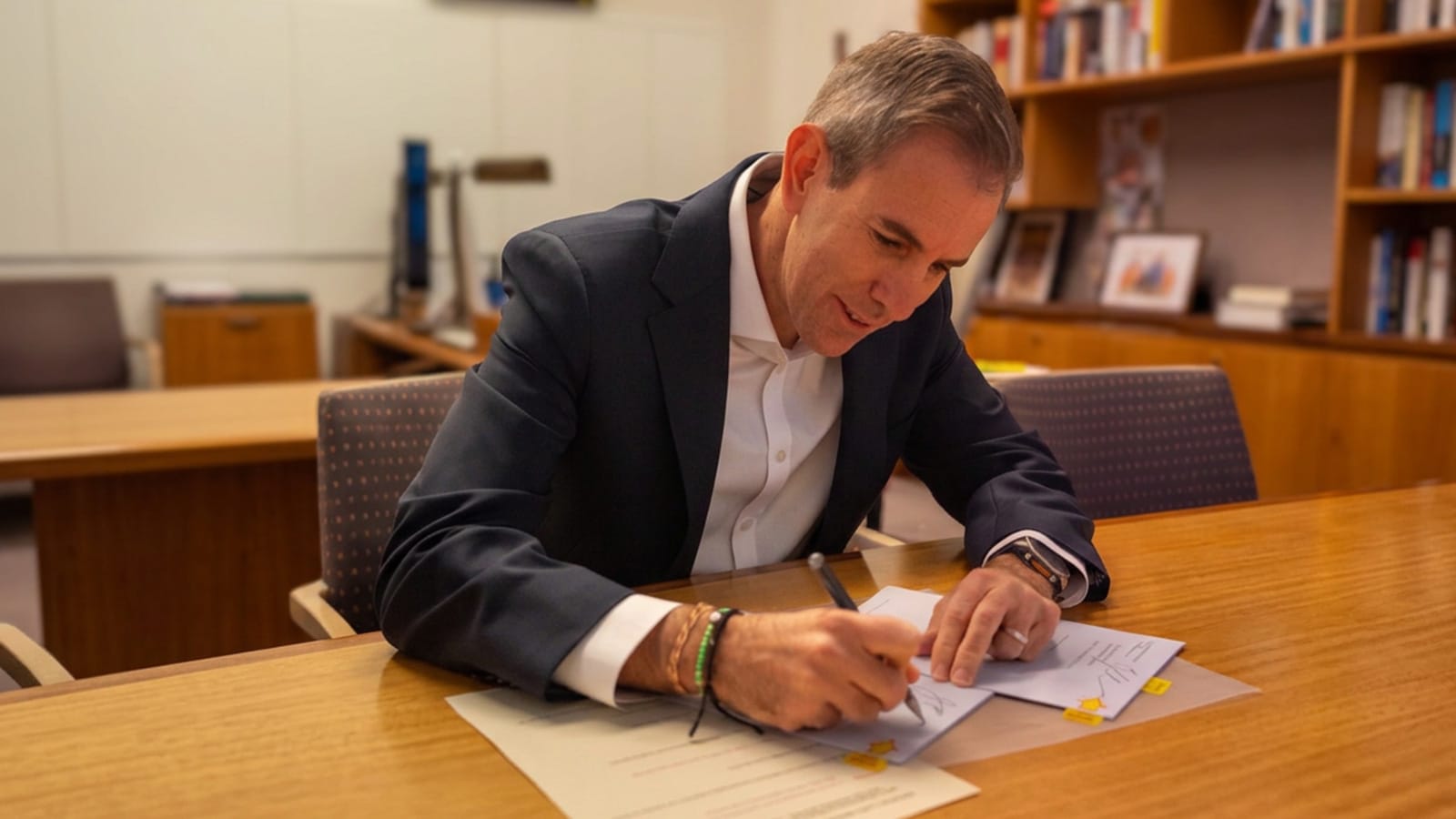
Taxpayer Millions Fund Foreign Net Zero Carbon Deal at Rushy Lagoon, Tasmania: Chalmers Under Fire. u1

The $142 Million Sovereign Ledger: Inside the State-Funded Financialization of Rushy Lagoon
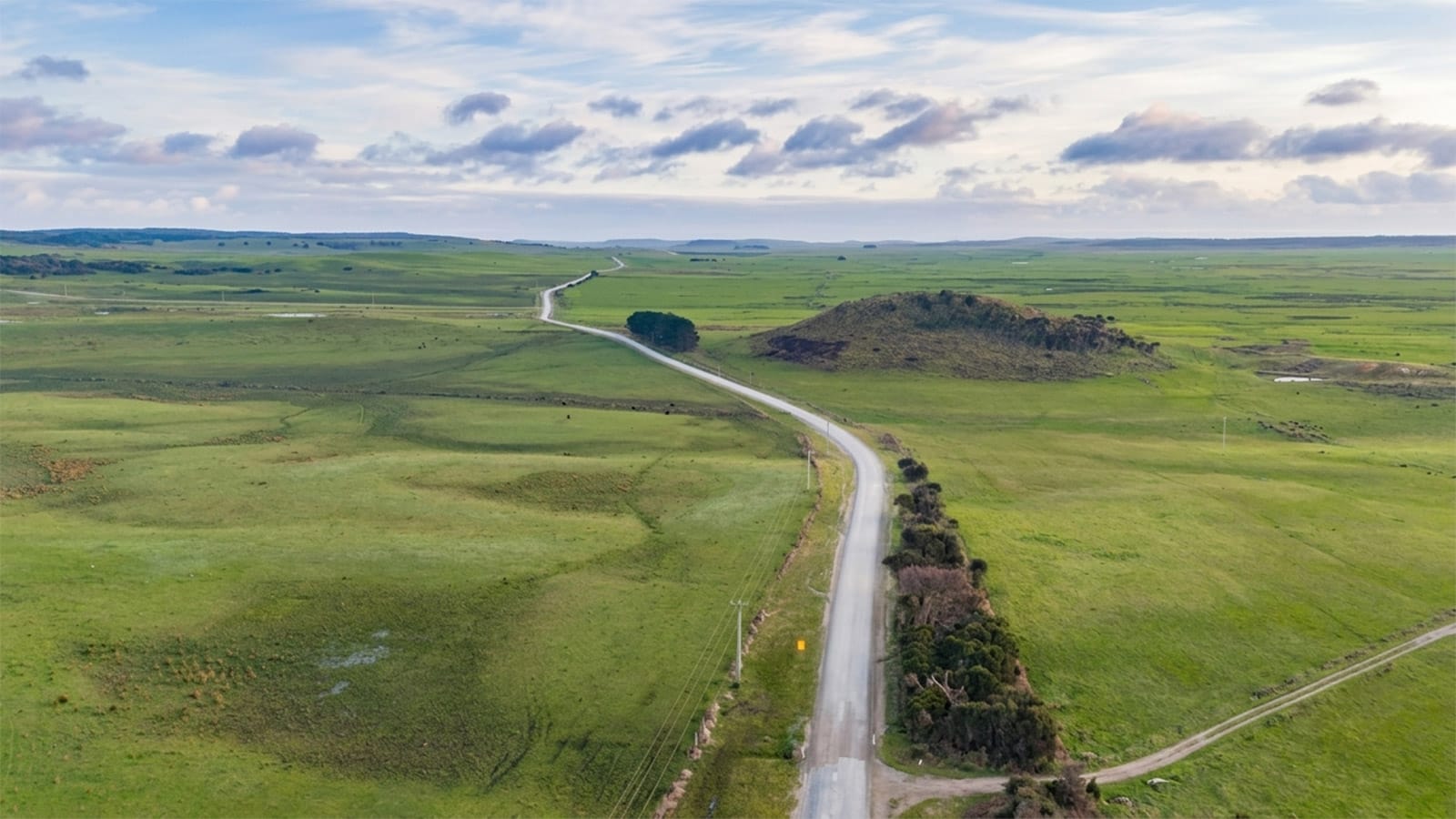
Across the wind-scoured plains of Cape Portland in Tasmania’s far northeastern tip, Rushy Lagoon spans an immense 21,745 hectares (roughly 53,700 acres). Running against the cold swells of Bass Strait, this vast expanse of beef pasture, dairy operations, sheep paddocks, and center-pivot crop circles has long operated as the island state’s largest agricultural holding. Supported by 1,170 hectares of high-capacity irrigation infrastructure and 12,500 megalitres of secure water entitlements, the estate stands as a massive monument to Australian rural production.
Today, Rushy Lagoon has transformed into a high-stakes flashpoint in Canberra’s corridors of power. The property has become the testing ground for an economic, environmental, and sovereign clash: a multi-layered transaction in which $77.8 million in Australian taxpayer capital and forestry subsidies was deployed alongside British institutional wealth to acquire the agricultural asset for $142 million.
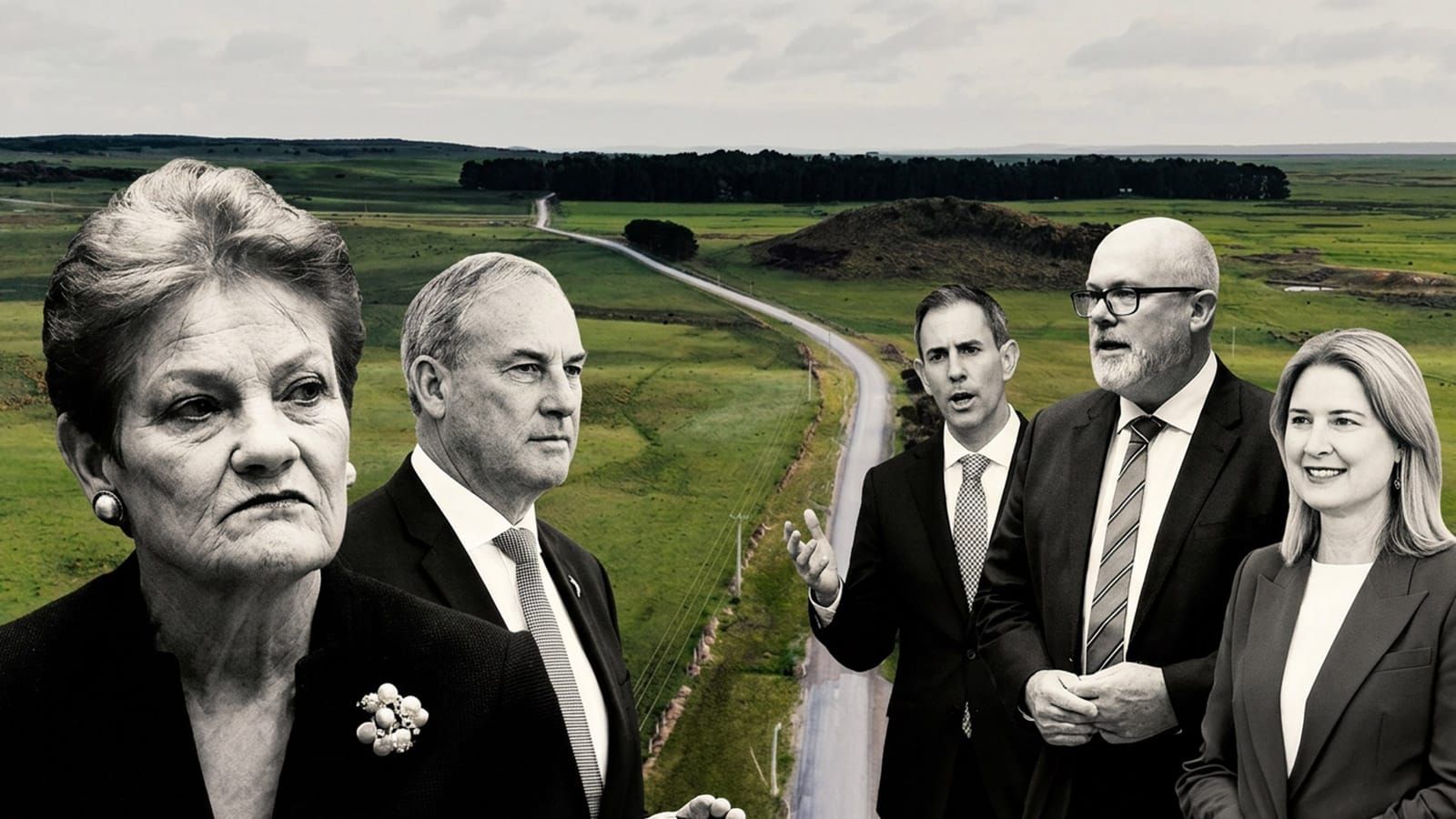
The ultimate operational blueprint: retire approximately 9,000 hectares of active grazing and cropping land, replacing it with an estimated 12 million monoculture radiata pine seedlings engineered to yield corporate carbon offsets and nature repair units under Australia’s net-zero policy framework.
+-----------------------------------------------------------------------------------------------+
|                                RUSHY LAGOON TRANSACTION AT A GLANCE                           |
+--------------------------+--------------------------------------------------------------------+
| Total Property Scale     | 21,745 hectares (~53,733 acres) | Cape Portland, NE Tasmania       |
+--------------------------+--------------------------------------------------------------------+
| Production Capacity      | 1,170 ha irrigated, 12,500 ML water rights, prime beef/dairy/grain  |
+--------------------------+--------------------------------------------------------------------+
| Total Acquisition Price  | $142 Million AUD                                                   |
+--------------------------+--------------------------------------------------------------------+
| Taxpayer Capital Stack   | • $69.0M direct equity (Clean Energy Finance Corporation / 49%)    |
|                          | • $8.8M forestry grant (Department of Agriculture, DAFF)           |
|                          | = $77.8 Million Total Commonwealth Commitment                      |
+--------------------------+--------------------------------------------------------------------+
| Private / Overseas Equity| $73.0M (Gresham House Forestry Fund & Aviva Investors, UK)         |
+--------------------------+--------------------------------------------------------------------+
| Competing Domestic Bids  | $70.0M – $75.0M (Unsubsidized Australian family farm consortiums)  |
+--------------------------+--------------------------------------------------------------------+
| Land-Use Conversion      | ~9,000 hectares transitioned from food output to Radiata pine      |
+--------------------------+--------------------------------------------------------------------+
| Offset & Yield Forecasts | 3.2M Australian Carbon Credit Units (ACCUs) | 5.0M tonnes timber   |
+--------------------------+--------------------------------------------------------------------+
For nearly three decades, Rushy Lagoon was developed and expanded under the stewardship of the Pye family, prominent New Zealand pastoralists who purchased the holding in 1996. Over 28 years, the Pyes consolidated the holding into Tasmania’s premier pastoral powerhouse, investing in extensive center-pivot irrigation, pasture renovation, dairy sheds, and livestock handling facilities.
The holding sits within a delicate coastal catchment, bordered by the internationally recognized Lower Ringarooma River Ramsar wetland site—a sanctuary for migratory shorebirds, rare endemic plants, and complex freshwater ecology.
                    RUSHY LAGOON: LAND CONVERSION BLUEPRINT
                    ========================================
                    Total Estate: 21,745 Hectares

 [   9,000 Hectares   ] [ 1,000 ha ] [          11,745 Hectares          ]
 [ Radiata Pine Forest] [Eco-Repair] [ Remaining Pasture / Coastal Margin]
 (Food production ended)              (Cattle grazing & remnant vegetation)
The property was intermittently marketed starting in 2018 before being formally placed on the international market in October 2024, with competitive bidding running through November 2025. Throughout this open marketing campaign, independent Australian farming consortiums and domestic pastoral operators entered bids ranging between $70 million and $75 million. These valuations reflected the property’s intrinsic agricultural production capacity: the market value of its beef, lamb, milk, wool, and grain yields under prevailing commodity prices.
The Buyer and the Financial Stack
The entity that ultimately secured the asset was the Tasmania Natural Asset Trust (TNAT), a fixed unit trust registered in Sydney on October 31, 2025.
Behind this vehicle sits a coalition of British institutional finance and Australian statutory funding:
                            THE TNAT CAPITAL STACK

           FOREIGN INSTITUTIONAL WEALTH        COMMONWEALTH OF AUSTRALIA
           ============================        =========================
                  Gresham House                         CEFC
              (UK Forestry Giant)                 (Govt Green Bank)
                       +                                  +
                Aviva Investors                         DAFF
            ($500B+ Asset Manager)              (Federal Ag Grant)
                       |                                  |
               [$73.0M Private]                   [$77.8M Taxpayer]
                       \                                  /
                        \                                /
                         v                              v
                    +----------------------------------------+
                    |     TASMANIA NATURAL ASSET TRUST       |
                    |        Total Purse: $150.8M            |
                    +----------------------------------------+
                                         |
                                         v
                         Acquisition of Rushy Lagoon ($142M)
                       + Plantation Capitalization ($8.8M)
-
Gresham House: The largest specialist commercial forestry asset manager in the United Kingdom, led on the ground in Australasia by Associate Director Dorian van Raalte and local Tasmanian asset manager Jonno Craven.
-
Aviva Investors: The asset-management arm of the British multinational insurance giant Aviva plc, commanding hundreds of billions in global assets under management.
-
Clean Energy Finance Corporation (CEFC): The Australian federal government’s statutory green bank, capitalized entirely by Australian taxpayers. The CEFC committed $69 million in direct equity, acquiring a 49% co-ownership stake in the purchasing syndicate.
-
Department of Agriculture, Fisheries and Forestry (DAFF): Administered under federal Agriculture Minister Julie Collins (the member for Franklin, Tasmania), DAFF approved an $8.8 million taxpayer-funded grant under the $73.45 million Support Plantation Establishment (SPE) initiative to underwrite the planting of 12 million pine seedlings.
The total public capital committed to the transaction reached $77.8 million ($69 million in CEFC equity plus $8.8 million in DAFF grants). This public contribution alone exceeded the total private capital offered by domestic Australian farmers attempting to acquire the farm as an ongoing food producer.
       AUSTRALIAN FARMERS VS. STATE-BACKED SYNDICATE ($ MILLIONS)
       =========================================================

 Domestic Australian Bids:
 [====================] $75.0M (100% Private Capital)

 Commonwealth Taxpayer Contribution Alone:
 [======================] $77.8M ($69M CEFC Equity + $8.8M Forestry Grant)

 Final Winning Syndicate Offer:
 [================================================] $142.0M ($73M UK Funds + $69M CEFC)
The Legislative Clash: Senate Question Time
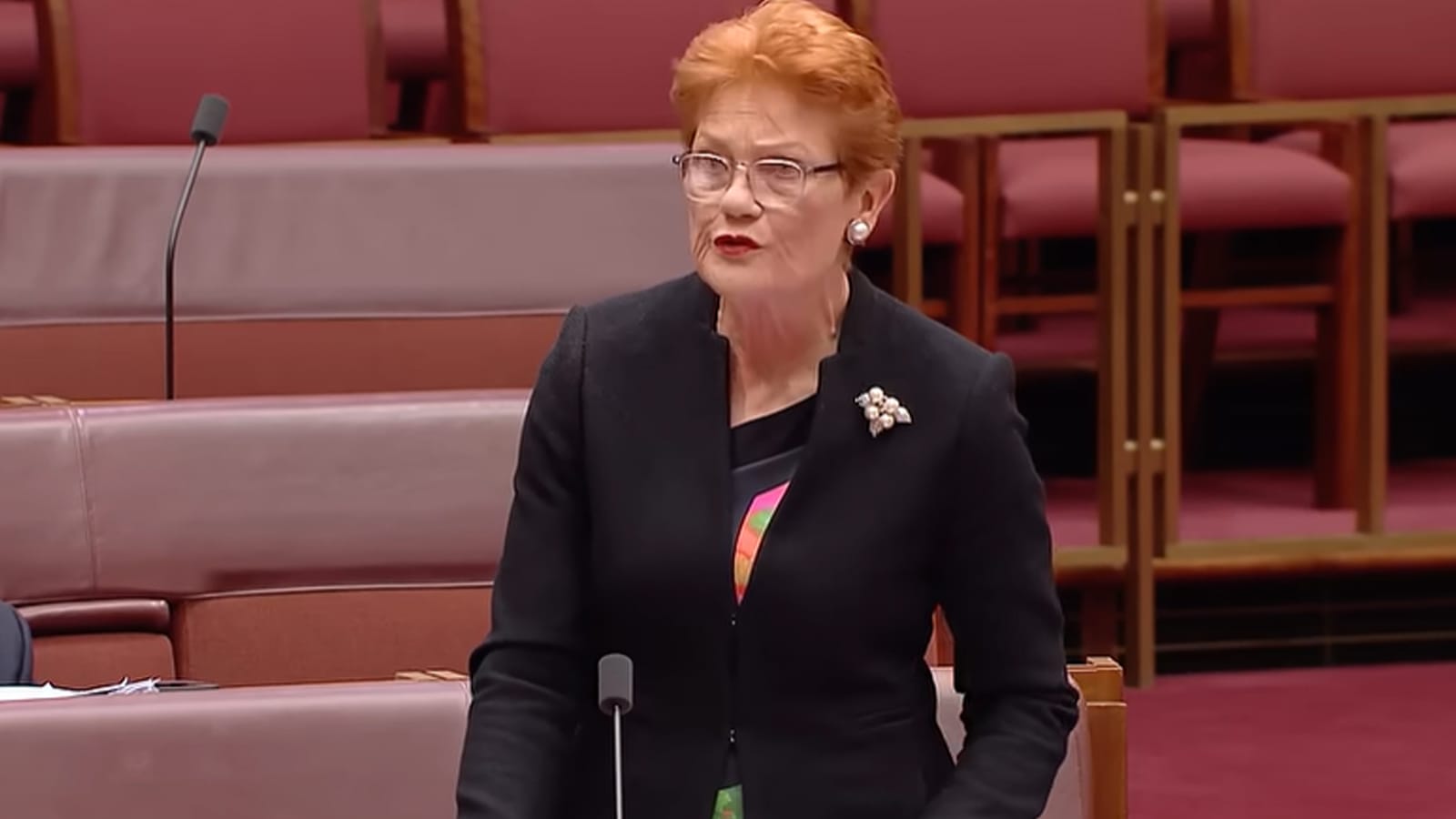
The transaction erupted into the national political arena following disclosures on the Karl Stefanovic Show by former senator Gerard Rennick and advocate Heston Russell. On Thursday, August 13, 2026, One Nation leader Senator Pauline Hanson confronted the government during Senate Question Time.
                       PARLIAMENTARY PROBE TIMELINE

   OCT 2024          OCT 31, 2025       NOV 5, 2025       MAY 2026
   Pye family        TNAT trust         TNAT applies      DAFF approves
   lists property    registered         for $8.8M grant   $8.8M seedling
   for global sale   in Sydney          on closing day    grant funding
      |                   |                  |                 |
      +-------------------+------------------+-----------------+
      |
   JULY 8, 2026      AUG 12-13, 2026    AUG 18, 2026      PENDING
   Treasurer Jim     Senate fireworks;  Senate forces     Financial
   Chalmers signs    Hanson & Colbeck   surrender of      Settlement
   FIRB approval     challenge deal     federal files     under pressure
Hanson opened by addressing Environment Minister Murray Watt, demanding to know why Commonwealth funds were deployed to price out Australian primary producers in favor of foreign-backed carbon forestry.
After Watt declined jurisdiction—directing the inquiry toward the Treasury and Climate Change portfolios—the question was fielded by Minister Tim Ayres, representing the Minister for Industry and Innovation and the Minister for Climate Change and Energy.
+---------------------------------------------------------------------------------------------------+
|                              CHAMBER CONFRONTATION: THE KEY EXCHANGES                             |
+--------------------------+------------------------------------------------------------------------+
| Senator Pauline Hanson   | "Minister, what business does your agency have in interfering in land   |
| (One Nation)             | purchases, encouraging foreign companies to turn Australia's           |
|                          | productive farmland into carbon credits and putting our national food  |
|                          | security at risk?"                                                     |
+--------------------------+------------------------------------------------------------------------+
| Minister Tim Ayres       | "Rushy Lagoon sits on Class 5 and Class 6 agricultural land... state   |
| (Government)             | policy does not classify this as prime agricultural land. It remains a |
|                          | working asset... generating roughly 190 regional jobs."               |
+--------------------------+------------------------------------------------------------------------+
| Senator Richard Colbeck  | "The government has effectively delivered to itself an $8.8 million    |
| (Liberal, Tasmania)      | grant in contravention of the guidelines. If this is not corrupt, it's |
|                          | verging on corruption."                                                |
+--------------------------+------------------------------------------------------------------------+
| Senator Sean Bell        | "If Canberra was prepared to put that much money behind this purchase, |
| (One Nation Whip)        | where was the support available to Tasmanian farmers who wanted to     |
|                          | keep this as an agricultural asset?"                                   |
+--------------------------+------------------------------------------------------------------------+
Ayres defended the transaction on several grounds:
-
Soil Classification: He argued that Rushy Lagoon is predominantly rated as Class 5 and Class 6 on Tasmania’s 1-to-7 Land Capability Classification scale, meaning it does not fall under statutory protections reserved for “prime agricultural land” (Classes 1–3).
-
Multi-Use Model: Ayres maintained the estate would retain an agricultural footprint, combining commercial timber, environmental restoration, and selective cattle grazing.
-
Coalition Policy Precedent: Ayres cited a July 2020 forestry hub map released under former Coalition energy minister Angus Taylor, claiming northern Tasmania had long been slated for plantation expansion.
-
Employment Projections: Ayres asserted the five-year establishment phase would create approximately 190 regional jobs.
Hanson delivered a sharp rebuttal during the subsequent adjournment debate, arguing:
“The deal over Rushy Lagoon stinks all the way from Tasmania to Canberra. This dirty deal has effectively lifted the value of the purchase to $142 million, about twice as much as local buyers could bid… You’re not farming food. You’re destroying very productive land that produces food for Tasmania, and for Australia for that matter, for carbon credits.”
One Nation Senate Whip Senator Sean Bell joined the offensive, stating that net-zero incentives had created an artificial economy that cannibalized rural enterprises:
“Labor has built a twisted system where carbon credits, taxpayer finance, and net zero targets create a sick incentive to destroy productive farmland, regional jobs, and local communities.”
Dual Governance Roles: The Scrutiny on Steven Skala
The transaction drew further scrutiny over governance structures and potential institutional conflicts of interest.
                           THE DUAL ROLES IN QUESTION

                          +-------------------------+
                          |   STEVEN SKALA AO       |
                          +------------+------------+
                                       |
                   +-------------------+-------------------+
                   |                                       |
                   v                                       v
     +---------------------------+           +---------------------------+
     |         CHAIRMAN          |           |        BOARD MEMBER       |
     |   Clean Energy Finance    |           |    Foreign Investment     |
     |        Corporation        |           |       Review Board        |
     +-------------+-------------+           +-------------+-------------+
                   |                                       |
                   v                                       v
         Committed $69.0 Million                  Assessed & Recommended
          Direct Public Equity                    Approval of $142M Sale
          Stake to Buyer (TNAT)                   to Foreign-Led Syndicate
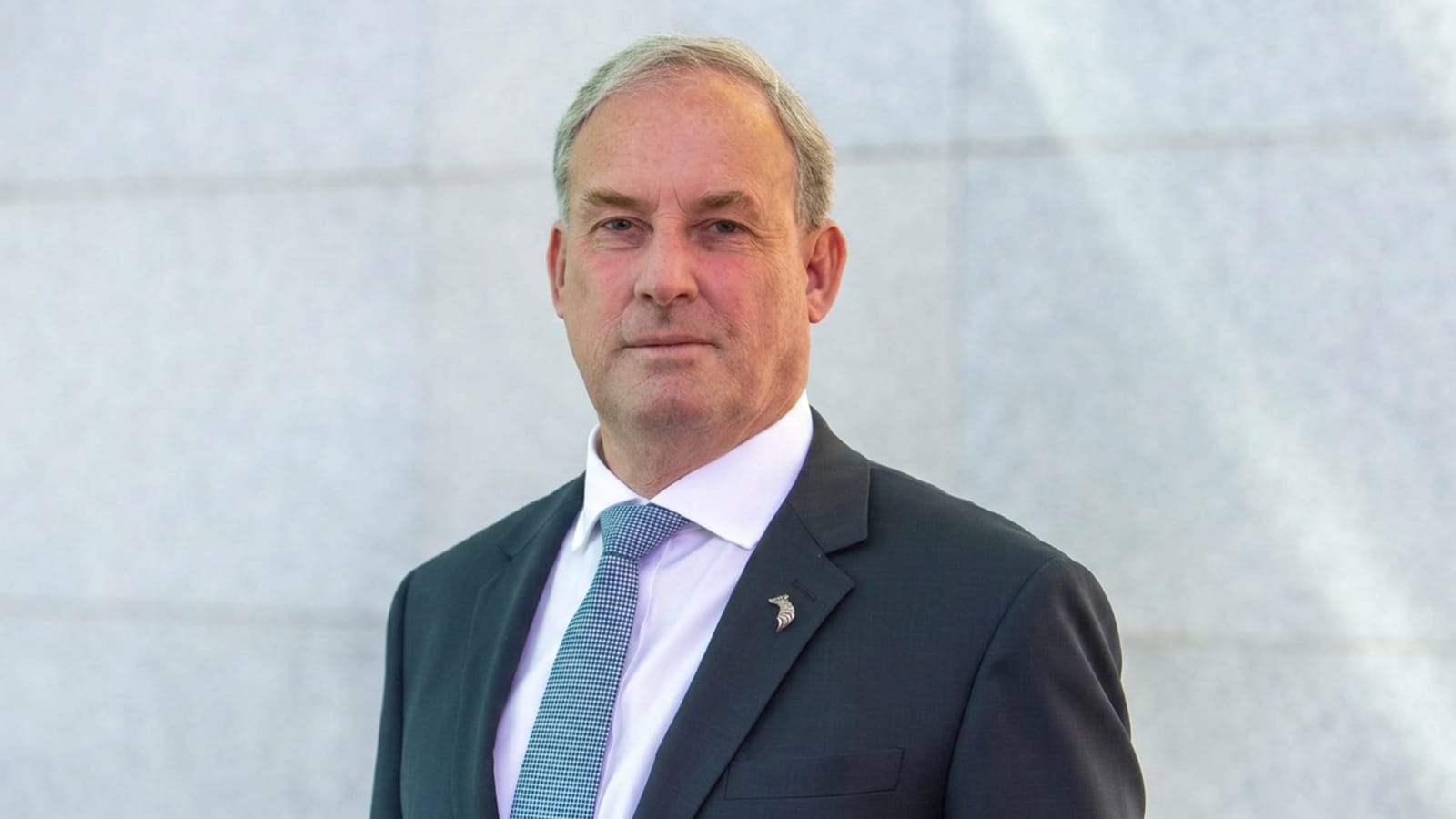
Steven Skala AO has served continuously as the Chairman of the Clean Energy Finance Corporation since 2017 and simultaneously serves as an appointed member of the Foreign Investment Review Board (FIRB), having been reappointed to FIRB by Treasurer Jim Chalmers in September 2025.
The CEFC approved a $69 million public equity investment to fund TNAT’s buyout, while FIRB simultaneously assessed the transaction and recommended that Treasurer Chalmers grant foreign investment approval.
When pressed in the Senate regarding whether Skala had formally declared a conflict of interest or recused himself from deliberations within both bodies, Minister Ayres initially stated the details were not advised to him directly. He later returned to the chamber to confirm that declarations and formal recusals had occurred according to statutory protocols, though no written documentation or disclosure logs were tabled during the session.
Regulatory Scrutiny: The $8.8 Million Forestry Grant
Beyond the CEFC equity stake, Liberal Senator for Tasmania Richard Colbeck—a former federal minister for forestry and agriculture—raised critical procedural questions regarding the $8.8 million grant awarded to TNAT by the Department of Agriculture.
+---------------------------------------------------------------------------------------------------+
|                        ALLEGED PROGRAM GUIDELINE BREACHES: DAFF $8.8M GRANT                       |
+--------------------------+------------------------------------------------------------------------+
| Requirement 1:           | Guideline Requirement: Applicants must hold secure, demonstrated       |
| Secured Land Access      | long-term title or tenure to the target land.                         |
|                          | Senate Finding: TNAT owned no part of Rushy Lagoon on application day  |
|                          | (Nov 5, 2025) or when the grant was awarded (May 2026).                |
+--------------------------+------------------------------------------------------------------------+
| Requirement 2:           | Guideline Requirement: Section 4.3 strictly excludes Commonwealth     |
| Corporate Entity Ban     | corporate entities from eligibility.                                   |
|                          | Senate Finding: The CEFC is a statutory Commonwealth corporate entity  |
|                          | holding a 49% direct ownership interest in the trust.                  |
+--------------------------+------------------------------------------------------------------------+
Colbeck referred the grant allocation directly to the Auditor-General for the Australian National Audit Office (ANAO), asserting:
-
Timing and Land Tenure: The trust submitted its application on November 5, 2025—the day the competitive grant window closed, and less than one week after TNAT was incorporated—months before it secured ownership or regulatory approval for Rushy Lagoon.
-
Corporate Eligibility: Section 4.3 of the Support Plantation Establishment guidelines expressly debars Commonwealth corporate entities from applying. Because the CEFC holds a 49% share of TNAT, Colbeck argued the Commonwealth had unlawfully awarded grant capital to a vehicle substantially owned by itself.
Colbeck told the Senate:
“The government has effectively delivered to itself an $8.8 million grant in contravention of the guidelines. If this is not corrupt, it’s verging on corruption.”
       DAFF SUPPORT PLANTATION ESTABLISHMENT GRANT DISTRIBUTION ($73.45M POOL)
       ========================================================================

 Next Highest Project Grant:
 [==] $2.3M

 Tasmania Natural Asset Trust (Rushy Lagoon):
 [========] $8.8M (Over 3.8x larger than any other individual grant recipient)
In defense, trust spokespersons stated that tree planting programs demand long operational lead times for nursery seedling propagation, necessitating early grant applications. They maintained that the syndicate participated in a competitive application process alongside other agricultural enterprises.

The Parliamentary Impasse and Senate Document Orders
Efforts to refer the transaction to the Senate Rural and Regional Affairs and Transport References Committee were halted when debate concluded before a final vote could be taken, with Coalition senators noting that both Labor and Greens senators opposed resuming debate.
In response to concerns over potential impacts on the adjacent Ramsar-listed Lower Ringarooma wetlands and questions surrounding water table drawdowns from 9,000 hectares of pine, Tasmanian Premier Jeremy Rockliff established a Tasmanian State Parliamentary Select Committee to investigate the transaction independently.
                         THE ENFORCEABLE LEVERS OF INTERVENTION

  [ LEVER 1: UNRELEASED EQUITY ]           [ LEVER 2: UNPAID GRANTS ]
  CEFC Board maintains legal control        DAFF $8.8M grant requires verified
  of $69M equity allocation until           matching capital and ongoing planting
  formal execution of settlement.           milestones before disbursement.
                 |                                         |
                 +--------------------+--------------------+
                                      |
                                      v
                  +---------------------------------------+
                  |     TREASURER JIM CHALMERS            |
                  | Can freeze federal funds disbursements|
                  | before final settlement completion.   |
                  +---------------------------------------+
Meanwhile, following the expiration of an earlier non-compliant disclosure order, the Senate passed two binding orders compelling the executive to produce all Department of Agriculture correspondence, text messages, internal assessments, and land capability studies relating to Rushy Lagoon by midday on Tuesday, August 18, 2026. Minister Jess Walsh subsequently tabled documents in response to the orders.

========================================================================================
                                MY PROFESSIONAL PERSPECTIVE
                 Investigative Field Notes & Strategic Policy Analysis
========================================================================================
Investigative journalism over three decades teaches you that when an outcome defies basic market logic, the answer is rarely found in the rhetoric shouted across parliamentary chambers. It is found in the underlying ledger—in the subtle regulatory shifts, yield arbitrage mechanisms, and financing structures that operate outside public view.
The controversy over Rushy Lagoon is not simply a squabble over Tasmanian acreage, nor is it merely another round in Australia’s long-running climate wars. It represents a watershed moment in the structural transformation of rural property: the state-engineered financialization of productive agricultural land.
                        THE LAND VALUATION DIVIDE

    AGRICULTURIST HORIZON                         FINANCIALIZED OFFSET HORIZON
    +--------------------------------+            +--------------------------------+
    | Land Valuation Formula:        |            | Land Valuation Formula:        |
    | Yield per Hectare (Beef, Lamb, |   VERSUS   | Base Timber Yield              |
    | Milk, Crops) × Global Clearing |            | + 3.2M Units (ACCUs)           |
    | Price - Operating Overhead     |            | + Nature Repair Market Credits |
    |                                |            | + 49% State Equity Co-Funding  |
    | Capital Ceiling: ~$75.0M       |            | Capital Ceiling: $142.0M+      |
    +--------------------------------+            +--------------------------------+
The Overlooked Mechanism: Sovereign-Backed Yield Arbitrage
The central question raised in the Senate was simple: How could a foreign-backed consortium justify paying $142 million for an asset that experienced domestic agriculturalists valued at $75 million?
The explanation lies in a distorted dynamic: yield arbitrage enabled by sovereign intervention.
-
The Agricultural Production Ceiling: A traditional pastoralist calculates land value based on biological production yields: kilograms of beef per hectare, hectoliters of milk, or metric tonnes of grain. Subject to input costs, rainfall variability, and global commodity price swings, the Pye property had a commercial ceiling near $75 million.
-
The Carbon Asset Multiplier: When the land is repurposed for carbon sequestration, the valuation metric changes entirely. By overlaying 9,000 hectares with 12 million pines, TNAT is not operating as a traditional farm; it is developing a financial clearinghouse. The asset is projected to yield:
-
3.2 million Australian Carbon Credit Units (ACCUs), tradeable on corporate offset markets.
-
5 million tonnes of harvestable commercial timber.
-
Emerging Nature Repair Market biodiversity credits.
-
-
The State Subsidy Advantage: Private capital pursuing carbon yields must normally bear the cost of commercial borrowing rates. In this transaction, the Australian government contributed $69 million in direct equity while absorbing significant underwriting risk, and then added an $8.8 million planting grant.
                   THE ASYMMETRIC LAND MARKET

 [ Private Farmer Capital ] ===> Capped by Agricultural Produce Realities
                                      |
                                  COMPETES WITH
                                      |
 [ Financialized Syndicate] ===> Underwritten by State Co-Equity + Offset Markets
                                      = DOMESTIC PRODUCERS PRICED OUT
When a sovereign green bank steps into the open market alongside offshore private equity, it alters market dynamics. Domestic family farming enterprises, relying solely on cash flows from primary food production, cannot match bids backed by government equity and corporate offset mandates.
The Soil Classification Defense: A Bureaucratic Fiction
Minister Tim Ayres’ reliance on Tasmania’s Class 5 and Class 6 land classification scale is an example of using regulatory technicalities to obscure operational realities.
       LAND CLASSIFICATION REALITY VS. ON-THE-GROUND PRODUCTIVITY
       =========================================================

 Regulatory Bureaucracy Label:
 "Class 5 & 6 Ground" ===> Low intrinsic soil fertility; not protected
                          by statutory agricultural preservation orders.

 Operational Farm Reality:
 1,170 ha Modern Irrigation + 12,500 ML Water + 28 Years Capital Investment
                          = High-yield food-producing pastoral estate.
To categorize Rushy Lagoon as marginal dirt because it falls outside Class 1–3 ratings is to ignore modern pastoral systems.
Through the development of 1,170 hectares of center-pivot irrigation, the management of 12,500 megalitres of water rights, and decades of soil improvement, the Pye family turned this estate into an agricultural asset. It carried thousands of dairy and beef cattle, grew forage crops, and supported regional food processing supply chains.
Retiring 9,000 hectares of this property is not the rehabilitation of barren terrain. It is the deliberate conversion of developed agricultural land into a monoculture forestry plantation designed to balance carbon accounts on corporate spreadsheets.
+---------------------------------------------------------------------------------------------------+
|                                     THE INSTITUTIONAL PARADOX                                     |
+--------------------------+------------------------------------------------------------------------+
| Stated Policy Aim        | Foster sovereign supply-chain resilience, lower national living costs, |
|                          | and preserve rural community employment.                               |
+--------------------------+------------------------------------------------------------------------+
| Operational Result       | Deploying taxpayer equity to help offshore capital buy rural land,     |
|                          | ending food production on 9,000 hectares to generate carbon credits.   |
+--------------------------+------------------------------------------------------------------------+
Systemic Governance Failures and the Dual-Role Precedent
The governance structure surrounding this approval raises important questions about oversight inside Australia’s statutory authorities.
                         THE CLOSED-LOOP REVIEW RISK

  Statutory Capital Deployment                  Sovereign Gatekeeping Review
  +--------------------------+                  +--------------------------+
  | Clean Energy Finance     |                  | Foreign Investment       |
  | Corporation (CEFC)       |                  | Review Board (FIRB)      |
  +------------+-------------+                  +------------+-------------+
               |                                             |
               \                      +----------------------+
                \                    /
                 v                  v
          +--------------------------------+
          |  CHAIR / BOARD INTERSECTION    |
          |  Shared Leadership Positions   |
          +--------------------------------+
While Minister Ayres stated to the Senate that Steven Skala followed conflict declaration and recusal procedures, the broader systemic issue remains.
When statutory bodies like the CEFC expand into commercial land acquisitions, the lines between market participant, policymaker, and regulator become blurred. When senior leadership holds positions across the entity deploying capital and the agency charged with vetting foreign investment, public confidence relies on absolute institutional transparency—not behind-the-scenes recusals disclosed only under sustained parliamentary pressure.
Furthermore, the DAFF $8.8 million seedling grant allocated under Julie Collins’ departmental jurisdiction shows sign of process strain:
-
TNAT submitted its bid on the final closing day, less than a week after incorporation.
-
It held no title to the underlying land at the time of award.
-
Its primary co-owner was a Commonwealth statutory entity that program guidelines expressly barred from participating.
When executive agencies find ways around their own funding rules to deliver multi-million-dollar grants to state-backed entities, standard procurement integrity is compromised.

The Unanswered Questions
As the midday August 18 deadline passes and the tabling of ordered departmental records begins, several structural questions require investigation:
+----+----------------------------------+-------------------------------------------------------------+
| #  | Unresolved Investigation Point   | Core Question for Public Accountability                     |
+----+----------------------------------+-------------------------------------------------------------+
| 1  | Full Recusal Audit Trail         | Will formal, time-stamped minutes of CEFC and FIRB board    |
|    |                                  | meetings confirming Skala's recusals be made public?       |
+----+----------------------------------+-------------------------------------------------------------+
| 2  | Legality of Grant Allocation     | How did DAFF reconcile Section 4.3 (excluding Commonwealth  |
|    |                                  | corporate entities) with the CEFC's 49% stake in TNAT?      |
+----+----------------------------------+-------------------------------------------------------------+
| 3  | Water Table Hydrology Risks      | What baseline studies were conducted on the hydrological    |
|    |                                  | drawdown of 12M pines adjacent to the Ramsar wetland site?  |
+----+----------------------------------+-------------------------------------------------------------+
| 4  | Precedent for Farmland Buyouts   | Does the government intend to use CEFC equity to back       |
|    |                                  | additional corporate purchases of Australian grazing land?  |
+----+----------------------------------+-------------------------------------------------------------+
-
Where are the formal minutes confirming recusals? The government must table the exact board minutes and FIRB hearing records showing when the dual-board chair declared conflicts and recused himself from the investment decision.
-
How was the Section 4.3 grant restriction bypassed? The Auditor-General must establish how the Department of Agriculture justified awarding $8.8 million to an entity owned 49% by a Commonwealth entity, despite clear program rules prohibiting it.
-
What is the true hydrological impact on the Ramsar wetlands? Radiata pine is a water-intensive crop. Planting 12 million trees directly adjacent to the protected Lower Ringarooma catchment risks altering shallow water tables, with unassessed environmental consequences.
-
Is this now standard national policy? If public equity is used to convert working cattle and grain farms into carbon credit plantations, what are the implications for long-term domestic food supply and land affordability for the next generation of Australian farmers?
The battle over Rushy Lagoon is more than a momentary political skirmish in Canberra. It serves as a stark case study of how policy mandates, when merged with financial engineering, can produce consequences that run counter to the public interest.
                           THE STRUGGLE FOR AUSTRALIA'S SOIL

       CORPORATE CARBON ECONOMY                   TRADITIONAL PASTORAL ECONOMY
    +----------------------------+             +--------------------------------+
    | • State Equity Co-Funding  |             | • Sovereign Food Security      |
    | • Paper Offset Credits     |     VS.     | • Intergenerational Farming    |
    | • Foreign Asset Management |             | • Rural Community Viability    |
    | • Tree Monocultures        |             | • Regional Economic Resilience |
    +----------------------------+             +--------------------------------+
                                  \           /
                                   \         /
                                    v       v
                        +-------------------------------+
                        |       THE CENTRAL DILEMMA     |
                        | When carbon offsets become    |
                        | more lucrative than feeding   |
                        | the nation, what does our     |
                        | country produce tomorrow?     |
                        +-------------------------------+
When the state deploys taxpayer money to help private syndicates outbid local primary producers, it alters the economic foundation of rural communities. It creates a dynamic where growing paper offsets for corporate balance sheets becomes more profitable than producing food for the nation’s tables.
As financial settlement looms, the choice before the government is clear: allow this deal to proceed as an unchallenged blueprint for future corporate buyouts, or step in, freeze the deployment of public capital, and subject the entire transaction to independent public scrutiny.
The land on the shores of Bass Strait will endure. But the precedent established here will determine who can afford to farm Australia’s soil in the decades ahead.
When a nation uses its own public wealth to price its farmers off the land in pursuit of balance-sheet carbon targets, who is the system truly serving—the communities who rely on that land for food, or the financial entities profiting from its conversion?