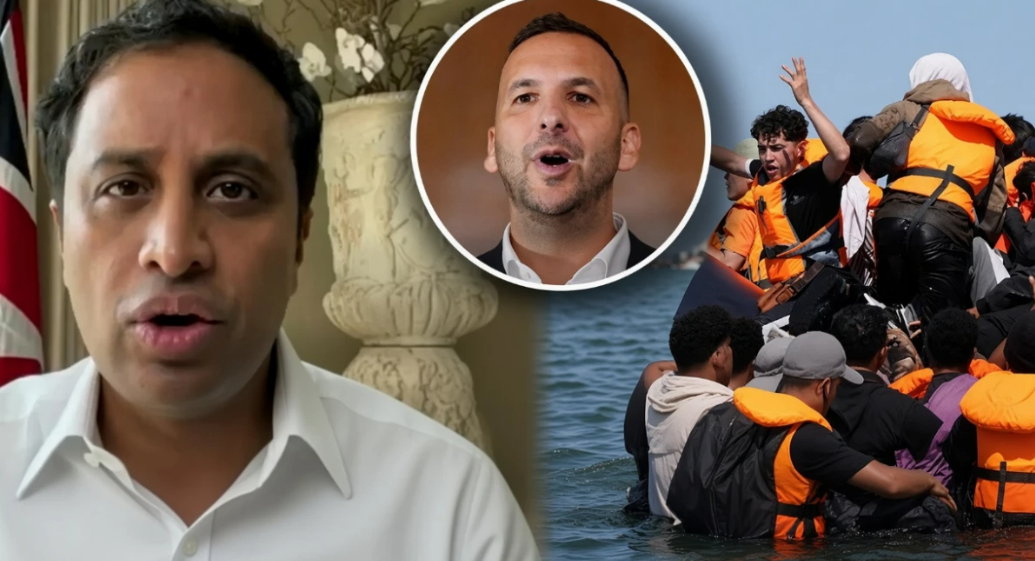
Reform UK’s Home Affairs spokesperson, Zia Yusuf, has announced the party’s intent to introduce “Polanski’s Law,”. n1

The Digital Contraband War: Behind Reform UK’s Threat to Jail Corporate Executives Over Migrant SIM Cards
In thirty years of covering political warfare, constitutional crises, and the militarization of national borders across the Western world, I have watched politicians reach for ever more extreme levers to capture public attention. We have seen razor wire strung along riverbanks, military gunboats deployed into civilian shipping lanes, and emergency legislation designed to bypass international courts.
Yet an extraordinary new frontier in the immigration battleground has emerged—one that moves the frontline from the choppy waters of the English Channel straight into corporate boardrooms, telecom server farms, and the fundamental architecture of common law.
The confrontation erupted when Zia Yusuf, the wealthy entrepreneur turned Home Affairs spokesperson and chairman for Reform UK, fired a direct political and legal broadside at Vodafone Group. The offense? Donating pre-paid mobile phone SIM cards to a registered British charity supporting asylum seekers.
Yusuf’s ultimatum was uncompromising: cease supplying connectivity to charities assisting small-boat arrivals or face the wrath of a future Reform UK government. Under a proposed statutory measure branded “Polanski’s Law,” assisting unauthorized migrants would be rewritten as a strict liability criminal offense—a sweeping legal transformation that Yusuf explicitly warned could see Vodafone Chief Executive Margherita Della Valle and her entire board of directors behind bars.
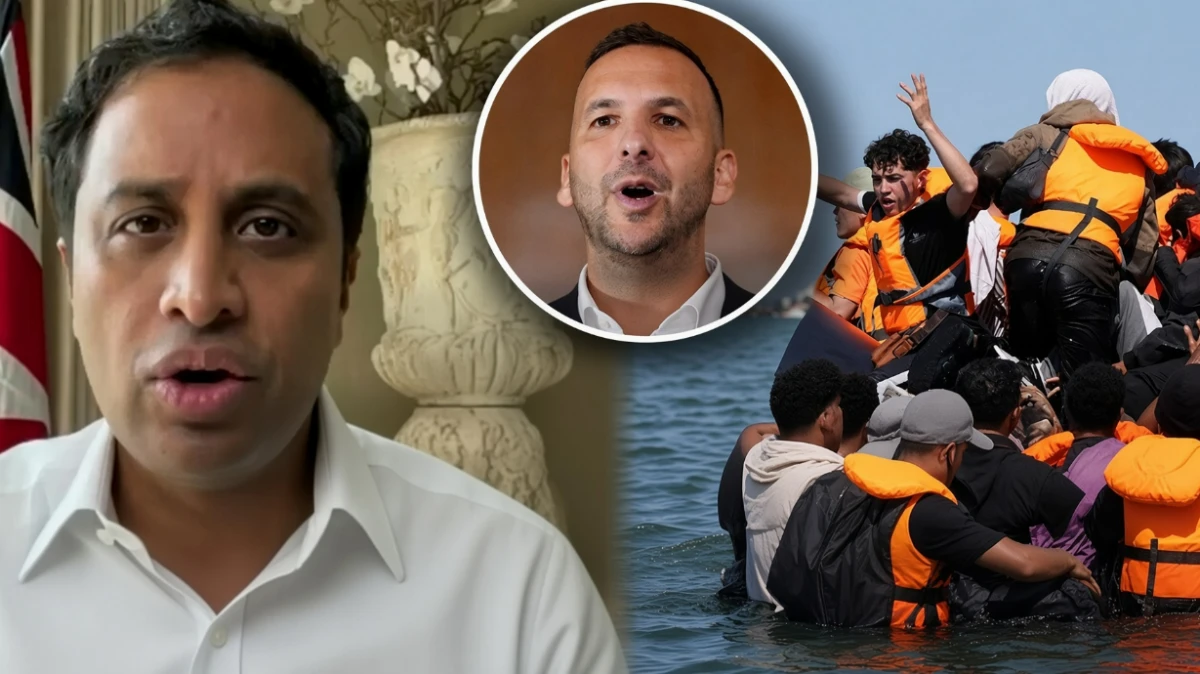
Beyond the bombastic television exchanges and furious press releases lies a calculated, precedent-shattering attempt to criminalize humanitarian aid, weaponize state procurement, and dismantle centuries-old legal standards of criminal intent (mens rea). This is not merely a dispute over plastic microchips and cellular data; it is an existential clash over where the boundaries of the state end and where basic human charity begins.
The Flashpoint: 2,500 SIM Cards and the Wethersfield Enclave
The controversy centers on a corporate social responsibility initiative run by telecommunications giant Vodafone. Under its long-running charities.connected initiative—established in 2021 as part of an industry-wide push to tackle digital exclusion—Vodafone has donated more than 1.7 million free SIM cards to over 1,800 registered non-profits across the United Kingdom. Each card provides 40GB of monthly mobile data alongside unlimited UK calls and texts for a fixed six-month window.
Among the recipients of this program was Care4Calais, a high-profile UK refugee charity operating on both sides of the Channel. Annual reporting and operational disclosures revealed that Care4Calais received approximately 2,500 of these pre-paid SIM cards (specifically documented as 2,221 in recent operational filings).
+-------------------------------------------------------------------------------+
|                    THE VODAFONE-CARE4CALAIS DATA STREAM                       |
+-------------------------------------------------------------------------------+
| Corporate Origin       : Vodafone UK "charities.connected" Scheme             |
| Total National Pool    : 1.7+ Million SIMs to 1,800+ UK Charities             |
| Care4Calais Allocation : ~2,500 Pre-Paid SIM Cards                            |
| Primary Destination    : Asylum seekers housed at MDP Wethersfield, Essex     |
| Connectivity Package   : 40GB Data / Unlimited UK Calls / 6-Month Expiry      |
| Geographic Limitation  : Domestic UK Network Routing Only (No EU Roaming)     |
+-------------------------------------------------------------------------------+
The vast majority of these cards were distributed not in the informal tent encampments of northern France, but inside the borders of the UK—primarily to asylum seekers housed at MDP Wethersfield, a repurposed, highly secure former Ministry of Defence airbase situated in the rural countryside of Essex.
The Political Offensive: Reform UK and “Polanski’s Law”
Seizing on the charity disclosures, Zia Yusuf launched a public offensive across major broadcast networks and national press. Yusuf accused Vodafone of actively facilitating what he described as an “invasion of Britain” and directly argued that distributing communications technology to unvetted migrants compromises the safety of British women and girls.
Yusuf elevated the dispute by unveiling the central mechanism of Reform UK’s proposed border policing framework: Polanski’s Law.
Named after a conceptual enforcement doctrine championed by the party’s legal advisors, the proposed bill seeks to fundamentally transform immigration jurisprudence by classifying any act that aids, abets, or encourages illegal entry as a strict liability criminal offense, carrying statutory penalties of up to two years’ imprisonment.
In an open letter addressed directly to Vodafone Group Chief Executive Margherita Della Valle, Yusuf delivered an extraordinary ultimatum:
-
Corporate Disavowal: Vodafone must publicly terminate its partnership with Care4Calais and revoke SIM card allocations to migrant-support organizations.
-
Criminal Prosecution: A future Reform UK administration would apply Polanski’s Law retroactively or prospectively against corporate entities, threatening company directors and board members with criminal indictments and prison terms.
-
Procurement Blacklisting: Reform pledged to conduct an immediate, hostile audit of all public sector telecommunications contracts held by Vodafone across central government departments, local authorities, and national security agencies.
-
Visa Revocations: Yusuf threatened to review and potentially cancel the UK work visas and residency authorizations of any foreign nationals serving on Vodafone’s executive leadership team or board of directors.
+-------------------------------------------------------------------------------+
|                 REFORM UK'S ESCALATION PATH AGAINST VODAFONE                  |
+-------------------------------------------------------------------------------+
| STAGE 1: Public Denunciation  | Accusations of facilitating border breaches   |
| STAGE 2: Boardroom Ultimatums | Threat of corporate contract cancellation     |
| STAGE 3: Immigration Leverage | Proposed visa revocation for foreign directors|
| STAGE 4: Legislative Cudgel   | Enactment of strict-liability "Polanski's Law"|
+-------------------------------------------------------------------------------+
The Pushback: Humanitarian Lifelines vs. The Smuggling Narrative
The announcement triggered immediate, ferocious debate. During broadcast appearances, Chris Kandiah, the founder of the Sanctuary Foundation, forcefully rejected Yusuf’s allegations.
Kandiah defended Vodafone as a “great British success story” acting out of basic civic decency toward vulnerable human beings already present on British soil. He emphasized that digital connectivity is an operational prerequisite for navigating the modern asylum system:
-
Claimants must maintain contact with legal counsel, caseworkers, and the Home Office to attend mandatory immigration interviews.
-
Isolated asylum seekers placed in remote military bases like Wethersfield rely on cellular data to locate medical clinics, translation services, and food banks.
-
Mobile phones provide the sole emotional bridge to displaced spouses, children, and elderly relatives stranded in conflict zones.
-
The underlying charitable program simultaneously provides free connectivity to domestic abuse survivors escaping violent households, youth leaving foster care, and low-income families facing severe fuel and food poverty.
Following the high-decibel television debates, both corporate and charitable leadership issued formal clarifications. A spokesperson for Vodafone confirmed that all donations via the charities.connected initiative are governed by strict eligibility criteria through registered UK charities regulated by the Charity Commission. The telecom confirmed that every SIM card is restricted strictly to UK network infrastructure—debunking viral internet claims that active cards were being handed out on the beaches of Dunkirk or Calais to coordinate maritime crossings.
A representative for Care4Calais reiterated that the charity’s SIM distribution takes place within the UK to individuals already navigating the formal asylum pipeline, explicitly denying social media rumors that it supplies communication hardware to channel smugglers in continental Europe.
When you have spent three decades in the field dissecting the rhetoric of political insurgencies, you learn that every moral panic is engineered with a specific target, a precise distraction, and an unstated structural objective.
What we are witnessing in Zia Yusuf’s assault on Vodafone is not an ordinary immigration spat. It is the opening salvo in a radical attempt to import American-style culture-war litigation and corporate intimidation into British administrative law.
To grasp the stakes of this confrontation, we have to look past the cable-news theatrics and examine four profound realities that the mainstream coverage has completely missed.
+-------------------------------------------------------------------------------+
|                       THE DUAL REALITIES OF THE DISPUTE                       |
+-------------------------------------------------------------------------------+
| POLITICAL TALKING POINT                   | OPERATIONAL / LEGAL REALITY       |
|-------------------------------------------|-----------------------------------|
| "SIMs facilitate illegal Channel crossing"| Data locked strictly to UK towers |
| "Aiding and abetting human smuggling"     | Standard digital inclusion charity|
| "Strict liability eliminates loopholes"   | Destroys common law *mens rea*    |
| "Jail the corporate boardroom"            | Retaliatory state procurement war |
+-------------------------------------------------------------------------------+
1. The Jurisprudential Hazard: Dismantling “Mens Rea”
The single most dangerous element of this entire saga is the casual weaponization of strict liability under the banner of “Polanski’s Law”.
In English and Western common law, the gold standard of criminal justice has rested for centuries on two inseparable pillars: actus reus (the guilty act) and mens rea (the guilty mind or intent). To convict someone of a serious criminal offense—especially one carrying prison sentences—prosecutors must prove beyond reasonable doubt that the accused intended to commit a crime, had knowledge of the illicit activity, or acted with willful, reckless negligence.
Strict liability exists in modern law, but it is almost exclusively reserved for minor administrative, regulatory, or corporate compliance infractions—such as selling expired food, environmental emissions violations, or speeding.
+-------------------------------------------------------------------------------+
|                       THE EROSION OF COMMON LAW INTENT                        |
+-------------------------------------------------------------------------------+
| STANDARD COMMON LAW JURISPRUDENCE:                                            |
| [ Actus Reus (The Prohibited Act) ] + [ Mens Rea (Criminal Intent) ] = GUILT |
|                                                                               |
| THE "POLANSKI'S LAW" PROPOSAL:                                                |
| [ Actus Reus (Any Assisting Action) ] + [ ZERO INTENT REQUIRED ] = PRISON     |
+-------------------------------------------------------------------------------+
By proposing that aiding unauthorized entry should require zero proof of criminal intent, Reform UK is proposing a legal sledgehammer that would shatter the boundaries of criminal liability:
-
If an act of assistance requires no intent, what happens to the RNLI (Royal National Lifeboat Institution) crew volunteers who pull drowning toddlers from the English Channel? While Reform asserts lifeboats would be exempted, strict liability statutes create immense legal ambiguity for maritime rescue organizations.
-
What happens to the municipal bus driver who transports a migrant from a processing center to a medical clinic?
-
What happens to the landlord who rents a room, the physician who treats a chronic infection, or the supermarket clerk who sells groceries to someone whose visa status is unconfirmed?
Once you strip mens rea from immigration enforcement, every civilian who provides food, shelter, medicine, or telecommunications becomes a potential felon. This is not immigration control; it is the total deputization—and potential criminalization—of civil society.
2. The Weaponization of Public Procurement and Visas
Look at the threats leveled against Vodafone’s executives: stripping government contracts and canceling the visas of foreign board members.
This is a breathtaking departure from traditional British governance norms. Public procurement in the UK is strictly governed by statutory frameworks designed to evaluate bids on cost, technical capability, cyber-security clearance, and delivery reliability.
If a government begins allocating or revoking multi-billion-pound critical infrastructure contracts based on whether a corporation’s charitable foundation aligns with the ruling party’s ideological agenda, the United Kingdom enters the realm of administrative authoritarianism.
Vodafone is not just a phone company; it manages massive swaths of the UK’s emergency service network, critical defense communications, and NHS digital backbones. Threatening to rip up national security and public infrastructure contracts to punish a corporate philanthropy program is economic and administrative recklessness masquerading as patriotism.
Furthermore, threatening corporate directors with targeted visa cancellations because of company policy introduces sovereign political risk into the City of London. Multinational corporations choose headquarters based on legal stability, predictability, and the rule of law. The moment board appointments become hostage to ministerial vengeance, foreign investment flees.
3. The Absurdity of the “Digital Smuggling” Myth
There is an enormous operational disconnect at the core of Yusuf’s rhetoric that must be called out with factual clarity.
The entire narrative pushed across social media implies that Vodafone’s SIM cards are actively fueling small-boat crossings by giving migrants in French sand dunes the technology to navigate dinghies across the Channel.
As anyone who understands telecommunications architecture knows, a UK-provisioned SIM card loaded with domestic-only bundles does not operate on French cell towers without active international roaming profiles. These cards were activated within the UK and handed to individuals detained inside the razor-wire perimeter of MDP Wethersfield.
+-------------------------------------------------------------------------------+
|                    THE DIGITAL ANATOMY OF AN ASYLUM CLAIM                     |
+-------------------------------------------------------------------------------+
|              +-------------------------------------------------+              |
|              |      ASYLUM SEEKER DETAINED AT WETHERSFIELD     |              |
|              +-------------------------------------------------+              |
|                                       |                                       |
|             +-------------------------+-------------------------+             |
|             |                         |                         |             |
|             v                         v                         v             |
|     [ LEGAL COUNSEL ]       [ HOME OFFICE PORTAL ]     [ FAMILY CONTACT ]     |
|   Appeals, evidence, and    Biometric scheduling and    Safety confirmation   |
|     tribunal deadlines         case status checks       in home countries     |
+-------------------------------------------------------------------------------+
The UK Home Office itself relies heavily on digital communication. It sends text messages to asylum claimants regarding interview schedules, biometric appointments, and tribunal dates. When the state places hundreds of men in an isolated, decommissioned airfield in the Essex countryside without Wi-Fi or public transport, denying them mobile connectivity does not magically encourage them to self-deport.
Instead, it renders them invisible, makes them miss mandatory Home Office reporting deadlines, breaks legal due process, and drives them into the underground black economy. The SIM card is not a luxury; it is an ankle monitor of administrative compliance.
4. The Unanswered Questions Westminster Refuses to Address
As this controversy rages, seasoned journalists must ask the questions that neither Reform UK nor the government want to answer:
-
The Program Termination Timing: Vodafone quietly announced that its charities.connected application window will close in October 2026, transitioning to third-party databank hubs. Did political pressure and backdoor lobbying from populist politicians accelerate the wind-down of this landmark corporate social initiative?
-
The Wethersfield Reality: Why has the state created sprawling rural holding facilities that lack basic digital infrastructure, forcing charitable organizations to step in and provide the communication channels necessary for the Home Office’s own asylum system to function?
-
The Legislative Viability: With Reform UK holding a small handful of seats in the House of Commons, how could “Polanski’s Law” ever pass without a complete collapse of mainstream party discipline, and why are traditional political figures letting such constitutional innovations go unchallenged in public debates?
The battle between Zia Yusuf and Vodafone is a watershed moment in contemporary British politics. It marks the precise point where the immigration debate abandoned all pretense of technocratic policy reform and pivoted directly toward punitive, total-war populism.
When a political party threatens to imprison corporate executives, cancel national infrastructure contracts, and abolish the foundational common-law principle of criminal intent—all over the donation of pre-paid cellular minutes to people housed in a disused military barracks—the debate is no longer about border security. It is about how far a society is willing to compromise its legal bedrock and basic human empathy in search of an electoral scapegoat.
A mobile phone SIM card is not a weapon of invasion. It is the modern world’s dial tone—a conduit for a frightened mother to check if her son survived a journey, a channel for a lawyer to submit evidence of torture, and an administrative tether to the very government assessing an asylum claim.
As populist movements across the Western world look to duplicate these aggressive boardroom tactics, we are left confronting a chilling question that reaches to the very soul of the modern democratic state:
When we begin defining the simple act of connecting another human being to the outside world as a criminal conspiracy, who is truly dismantling the values of the nation: the migrant searching for a signal, or the politician demanding we cut the line?
For a comprehensive media analysis detailing the political motivations and legal implications behind these executive threats, see The News Agents breakdown of Reform UK’s clash with Vodafone. This investigative discussion breaks down how boardroom intimidation has become a centerpiece of populist immigration strategy in Britain.