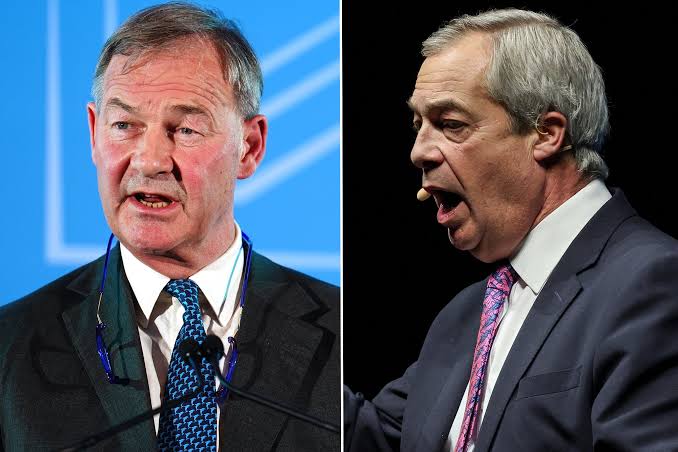
Rupert Lowe, leader of the newly formed Restore Britain party, has formally announced that a proposed electoral coalition with Reform UK has collapsed. n1

Civil War on the British Right: Inside the Ruptured Pact Between Nigel Farage and Rupert Lowe
┌────────────────────────────────────────────────────────────────────────┐
│                   THE COLLAPSE OF THE RIGHT-WING PACT                  │
│                                                                        │
│   NEGOTIATING PARTIES:  Reform UK (Nigel Farage)                       │
│                         vs. Restore Britain (Rupert Lowe)              │
│                                                                        │
│   THE CATALYST:         Farage's ultimatum demanding the purge of      │
│                         Restore Britain co-founder Charlie Downes (DS) │
│                         over alleged anti-Semitic commentary.          │
│                                                                        │
│   THE BREAKPOINT:       Lowe rejects the demand; terminates talks;    │
│                         accuses Farage of prioritizing personalities.  │
│                                                                        │
│   ELECTORAL OUTCOME:    A fractured populist right facing head-to-head │
│                         contests across pivotal British constituencies. │
└────────────────────────────────────────────────────────────────────────┘
Background: The Fractured Insurgency
The prospect of a consolidated right-wing electoral front in British politics collapsed following a bitter public clash between Nigel Farage, leader of Reform UK, and Rupert Lowe, Member of Parliament for Great Yarmouth and founder of the hardline breakaway party, Restore Britain.
Lowe, who originally entered the House of Commons under the Reform UK banner in 2024 before an acrimonious split from Farage, had initiated overtures to negotiate a formal non-aggression and electoral cooperation pact. The proposed alliance sought to pool voter bases and prevent vote-splitting against Prime Minister Keir Starmer’s Labour government in future general and municipal elections.
However, the fragile negotiations disintegrated when Farage issued an unyielding ultimatum: Reform UK would only enter an electoral pact if Lowe expelled his party’s co-founder and campaign director, Charlie Downes (known publicly as Charlie DS), over public comments condemned by Farage and external watchdogs as anti-Semitic.
Main Events: The Ultimatum and the Wednesday Walkaway
Lowe rejected Farage’s ultimatum, releasing a public statement confirming that coalition talks were terminated. Declining to acquiesce to personnel demands from Reform UK’s high command, Lowe signaled his refusal to purge his long-time lieutenant.
“Reform UK have said that a pact with Restore Britain is off; that is their decision,” Lowe stated. “I’m not getting into the personality differences of it all. I cannot be bothered.”
Lowe maintained that his original overture for an alliance was a “genuine attempt” anchored in core policy alignment rather than personal ambition. He noted that while he “didn’t particularly enjoy doing it,” consolidating the anti-establishment right was an operational necessity to challenge the sitting government. He left a narrow opening for future reconciliation, adding: “If Reform want to discuss policy, not personality, then they know where to find me.”
                       THE DIVERGENT TRAJECTORIES
                                    │
       ┌────────────────────────────┴────────────────────────────┐
       ▼                                                         ▼
  REFORM UK (FARAGE)                                RESTORE BRITAIN (LOWE)
• Electoral strategy: Mainstream populist-        • Electoral strategy: Hardline ethnic-
  nationalist coalition; "Civic Nationalist."       nationalist core; "Net-negative migration."
• Foreign policy: Pro-Western / Pro-Israel line.  • Foreign policy: Non-interventionist / Isolationist.
• Boundary line: Rejects overt anti-Semitism.     • Core platform: Domestic focus; ban on kosher/halal.
The Ideological Fault Line: Anti-Semitism, Foreign Policy, and Domestic Platforms
The standoff over Charlie Downes triggered a broader battle over the ideological character of Restore Britain. Following the collapse of the negotiations, Lowe published a detailed rebuttal addressing media and political characterizations of his party as anti-Semitic.
The accusations stemmed from two distinct fronts:
-
The Downes Controversy: Remarks regarding institutional and geopolitical influence, which Farage labeled anti-Semitic but which Lowe defended as routine commentary on political power.
-
Policy Mandates: Restore Britain’s statutory platform, which proposes a complete ban on both halal and kosher ritual slaughter alongside strict curbs on religious dispute tribunals.
In his defense, Lowe rejected foreign policy metrics as a valid litmus test for British nationalism, declaring that Middle Eastern conflicts were “so far down my list of priorities.” While explicitly describing Hamas as “murderous terrorists” whose eradication he endorsed, Lowe maintained that scrutiny of the Israeli government should not be conflated with prejudice against Jewish people.
Lowe argued that the most effective way to guarantee the safety of British Jews was through aggressive domestic border enforcement, proposing the large-scale deportation of radical Islamists and a blanket freeze on immigration from select high-risk nations:
“I opposed our involvement in the Iranian war for exactly that reason,” Lowe wrote. “Unlike the Tories and Reform, I don’t think it would serve our interest… it has driven the cost of living up and made life more difficult for British families.”
Reasserting his party’s focus, Lowe emphasized that Restore Britain remains “laser-focused” on mass deportations, policing, domestic energy independence, and macroeconomic deregulation, concluding: “Britain is our one and only priority”.
================================================================================
                    THE HIDDEN FAULT LINES OF POPULIST FACTIONALISM
================================================================================
  1. THE MAINSTREAMING STRATEGY:
     Why Farage uses personnel purges as a firewall against media delegitimization.

  2. CIVIC VS. ETHNIC NATIONALISM:
     The ideological chasm separating Reform UK from Restore Britain.

  3. THE ELECTORAL SPLINTER THREAT:
     First-Past-The-Post arithmetic turns 4% splinter parties into kingmakers.

  4. THE SILENT FINANCIERS:
     Transatlantic donors and the struggle for ideological control of the UK Right.
================================================================================
When you spend thirty years covering parliamentary rebellions, leadership coups, and insurgent movements from the backbenches of Westminster to the campaign trails of the industrial north, you learn to look past the dramatic press releases.
The public narrative presents this breakdown as a simple clash of outsized egos: two headstrong leaders arguing over an aide’s controversial rhetoric.
That explanation scratches only the surface.
What took place between Nigel Farage and Rupert Lowe is a symptom of a deeper struggle that has fractured populist movements across the Western democratic world: the structural collision between an insurgent party attempting to achieve mainstream governmental power and an uncompromising fringe determined to police ideological purity.
I. Farage’s Mainstream Firewall: The Lessons of UKIP’s Ghost
To understand Farage’s unbending demand for the removal of Charlie Downes, one must examine the institutional trauma that shaped his career.
┌────────────────────────────────────────────────────────────────────────┐
│                   THE POPULIST MAINSTREAMING PARADOX                   │
│                                                                        │
│   STAGE 1: Grassroots Insurgency ──▶ Attracts radical activists &     │
│                                      fringe elements for momentum.     │
│                                                                        │
│   STAGE 2: Electoral Breakthrough──▶ Wins parliamentary seats; comes   │
│                                      under relentless national scrutiny│
│                                                                        │
│   STAGE 3: The Farage Pruning    ──▶ Aggressively purges radicals to   │
│                                      remain acceptable to suburban,   │
│                                      middle-class swing voters.        │
│                                                                        │
│   STAGE 4: The Inevitable Schism ──▶ Purged hardliners form purist     │
│                                      factions (e.g., Restore Britain). │
└────────────────────────────────────────────────────────────────────────┘
Throughout the 2010s, Farage watched the UK Independence Party (UKIP)—an organization he spent decades building—collapse into electoral irrelevance after he stepped down. Under successive leaders, UKIP opened its doors to figures associated with street-level agitation, allowing legacy media and political opponents to permanently brand the party as toxic and un-electable.
Farage’s modern political enterprise, Reform UK, is run with centralized, corporate control precisely to prevent history from repeating itself. Farage understands that to win seats in middle-class southern shires and the suburban commuter belts, Reform UK must project the image of a respectable, professional political party.
Aligning with Restore Britain while figures like Charlie Downes remain at its helm would instantly demolish Farage’s mainstreaming project. It would hand Labour and Conservative strategists an inexhaustible supply of attack-ad material, tying Reform to extremist associations.
Farage’s ultimatum was not about an interpersonal spat; it was a defensive maneuver to protect his parliamentary ambitions from being contaminated by unvetted associates.
II. Civic Nationalism vs. Ethnic Nationalism: The Real Rift
Beyond political tactics lies a fundamental ideological divide that makes any lasting pact between Reform UK and Restore Britain nearly impossible.
| Policy Pillar | Reform UK (Farage) | Restore Britain (Lowe) |
| Nationalist Model | Civic Nationalism: Assimilation, points-based legal caps, statutory deportations for criminality. | Ethnic/Traditionalist Nationalism: Net-negative immigration, remigration mandates, cultural protectionism. |
| Foreign Policy | Atlanticist, pro-Western security architecture, strong institutional defense of Israel. | Non-interventionist, isolationist, skeptical of foreign military entanglements (“Britain Only”). |
| Religious & Cultural Law | Focus on integration and combating extremism; tolerates standard kosher/halal exemptions. | Total statutory ban on halal and kosher slaughter; abolition of all religious arbitration councils. |
| Economic Position | Low-tax deregulation, small state, supply-side pro-enterprise platform. | Economic protectionism, aggressive domestic self-sufficiency, social welfare retrenchment. |
Lowe’s defense of his platform—especially his willingness to defend bans on kosher slaughter and articulate an isolationist stance on the Middle East—demonstrates that Restore Britain is not simply Reform UK with a different logo. It represents an ideological lineage rooted in unyielding cultural traditionalism and economic nationalism.
Farage seeks to govern a diverse modern nation through strict border enforcement and civic integration. Lowe and his circle view civic nationalism as an inadequate half-measure, arguing that without sweeping cultural transformation, demographic changes cannot be reversed.
These two worldviews cannot easily share a manifesto.
III. The Brutal Arithmetic of First-Past-The-Post
The immediate victims of this collapsed pact will not be the party leaders; it will be their shared political objective.
Under the United Kingdom’s First-Past-The-Post (FPTP) electoral system, a divided political bloc faces steep structural disadvantages:
┌───────────────────────────────────────────────────────────────┐
│              THE FIRST-PAST-THE-POST SPOILER EFFECT           │
│                                                               │
│   SCENARIO: Tight Three-Way Marginal Seat                     │
│   ─────────────────────────────────────────                   │
│   Labour Candidate:            36% ──▶ [WINS SEAT]            │
│   Reform UK Candidate:         33%                            │
│   Restore Britain Candidate:    5%                            │
│   Conservative Candidate:      26%                            │
│                                                               │
│   COMBINED INSURGENT VOTE:     38% (Would have won the seat)  │
└───────────────────────────────────────────────────────────────┘
Even if Restore Britain commands only 3% to 6% of the vote in target working-class seats, that margin is more than enough to act as a spoiler. In dozens of de-industrialized constituencies across the Midlands and North, the margin between a Labour victory and an insurgent right-wing breakthrough rests on razor-thin pluralities.
By running competing slates of candidates, Farage and Lowe will turn marginal seats into contested territory between rival right-wing factions. Farage will accuse Lowe of sabotaging the anti-establishment movement for the sake of ideological vanity; Lowe will accuse Farage of selling out the working class for establishment respectability.
IV. The Questions That Demand Answers
As investigative journalists, our duty is to press beyond prepared statements and highlight the unanswered operational questions:
┌────────────────────────────────────────────────────────────────────────┐
│                   CRITICAL UNANSWERED INVESTIGATIVE PROBES             │
│                                                                        │
│  ? What private communications occurred between high-net-worth         │
│    donors (including transatlantic tech figures) and the party leaders │
│    prior to the negotiation collapse?                             │
│                                                                        │
│  ? Which specific constituencies has Restore Britain targeted to       │
│    intentionally challenge sitting Reform UK candidates?               │
│                                                                        │
│  ? Will local branches in regional councils (such as Norfolk) continue │
│    informal cross-party working despite the national feud?             │
└────────────────────────────────────────────────────────────────────────┘
-
The Donor Undercurrent: To what extent did pressure from major financial backers dictate Farage’s refusal to compromise? With international figures taking an active interest in British political platforms, was Farage under direct pressure to scrub any association with figures facing anti-Semitism allegations?
-
The Ground Campaign War: How many parliamentary constituencies has Restore Britain officially registered with the Electoral Commission, and will they run specifically in seats where Reform UK finished second in 2024, maximizing their spoiler leverage?
-
Local Council Governance: What happens to the existing joint working arrangements on local authorities—such as the cooperation between Reform and Restore councillors on the Norfolk County Council? Will local councillors follow their national leaders into open war, or will grassroots pragmatism prevail over Westminster feuds?
The collapse of the Reform UK–Restore Britain pact represents a defining turning point in the evolution of the British populist right.
       ═══════════════════════════════════════════════════════
       THE CYCLE OF POPULIST SCHISM

       Unified Anti-Establishment ──▶ Growth & Media Scrutiny
       Outrage
                 ▲                                │
                 │                                ▼
       Mutual Electoral Defeat    ◀── Fragmentation Over Purges
       Under First-Past-The-Post      & Ideological Purity
       ═══════════════════════════════════════════════════════
What began as an ambitious attempt to unify millions of disaffected voters against the governing status quo has devolved into a familiar cycle of recrimination, ideological gatekeeping, and personal rancor.
Nigel Farage drew a line in the sand to protect his hard-won mainstream credibility; Rupert Lowe chose personal loyalty and ideological defiance over a tactical compromise. Both men have staked their political futures on the gamble that their brand of populism is the one British voters truly want.
As both parties prepare to unleash their campaign machines against one another in the towns and cities of Britain, the country must confront the fundamental paradox that has derailed political insurgencies for a century:
When a political movement values ideological purity over the compromises necessary to govern, who ultimately pays the price—the leaders who walk away from the negotiating table, or the voters who are left with a fractured voice at the ballot box?