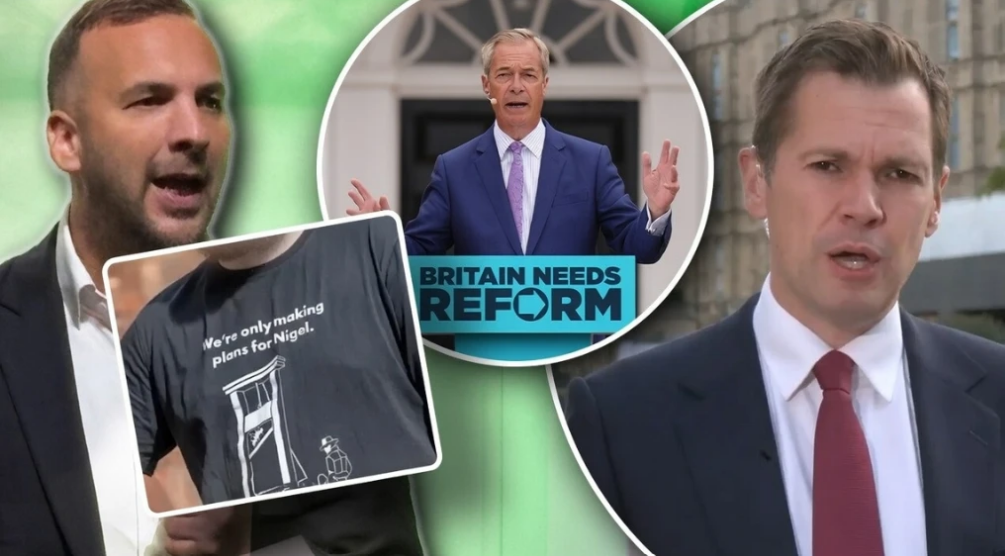
Reform UK is demanding a top party leader “face the full force of the law” following a horrific image targeting Nigel Farage! n1

Weaponized Free Speech and the Law: Robert Jenrick’s High-Stakes Battle Over Political Incitement
The ongoing fallout surrounding a violent graphic shared on Green Party leader Zack Polanski’s social media feed has escalated into a high-stakes legal and political confrontation. Reform UK Treasury Spokesperson Robert Jenrick is now demanding that Polanski face the “full force of the law” following the circulation of an image depicting a bloodied guillotine directed at Reform UK leader Nigel Farage.
               SUMMARY OF THE JENRICK-POLANSKI ESCALATION
┌───────────────────────┬───────────────────────────────────────────────┐
│ Primary Accuser       │ Robert Jenrick MP (Reform UK Treasury        │
│                       │ Spokesperson)                                 │
├───────────────────────┼───────────────────────────────────────────────┤
│ Target of Allegation  │ Zack Polanski (Leader of the Green Party)     │
├───────────────────────┼───────────────────────────────────────────────┤
│ The Core Dispute      │ Instagram collab post featuring a t-shirt     │
│                       │ with a bloodied guillotine & Nigel Farage     │
├───────────────────────┼───────────────────────────────────────────────┤
│ Reform UK Demand      │ Full police prosecution for criminal          │
│                       │ incitement to violence                        │
├───────────────────────┼───────────────────────────────────────────────┤
│ Green Party Defense   │ Unvetted automated collaboration request      │
│                       │ unshared immediately; no support for violence │
└───────────────────────┴───────────────────────────────────────────────┘
The incident originated from an Instagram collaboration carousel published to Polanski’s account, which included a photo of a supporter wearing a t-shirt featuring the slogan “We’re only making plans for Nigel” alongside a graphic of a bloodied guillotine. Reform UK immediately reported the post to the police, framing it as an active incitement to violence against a sitting political figure.
Appearing in an interview on GB News, Jenrick forcefully defended Reform UK’s decision to pursue formal criminal charges. He rejected suggestions from commentators that pushing for police intervention compromised the party’s traditional stance as defenders of unrestricted free speech.
“I’ll always defend the right to offend people, but I’ll never defend the right to incite violence, to encourage people to kill people serving in public life,” Jenrick stated.
To underscore the severity of the situation, Jenrick cited the threat environment surrounding Reform UK and Nigel Farage specifically. He revealed that Farage currently receives “hundreds and hundreds” of credible death threats, pointing to recent security incidents—including the conviction of an individual who entered the UK illegally with intent to harm Farage, alongside the high-profile murders of British politicians in recent years.
“Zack Polanski is the leader of a national political party, and he has posted, collaborated with a post on social media with a guillotine with blood on it saying this is being prepared for Nigel Farage,” Jenrick told GB News. “Zack Polanski knew exactly what he was doing and he does need to face the consequences.”
                     THE LEGAL & POLITICAL ARGUMENTS
┌───────────────────────────────────────┬───────────────────────────────────────┐
│ Reform UK Position (Robert Jenrick)   │ Green Party Defense & Response        │
├───────────────────────────────────────┼───────────────────────────────────────┤
│ • Violent imagery crosses legal line  │ • Unintentional error via automated   │
│   from offensive speech to incitement │   Instagram collaboration feature     │
│ • Heightened real-world threat environment│ • Post unshared immediately upon     │
│   makes visual execution threats criminal │   discovering the guillotine slide   │
│ • Rejects hypocrisy claims: "Right to │ • Unequivocal condemnation of all      │
│   offend ≠ Right to incite violence"  │   forms of political violence         │
│ • Demands full police prosecution     │ • Accuses opponents of amplifying     │
│   and legal consequences for Polanski │   a low-reach post for political gain │
└───────────────────────────────────────┴───────────────────────────────────────┘
Jenrick argued that the post is not an isolated error, but part of a broader pattern of dehumanizing hostility directed at Reform UK due to its hardline stances on immigration and border security. He insisted that while political debate allows for harsh offense, displaying tools of execution directed at specific individuals crosses both a legal and moral threshold.
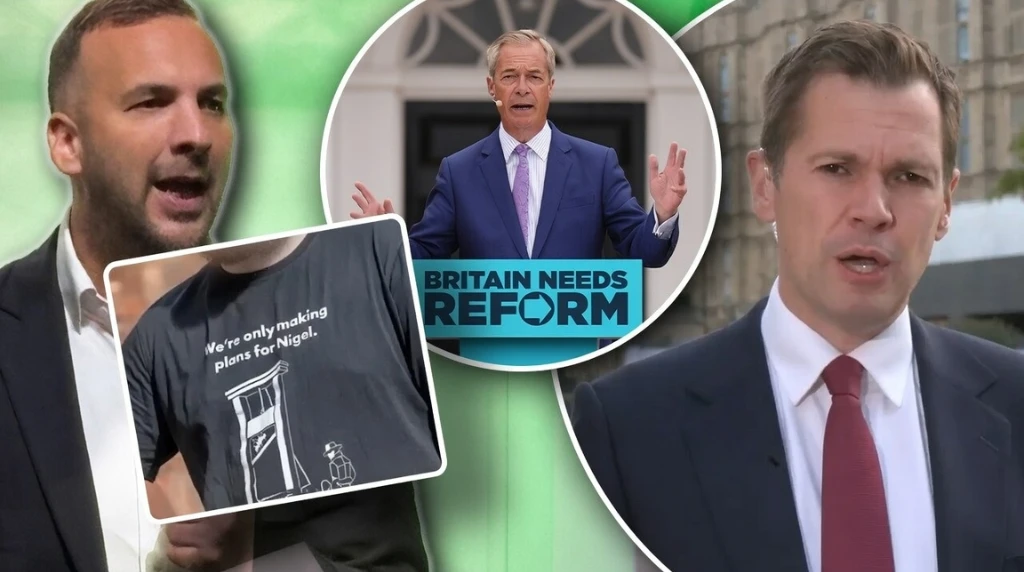
In response to the growing legal pressure, a spokesperson for the Green Party issued a clarification. The party explained that Polanski had attended a public event and accepted an automated request to collaborate on a multi-slide post. The statement emphasized that once the specific image was brought to Polanski’s attention, he immediately unshared the post, reiterating that he “unequivocally does not support this type of dangerous imagery.”
The Metropolitan Police are assessing the formal complaint to determine whether the post constitutes a breach of laws governing online communications, public order, or incitement to violence, while no formal charges have been announced.
Having spent thirty years tracking how political movements weaponize legal frameworks, media narratives, and public outrage, I view Robert Jenrick’s intervention in this dispute as a defining case study in contemporary political strategy.
This confrontation is not simply about an offensive t-shirt on Instagram. It is an illustration of how party strategists manage security threats, exploit digital mistakes, and test the legal boundaries of free speech in an era of intense polarization.
What Important Details Have People Overlooked?
The public debate has fixated heavily on whether Polanski “intended” to post the guillotine image. But this hyper-focus on personal intent misses two crucial structural factors that drive this story.
First, there is Robert Jenrick’s strategic repositioning within Reform UK.
               THE TACTICAL SHIFT IN FREE SPEECH ADVOCACY
┌─────────────────────────────────────────────────────────────────────────────┐
│                       TRADITIONAL POPULIST POSITION                         │
│  Demands absolute freedom of speech; criticizes police "overreach" online   │
└─────────────────────────────────────┬───────────────────────────────────────┘
                                      │
                                      ▼
┌─────────────────────────────────────────────────────────────────────────────┐
│                          THE INCITEMENT EXCEPTION                           │
│     Draws a strict legal line between offensive speech and execution imagery│
└─────────────────────────────────────┬───────────────────────────────────────┘
                                      │
                                      ▼
┌─────────────────────────────────────────────────────────────────────────────┐
│                         THE OFFENSIVE LEGAL PIVOT                           │
│  Uses state law enforcement mechanisms to put political rivals on defense   │
└─────────────────────────────────────────────────────────────────────────────┘
Jenrick—a former Conservative Cabinet minister who defected to Reform UK to serve as Treasury Spokesperson—brings institutional legal experience as a former solicitor. By stepping forward as the primary legal voice on GB News, Jenrick provided a structured, courtroom-style argument for why police action is required. His framing of “Offense vs. Incitement” allows Reform UK to maintain its self-proclaimed role as a champion of free expression while using public order law against an opponent.
Second, analysts have overlooked the legal threshold required for criminal incitement.
Under British law (specifically the Serious Crime Act 2007 and the Public Order Act 1986), establishing incitement requires proving either intent to encourage a crime or recklessness regarding whether a crime would be encouraged. By arguing that Polanski “knew exactly what he was doing,” Jenrick is deliberately laying the groundwork for a charge of legal recklessness—arguing that a national party leader cannot claim ignorance when approving content on an official channel with hundreds of thousands of followers.
What Deeper Meaning Lies Behind This Event?
This dispute illustrates the complete breakdown of agreement on where free speech ends and criminal harm begins.
                         THE BOUNDARY OF FREE SPEECH
┌───────────────────────────────────────┬───────────────────────────────────────┐
│ Protectable Speech (Right to Offend)   │ Unprotected Speech (Incitement)       │
├───────────────────────────────────────┼───────────────────────────────────────┤
│ • Satire, harsh political criticism   │ • Explicit visual execution symbols   │
│ • Provocative ideological debate      │ • Direct targeting of public figures  │
│ • Unpopular or extreme views          │ • Imagery creating real-world risk    │
└───────────────────────────────────────┴───────────────────────────────────────┘
For years, political factions have weaponized speech regulations against their rivals. The left frequently accuses the right of “hate speech” and “harmful rhetoric,” demanding deplatforming and police intervention. Conversely, the right frequently accuses the left of suppressing free speech and enforcing ideological conformity.
In this incident, the roles have inverted. Reform UK is leveraging criminal statutes to demand police action against a Green Party leader, while the Green Party relies on arguments of accidental distribution and contextual nuance. This role reversal demonstrates that in modern politics, legal principles surrounding speech are frequently deployed as tactical weapons depending on who holds the victim narrative in a given news cycle.
Why Does This Story Matter?
This story matters because it operates against the backdrop of real, documented physical danger for public servants.
When Jenrick references the murders of British MPs and active death threats against Nigel Farage, he is highlighting a stark reality. Political violence in the UK is no longer theoretical. When public figures navigate elevated threat levels, imagery depicting execution instruments—whether guillotines, gallows, or crosshairs—carries real weight.
                   THE DANGER OF NORMALIZED EXECUTION SYMBOLS
┌─────────────────────────────────────────────────────────────────────────────┐
│                      HEIGHTENED REAL-WORLD THREATS                          │
│     Targeted death threats, physical stalking, and political assassinations │
└─────────────────────────────────────┬───────────────────────────────────────┘
                                      │
                                      ▼
┌─────────────────────────────────────────────────────────────────────────────┐
│                       DIGITAL NORMALIZATION OF VIOLENCE                     │
│  Guillotine graphics framing opponents as targets for physical execution   │
└─────────────────────────────────────┬───────────────────────────────────────┘
                                      │
                                      ▼
┌─────────────────────────────────────────────────────────────────────────────┐
│                          SYSTEMIC POLICE DILEMMA                            │
│  Law enforcement forced to decide between protecting free speech and        │
│          prosecuting dangerous, high-visibility digital threats             │
└─────────────────────────────────────────────────────────────────────────────┘
If the justice system treats execution graphics directed at politicians as harmless digital mistakes, it risks normalizing visual threats. Conversely, if police begin arresting political leaders for approving third-party social media carousels, it establishes a precedent where political blunders are routinely processed through criminal courts.
What Questions Remain Unanswered?
-
The Evidentiary Standard: Will the Metropolitan Police find evidence of legal recklessness or intent in Polanski’s approval of the Instagram collaboration request?
-
Platform Responsibility: What duty of care do social media platforms owe when automated “collaboration” tools allow third-party graphic content to merge seamlessly onto official public profile feeds?
-
The Precedent for Political Speech: If law enforcement declines to press charges, what explicit standard will they set for distinguishing between extreme political satire and unlawful incitement?
What Should Audiences Understand Beyond the Headline?
The public is being presented with a simplified partisan binary: you must either view Jenrick’s demands as a necessary defense against political violence, or as an authoritarian attempt to criminalize an accidental social media error.
The truth encompasses elements of both operational strategy and real security concerns.
                           THE DUAL STRATEGIC MOTIVATIONS
                                ┌──────────────┐
                                │ The Guillotine│
                                │ Instagram Post│
                                └──────┬───────┘
                                       │
                                       ▼
 ┌───────────────────────────┐  ┌──────────────┐  ┌───────────────────────────┐
 │ REFORM UK TACTIC          │◄─┤ Legal Action │─►│ GREEN PARTY TACTIC        │
 │ • Put Green Party on      │  │ & Police     │  │ • Minimize as administrative│
 │   the defensive           │  │ Complaint    │  │   carousel error          │
 │ • Reframe party as victim │  └──────────────┘  │ • Pivot to anti-Farage    │
 │   of systemic incitement  │                    │   ideological commentary  │
 └───────────────────────────┘                    └───────────────────────────┘
Reform UK is using this episode to highlight real security concerns facing their leadership while exposing what they view as a double standard in how political rhetoric is judged. Meanwhile, the Green Party is attempting to minimize a serious administrative oversight that allowed violent imagery to broadcast under their leader’s official brand.
The demand by Robert Jenrick for police action against Zack Polanski represents a dangerous new phase in British political warfare. It marks a moment where digital errors, social media features, and violent political imagery collide directly with criminal law and law enforcement.
As the Metropolitan Police review the evidence, the case forces a reckoning for politicians across the spectrum. In an era where online imagery can translate into real-world violence, the line between protected political offense and unlawful incitement has never been more contentious—or more consequential.
As law enforcement considers its decision, one fundamental question remains for the public and policymakers alike:
When visual depictions of execution become casual collateral in social media campaigns, where should the law draw the line between a reckless political mistake and a criminal act of incitement?