Herman Lehmann: The Boy Who Crossed Two Worlds and Returned With a Story Few Could Ever Understand-old

Herman Lehmann: The Boy Who Crossed Two Worlds and Returned With a Story Few Could Ever Understand
History often remembers generals, presidents, and famous outlaws, but some of the most extraordinary lives belong to people who never intended to become legends. Among the countless stories hidden within the vast landscape of the American Frontier, few are as astonishing—or as difficult to fully explain—as the life of Herman Lehmann. His journey was not merely one of survival. It was a transformation so complete that it blurred the line between two civilizations that spent generations fighting one another. By the time he returned to white society, the greatest mystery was no longer how he had survived. It was whether the boy who disappeared had ever truly come home.
That question has fascinated historians, students of Native American history, and lovers of Wild West stories for more than a century. The documented facts tell an incredible tale, yet they also leave behind unsettling gaps—moments that seem almost impossible to reconstruct. Those missing pieces have only deepened the fascination surrounding Herman Lehmann, whose life became one of the most remarkable true stories in Texas history.
Born in 1859 to German immigrant parents in Texas, Herman entered the world during one of the most dangerous periods in the history of the American West. The frontier was expanding rapidly, but it remained a land where settlers, Native American tribes, Texas Rangers, and soldiers often collided in violent conflict. Every isolated homestead stood on uncertain ground. Families understood that every sunrise brought opportunity, but also danger that could appear without warning.
For many settlers, the greatest fear was an unexpected raid. Stories spread quickly across frontier communities, telling of cabins attacked without warning, livestock taken, and children carried away into an unfamiliar world. Some of those stories grew into folklore. Others became grim reality.
No one imagined that Herman Lehmann would become one of those children.
In the spring of 1870, while traveling near Loyal Valley in Mason County, Texas, Herman and his younger brother Willie encountered an Apache raiding party. Within moments, their childhood ended forever. Willie escaped after only a few days and eventually found his way back to his family. Herman did not.
His disappearance marked the beginning of a journey that would carry him farther than any map could describe—not simply across Texas, but across cultures, identities, and loyalties.
For most captives, survival depended upon obedience. For Herman, survival demanded something far more extraordinary. He had to become someone entirely different.
The Apache who captured him did not merely keep him alive. According to historical accounts, he was adopted into the tribe by a warrior known as Carnoviste. Adoption among many Native tribes carried deep meaning. It was not simply ownership of a captive. It represented acceptance into a new family and the expectation that the child would embrace an entirely different way of life.
Everything familiar disappeared.
The language spoken around him changed overnight.
The customs of his German-American upbringing vanished.
The values that had shaped his earliest years slowly gave way to traditions refined through centuries of life on the frontier.
Few modern readers can fully imagine what such a transformation demanded from a child barely entering adolescence. Every lesson meant survival. Every mistake could carry consequences. Every success brought him one step closer to belonging in a society that had once seemed completely foreign.
Yet the deeper mystery remains this: at what point did Herman stop pretending to survive and genuinely become Apache?
That invisible turning point may never be known.
Historical records suggest that Carnoviste trained Herman as a young warrior. He learned to ride with astonishing skill, to track movement across open country, and to endure conditions that many frontier soldiers struggled to survive. Hunting became second nature. So did discipline.
Life among the Apache demanded constant awareness. Food was never guaranteed. Water could determine life or death. Every distant ridge might conceal allies—or enemies. It was a world built on experience rather than comfort, where children matured far earlier than those growing up in settled communities.
As Herman adapted, the frightened German boy slowly disappeared beneath paint, leather, feathers, and years of relentless training.
Eventually he participated in war parties that brought him into conflict with Texas Rangers, Mexican forces, rival Native groups, and expanding American settlements.
Here history becomes particularly fascinating.
Imagine a German-born child fighting against the very society into which he had been born.
To frontier settlers, he had become one of the feared Native warriors.
To his adoptive family, however, he was exactly the opposite.
He was one of their own.
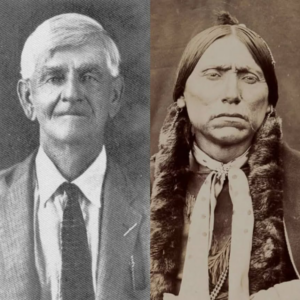
Identity, historians often say, is shaped by experience rather than blood. Herman Lehmann’s life may represent one of history’s strongest examples of that truth.
Then tragedy struck once again.
After Carnoviste died, Herman’s place within Apache society changed dramatically. Accounts describe a conflict that resulted in Herman killing an Apache medicine man. Whether the confrontation arose from misunderstanding, honor, or deeper tribal tensions remains debated by historians.
What followed was punishment unlike anything most readers have ever encountered.
He spent approximately one year living entirely alone upon the plains.
Absolute solitude.
No permanent camp.
No family.
No tribe.
Only endless grasslands, harsh weather, dangerous animals, and whatever skills he had developed through years of survival.
One cannot help but wonder what happened during those silent months.
There are no detailed journals.
No eyewitness accounts.
Only fragments.
Those empty spaces invite questions that history cannot fully answer.
How did he endure loneliness?
Did he ever consider returning home?
Did he even remember what home looked like?
Perhaps those unanswered questions explain why Herman’s story continues to feel strangely alive today.
When his exile ended, another remarkable chapter began.
Rather than returning to white settlements, Herman joined the Comanche.
To many Americans of the nineteenth century, Apache and Comanche peoples appeared interchangeable. In reality, they possessed distinct languages, traditions, political structures, and histories.
Once again Herman entered a different world.
The Comanches accepted him and reportedly gave him the name Montechena. He learned their customs just as thoroughly as he had learned Apache life.
He rode across enormous stretches of the Southern Plains.
He hunted buffalo.
He participated in campaigns against the Tonkawa people and United States cavalry forces.
By now nearly every trace of the frightened child captured years earlier had vanished.
He had become a seasoned frontier warrior.
Yet another mystery quietly unfolded beneath the surface.
Did Herman still remember his mother’s face?
Or had those memories faded beneath years of war, migration, and survival?
History offers no certain answer.
Eventually the Indian Wars began drawing toward their conclusion. Pressure from the United States government intensified. Military campaigns weakened Native resistance across the Southern Plains. Reservations increasingly replaced the freedom of open country.
Like countless Native families facing impossible choices, Herman found himself living through an era where an entire way of life approached its end.
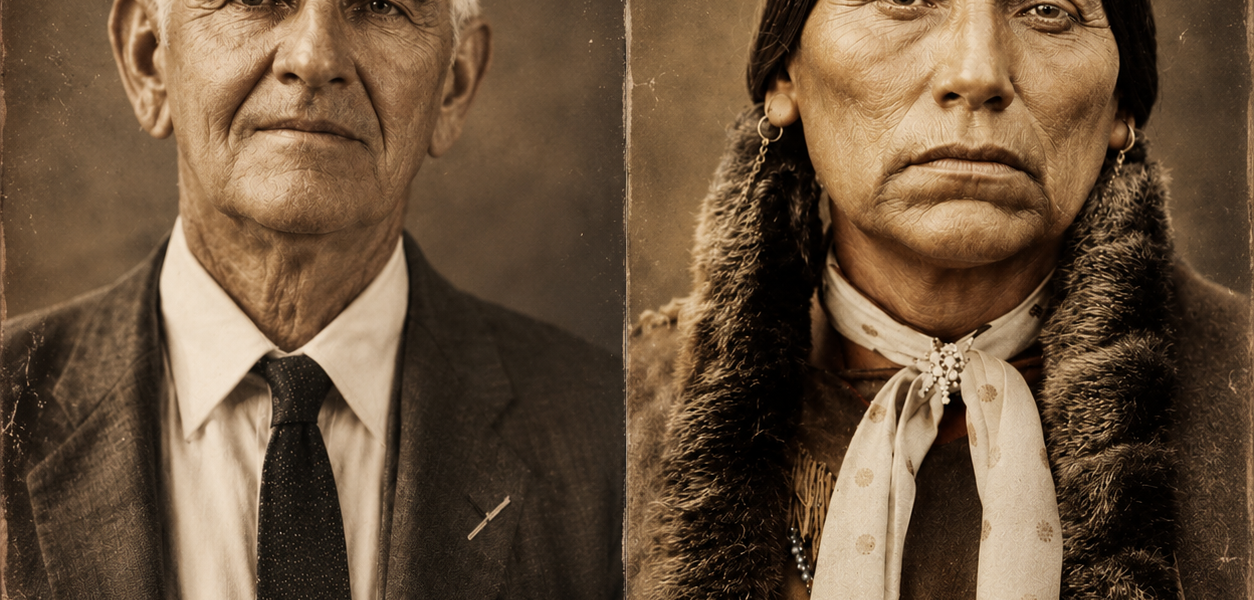
During this period he came into the circle of Quanah Parker, one of the most respected Comanche leaders in American history.
Quanah Parker himself embodied two worlds. Born to a Comanche chief and a white mother who had also been captured as a child, Quanah understood cultural conflict better than almost anyone alive.
Perhaps that explains why he accepted Herman.
Perhaps he recognized something familiar.
Two men.
Two extraordinary journeys.
Two lives suspended between civilizations.
Their friendship remains one of the most compelling chapters in frontier history.
Still, even this remarkable relationship could not prevent the inevitable.
Authorities eventually identified Herman as a white captive whose biological family still lived in Texas.
In 1878, after roughly eight years among Native peoples, he returned home.
For most families, such a reunion would have been a joyful ending.
Instead, it revealed how deeply transformation can reshape the human mind.
Herman did not behave like the son his parents remembered.
He refused to sleep in beds.
He avoided pork.
He preferred Native clothing.
He painted his body.
He wore leggings and feathers.
Neighbors reportedly watched in disbelief as he attempted to kill pigs and calves much as he would have hunted game on the plains.
His biological family welcomed him.
Yet they scarcely recognized him.
Modern psychologists might describe Herman’s experience through concepts like identity formation, cultural adaptation, or reverse culture shock. Such terminology did not exist in nineteenth-century Texas.
His family simply faced an impossible reality.
Their son had survived.
But he had returned as someone else.
The adjustment required extraordinary patience.
Slowly Herman relearned German, the language spoken by his immigrant parents.
He learned English as well.
Piece by piece he navigated the unfamiliar customs of settled American life.
Simple routines that most people never questioned—sleeping indoors, eating domestic food, following agricultural schedules—had become foreign habits requiring conscious effort.
Imagine trying to relearn the life you once lived before adolescence.
That challenge alone makes Herman’s story unlike nearly any other in American history.
Over time he found work performing numerous frontier occupations. His remarkable riding ability, expert roping skills, hunting knowledge, and extraordinary archery made him widely respected throughout Texas.
People came not merely to meet Herman Lehmann.
They came hoping to glimpse a living connection to the disappearing frontier.
He eventually married twice and became the father of five children.
To casual observers, his life may have appeared ordinary.
Yet those closest to him understood something important.
The frontier never truly left him.
Historical accounts suggest Herman remained in contact with many of his Native friends and adoptive family members. The bonds formed during childhood proved stronger than politics or racial divisions.
That loyalty speaks volumes.
Many historical narratives simplify the American West into heroes and villains.
Reality was rarely so simple.
Herman loved the family who raised him.
He also loved the family into which he had been born.
Holding both truths simultaneously may have been the greatest burden—and perhaps the greatest gift—of his extraordinary life.
His experiences later inspired memoirs and historical studies that continue attracting readers interested in Texas history, Native American history, frontier survival, and the complex realities of the Old West.
Researchers still compare surviving records, tribal traditions, military reports, and family recollections.
Some details align perfectly.
Others remain uncertain.
Those uncertainties are precisely what keep Herman Lehmann’s story alive.
History often feels complete only until someone asks one more question.
What conversations occurred around campfires that no record preserved?
What lessons did Carnoviste teach that Herman never wrote down?
What wisdom did Quanah Parker quietly share with the adopted warrior who understood two worlds?
Those answers disappeared with the people who lived them.
Perhaps they always will.
Today, Herman Lehmann stands as more than a historical curiosity. His life challenges comfortable assumptions about identity, belonging, and culture. He reminds us that civilization and wilderness are not simply places on a map but experiences capable of reshaping the human spirit.
His story also forces readers to reconsider the American Frontier itself. Too often it is portrayed only through battles, cowboys, and expanding settlements. Yet beneath those familiar images existed countless deeply personal stories of families divided, children transformed, and lives forever altered by events beyond their control.
Among those stories, Herman’s remains uniquely compelling because it refuses easy conclusions.
Was he German?
Certainly.
Was he Apache?
By adoption, training, and lived experience, yes.
Was he Comanche?
He earned that place as well.
Could any single identity fully describe him?
Probably not.
Perhaps that is why his life continues captivating historians, documentary filmmakers, and readers around the world. He represents something larger than one remarkable biography.
He embodies the complicated human reality hidden beneath the mythology of the Wild West.
As decades passed and the frontier faded into memory, Herman became a respected local figure whose remarkable abilities never ceased attracting attention. Younger generations saw him demonstrate riding techniques, rope handling, and archery that few others could match. To them, he seemed almost like a man carrying fragments of another century.
When Herman Lehmann died in 1932, America had already entered an entirely different age. Automobiles crossed highways where buffalo once roamed. Cities expanded across landscapes that had once echoed with the sounds of horseback riders and migrating tribes.
Yet his story survived.
Not because every detail could be proven beyond doubt.
Not because every mystery found an answer.
It survived because it revealed something timeless about the resilience of the human spirit.
Some stories end when their heroes return home.
Herman Lehmann’s story truly began there.
For even after he crossed back into white society, the greatest frontier he would ever face was no longer the wilderness stretching across Texas.
It was the invisible frontier inside his own heart—a place where two families, two cultures, two languages, and two identities continued to exist together until the very end.
And perhaps that is the final mystery.
History records where Herman Lehmann lived.
It records whom he fought beside.
It records whom he married and where he died.
But it can never fully reveal where he believed he truly belonged.
That answer may have remained known only to Herman himself, carried quietly through every chapter of a life that crossed two worlds and forever changed the way we understand both.