
The Battle Over the Classroom: Denmark’s Unrelenting Push to Dissolve “Parallel Societies”
Background & Context
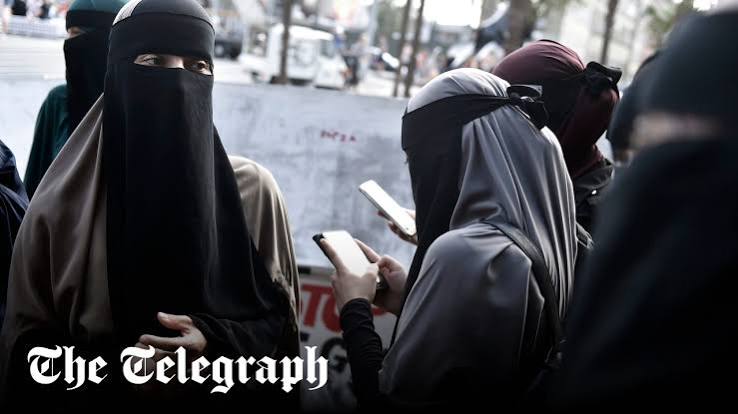
Denmark’s Social Democrat-led government is expanding its campaign against what it labels “parallel societies” and “negative social control”. Prime Minister Mette Frederiksen announced plans to extend the nation’s 2018 public space burqa ban directly into educational institutions.
The new measures target full-face Islamic veils—including the niqab and burqa—in classrooms and university lecture halls, backed by fines of up to 10,000 Danish kroner ($1,530) for repeat offenders.
DENMARK'S INTEGRATION POLICY LEGISLATIVE TIMELINE
┌─────────────────────────────────────────────────────────────┐
│ 2018: Public Burqa Ban                                      │
│ • Prohibits face-concealing garments in all public spaces.  │
│ • Establishes initial fines for non-compliance.             │
├─────────────────────────────────────────────────────────────┤
│ 2018: "Parallel Societies" Housing Package                  │
│ • Designates neighborhoods based on non-Western residency. │
│ • Mandates reduction of public housing in target zones.     │
├─────────────────────────────────────────────────────────────┤
│ Expansion Phase: Education & Public Realm                   │
│ • Ban extended to cover schools and universities.           │
│ • Directives targeting prayer rooms in public institutions. │
│ • Proposed restrictions on public calls to prayer.          │
└─────────────────────────────────────────────────────────────┘
Speaking to Danish media, Prime Minister Frederiksen framed the proposed legislation not as a restriction on individual freedom, but as a defense of secular democratic integration.
“There are gaps in the legislation that allow Muslim social control and oppression of women at educational institutions in Denmark,” Frederiksen stated. “You have the right to be a person of faith and practice your religion, but democracy takes precedence. You are welcome to have your religion, but when you’re at school, you’re there to be at school and take part in your education.”
Key Events and Policy Scope
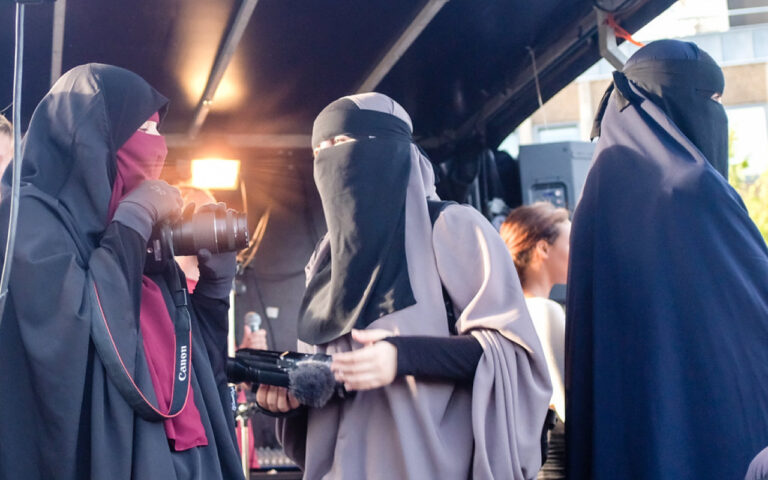
The proposal builds upon a broader legislative strategy pushed by the Ministry of Immigration and Integration. Alongside the face-covering ban, the government is moving to dismantle physical infrastructure supporting religious practice within academic settings.
Key Figures & Government Portfolios
├── Mette Frederiksen (Prime Minister)
│   ├── Core Argument: Democracy precedes religious practice in civic space.
│   └── Focus: Eliminating "negative social control" in schools.
└── Morten Bødskov & Rasmus Stoklund (Immigration & Integration Leadership)
    ├── Core Argument: Preventing "creeping Islamization" of public life.
    └── Focus: Banning call-to-prayer broadcasts and face coverings in education.
The administration has instructed university administrators to phase out dedicated prayer rooms. Officials argue these rooms act as hubs for peer pressure and social exclusion rather than peaceful reflection.
This move follows earlier statements by former Immigration Minister Morten Bødskov regarding public religious broadcasts. Bødskov publicly advocated for banning the Islamic call to prayer from mosque minarets, declaring that such broadcasts “should not be heard over Danish rooftops.”
“It has no place in Denmark,” Bødskov remarked, “and you shouldn’t be in any doubt whether you’ve ended up in a suburb of Islamabad when you walk around Denmark.”
The Larger Legal and Regional Landscape
Denmark’s approach stands out in Western Europe for a key political reason: its tough stance on assimilation is led by the center-left Social Democrats. By co-opting policies historically championed by the populist right, the party has maintained power while fundamentally reshaping the nation’s welfare state and demographic policies.
                  EUROPEAN FACE-COVERING RESTRICTIONS

  France / Belgium           Denmark               Norway
----|--------------------------|----------------------|---->
 Full public ban           Public ban (2018)      Educational ban
 (Early adopters)          Expanding to schools   in place since 2018
Beyond educational restrictions, Denmark’s broader “parallel society” framework allows the state to restructure or demolish public housing developments where over 50% of residents are classified as “non-Western immigrants and their descendants” alongside specific economic metrics. While immigrant rights groups have challenged these housing measures in international courts on grounds of ethnic discrimination, the government continues to push forward.
With this proposal, Denmark joins European neighbors like France, Belgium, Austria, and Switzerland in enforcing strict face-covering rules, aligning with Norway’s existing prohibition on face veils within schools.
My Professional Perspective
Over thirty years of reporting on international statecraft and political sociology, I have covered countless culture wars across the Atlantic and throughout Europe. What is unfolding in Denmark is not a standard story about religious freedom versus secularism. It is a fundamental redesign of the social contract inside a traditional Nordic welfare model.
THE DANISH HYPER-INTEGRATION MODEL

   [ Surface Debate: Burqas, Minarets, & Prayer Rooms ]
~~~~~~~~~~~~~~~~~~~~~~~~~~~~~~~~~~~~~~~~~~~~~~~~~~~~~~~~~~~~~
   - The "Social Fabric" Defense (Preserving the Nordic Welfare State)
   - Left-Wing Nationalism (The Social Democrat Pivot)
   - Facial Communication as a Civic Requirement
   - The Paradox of Coercive Secular Freedom
1. The Survival Strategy of the Nordic Welfare Model
To understand why Denmark’s center-left acts this way, you have to look at how their society is built. The universal Nordic welfare system depends entirely on a high degree of social trust, high tax contributions, and shared cultural norms.
In the eyes of the Danish political establishment, “parallel societies” represent an existential threat to this system. If a segment of the population is viewed as remaining culturally segregated, state-dependent, or outside shared civic norms, public support for the broader welfare state breaks down.
        WELFARE STATE STABILITY MECHANISM

  High Social Trust ──> High Tax Willingness ──> Universal Services
         │                                            │
         └─── Needs Cultural Alignment to Sustain ─────┘
The push against the burqa or prayer rooms is less about the fabric of the veil itself and more about enforcing civic legibility. The state demands that every individual in public life be fully visible, integrated, and accountable to the collective standard.
2. The Political Blueprint: Left-Wing Nationalism
For decades, political analysts assumed that hardline immigration policies belonged exclusively to right-wing populist parties. Denmark upended that assumption.
Under Mette Frederiksen, the Social Democrats adopted strict immigration controls to protect the working class from wage competition and preserve community cohesion. This strategy successfully neutralized right-wing rivals while keeping traditional social-democratic labor programs intact.

Traditional Political Divide vs. Danish Social Democrat Hybrid
┌─────────────────────────────────────────────────────────────┐
│ TRADITIONAL LEFT: Open Immigration + Strong Welfare State   │
├─────────────────────────────────────────────────────────────┤
│ TRADITIONAL RIGHT: Closed Immigration + Deregulated Economy │
├─────────────────────────────────────────────────────────────┤
│ DANISH HYBRID:    Strict Assimilation + Universal Welfare   │
└─────────────────────────────────────────────────────────────┘
By framing secularism as a tool against “negative social control,” the Danish government uses progressive language—such as gender equality and personal freedom—to justify restrictive laws.
3. The Classroom as an Arena of the State
There is a specific reason why this battle has moved into educational institutions. In Danish political thought, the classroom is not just a place to learn skills; it is where citizens are formed.
For a government trying to prevent self-isolation within immigrant communities, the presence of full-face coverings or separate prayer spaces in schools represents a breakdown of civic integration.
           THE CLASSROOM INTEGRATION PIPELINE

  Visual Neutrality ──> Direct Engagement ──> Civic Assimilation
  (No face veils)       (Shared dialogues)    (Common identity)
By banning full-face veils, the government forces a clear choice: complete participation in the secular public system or social isolation outside of it.
4. Critical Unanswered Questions
As Denmark pushes this model further than almost any other Western democracy, major tensions remain:
-
The Alienation Paradox: Does banning religious symbols force integration, or does it push conservative religious families out of public education and into private, isolated institutions?
-
The Boundaries of the State: If the state can dictate what individuals wear in academic settings to protect “democracy,” where does the boundary between public interest and personal freedom end?
-
Legal Friction: How will Denmark reconcile these expanding domestic bans with European human rights frameworks that protect freedom of religious expression?
Denmark’s decision to ban face-concealing veils in schools and universities is more than a cultural policy—it is a bold statement about the limits of multiculturalism in a Nordic state. By placing civic integration above absolute individual freedom, Prime Minister Frederiksen’s government is redefining what it means to belong to a modern European society.
As other European countries watch Denmark’s experiment, a fundamental debate takes center stage: can a society force integration without undermining the very liberties it aims to protect?
A Thought to Consider
When a democracy uses state power to compel social integration, is it preserving the shared values of its society—or is it redefining the meaning of personal freedom?