Money, Mystery, and Politics: Criminal Probe Opens into £500,000 Donations to Reform UK
British political funding rules are designed to ensure transparency, prevent foreign or illicit money from entering the system, and guarantee that voters know who is financing the parties they support. But a complex web of large donations, offshore connections, and unanswered questions has now brought criminal investigators into the picture — centred on Reform UK, its deputy leader Richard Tice, and its most prominent figure, Nigel Farage.
The controversy began with reports of significant sums flowing into the party and Farage’s personal operations, from a donor with no previous history of political giving. Now, what started as a media investigation and regulatory inquiries has escalated into a full criminal investigation by Scotland Yard.
Main Events
The Police Investigation
The Metropolitan Police confirmed it launched an inquiry in February 2025, following a referral from the Electoral Commission. The probe focuses on at least £500,000 in donations made to Reform UK by Fiona Cottrell, 67, a former socialite and businesswoman. Detectives are examining potential offences under Section 61 of the Political Parties, Elections and Referendums Act 2000 — which prohibits concealing the true source of donations, using false information, or receiving funds from “impermissible” donors. Two people have been interviewed under caution, but no arrests have been made.
The Donations in Question
- Two payments of £250,000 each were made to Reform on 9 May and 29 May 2024, just weeks before the July 2024 general election — the contest in which Nigel Farage was elected to Parliament for the first time.
- A separate £1 million was transferred by Fiona Cottrell into a company belonging to Richard Tice, Reform’s deputy leader, half of which was later donated to the party. The National Crime Agency has stated it could not trace the original origin of that £1 million sum.
- Fiona Cottrell also made a further £250,000 donation in 2025.
Questions Over Wealth and Source
Fiona Cottrell’s background has raised eyebrows. She has described herself as a “retired stylist,” runs a small marina in Gloucestershire, and lives in a property valued between £500,000 and £1 million. Her late husband left an estate worth around £1.5 million — yet she has given more than £1.25 million in total to political causes. Neither she nor her representatives have explained where this money came from.
Central to the mystery is her son George Cottrell, 32, a convicted fraudster now based in Montenegro. Investigations claim he has secretly funded much of Farage’s personal and political operations — including security, staff, and a luxury townhouse near Buckingham Palace — despite being resident abroad and therefore ineligible to donate legally to UK parties. George Cottrell is also linked to Tether.bet, an offshore crypto gambling platform being examined for potential unlicensed activity in Britain.
Impact on Farage and Reform
The pressure from these revelations, combined with scrutiny over a separate £5 million gift from billionaire Christopher Harborne, led Nigel Farage to resign his seat as MP for Clacton and call a by‑election — which he intends to contest again, framing it as a vote against “establishment attacks.”
- Two Parliamentary Standards investigations into his funding have been opened; one was suspended after his resignation but will restart if he is re‑elected.
- Unlike parliamentary inquiries, the Met Police investigation is independent and criminal in nature, meaning its outcome will not be decided by voters at the polls.
- Fiona Cottrell has repeatedly declined to comment.
- George Cottrell’s lawyers say his mother’s donations “are a matter for her.”
- Richard Tice has accused the National Crime Agency of leaking bank records, which the agency denies.
- Reform UK and Farage have not formally addressed the source of the funds, insisting all donations were declared properly.
My Professional Perspective
Having covered political funding and regulatory affairs in the UK for more than two decades, I can tell you this: This is no longer just a story about party finances — it is a test of whether the rules that keep British politics clean are actually enforceable.
What Most Observers Miss
Three key layers make this investigation far more significant than a routine funding row.
First, the law is clear — but the loopholes are real. UK rules state that only individuals registered to vote in Britain, or UK‑based businesses, can donate. If the money came from abroad, from an anonymous source, or from someone who cannot give legally, it is illegal. The question now is whether the system allowed those rules to be bypassed by using a family member as a “front” donor.
Second, the timing and scale raise red flags. Large sums arriving right before a general election, from someone who never donated before, naturally invite suspicion. It changes the question from “Did they break the law?” to “If this is legitimate, why not explain it openly?” The silence only fuels speculation.
Third, this exposes a growing risk: offshore finance and politics. George Cottrell lives outside the UK, is involved in crypto‑related businesses, and cannot donate legally. If money linked to him found its way into the party via his mother, it would raise serious questions about how easy it is to channel offshore funds into British politics.
The Deeper Meaning Behind the Probe
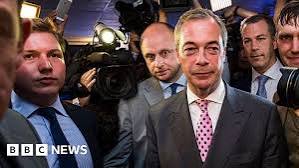
At its heart, this case is about trust. Voters accept that parties need money to campaign — but they must be certain it does not come from hidden sources, foreign interests, or people who want influence without accountability.
Nigel Farage has built his career on attacking “corruption in Westminster” and promising transparency. Now, he finds himself at the centre of the very kind of financial controversy he has criticised others for. If the police prove the money was misdirected, it would undermine his whole political brand.
Why This Matters Beyond Reform UK
- For regulation: This will test whether the Electoral Commission and police have the tools and authority to trace complex financial trails across borders and through family connections.
- For politics: If no wrongdoing is found, Reform will argue it is being targeted. If offences are proven, it will strengthen calls for even stricter rules on donations and offshore links.
- For the public: It reminds everyone that when money is not explained, the suspicion it creates does more damage to politics than the money itself ever could.
Unanswered Questions
As the investigation proceeds, the critical issues remain:
- Where exactly did Fiona Cottrell’s £1.25 million come from?
- Was her son George involved in arranging or funding the payments?
- Did Reform UK carry out proper checks to ensure the donations were legal?
- Can British authorities track funds that move through offshore companies and crypto‑linked structures?
Conclusion
The Metropolitan Police’s investigation marks a new and serious phase in this story. It moves the debate from allegations and denials into the realm of criminal evidence.
Whether the donations are eventually found to be legal or not, one thing is clear: The gap between the amount of money given and the explanation provided is too wide — and the silence from those involved only widens it further.
For Nigel Farage, Reform UK, and British politics as a whole, the outcome will be significant. It will either confirm that even parties claiming to challenge the system must play by its rules — or show once again that money can still flow into politics in ways voters cannot see or control.