POLAND’S BORDER POLICY REIGNITES EUROPEAN DEBATE AS SECURITY AND HUMANITARIAN CONCERNS COLLIDE. n1

SOVEREIGNTY, SECURITY, AND HUMAN DIGNITY: Poland’s Border Policy and Europe’s Unresolved Migration Crisis
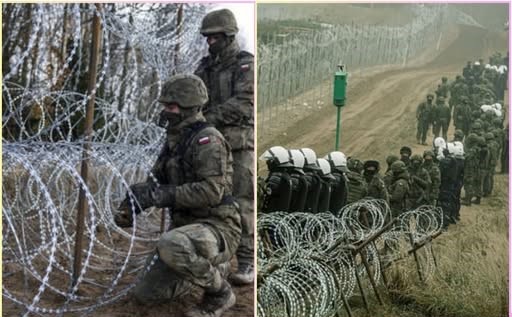
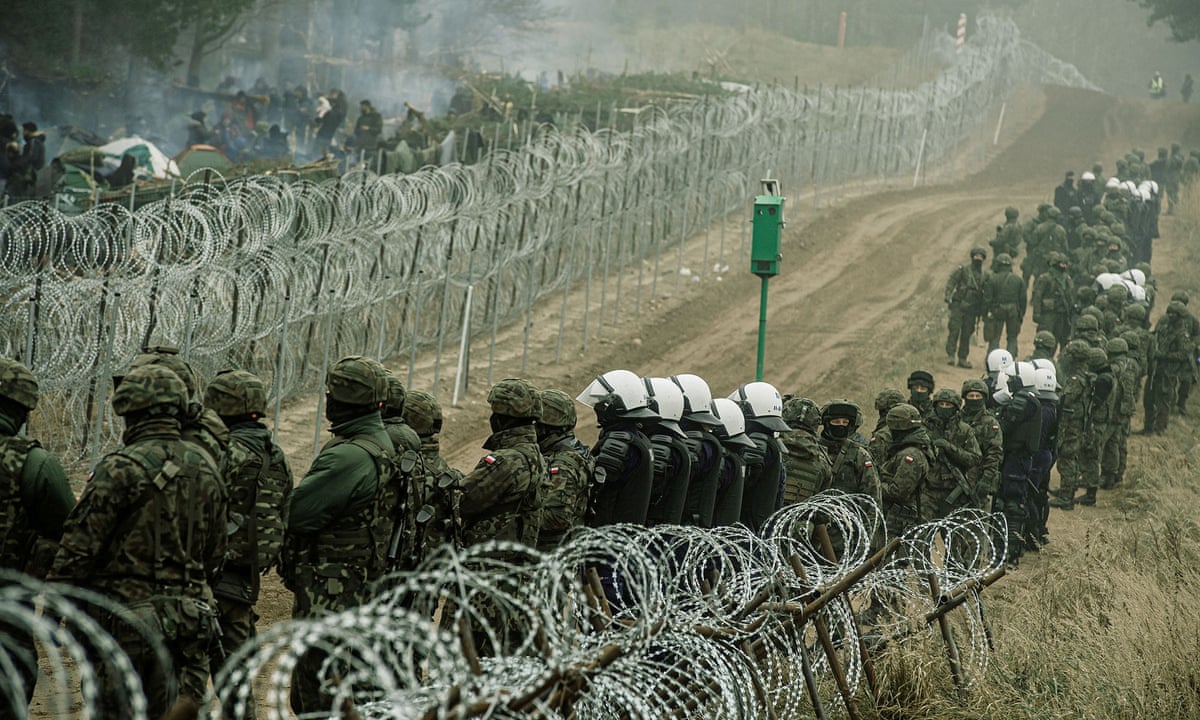
In 2026, the debate over irregular migration has once again ignited across the European Union, with Poland at its center. Fresh reports from border zones along the 418-kilometer frontier with Belarus claim that hundreds of people attempting to cross into Poland have been turned back before they could lodge asylum claims, a practice widely described by critics as “pushbacks”. These accounts have reignited a fierce argument that began in 2021, when Minsk began transporting migrants to the border in what Warsaw and Brussels call a form of “hybrid warfare” aimed at destabilizing the bloc.
At stake is one of the most fundamental tensions in modern European governance: how to defend national borders and uphold security while respecting international law and the human right to seek protection. Poland, as an external frontier state of the Schengen Area, stands on the front line of this conflict, and its approach has become a benchmark for how far the EU is willing to go to control migration flows.

Since 2021, successive Polish governments—first led by the Law and Justice party, and since late 2023 by Prime Minister Donald Tusk’s coalition—have maintained a hardline position. Officials argue that the border measures are necessary to stop unauthorized crossings, dismantle smuggling networks, and protect the integrity of the entire European Union’s external boundary. In March 2025, the government took a further step, introducing a temporary suspension of the right to apply for asylum at the Belarusian border, citing “instrumentalization” of migration by the Belarusian regime. Though initially limited to 60 days, the measure has been repeatedly renewed, remaining in force through mid-2026.
Supporters of the policy say it works. They point to a sharp drop in attempted crossings from a peak of thousands per month in 2021 to a few hundred today, arguing that strong deterrence saves lives by discouraging dangerous journeys through dense forests and freezing temperatures. They also emphasize that every sovereign state has the right to decide who enters its territory, and that uncontrolled migration would overwhelm public services, strain social cohesion, and open the door to criminal activity.
But critics paint a very different picture. Human rights groups such as Amnesty International, Human Rights Watch, and the UN High Commissioner for Refugees (UNHCR) argue that turning people back without individual assessment violates the 1951 Refugee Convention, the principle of non-refoulement, and both EU and European Court of Human Rights law. They warn that Belarus is not a safe country for returnees, citing reports of beatings, extortion, and detention for those sent back. According to a 2026 report, Poland recorded over 14,700 pushbacks in 2025 alone—more than any other EU member state.
The legal landscape is complex. While the EU’s new Migration and Asylum Pact entered into force in July 2026, allowing for faster border procedures, it still requires states to register asylum claims and avoid collective expulsion. The European Court of Justice has ruled that pushbacks without proper screening are unlawful, yet Poland insists its actions are justified under its national security mandate.
As images of exhausted migrants and reinforced barriers circulate, the controversy raises a question that goes far beyond Poland: Can Europe build a migration system that is both secure and humane?
After three decades reporting on borders, migration, and human rights across Europe and beyond, I have learned that debates over “security versus rights” are rarely as simple as they sound. In Poland’s case, the headlines often obscure three critical realities that shape this story.
1. The Double Standard of Sovereignty
The most striking feature of this debate is how sovereignty is invoked selectively. Supporters rightly note that every nation controls its borders—but they often overlook that sovereignty does not exist in a vacuum. It comes with obligations. Under international law, Poland cannot simply close its doors to everyone; it must distinguish between economic migrants and those fleeing war, persecution, or violence.
The government’s argument that Belarus is a “safe third country” does not hold up to scrutiny. Independent investigations confirm that people returned there face severe risk, which means pushbacks effectively send them back to danger. This is not just a technicality—it is the difference between lawful border management and illegal expulsion. Yet what is most telling is that this policy has persisted even after the change of government in Warsaw. The Tusk administration, once critical of the previous government’s approach, has largely kept the same rules, revealing a political consensus: in the face of public pressure, security concerns almost always take priority.
2. Deterrence as a Humanitarian Tool – or a Risk?
Proponents claim that pushbacks protect migrants by stopping them from risking their lives. This is a powerful argument, but it raises a difficult ethical question: Do we prevent harm by closing the door entirely, or by ensuring safe, legal ways to seek protection? History shows that deterrence does not eliminate migration—it only changes the routes and makes them more dangerous. When one border closes, smuggling networks shift to others, and the price of entry rises, along with the risks.
At the same time, it would be naive to ignore the security dimension. In 2021, the situation was chaotic: thousands of people arriving in remote areas, traffickers exploiting them, and a neighboring state using migration as a political weapon. Poland faced a genuine crisis, and the EU was slow to respond. But the problem is that “temporary” measures have become permanent, and exceptions have become the rule. When emergency powers become routine, rights are often eroded without public debate.
3. The Failure of a Shared European System
This is not just Poland’s problem—it is Europe’s collective failure. For 15 years, the EU has struggled to agree on how to share responsibility. Frontline states like Poland, Greece, Italy, and Spain bear the brunt, while others refuse to take in their share of asylum seekers. The new 2026 Migration Pact was meant to fix this, but it allows countries to opt out of relocations and instead pay for border infrastructure—effectively outsourcing responsibility to the edges of the bloc.
In this context, Poland’s policy becomes a symptom of a broken system. When the EU cannot agree on common rules, individual states take matters into their own hands, often pushing legal boundaries. The result is a patchwork of practices that vary widely from one country to the next, creating a two-tier system where rights depend on which border you cross.
4. What We Don’t See: The Human Cost
Finally, we must look beyond the statistics. Behind every number is a person: a Syrian fleeing war, an Afghan escaping the Taliban, a family from Somalia or Iraq searching for safety. The rules that treat them all as a single security risk erase their individual stories. While it is true that not every migrant qualifies for asylum, the only way to know is through a fair, individual assessment. When we skip that step, we stop treating people as rights-bearers and start treating them as a problem to be managed.
Poland’s border policy stands as a defining test for modern Europe. It shows what happens when security concerns override legal safeguards, and when solidarity among nations gives way to national self-interest. It reveals that the greatest challenge facing the continent is not just how to control its borders, but how to remain true to the values it claims to defend: freedom, justice, and respect for human dignity.
We have learned that firm borders and security are not incompatible with human rights—but they require rules that are fair, transparent, and applied equally. We have seen that “temporary” restrictions often become permanent, and that the absence of a shared European solution leaves the most vulnerable caught in the middle. And we have been reminded that a policy that seems effective in the short term can create long-term costs: eroded trust, weakened legal standards, and a Europe that is less open, less united, and less true to its founding principles.
As the debate continues, and as new legal challenges and reports emerge, the question facing every European leader and citizen is clear: If we build our borders strong enough to keep out danger, but also strong enough to keep out those in need, have we truly protected our values—or have we lost them?