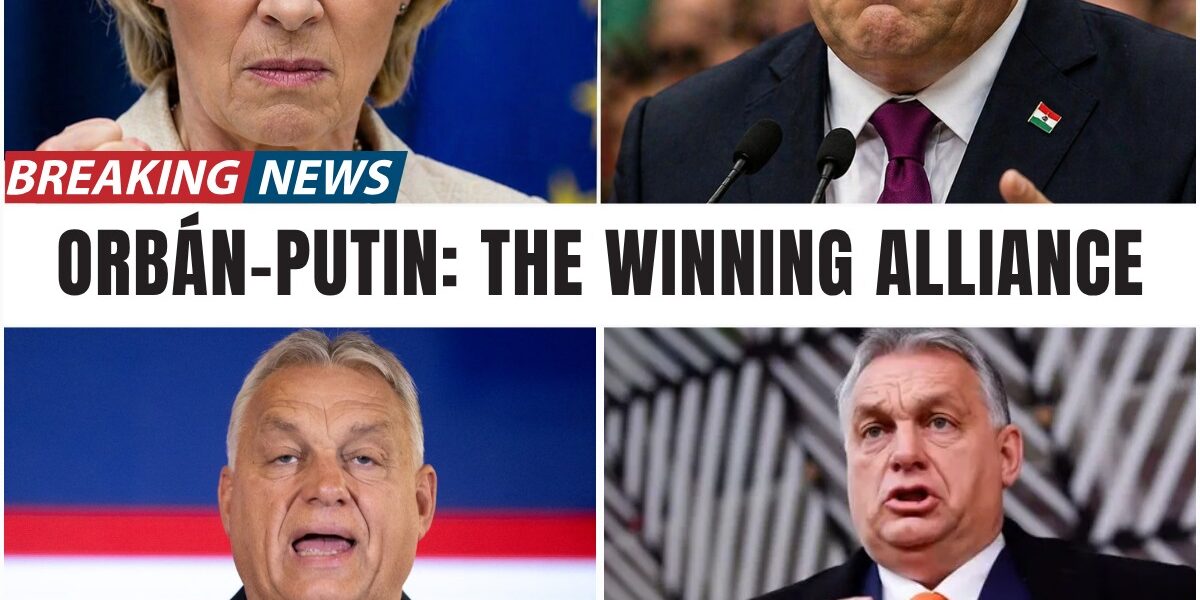

Ursula’s Twilight: How Viktor Orbán Brought Brussels to Heel.
A Crushing Failure of a Strategy of Suffocation: The Hour of Reckoning in Brussels
For four long years, a meticulous strategy was orchestrated from the heights of Brussels. Ursula von der Leyen, President of the European Commission, had erected what some described as an “iron wall” around Hungary.
The objective was clear—almost surgical: to diplomatically isolate, financially drain, and politically weaken Viktor Orbán until his capitulation or defeat in the next elections. Yet, as the निर्णcive vote approaches, the verdict is undeniable: the Commission’s strategy has shattered against reality on the ground.
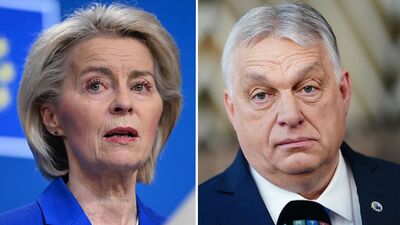
Ursula von der Leyen has not merely failed; she appears to have been outmaneuvered on all fronts by an Orbán–Putin axis that proved far more resilient and pragmatic than anticipated.
The Energy Front: The Triumph of Molecules Over Paper Promises
The first act of this confrontation unfolded on the energy battlefield. The European Union proudly declared an end to Russian gas, promising a new era of energy independence. But behind the polished rhetoric lies a harsher reality. While many European households face soaring electricity prices, Hungary breathes easier.
Thanks to a strategic contract with Gazprom extending to 2036, Budapest has secured its supply via the TurkStream pipeline. This critical route bypasses Ukraine entirely, rendering Kyiv powerless to shut off the flow. The verdict is clear: real gas molecules always prevail over paper legislation. Orbán has secured his nation’s future while much of Europe, critics argue, sacrificed itself on the altar of what is now seen by some as a self-destructive ideology.
Financial Warfare: €90 Billion and an Unyielding Veto
The second front—cold, hard finance—has exposed the limits of European bureaucracy when confronted with national sovereignty. The figure shaking European capitals is €90 billion. This is not merely a budget line; it represents the final lifeline preventing Ukraine from slipping into technical default. At a pivotal summit, Viktor Orbán deployed his ultimate weapon: the veto.
In response to Ukraine’s shutdown of the Druzhba pipeline, Orbán froze the entire European financial mechanism. “No oil, no money.” This stance paralyzed Brussels for months. Despite accusations of betrayal from several European leaders, Orbán, well-versed in EU treaties, knows that unanimity is the golden rule for such decisions. Without his signature, those billions remain nothing more than dead pixels on a screen.
The Domino Effect: When Brussels’ Allies Begin to Doubt
The real diplomatic earthquake occurred behind closed doors. At a last-chance summit, European unity revealed troubling cracks. Giorgia Meloni, Italy’s Prime Minister—whom Brussels had hoped would discipline dissenters—caused shockwaves. According to confirmed diplomatic leaks, she acknowledged the logic of Budapest’s position, stating that in Orbán’s place, she would defend her nation’s energy interests with equal determination.
For a key ally to recognize the legitimacy of the so-called “pariah” is a historic embarrassment for Ursula von der Leyen. Rome appears to sense the shifting winds, even proposing compromises that increasingly resemble a capitulation by Brussels to Hungarian demands.
Authoritarian Drift: A Denial of Democracy?
Having failed to break Orbán economically, Brussels now appears willing to escalate politically. Leaks suggest preparations for drastic measures: activation of Article 7, a total freeze of funds, or even threats of exclusion should Orbán win re-election. More troubling still, some Members of the European Parliament have openly suggested that the EU should not recognize another Orbán victory.

Such a stance—potentially invalidating the votes of millions of Hungarian citizens—marks a dark turning point in European governance. Justice itself appears increasingly politicized: reports indicate the Commission has quietly paused certain legal proceedings, waiting for polling outcomes before deciding whether to pursue or shelve cases according to political needs.
Conclusion: A Sovereigntist Bloc Stronger Than Ever
As inflation batters the continent and energy costs surge, the attempt to isolate Hungary has produced the opposite effect. Budapest has become a gravitational center for patriotic and sovereigntist forces across Europe. Prominent political figures are now rallying behind the man who dared to say no to technocracy.
In seeking to suffocate Orbán, Ursula von der Leyen may have instead weakened Europe’s economy and inadvertently fostered a more unified resistance bloc than ever before. The Hungarian people are about to decide their future, but one certainty remains: between Brussels’ paper promises and the reality of heated homes, the choice for many already seems clear. The story of this geopolitical earthquake is only just beginning.