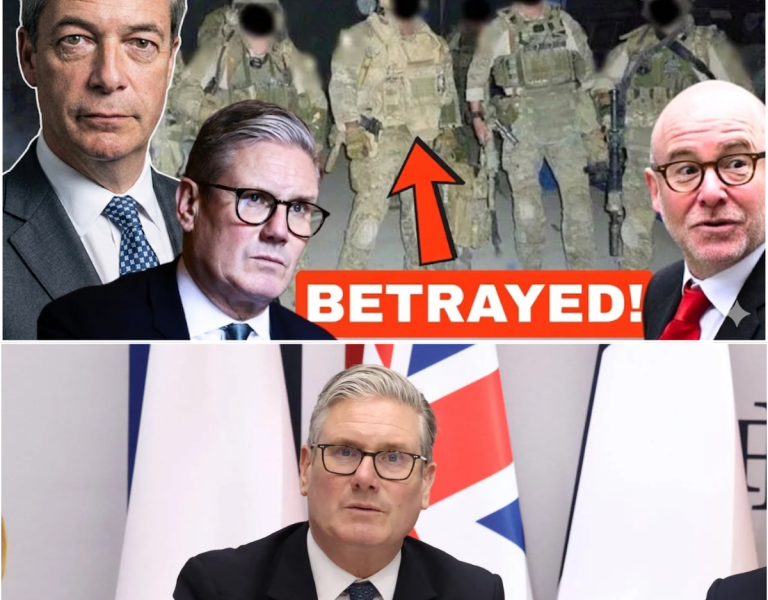
Reports of SAS Resignations Raise Alarm Over Fear of Prosecution for Past War Actions. n1

Reports of SAS Resignations Raise Alarm Over Fear of Prosecution for Past War Actions
Concerns are mounting within Britain’s defence and political circles following reports that operators from the elite Special Air Service (SAS) are resigning, or considering resignation, amid growing fears of legal prosecution linked to historic military operations.
The controversy centres on the reopening of investigations into alleged misconduct by British troops during conflicts in Iraq and Afghanistan, as well as older cases linked to Northern Ireland. Critics argue that repeated inquiries — sometimes long after soldiers were cleared — are creating a climate of uncertainty and distrust within the armed forces.
Supporters of renewed investigations insist that serious allegations must be examined, regardless of time passed. However, veterans’ groups and military commentators warn that the current approach risks undermining morale, weakening recruitment and retention, and damaging the operational effectiveness of the United Kingdom’s most specialised units.
At the centre of the political storm is Lord Hermer, a senior figure in government and a close ally of Prime Minister Keir Starmer. Hermer has faced criticism due to his previous legal career in human rights law, including involvement in cases that challenged the actions of British soldiers overseas. The issue has become increasingly sensitive as Starmer himself is also closely associated with the legal establishment, having served as Director of Public Prosecutions and built his public reputation in the world of human rights law.
For many critics, this is no longer simply a military issue. It is now viewed as a clash between legal accountability, political culture, and national defence priorities.
A growing fear within the ranks
According to reports circulating in military circles, a significant number of operators within 22 SAS — one of Britain’s most elite special forces regiments — have either resigned or are seriously considering leaving. While official figures remain unclear, the reported motive has generated intense concern: a belief among some operators that they could face criminal prosecution years after missions have ended.
For special forces personnel, such uncertainty is regarded as uniquely destabilising. Unlike conventional forces, SAS operations often involve high-risk missions, split-second decisions, and engagements in classified environments that are difficult to fully explain publicly.
Critics argue that if elite soldiers begin to hesitate in the field out of fear of future legal consequences, it could reduce effectiveness and increase danger for both troops and civilians.
Investigations revisiting Iraq, Afghanistan, and Northern Ireland
The issue is rooted in a wider history of allegations against British forces following the Iraq and Afghanistan campaigns.
During and after these wars, thousands of claims were lodged alleging unlawful killings, mistreatment of detainees, and excessive force. Many of these allegations demanded investigation, and successive governments were pressured to demonstrate accountability under domestic and international law.
To handle the volume of claims, the government established the Iraq Historic Allegations Team (IHAT), designed to examine accusations against British troops.
However, IHAT itself became controversial. Over time, many cases were withdrawn, collapsed, or were deemed unreliable. Some law firms involved in bringing forward allegations were criticised for submitting weak claims or relying on questionable evidence.
The collapse of many investigations left a bitter legacy. Soldiers who had been investigated and cleared found themselves repeatedly subjected to renewed scrutiny. For many veterans, the process was described as deeply traumatic — not only due to the allegations themselves, but because of the long-term uncertainty, reputational damage, and personal stress caused by years of legal limbo.
The battlefield versus the courtroom
One of the central arguments made by critics of repeated investigations is that warfare cannot be judged as though it were a controlled environment.
Combat decisions are often made under extreme pressure: limited visibility, immediate threats, chaotic movement, and rapidly changing circumstances. Soldiers are trained to follow rules of engagement and the law of armed conflict, but they are also trained to act quickly when faced with threats to life.
Veterans argue that years later, these same moments are re-examined in slow motion, with legal professionals asking whether a soldier could have acted differently — without having experienced the immediate danger.
Supporters of legal scrutiny counter that the chaos of war does not remove the need for accountability, particularly in cases involving civilians or detainees. But critics insist the current system risks criminalising legitimate combat actions by applying peacetime legal expectations to wartime environments.
Why SAS resignations would be a serious warning sign
The SAS is widely regarded as one of the most capable and selective military units in the world. Its operators conduct counterterrorism missions, hostage rescue, covert reconnaissance, and direct action operations — many of which are never publicly disclosed.
Selection for the SAS is famously brutal, with only a small percentage of candidates successfully completing training. Those who do often spend years refining specialist skills that cannot be easily replaced.
If operators are leaving at scale, defence analysts warn it would represent more than normal turnover. It would indicate a deep institutional crisis.
Unlike conventional forces, special forces units rely heavily on accumulated experience. Losing trained operators would mean losing operational capability that could take years, even decades, to rebuild.
Lord Hermer and the political backlash
The controversy has intensified due to attention on Lord Hermer, a senior figure now inside government. Before his appointment, Hermer built a legal career in human rights law, including cases involving allegations against British troops.
Critics claim that some of these cases were pursued even when doubts were raised about the strength or reliability of evidence. While supporters argue that legal advocacy is a legitimate function of the justice system, opponents insist it contributed to a wider culture in which British soldiers were repeatedly subjected to allegations that later collapsed.
Now, Hermer’s role inside government has raised suspicions among some military supporters and political commentators that his legal history could influence how the state approaches investigations into troops.
Even without evidence of direct interference, critics argue that perception alone matters. Trust between the military and political leadership is crucial, and the current climate is increasingly described as one of mistrust.
Starmer’s legal background adds political sensitivity
Prime Minister Keir Starmer’s own history has added fuel to the controversy. Starmer served as Director of Public Prosecutions and is widely associated with legal accountability frameworks and human rights principles.
For critics, the concern is that a government led by a former prosecutor may be more inclined to allow extensive legal action against troops, even in cases where evidence is unclear or already reviewed.
For supporters of Starmer, this argument is unfair and politically motivated. They insist that accountability and professionalism are essential for the legitimacy of Britain’s armed forces, and that no one should be immune from investigation if serious allegations exist.
However, the political reality remains: in the eyes of many soldiers and veterans, the combination of renewed investigations and legal-minded leadership creates a narrative that the system is “leaning against” the armed forces.
Accountability or witch hunt?
At the heart of the debate is the line between genuine accountability and what critics describe as a witch hunt.
Accountability, in its legitimate form, involves investigating credible claims supported by evidence and ensuring justice is served where wrongdoing occurred.
A witch hunt, critics argue, looks different: repeated investigations into the same individuals, reliance on recycled allegations, pressure to produce outcomes, and long-term uncertainty that destroys reputations even without convictions.
Veterans’ groups argue that the repeated reopening of cases, particularly when previous investigations found insufficient evidence, has blurred this line. The result, they claim, is that soldiers begin to believe they could be accused regardless of whether they acted lawfully.
This belief is seen as particularly dangerous for elite operators, whose effectiveness depends on confidence, decisiveness, and trust that lawful actions will be defended by the state.
Strategic consequences for the armed forces
Military analysts warn that if the current climate continues, Britain could face long-term damage to recruitment and retention.
Potential recruits may become less willing to join a military that could expose them to legal jeopardy years after their service. Experienced soldiers may choose early retirement rather than risk being dragged into lengthy legal proceedings.
For special forces units like the SAS and the Special Boat Service (SBS), the impact could be even more severe. These units depend on highly trained individuals who cannot be quickly replaced. Losing even a small number of experienced operators could reduce Britain’s ability to respond to terrorism threats, international crises, and covert operations.
In a world where security threats are increasing — from state adversaries to extremist networks — any weakening of Britain’s elite capability could carry serious national consequences.
A crisis of trust between troops and government
The most damaging aspect of the controversy may not be the legal debate itself, but the erosion of trust.
Soldiers are trained to operate under lawful command, with the expectation that if they follow rules of engagement, the state will support them. If they believe political leaders may abandon them, sacrifice them to public pressure, or allow them to be pursued indefinitely, morale can collapse.
For critics, the reports of SAS resignations represent a red flag: a sign that the people tasked with defending Britain may no longer trust the system that governs them.
For supporters of the investigations, the argument remains that Britain must uphold legal and moral standards even in war, and that the armed forces must remain accountable to the law.
Conclusion: a defining issue for Britain’s military future
The reported SAS resignations have triggered a wider national debate over the relationship between justice and warfare, and over whether Britain is protecting those who serve or exposing them to endless legal risk.
The government now faces pressure to clarify its position: whether it will continue to allow historic investigations to be reopened, whether it will introduce legal protections for soldiers acting in good faith, and whether it can restore confidence among elite units.
For many observers, the issue is no longer theoretical. If Britain’s most capable operators believe the state will not stand behind them, the consequences could reshape the armed forces for years to come.