
THE MANDELSON AFFAIR: A PREMIER’S JUDGMENT ON TRIAL
The corridors of Westminster have rarely echoed with such a visceral sense of constitutional dread. In a high-stakes debate that felt less like a parliamentary procedure and more like a final reckoning, the House of Commons considered the government’s accountability regarding the appointment of Peter Mandelson as Britain’s Ambassador to the United States. The charge leveled against the Prime Minister is grave: that he personally intervened to install a “known national security risk” in Washington, bypassing the very vetting processes designed to protect the state. As the details spilled out into the chamber, the portrait emerged of a Downing Street operation that viewed civil service protocols as mere inconveniences to be steamrolled.

At the heart of the scandal is a figure who has long haunted the peripheries of British power. Peter Mandelson—a man sacked twice from previous governments for lapses in integrity—was sent to our most sensitive diplomatic post despite red flags that would have disqualified any junior civil servant. These were not merely historical footnotes; they included documented links to the Kremlin and a Russian defense company, Systema, following the invasion of Crimea. The Prime Minister’s defense, articulated through a series of increasingly strained parliamentary appearances, has been that he “never thought to ask” about these risks. It is a defense that oscillates between staggering incompetence and calculated deception.
The bombshell testimony of Sir Ollie Robbins, the former Permanent Secretary of the Foreign Office, has shattered the government’s narrative of “due process.” Sir Ollie, a mandarin of impeccable standing, revealed a culture of “constant pressure” from Number 10 to clear Mandelson’s appointment. He described a dismissive approach to vetting, where the Prime Minister’s office showed no interest in waiting for security clearances. Most damming was the revelation that Mandelson was granted access to highly classified briefings on a “case-by-case basis” before he had even been formally vetted. This was not a failure of the system; it was a deliberate bypass of it by the man at the very top.
The debate highlighted a chilling pattern in the Prime Minister’s leadership style: the sacrificial “human shield.” As the Leader of the Opposition noted, the Prime Minister was conspicuously absent from the chamber, sending a junior minister to answer for decisions made far above his pay grade. This follows a trend where senior civil servants like Sir Ollie Robbins and Chris Wormald are thrown under the bus to carry the can for political failures. Since Labour took office less than two years ago, half of the permanent secretaries have been ousted, costing taxpayers over £1.5 million in payouts. This “chilling effect” on the civil service has created what Lord O’Donnell described as the worst crisis in minister-mandarin relations in modern history.
The national security implications of this appointment are profound. The British Ambassador to Washington is a linchpin in the “Five Eyes” intelligence-sharing community, privy to top-secret data from our most vital allies. To place a man with unvetted links to Russia and China in such a position is to gamble with the crown jewels of British intelligence. The opposition’s question—”What if he had leaked it to one of our enemies?”—remains hauntingly unanswered. The Prime Minister’s choice to ignore a letter from the Cabinet Secretary warning against the appointment suggests a leader who believes his personal whims override the collective security of the realm.
Furthermore, the scandal has exposed a mysterious “black hole” in the government’s record-keeping. Despite a “Humble Address” from Parliament demanding the publication of all documents related to the appointment, crucial meeting records and annotations remain missing. Forms have been left blank; key decisions remain unrecorded.
This lack of transparency has led many to conclude that a coordinated cover-up is underway. Helen McNamara, the former head of propriety and ethics, noted that the argument would be simpler if the facts were public, yet the government continues to withhold the very evidence that would either clear or convict them in the court of public opinion.
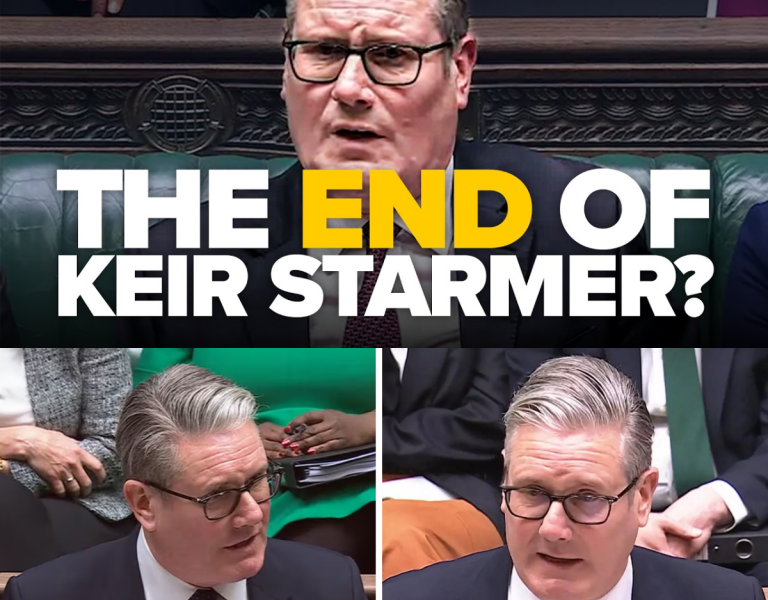
The Prime Minister’s own words from 2022 now serve as a political noose. Back then, he stated with moral certainty that if a Prime Minister misleads the House, they must resign. Today, he refuses to apologize for “staggering” inconsistencies in his account of the Mandelson vetting.
The question of whether he knowingly misled Parliament is no longer a partisan talking point but a matter of constitutional integrity. If he is a man of his word, the path is clear; if he stays, he confirms the public’s darkest suspicions that there is “one rule for him and another for everyone else.”
The timing of this crisis could not be more perilous. With war raging in Europe and the Middle East, and a global energy shock straining the economy, Britain requires a Prime Minister with an absolute grip on national security. Yet, even his own allies are sounding the alarm. Lord Robertson, the former NATO Secretary General who authored the government’s Strategic Defense Review, recently warned of a “corrosive complacency” at the heart of the administration. If the Prime Minister cannot be trusted to tell the truth about an ambassadorial appointment, how can he be trusted to lead the nation through a time of unprecedented global instability?
The debate concluded with a stinging indictment of the Prime Minister’s “incurious” regime. Leadership, the House was reminded, requires a curiosity to understand problems before they become crises. Instead, we have a premier who appears more interested in being Prime Minister than in doing the job. His defense—that “no one told him”—is either an admission of total administrative collapse or a flat-out falsehood. Neither option is acceptable for a leader whose first duty is to keep the country safe.
As the dust settles on this debate, the buck finally rests where it began: with the Prime Minister. The Mandelson Affair has revealed a leadership devoid of accountability, a civil service in revolt, and a national security apparatus compromised by political ego. The House has made its frustration clear, but the ultimate judgment will lie with the public and the Prime Minister’s own backbenchers.
If leadership is about taking responsibility, as the Prime Minister once claimed, then the honorable thing to do is no longer in doubt. Britain deserves better than a government that prioritizes political cronyism over the safety of the state. It is time for the Prime Minister to face the consequences of his judgment.