
The Digital Siege: Sadiq Khan and the Rise of Manufactured Reality
LONDON — In the high-velocity world of social media, the distance between a fabricated headline and a national conversation has never been shorter. This week, a viral narrative claiming that London Mayor Sadiq Khan had “collapsed” on live television began to circulate with the frantic energy of a breaking news alert. Accompanied by inflammatory language questioning the “weight of his decisions,” the report painted a picture of a leader in the midst of a terminal psychological and physical breakdown. However, like much of the content fueling the so-called “outrage economy,” the incident simply did not happen.
The “shocking revelation” was, in fact, a masterclass in digital manipulation, utilizing a mix of out-of-context clips and AI-generated sentiment to create a “tempest” where there was only professional routine. While the blogs reported a “public humiliation,” Sir Sadiq was actually navigating the far more mundane, yet high-stakes, realities of municipal governance—finalizing housing budgets and addressing the very real, very tangible pressures of London’s infrastructure. The “collapse” was not a medical event, but a strategic fiction designed to test the resilience of British democratic institutions.

The Mechanics of the Outrage Industry
Security experts warn that these “unprecedented moments” are often the work of a sophisticated disinformation industry that thrives on polarizing public figures. By framing the Mayor’s political situation as an “unraveling career,” these platforms generate millions of views from audiences already primed for discontent. This is the new front line of urban leadership: a constant battle not just against policy failures, but against “phantom failures” manufactured in digital labs to erode the basic bonds of trust between a city and its representative.
For the Mayor, the weight of the decisions is real, but it is not found in the “mask of composure” described by his detractors. It is found in the grit of managing a global city facing a housing crisis and the fallout of international economic shifts. The pressure is palpable not because of a “thunderbolt” question from a reporter, but because the margin for error in a city of nine million people is vanishingly thin. By turning these administrative stresses into a “theatrical performance,” disinformation actors aim to make the job of governing practically impossible.
The Architecture of Discontent
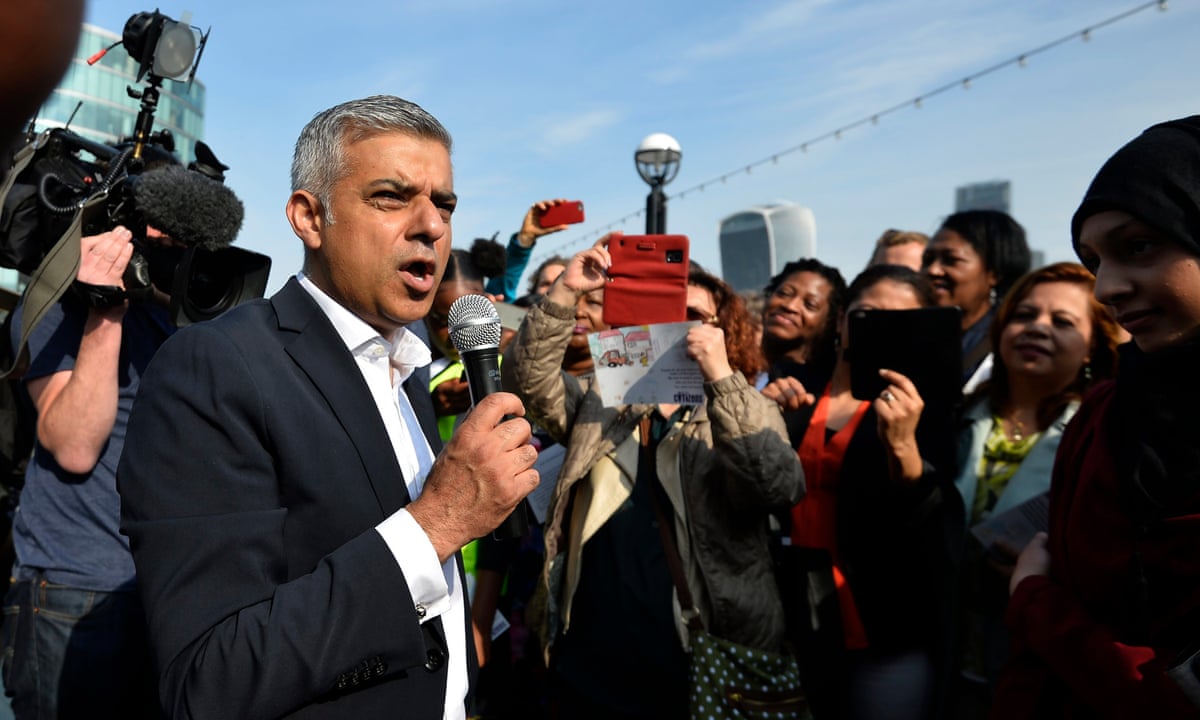
Critics often mistake silence for vulnerability, yet for those inside City Hall, the Mayor’s “mask of composure” is viewed as a necessary defense against a landscape that increasingly prioritizes spectacle over substance. In recent weeks, Khan has shifted his focus toward calling out the “parasitic” nature of the outrage economy, arguing that “leadership should never be confused with celebrity.” He is increasingly positioning himself as a defender of “truth and responsibility,” warning that if the internet continues to “shake,” the foundations of democracy will surely follow.
The “media frenzy” surrounding the supposed breakdown has also highlighted a growing divide in how information is consumed across the UK. While traditional outlets ignored the fabrication, “uncategorized” news sites and social media bots ensured the story reached millions. This “shadow media” creates a parallel reality where a leader is always “trapped in a ring,” facing an onslaught of “raw and unfiltered” vulnerability. It is a world where the outcome is always a “punch that lands harder,” regardless of the actual facts on the ground.
The Reality of Resilience
Despite the “mounting chaos” promised by his opponents, the Mayor’s actual week was defined by policy, not paralysis. He recently announced a new round of funding for community safety initiatives, pointedly ignoring the digital noise to focus on “tangible relief” for Londoners. This “governing philosophy” of acting quickly and targeting pressure points is his direct answer to the “weight of inadequacies” his critics claim he feels. For Khan, the best defense against a manufactured collapse is a demonstrated record of activity.
The “public humiliation” touted by digital provocateurs has instead turned into a catalyst for a broader discussion on the ethics of AI in political campaigns. As the city moves toward a new election cycle, the “explosive exploration of chaos” seen this week serves as a warning of what is to come. For the London voter, the challenge is no longer just choosing a candidate, but distinguishing between a leader who is “struggling to respond” and a leader who is simply ignoring a scripted lie.

Conclusion: Beyond the Digital Facade
As the “silence” of the broadcast settles, the reality remains that London’s Mayor is neither collapsing nor unraveling. The “weight of his decisions” remains heavy, but it is a weight he has carried through multiple terms of global instability. The “tempest” was a digital construct, a flicker on a screen that vanished as soon as the real-world business of the city resumed. In the end, the “boxer” was never in the ring, and the “punches” were never thrown; the only thing that crumbled was the credibility of the narrative itself.
Ultimately, the “shocking breakdown” of Sadiq Khan provides a stark example of the high cost of modern disinformation. It reveals a political climate where “human decisions” are reduced to clickbait and where “dignity” is the first casualty of the outrage cycle. As Londoners walk their streets, the air is not thick with “tension,” but with the familiar, steady rhythm of a city that has seen enough theatrical flair to know the difference between a crisis and a show.
How can global cities develop the “institutional immunity” required to protect their leaders and citizens from manufactured medical and political crises, and what role should tech platforms play in dismantling the “outrage economy” before it results in real-world civil instability?