“They Bombarded Empty Trenches” — How Australians Made the Turkish Army Look Stupid. nu

“They Bombarded Empty Trenches” — How Australians Made the Turkish Army Look Stupid
Two tin cans, a piece of string, a hole the size of a bayonet point. That is all it took to make 40,000 predicted casualties disappear from the ledger of the British Empire and turn one of the most powerful armies in the Middle East into a laughingtock that spent an entire morning heroically assaulting kitchen wear.
On the 20th of December 1915, Ottoman infantry stormed the ANZAC trenches at Gallipoli with bayonets fixed and war cries on their lips, expecting the savage close quarters bloodbath they had been preparing for since dawn, only to discover that 80,000 enemy soldiers had already sailed away in the night, leaving behind nothing but cold campfires, slouch hats on sticks, and rows of Lee Enfield rifles still cracking shots into the darkness.
fired by gravity and dripping water instead of human hands. Every general in the British War Office had already written the butcher bill for this retreat. Between 25,000 and 40,000 men, that was the official forecast, delivered with the sort of calm arithmetic that comes easy when you are calculating from a leather armchair 12,000 km from the nearest Turkish sniper.
The actual number of Australians lost during the withdrawal was zero. And the device that made that number possible was invented by a Lance corporal whose entire engineering education consisted of growing up in a country where if something broke, you fixed it yourself or you went without. But this story does not begin with the miracle.
It begins with the disaster that made the miracle necessary. Rewind to the 25th of April, 1915. The beaches of the Gallipoli Peninsula are about to swallow an entire generation of young Australians and New Zealanders. And the architect of this catastrophe is sitting in London thoroughly convinced of his own brilliance.
Winston Churchill championed the Dardinell’s campaign with the unshakable confidence of a man who had studied war from the comfortable side of a mahogany desk. Force the Straits. Knock out the Ottoman Empire. open a warm water supply route to Russia. On paper, the arrows pointed in the right direction. The fleet looked unstoppable, and the timeline was optimistic.

On the ground, or more precisely, at the base of a cliff that should never have been a landing zone, reality had a different set of arrows prepared, and every single one of them pointed straight at the ANZAC boats. A navigational blunder in the pre-dawn darkness dumped the assault force at the wrong beach.
Instead of gentle slopes and open ground, the Australians found themselves scrambling up near vertical ridges under withering fire from Ottoman defenders who held every meter of high ground. Colonel Mustafa Kamal, a then unknown officer who would later forge an entire nation from the ashes of the Ottoman collapse, had positioned his men with the kind of tactical intuition that no amount of Admiral Ty planning could overcome.
The Australians climbed into a wall of bullets and the campaign was functionally lost before breakfast on its very first day. London refused to acknowledge the obvious. Reinforcements arrived. Fresh offensives were ordered. Thousands of men charged uphill into machine guns because somebody with a title and a pension decided that one more push would crack the Turkish line.
It never cracked. The line held and the casualty lists grew and the ANZAC positions shrank to a coastal strip so narrow that a man with a strong arm could almost throw a cricket ball from the beach to the frontline trench. But the order to stop never came because admitting failure at Gallipoli meant admitting that the entire strategic vision had been a fantasy and empires do not enjoy admitting fantasies, especially when the cost of maintaining them is measured in colonial blood.
By autumn, the peninsula had become something out of a fever nightmare. The ANZAC perimeter clung to a strip of land barely 900 m deep at its widest point. Turkish trenches sat so close that soldiers could hear their opponents clearing their throats, shuffling ammunition, muttering prayers. In the worst sectors, barely 10 m of churned earth separated the two sides.
A distance so absurd that a man could spit across no man’s land and hit the enemy parapit. Snipers ruled every square centimeter of exposed ground, and raising your head above the sandbags for longer than a heartbeat, was an invitation to stop existing. The flies were a plague of genuinely biblical proportions.
Millions of them, fat and black and buzzing, breeding on the remains that nobody could retrieve from the slopes between the lines. Men ate their rations with one hand swatting and the other shoveling food into mouths they tried to keep closed between bites, knowing perfectly well what those insects had been crawling over 5 minutes earlier.
Dissantry swept through the ranks with the efficiency of a factory production line. At any given moment, roughly 40% of the ANZAC force was too ill to hold a rifle. And even the latrines offered no refuge because Turkish marksmen had registered every one of them with painstaking precision. The British war office continued to demand more assaults.
Lone pine, the neck, Chunuk Bayer. Each name became a shorthand for organized butchery. Entire battalions ripped apart in minutes for territorial gains measured in singledigit meters. gains that frequently evaporated before the sun went down. Over eight months, the Gallipoli campaign chewed through more than 26,000 ANZAC casualties and produced exactly zero strategic results.
The peninsula had become nothing more than an industrial mechanism for converting living men into statistics, and every soldier trapped on that beach knew it, even if every general in London pretended otherwise. The decision to evacuate arrived in November of 1915, whimpering through the chain of command like an embarrassing secret nobody wanted to be caught repeating.
Lord Kiter visited the peninsula, surveyed the wreckage of 8 months of delusion, and reportedly said almost nothing. The mathematics required no commentary. There would be no breakthrough. Constantinople was a fantasy. The only remaining question was how to get 80,000 men off a beach that was overlooked by an enemy army sitting on top of a mountain range with clear lines of fire to every pier, every gully, and every square meter of sand.
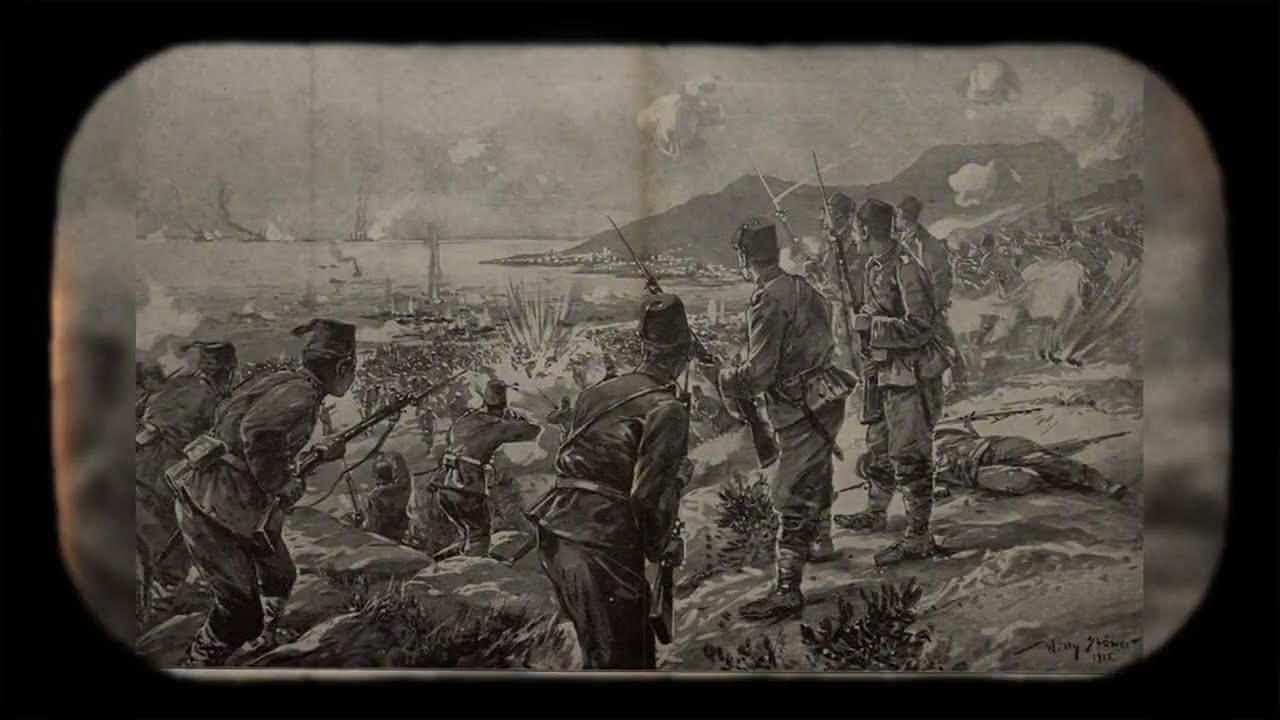
This is where the numbers turned genuinely terrifying. Evacuating a force that is in direct contact with the enemy is the single most dangerous maneuver in warfare. The troops have to thin out gradually, meaning each successive night leaves fewer men holding a longer line. The enemy has observation posts, patrols, and ears that are tuned to any change in the rhythm of the opposing trench.
If the Turks detected the withdrawal at any stage, if they noticed the cooking fires dwindling, if they registered the drop in rifle fire, if a single patrol discovered a trench that had been quietly abandoned, they would pour over the top with everything they had. The remaining Australians would be caught between an advancing army and the sea with nowhere to go and no reserves to call.
British planners quantified this nightmare with characteristic precision. up to 50% losses, 40,000 men. That number circulated through headquarters with the grim inevitability of a medical prognosis from a doctor who has already given up. Some staff officers began drafting contingency communications for the expected scale of casualties.
The word sacrifice appeared in official telegrams written by hands that would never grip a rifle on that beach. The Australians received these projections, considered them carefully, and responded in the most Australian way imaginable by deciding that the experts were completely full of it. The problem was clear enough for anyone willing to look at it without the blinkers of conventional military doctrine.
80,000 men needed to vanish. The enemy, entrenched on the heights barely a stones throw away, could not be allowed to notice. The Turks were experienced, aggressive, and intimately familiar with every sound and pattern of the ANZAC positions after 8 months of close quarters coexistence. A drop in gunfire would alert them.
A decrease in visible movement would alert them. Even a change in the smell of cooking would alert them. The deception had to be total, sustained over multiple nights, and convincing enough to fool an army that had been staring at these trenches since April. The answer came from the kind of mind that the British military establishment had spent centuries ignoring.
The mind of a man who knew how things worked because he had spent his life making broken things work again with whatever was lying around. Lance Corporal William Scurry looked at the problem that had the entire Imperial General Staff ringing its hands, walked over to a rubbish pile, picked up two empty condensed milk tins, and built a device that would save 80,000 lives.
The drip rifle was insultingly simple. A loaded Lee Enfield fixed to the parapit in a firing position. A string running from the trigger down to an empty tin can. A second tin filled with water suspended above the first with a tiny puncture in its base. Water drips from the upper tin into the lower one.
Drop by drop, the weight builds. When the lower tin grows heavy enough, it pulls the string. The string pulls the trigger. The rifle fires around into the Turkish lines. Total cost of materials. Two pieces of garbage and some string. Total number of soldiers required to operate the device, none. Total number of Ottoman generals fooled, every last one.
The real brilliance lived in the calibration. A pin prick hole produced a slow drip. The rifle would fire after roughly an hour. A slightly wider hole shortened the delay to 30 minutes. Bigger still, and the shot came in 10. Line up dozens of these rigs along a trench section, each with a different drip rate, and the result was a wall of sporadic, unpredictable gunfire that sounded indistinguishable from a manned defensive position.
The shots cracked out at random intervals, mimicking the natural rhythm of board soldiers taking pot shots in the dark. A Turkish sentry listening from the opposing parapet would hear exactly what he expected to hear, the familiar percussion of Australians being Australians. The thought that those rifles were being operated by condensed milk tins would not cross his mind in a thousand years.
But Scurry’s invention was only the centerpiece of a deception campaign that stretched across every sense the Turkish army possessed. The Australians were about to stage the greatest piece of theater the First World War would ever produce. And every man on the peninsula had a role to play.
The withdrawal plan carved the evacuation into phases spread over several successive nights. Each night, under total blackout conditions, designated groups would slip away from the front, file silently down the gullies, cross the beach, and board the waiting boats. The men left behind had to fill the gaps, sprinting between firing positions, maintaining the noise levels, keeping the fires burning, projecting the illusion of a full garrison through sheer energy and nerve.
A trench section manned by 50 soldiers at the start of the week might hold 15 by midweek, and those 15 had to generate the acoustic and visual footprint of the original 50 without missing a beat. Sound discipline reached fanatical levels. Departing soldiers wrapped their boots in rags and sacking to silence their footsteps on the rocky paths.
The wooden peers at the beach, structures that amplified every footfall like a hollow drum, were padded with layers of sandbags and blankets. Orders were communicated in whispers or hand signals. Equipment that could not be transported was either destroyed beyond use or rigged with nasty surprises. Grenades wired to the lids of abandoned food tins guaranteed that any Turkish soldier who raided the stores after the retreat would receive a deeply unwelcoming reception.
During daylight hours, the deception became a visual performance. The dwindling garrison propped slouch hats on sticks along the parapet, silhouettes that from a distance looked exactly like soldiers keeping watch. Small groups of men walked deliberately visible circuits along the ridge line past the Turkish observation posts, dragging empty crates and carrying purposeless bundles to simulate the steady bustle of a functioning military encampment.
The handful of soldiers performing these roles in the final days were running a one-man band operation, cooking, shooting, moving, signaling, maintaining the illusion that thousands of their mates were still right there alongside them. The most psychologically devastating element of the deception was a conditioning program that the Australians ran on the Turkish army in the weeks leading up to the withdrawal.
They introduced deliberate periods of absolute silence along sections of the front. All shooting stopped. All movement ceased. The trenches went quiet in a way that screamed ambush to anyone paying attention. Turkish commanders, sensing opportunity, would dispatch patrols forward to probe the apparently dormant positions.
And the instant those patrols reached the wire, the Australians unleashed coordinated hell. Every rifle, every machine gun, every available grenade detonated simultaneously in a storm of fire that obliterated the patrol and sent survivors crawling back to their own lines in blind terror. This was calculated behavioral manipulation executed at an industrial scale.
The Australians were programming a Pavlovian response into the Turkish command structure. Silence equals trap. Quiet means danger. When the ANZAC guns stop, do not advance because the last three times the guns stopped, anyone who moved forward came back in pieces. So when the final evacuation emptied the trenches for real and the rifles genuinely fell silent, the conditioned response kicked in like clockwork.
Turkish officers held their men back, convinced that the quiet was bait for another devastating ambush. They chose to wait, and every hour they waited was another boatload of Australians sailing safely away from the peninsula. The endgame began on the night of the 18th of December, 1915. The force that once numbered 80,000 had been reduced to a skeleton rear guard, a thin line of volunteers holding an entire perimeter designed for an army corps.
These were the men who had drawn the short straw, the ones who knew they would be the last to leave and the most exposed if the Turks attacked. They moved through the empty trenches like ghosts, maintaining a haunted house, tending the drip rifles, relighting dying fires, shifting from position to position to sustain the sound and motion of a garrison that had already ceased to exist.
The drip rifles performed with mechanical perfection. Through the cold December darkness, they barked and cracked along the ridge line at satisfyingly irregular intervals. Each shot echoing through the ravines with the authentic report of aimed fire. Turkish sentries logged the activity as routine. Turkish officers confirmed the enemy positions remained occupied.
The performance was flawless and the performers were made of tin. On the night of the 19th, bleeding into the small hours of the 20th of December, the last Australians walked away from Gallipoli. They moved in single file down the narrow paths to the beach, past the silent dugouts carved into the cliffs, past the abandoned cookouses where the embers still glowed orange against the night.
Some paused for a final glance at the rgeline, that miserable, blood soaked strip of dirt that had consumed 8 months and 26,000 of their countrymen. Then they stepped onto the muffled peers, climbed into the boats, and vanished into the dark agian. Behind them, the drip rifles maintained their lonely vigil, the last soldiers on the peninsula, tireless, unflinching, and made entirely of rubbish.
Dawn broke on the 20th of December and the Turkish army made its move. Artillery batteries that had been ranging the ANZAC positions for months opened a concentrated bombardment, cratering trenches that had already been empty for hours. When the barrage lifted, infantry surged forward, fresh troops, bayonets catching the weak winter sunlight, voices raised in the expectation of a fight that would write the final chapter of the Gallipoli saga in Australian blood. They found sandbags.
They found abandoned blankets. They found mess tins with uneaten rations and letters half-written to addresses in Sydney and Melbourne and Perth. They found booby trapped supply caches that extracted a few last casualties from the unwary. And they found the drip rifles still lashed to the parapit.
Strings still attached, lower tins still wet, upper tins finally empty, their work complete. A row of improvised machines, each one a monument to the principle that desperation and ingenuity will always outperform doctrine and budget. Ottoman command faced a problem that no amount of military experience had prepared them to explain.
An entire army corps, 80,000 soldiers with all their equipment and stores had evaporated from a position under constant surveillance. The official reports that went to Constantinople were masterpieces of diplomatic evasion because nobody with a career to protect wanted to commit to paper the sentence that said the glorious forces of the Sultan had spent their morning conducting a full-scale combined arms assault against a plumbing experiment.
Mustafa Kamal, whose tactical genius had kept the Australians pinned to their tiny beach head for the entire campaign, reportedly acknowledged the ANZAC withdrawal with a respect that cut through the embarrassment. The man who had become the founder of the Turkish Republic understood what had been accomplished.
The Australians had taken the single most dangerous moment of their entire campaign. The moment when they were at maximum vulnerability, stripped of numbers, stripped of options, boxed in between an enemy and the sea, and turned it into the only genuinely successful operation of the entire 8-month disaster. There is a truth buried inside this story that has nothing to do with military tactics and everything to do with what happens when the people making the plans and the people paying for the plans exist in entirely different universes.
The British Empire sent the ANZACs to Gallipoli, armed with bad maps, worse intelligence, a hopelessly optimistic timeline, and a naval bombardment that achieved almost nothing. For 8 months, the men on the peninsula absorbed everything the campaign threw at them. The casualties, the disease, the filth, the suicidal offensives ordered by men who would never personally lead one.
and the reward for their endurance was a final memo predicting that half of them would perish during the retreat. That memo represented the absolute ceiling of what the British military establishment could imagine. 40,000 casualties. That was the best case thinking of an officer class that had spent centuries managing colonial manpower as a disposable resource.
The generals looked at Gallipoli and saw an equation with an inevitable answer because their entire training taught them that evacuation under fire equaled catastrophic losses. Full stop. No exceptions. Have a whiskey and write the condolence letters. William Scurry looked at the same situation and saw two empty tins and a piece of string.
The gap between those two visions, between the general’s forecast of mass casualties and the Lance Corporal’s forecast of survival through improvisation, is the gap that defines Australia’s relationship with the old imperial power structures to this day. The officers predicted tragedy because their models said tragedy was unavoidable.
The man in the trench predicted a way out because his entire life had taught him that every problem has a solution. If you stop listening to people who tell you it cannot be done. Scurry came home from the war without fanfare or ceremony. The British establishment had no mechanism for celebrating a colonial lance corporal who had outsmarted its own predictions using condensed milk tins.
The official histories of the campaign dedicated far more space to the strategic decisions made in London than to the tactical inventions made in the dirt. Generals received their knighthoods. staff officers received their promotions. Churchill weathered the political fallout and reemerged with his reputation battered but intact, ready to make a fresh set of decisions in the next war that would once again place Australian soldiers in impossible positions on the far side of the planet.
The men who walked off the beach at Gallipoli carried something home that no medal or official commenation could capture. They carried the knowledge that the margin between the predicted disaster and the actual outcome had been filled entirely by their own refusal to accept the verdict of their supposed bets.
80,000 men saved by tin cans and water. Zero casualties achieved through stubbornness, lateral thinking, and the deep Australian conviction that expertise without practical common sense is just expensive hot air. The Turkish army spent hours on the morning of the 20th of December combing through those empty trenches, searching for an explanation that would satisfy their commanders and make sense of how an entire enemy force had performed history’s greatest vanishing act.
Somewhere among the abandoned sandbags and discarded kit, they found the drip rifles. Crude, laughable, made from the kind of materials that a quartermaster would throw in the skip without a second thought. The devices were so simple that any soldier in any army could have built one in 5 minutes with the contents of his own mess kit.
The difference was that none of them did. The materials were universal. The principle was nothing more complex than gravity. Any army in the world could have replicated the idea in an afternoon. But it took a particular kind of mind shaped by a country where improvisation was survival, where help was a 100 km away and the only pair of hands available were your own.
To look at two empty cans on a rubbish heap and see 80,000 men walking quietly to the boats while the enemy shot at ghosts on a rgeline. The Gipoly evacuation remains the single most successful military withdrawal of the First World War and the operation that militarymies still teach a century later as the gold standard of tactical deception.
The irony and Australians have always savored this irony with a particular grim relish is that the only thing that went right during the entire catastrophic campaign was the leaving. Eight months of disaster, eight months of blunders and futile assaults and bureaucratic stubbornness from London. And the sole moment of genuine operational brilliance came from the decision to get out and the refusal to accept the cost that the experts said getting out required.
A bloke with dirty hands, two tins from the rubbish pile, and the bloody-minded certainty that the brass were wrong about how this story had to end. That is what stood between 80,000 men and a butcher’s bill that would have broken Australia in half. On a freezing December night on a beach that the entire British Empire had written off as a graveyard, the ANZACs walked away alive, silent, careful, boots wrapped in rags, leaving behind nothing but cold fires, empty trenches, and a row of rifles still shooting at an army that no longer had anyone left to
fight. The water dripped, the tins filled, the triggers pulled, and somewhere on the dark aian, 80,000 men sailed toward home, owing their lives to a lance corporal, some string, and a country that taught its people the only lesson that ever really mattered. When the plan falls apart and the experts say you are finished, pick up whatever is lying at your feet and build your own way