The Constant Cross: Why a “Weird” and Ancient Faith is Claiming a New Generation. n1

The Constant Cross: Why a “Weird” and Ancient Faith is Claiming a New Generation
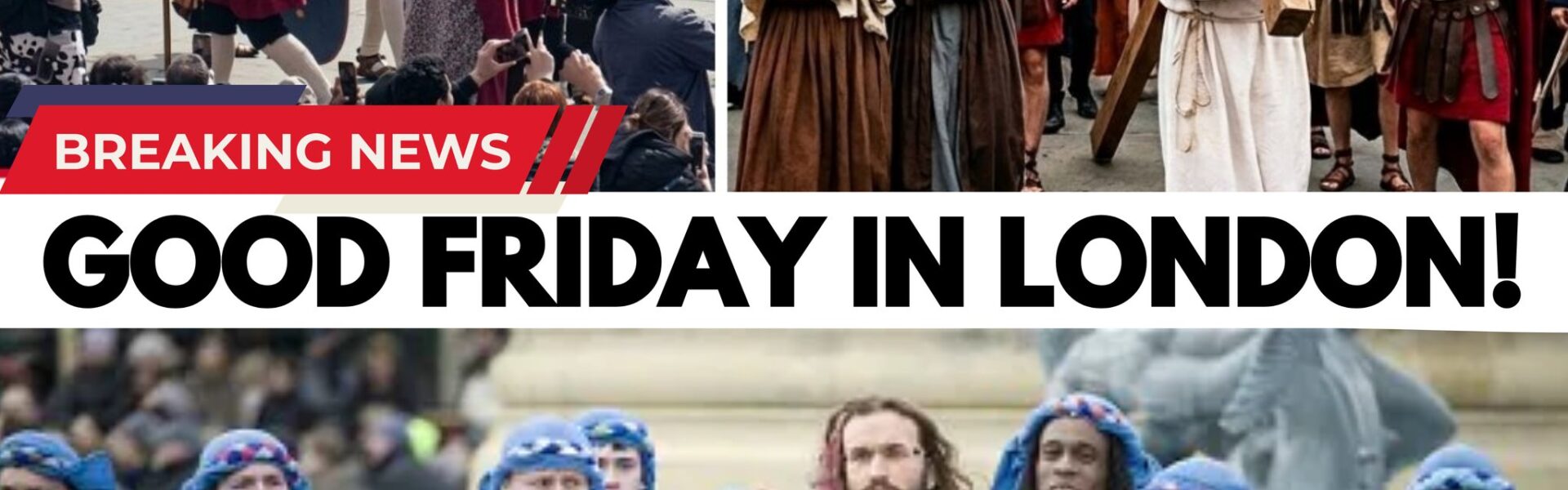
LONDON — Under a relentless grey drizzle in Trafalgar Square, the stone lions looked on as a sea of umbrellas parted for a man on a donkey. This was not a protest or a political rally, but the annual “Passion of Jesus” performance, a reenactment of the final days of a young teacher from Nazareth. In an era defined by digital fragmentation and the erosion of national identity, the sheer density of the crowd was a jarring sight. For many in the United Kingdom, a country often described as “post-Christian,” the scene was a vivid reminder that the story of the crucifixion—what theologians call the crux, or the heart of the matter—retains a gravitational pull that modern secularism has struggled to replicate.
The narrative, as told by those who still follow it, remains as subversive today as it was in the first century. It is the story of a man named Jesus who eschewed the “warhorse of a conquering hero” for a “simple and gentle creature of peace,” entering a Jerusalem teeming with Passover pilgrims and Roman steel. To his disciples, like the young fisherman John, he was the Alpha and the Omega; to the high priest Caiaphas and the Roman authorities, he was a populist firebrand whose popularity threatened a fragile geopolitical peace. It is a story of ultimate rejection—of a creator sent to his own, only to be crucified by them—and yet, it is precisely this “weirdness” that is drawing people back.

In Catholic and Anglican cathedrals from Westminster to the small market towns of Lincolnshire, the liturgy of Good Friday remains anchored in an ancient ceremony: the Unveiling of the Cross. As the wood is revealed, the faithful chant, “Behold the wood of the cross, on which hung the salvation of the world.” For Father Dominic, a priest in the diocese of Nottingham, this is not mere theater. He reports the highest number of adult converts to the Catholic faith in 40 years. “The cross stays still while the world turns,” he noted, quoting an old Carthusian motto. In an age where identity is fluid and traditions are discarded, the unchanging nature of the Gospel has become its greatest asset.
The demographic shift is particularly striking among young adults. In France, record numbers of baptisms are expected this Easter Sunday, a trend mirrored across much of Western Europe. These are not people looking for a “watered-down” or “socially nice” version of religion. According to religious scholars, the churches that are growing are those that lean into the “hardcore” elements of the faith—sin, redemption, and the literal resurrection. They are heeding the call of historians like Tom Holland to “keep Christianity weird,” rejecting the decades-long attempt to make the faith “acceptable and easy” in favor of a call to spiritual greatness.
This resurgence is unfolding against a backdrop of profound global uncertainty. From the trade wars of North America to the energy shocks in the Middle East, the “modern” world feels increasingly precarious. For a generation raised without a clear tradition or a solid sense of belonging, the 2,000-year-old Christian narrative offers a “narrow gate” out of the chaos. It provides a root system in an age of uprootedness. The attraction isn’t just the promise of an afterlife, but the offer of a coherent identity built on something that predates—and promises to outlast—the current political and economic order.

The paradox of the cross is that it represents the “ultimate rejection” of God’s love by humanity, yet ends with a message of absolute forgiveness: “Father, forgive them, for they know not what they do.” This theme of redemption resonates deeply in a “cancel culture” where forgiveness is often a scarce commodity. The Christian claim that human hate and rebellion can be overcome by divine love offers a psychological and social relief that many find nowhere else. It is a radical alternative to the tribalism and ideological rigidity that dominate the digital town square.
The Passover setting of the original story further deepens its significance. For the Jewish families in Jerusalem two millennia ago, the feast was a celebration of escape from Egyptian bondage. Jesus’ entry into this high-stakes religious and political environment was a calculated move, one that forced a choice between the authority of the Temple and the revolutionary “Kingdom of God.” Today, that same choice is being presented to a new audience: a choice between the fleeting “broad road” of modern consumption and the “narrow road” of a life lived for something beyond the self.
Critics argue that this religious “mini-boom” is merely a reactionary search for comfort in a confusing world. They point to the declining numbers of traditional “cradle” Christians as evidence that the institution is still in terminal decline. However, the energy in places like Market Rasen or Trafalgar Square suggests a different story—one of a “remnant” that is becoming more devout, more informed, and more counter-cultural. These are not “passive” believers; they are people who have consciously chosen to step out of the secular mainstream and into an ancient, demanding tradition.
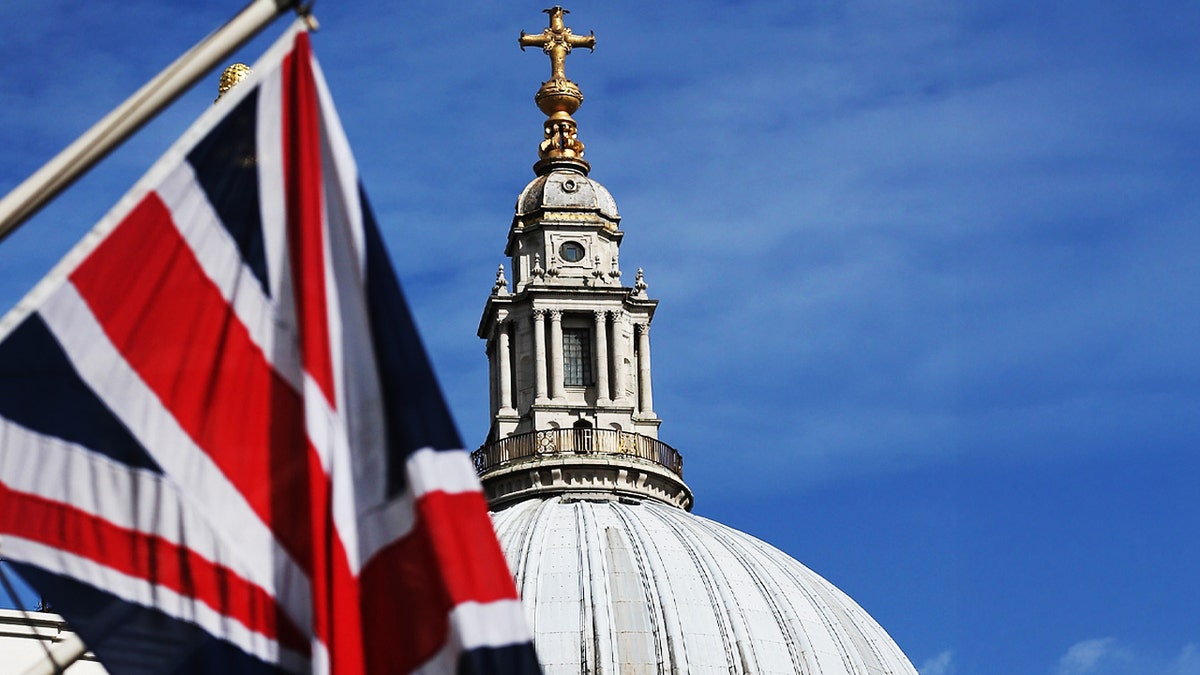
The linguistic legacy of the faith also speaks to its enduring power. The word “crux,” used daily to describe the most important part of any problem, is a direct linguistic descendant of the Latin word for cross. Our very language is haunted by the crucifixion, an “invisible math” of culture that continues to shape our understanding of sacrifice and importance. As Father Dominic observed, when we seek the “heart of the matter,” we are—knowingly or not—making a reference to the wood of the cross. It is a sign that the Christian story remains the subterranean foundation upon which the Western house was built.
As Easter Sunday approaches, the focus moves from the wood of the cross to the empty tomb. The claim of the resurrection—that life has conquered death—is the “weirdest” claim of all, and yet it is the one that provides the ultimate sense of continuity and hope. For the thousands standing in the London rain, the story of Jesus is not a “distant memory” of a lost era, but a living reality that offers a way forward. They are betting their lives on the idea that the “Alpha and Omega” is still at work in the world, healing the “broken-hearted and the dispossessed.”
Ultimately, the 2026 Easter season reflects a world that is rediscovering the value of “something unchanging.” Whether it is through the spectacle of a Passion play or the quiet solemnity of a baptismal rite, the message remains the same: God doesn’t call us for an easy life, but for greatness. In the “arithmetic of who eats tomorrow,” the Christian faith offers a bread that isn’t dictated by trade routes or tariffs. It is a reminder that while the world turns, and the “Great Faucets” of power are opened and closed by prime ministers and presidents, the cross stays still.
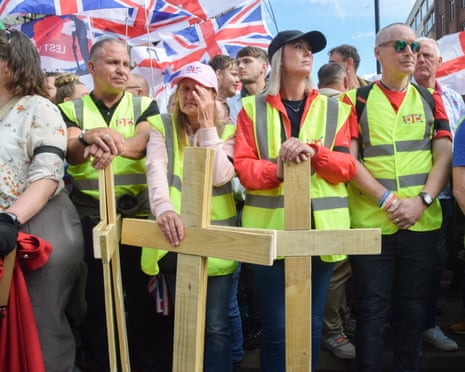
The “Passion of Christ” in Trafalgar Square ended as the rain began to clear, but the atmosphere of enthusiasm remained. The full video, destined for YouTube, will undoubtedly spark the usual debates and “Speaker’s Corner” arguments. But for the eight adults being baptized in a small town in Lincolnshire, the debate is over. They have found their roots. They have entered through the small gate. And in doing so, they have reminded a skeptical world that sometimes, the most revolutionary thing you can do is believe in a story that began over a thousand years ago.