“You Call Us Cowards?” — The Australian Militia That Showed US Generals How To Win. nu

“You Call Us Cowards?” — The Australian Militia That Showed US Generals How To Win
A group of Australian soldiers received an order in December of 1942 that should have made every general in the Allied chain of command choke on his breakfast. These men had just spent 3 months crawling through the worst jungle on the planet, starving, riddled with malaria, carrying mates on their backs through mud that sucked the boots right off their feet.
They had been called cowards by the most powerful military commander in the Pacific. They had been written off as amateurs, as failures, as men who lacked the stomach for real war. And now those exact same soldiers were being told to turn around, march back into the nightmare, and rescue the finest, best equipped division of the United States Army.
Because that division had walked into the swamps of Buuna, and fallen apart in less than a fortnight. How does a story like this happen? How does a supreme commander call his allies cowards and then beg those cowards to save his own men from annihilation? The answer involves ego, ignorance, and one of the most cynical cover-ups in the history of modern warfare.
And it starts with a general who fought the entire war from behind a desk. Douglas MacArthur arrived in Australia in March of 1942, trailing a cloud of carefully manufactured legend behind him. He had escaped the Philippines by torpedo boat while tens of thousands of American and Filipino soldiers remained trapped on Batan.
And he had turned that escape into a public relations triumph with four words. I shall return. The American press loved it. Washington loved it. Australia, desperate for any sign that a powerful ally was paying attention, embraced MacArthur as a savior. Behind the polished image, the reality was considerably less inspiring. MacArthur set up his headquarters in Melbourne, surrounded himself with a tight circle of loyal American staff officers, and proceeded to run the war in the Southwest Pacific the way a corporate executive runs a company from the top
floor. He studied maps. He read cables. He issued orders to men whose daily reality he could not begin to comprehend. and he judged their performance by the only metric that mattered to a man of his particular psychology, whether the arrows on his situation map pointed in the right direction.
The arrows pointed in a very bad direction in the middle of 1942. And the reason was Japan. The Japanese military had achieved something in the first 6 months of the Pacific War that no modern army had accomplished since the campaigns of Napoleon. They had conquered an area stretching from the borders of India to the central Pacific, smashing every force that stood in their way with a combination of speed, ferocity, and tactical brilliance that left the Western powers reeling.
Malaya fell in 70 days. The great fortress of Singapore, jewel of the British Empire, surrendered with over 80,000 troops, the single worst military humiliation in British history. The Dutch East Indies, Burma, Wake Island, Guam, Hong Kong, all of them swept away in a tide of conquest that seemed impossible to stop.
By mid 1942, Japanese forces had landed on the northern coast of New Guinea, the massive island sitting directly above Australia like a loaded gun. And they had one objective. Cross the jungle mountains. Take Port Moresby. Open the door to Australia itself. The force Japan sent to accomplish this was not improvised.
Major General Tomitaro Huri commanded roughly 10,000 veterans of the South Seas detachment. Soldiers who had fought in China and Malaya, men trained in jungle warfare and possessed of a doctrine that treated surrender as worse than anything the enemy could inflict. These troops landed near the villages of Buna and Gona on the northern coast and immediately began pushing south along the only route through the Owen Stanley range.
A track that connected the coast to Port Moresby. That route was the Cakakota track and calling it a track is generous to the point of absurdity. The Owen Stanley Range is a wall of jungle covered mountains that splits Papa New Guinea like a broken spine. The COD track climbs through this wall over a distance of roughly 96 km, ascending to more than 2,100 m through terrain that seems designed by nature specifically to destroy human beings.
Cloud forest so dense that a man standing 3 m away becomes invisible. Mud that reaches the waist in the valleys and turns every slope into a greased slide. Humidity that never drops below 90% breeding clouds of malaria carrying mosquitoes that make the air itself a weapon. Tropical ulcers that can eat through flesh to the bone within days.
Dissantry that reduces a soldier to a shaking wreck unable to stand. Leeches that drop from every leaf and burrow into every fold of skin. Military planners had looked at the Owen Stanley range and concluded that no army could cross it in force. The Japanese were about to prove those planners wrong, and the only thing standing in their path was a collection of boys who had never seen a shot fired in anger.
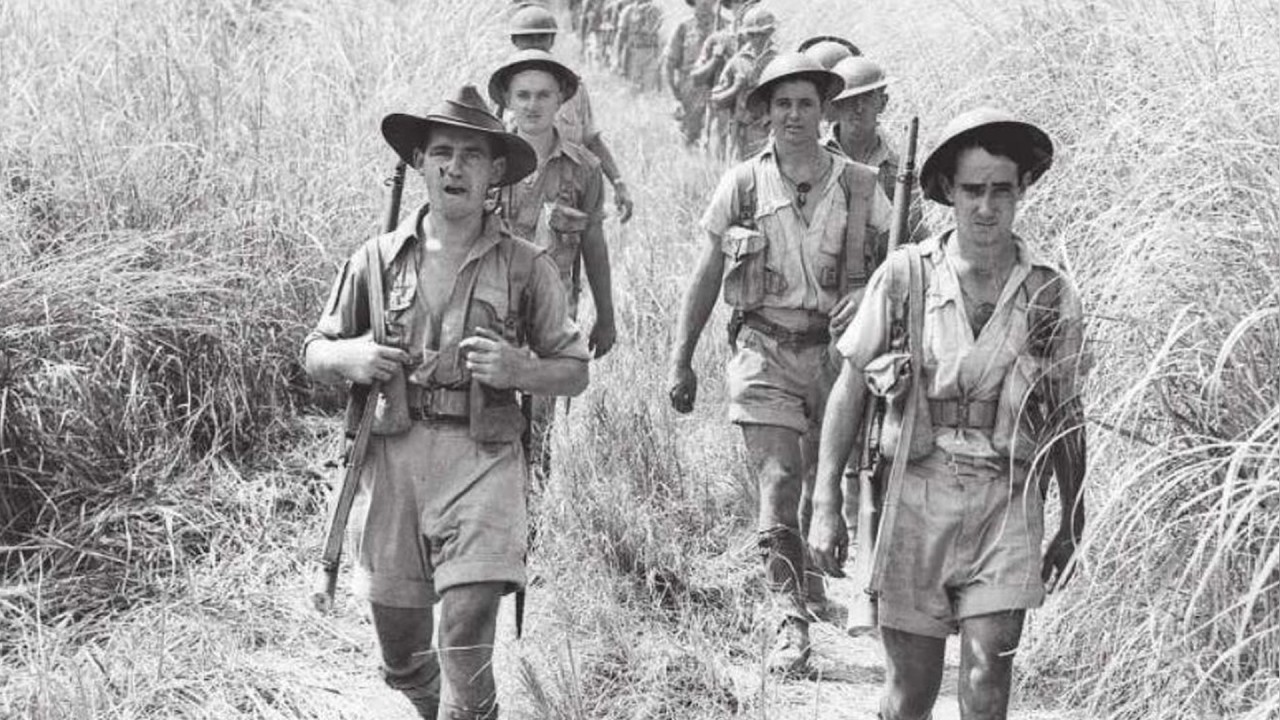
The 39th Australian Infantry Battalion occupied the area around Cakakota Village in July of 1942 with the energy of men who suspected they had been sent somewhere they were not supposed to survive. The 39th was a militia unit. And in the military culture of wartime Australia, militia meant something close to a punchline. These were not volunteers for the Australian Imperial Force, the professional soldiers who had earned their reputation fighting RML in the Western Desert.
Militia were conscripts called up under the Defense Act, legally restricted to service within Australian Territory. They were 18 and 19year-old clerks, farm hands, factory workers, and students handed obsolete equipment and given a few weeks of training that bore no resemblance to the conditions they were about to face.
The veterans of the AIF had a name for them that dripped with contempt. Chocolate soldiers. The meaning was simple. Put them in the heat and they would melt. MacArthur reading his reports in Melbourne saw no reason to disagree. When Haras veterans hit the 39th Battalion at Cakakota in late July, the weight of numbers alone should have ended the contest in hours.
The Japanese attacked with mortars, heavy machine guns, and screaming bayonet charges that erupted from the jungle in the small hours of the morning. The Australians had Lee Enfield bolt-action rifles that jammed in the humidity. A handful of Bren guns and ammunition supplies that were already running short. They were outnumbered roughly 5 to1 by soldiers who had been fighting wars for years.
Every conventional military analysis says the 39th Battalion should have broken. Every staff officer reading the situation reports from a distance would have predicted a route. MacArthur certainly predicted it. And when the Australians began falling back down the track, he believed his prediction had been confirmed.
Except the 39th Battalion was not routing. It was executing a fighting withdrawal. And anyone who has studied military tactics knows that a fighting withdrawal against a superior force through difficult terrain is one of the hardest operations any infantry unit can attempt. The concept is deceptively simple. You retreat, but you make the enemy pay for every step of ground you concede.
You set ambushes on ridgeel lines. You booby trap the trail. You wait until the lead elements of the pursuing force walk into a kill zone. You hit them hard and then you melt back into the jungle before they can bring their superior numbers to bear. It requires discipline, coordination, and a level of cool-headedness that most experienced professional soldiers struggle to maintain under fire.
The chocolate soldiers, the boys who were supposed to melt, did it for 2 months straight through the worst terrain on the planet while slowly being consumed by disease, starvation, and exhaustion. MacArthur saw none of this. From Melbourne, he saw a line on a map moving in the wrong direction, and that was all he needed to render his verdict.
His cables to Washington during the Kakakota campaign are documents that should haunt his reputation for eternity. He told the War Department that Australian soldiers lacked fighting spirit. He implied they were refusing to engage the enemy. He described their performance in terms that amounted to an accusation of mass cowardice.
Carefully deflecting any suggestion that the disaster might have something to do with his own failure to provide adequate reinforcements, supplies, or air support. The Supreme Commander of Allied forces in the Southwest Pacific was throwing teenage conscripts under the bus to protect his own image. And he was doing it from an office with electric fans and hot meals while those teenagers were sharing a single tin of bully beef between eight men and picking leeches out of their wounds with shaking fingers.
The Japanese advance reached Yorria Ridge in midepptember of 1942, barely 48 km from Port Moresby. And this is the point where MacArthur’s entire narrative collapsed, although he would spend the rest of the war making sure nobody noticed. General Horry’s force was finished. The same fighting withdrawal that MacArthur had dismissed as cowardice had bled the Japanese advance white.
Horry’s supply line stretched over a 100 km of mountain track and it had effectively ceased to function. His soldiers were starving, eating grass, roots, and according to some accounts, far worse. Malaria and dissentry had reduced entire companies to a fraction of their fighting strength. Ammunition was critically low. The force that had seemed unstoppable in July was a hollow shell by September.
And the chocolate soldiers had done that to them. Farmboys and office clarks with rusty rifles had achieved what every great army of the Western Alliance had failed to do since December of 1941. When the seventh Australian division, combat veterans from the Middle East campaigns arrived to reinforce the militia on the Cakakota track.
The combined Australian force launched a counteroffensive that rewrote the strategic map of the Pacific. The Japanese retreated, stumbling back over the mountains they had crossed with such confidence just weeks before, pursued by Australians who gave them no rest and no mercy. Cakakota Village was retaken on the 2nd of November, 1942, and the news hit Australia like an electric shock.
For the first time in the entire Pacific War, a Japanese army had been stopped and driven backward on land. The myth of Japanese invincibility on the ground the legend that had terrified every Allied commander from Burma to the Philippines cracked open on a muddy track in Papua New Guinea at the hands of soldiers that a supreme commander had called cowards from 1,500 km away.
And now the war moved to the coast where the real humiliation was about to begin. The retreating Japanese consolidated around the villages of Buna, Gona, and Saninanda on the northern coast of Papua New Guinea, and they turned those villages into a fortress that would have impressed military engineers from any era.
Japanese construction troops built an interlocking network of bunkers using coconut palm logs, earth, and salvage steel, positioning them with the cunning of men who knew they were going to perish, and intended to take as many of the enemy with them as possible. The bunkers sat among the roots of enormous tropical trees hidden beneath the jungle canopy, surrounded by chestde swamps of stinking black water.
The approaches offered no cover, no concealment, and no solid ground. Fields of fire overlapped so that any attacker who survived the bullets from one position would immediately be caught by fire from another. It was a defensive position that demanded experienced jungle troops, careful planning, adequate armor, and plenty of time to crack.
MacArthur had none of those things. But he had ambition, and ambition was about to feed American soldiers into a swamp and watch them drown. The unit MacArthur chose to take Buuna was the 32nd Infantry Division of the United States Army, a National Guard formation from Wisconsin and Michigan, activated for Federal Service in 1941.
The 32nd Division had over 14,000 men, modern American weapons, and the full logistical backing of the wealthiest military on Earth. It also had absolutely zero combat experience and training that belonged to a different continent, a different climate, and a different century. These men had been taught to fight on open ground to advance in coordinated lines behind artillery barges to use terrain features that you could actually see.
Nobody had prepared them for the swamps of Buna. Nobody had taught them how to spot a Japanese bunker hidden in the roots of a banyan tree until the machine gun inside it started chewing through their ranks. They arrived on the northern coast of Papua New Guinea in mid- November of 1942 with the confidence of men who believed their equipment and their nationality made them superior to any enemy and any landscape.
The jungle was about to deliver a correction so savage that the United States Army would spend decades trying to forget it. The 32nd Division attacked the Buuna perimeter and was immediately shredded. American infantry advanced across open swamp into machine gun fire from positions they could not see, could not locate, and could not suppress.
Coconut log bunkers absorbed rifle fire, mortar rounds, and even smallc caliber artillery shells without any visible effect. American soldiers watched their rounds slam into Japanese positions and achieve nothing. While the return fire cut men down in rows, platoon that stepped off with full strength returned as fragments. Companies reported casualty rates that belonged in the vocabulary of the First World War.
The kind of numbers that meant a unit was being fed into a grinder with no tactical result. Within days, the advance stalled completely, and what followed was worse than the casualties. American units at Buuna experienced a comprehensive disintegration of combat effectiveness that the official histories describe in careful clinical language designed to hide the full horror of what actually happened.
Soldiers who had never been under fire discovered that the gap between training and reality was an abyss. Japanese snipers targeted officers and non-commissioned officers with deliberate precision, removing the men who held units together. And when the leadership evaporated, cohesion evaporated with it. Men crouched in swamp water and refused to move forward.
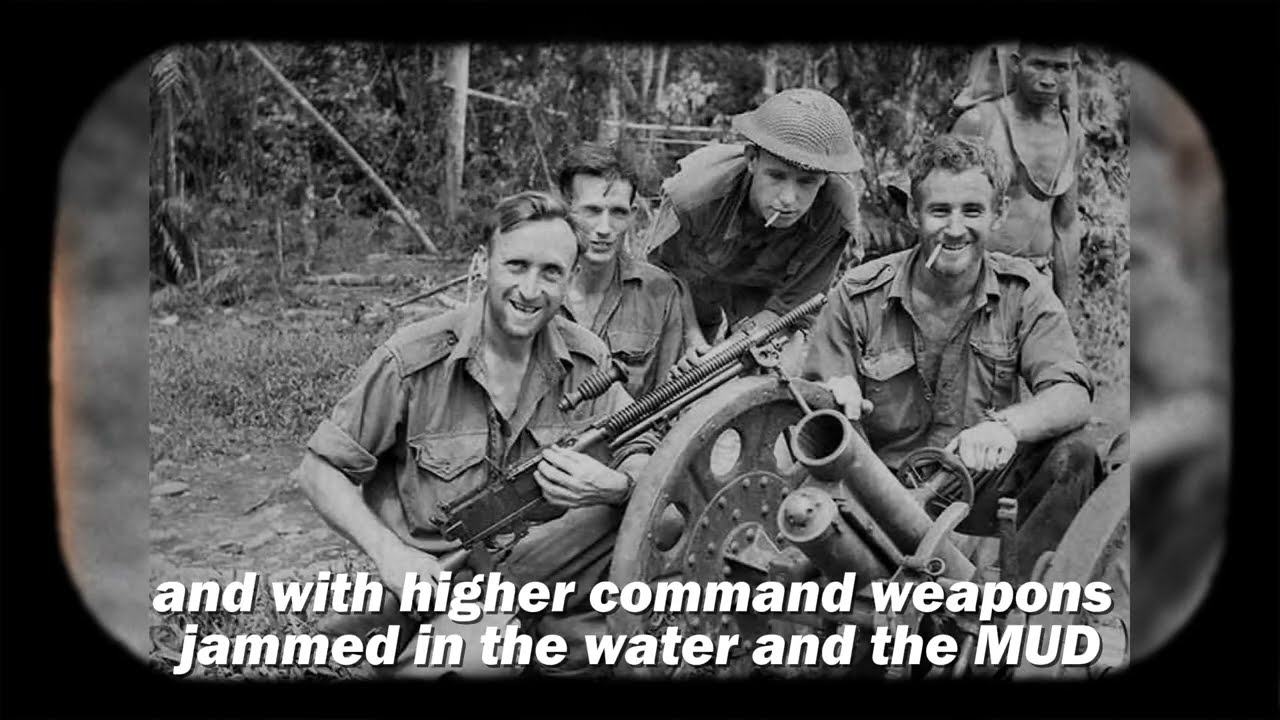
Whole platoon froze, pinned by fire they could not answer, unwilling to advance into what they correctly perceived as a guaranteed trip to the casualty clearing station. Officers lost communication with their men with adjacent units and with higher command. Weapons jammed in the water and the mud.
The tropical diseases that had already ravaged the Australians on the Cakakota track began tearing through American ranks with the same merciless efficiency. The 32nd Division was not just failing to advance. It was ceasing to function as a military formation, and the reports reaching MacArthur in his distant headquarters described a situation that was spiraling toward complete organizational collapse.
MacArthur’s response to the crisis at Buuna revealed every flaw in his character compressed into a single order. He summoned Lieutenant General Robert Eichelberger, commander of the First Corps, and told him to take Buuna or not come back alive. That sentence deserves a moment of reflection. A supreme commander who had never visited the front line, who had never walked through the swamps his troops were drowning in, who had never heard the sound of a Japanese machine gun chewing through an American squad at close range, ordered a subordinate
general to either achieve an objective that the entire 32nd division had failed to achieve or forfeit his life. Eichelberger flew forward, fired several senior officers, personally toured the front lines at considerable risk to his own life, and attempted to rebuild the shattered morale of the division through a combination of reorganization, improved supply, and personal example.
He was a competent and courageous officer, doing his best with a catastrophe he had inherited, and his efforts produced incremental improvements. American troops began moving forward again in some sectors, but the Japanese bunkers still held. The swamps still swallowed men, and the fundamental problem remained unsolved.
The 32nd division did not know how to crack fortified jungle positions, and no amount of command reshuffleling could teach them that skill in the middle of a battle. The decision that followed should be studied in every military academy on Earth as the definitive case study in how arrogance creates its own punishment.
Allied command, which in practical terms meant MacArthur’s headquarters, was forced to acknowledge that the American division could not take Buna alone. Reinforcements were needed and the only reinforcements available were Australian. The same Australians who had just crawled over the Cakakota track. The same militia and AIF troops that MacArthur had dismissed as lacking fighting spirit.
The same men he had branded cowards in official cables to Washington. The Supreme Commander of Allied forces in the Southwest Pacific had to swallow his own words and ask the soldiers he had slandered to come back and save his personal reputation. The Australian troops who moved into the Bunagona sector in late November and December of 1942 were a site that would have made a recruiting poster designer weep with despair. They were walking skeletons.
Months of jungle warfare, starvation rations, and tropical disease had stripped them down to bone, senue, and something indefinable that kept them moving when their bodies had every reason to stop. Their uniforms were shreds of rotting fabric held together by habit. Many had no boots. Almost every man was carrying malaria, dissentry, or both.
By every measurable standard of military readiness, they were unfit for combat. And yet, they possessed something that the fresh, well-fed, fully equipped American division had lacked from the first moment it entered the swamp. They knew what they were doing. Three months on the Cakakota track had turned these former clerks and farmers into some of the most effective jungle fighters on the planet.
Men who understood how the jungle worked, how the Japanese fought, and how you stayed alive long enough to do your job and go home. Australian assault tactics at Bunagona represented the complete opposite of the approach that had destroyed the 32nd Division. where the Americans had attacked in company strength across open ground, the Australians worked in small teams of eight to 10 men, where the Americans had tried to advance quickly and been cut to pieces, the Australians crawled.
They moved at night, sometimes covering as little as 50 m in an hour, inching through feted swamp water that reached their chests, navigating by sound and smell toward Japanese positions they had spent days observing and mapping. When they reached striking distance of a bunker, the assault was sudden, violent, and intimate.
Grenades went in first, aimed at the firing slits to suppress the defenders. Then, a man with a flamethrower would crawl the final meters and send a stream of burning fuel directly into the bunker opening. When flamethrowers malfunctioned in the water and humidity, which happened constantly, the assault teams improvised with whatever they had.
Grenades shoved through gaps in the logs, explosive charges dropped through ventilation holes, men climbing on top of bunkers to pour fire into them from above. It was warfare at a range where you could hear the enemy coughing, and it required a form of cold, practical courage that bears no resemblance to the version of bravery that appears in recruitment advertisements.
Goner fell to Australian forces on the 9th of December 1942, and the cost tells the story better than any adjective. Some Australian battalions that went into the assault at Gona came out with fewer than half the men they had started with. The Japanese garrison had obeyed its orders to hold to the last, and the fighting was hand-to- hand in places.
A close quarters nightmare of grenades, bayonets, and flame in the ruins of a village that no longer existed. Buuna village followed on the 14th of December. Buuna mission, the last major Japanese strong point, fell on the 2nd of January 1943 after a combined assault that only succeeded because Australian troops had opened the breaches that the American units had been unable to create on their own.
The entire Bunaona campaign produced roughly 3,500 Allied troops who never went home and more than 12,000 total casualties from combat and disease combined. The Japanese garrison was essentially annihilated. Of approximately 6,500 defenders, fewer than 300 survived as prisoners, and most of those were too broken to offer resistance.
MacArthur handled the aftermath exactly the way a man of his particular character would handle it. His official communicates presented the Buna Gona victory as a triumph of Americanled strategic genius, burying the catastrophic performance of the 32nd division beneath layers of carefully worded praise for Allied cooperation while ensuring that the critical role of Australian forces received minimal attention.
He never acknowledged publicly or privately that his assessment of Australian fighting spirit had been spectacularly wrong. He never apologized for the cables to Washington that branded militia soldiers as cowards. He never admitted that his own failure to prepare and support the 32nd Division properly had caused the American disaster at Buuna.
The war moved on and MacArthur moved with it, systematically sidelining Australian forces in favor of American units for the remainder of the Pacific campaign, ensuring that the glory and the headlines went where his ego demanded they go. Eichelberger, the general MacArthur had threatened with execution, saw the war from a very different angle.
He had walked through the swamps. He had smelled the rot and heard the gunfire. He had watched Australian soldiers crawl through black water to reach Japanese bunkers that his own troops could not approach. And in a private letter after the battle, he put into words what MacArthur would never admit. He described the Australians as the finest jungle fighters he had ever encountered.
Soldiers who combined physical toughness, tactical ingenuity, and a quiet ferocity that he had not seen in any other Allied force. This was an American general, a man whose career depended on promoting the reputation of the American military, offering unqualified praise to the very soldiers his supreme commander had written off as cowards.
The contrast between Eichelberger’s honest assessment and MacArthur’s political mythology tells you everything you need to know about who was actually fighting the war and who was merely taking credit for it. The Cakakota track and bunagona together form one of the most important and least acknowledged turning points of the second world war.
Before these campaigns, the Japanese army was considered unbeatable on land, a force that had smashed every opponent from Manuria to Singapore. After these campaigns, the myth was broken. and it was broken by Australian soldiers. Militia conscripts who had been thrown into combat with inadequate training, obsolete equipment, and a commander who despised them from a safe distance had accomplished what the professional armies of the British Empire, the American military, and every other allied force in the Pacific had failed
to achieve. They proved that the Japanese could be beaten in the jungle on the ground in close combat by men who adapted faster and endured longer than any military planner thought possible. And when the Supreme Commander’s own handpicked American division collapsed under the pressure of exactly the kind of fighting the Australians had already mastered, those same supposedly inferior troops walked back in and finished the job.
The 39th Battalion, the chocolate soldiers, went home eventually, the ones who survived. They did not receive the recognition they deserved from the Allied High Command because MacArthur’s version of history was the one that reached the newspapers and the history books. They received something smaller and more valuable. They received the knowledge shared quietly among themselves that every word MacArthur had written about them was wrong.
A general in an airond conditioned office had called them cowards. They had walked into the jungle and held together when everything around them was falling apart. They had stopped an army that had conquered half of Asia. And when the general’s own soldiers could not finish the fight, those same teenage farm boys and office clarks went back into the swamp, crawled through the muck, and cracked open a fortress that the mightiest military on earth could not touch.
MacArthur got his victory, his headlines, and eventually his triumphant return to the Philippines. The men of the 39th Battalion got a handshake, a discharge paper, and a lifetime of memories that no official communique could ever capture or erase. The general collected medals, the diggers collected their mates and went home.
History can decide who mattered