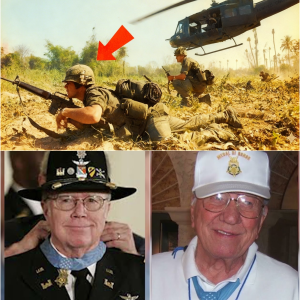

The Most FEARLESS Pilot of Vietnam – Ed Freeman
To understand who just keyed that mic, you need to understand what kind of man volunteers to fly into a landing zone that every other pilot has been ordered to avoid. Ed W. Freeman was born on November 20th, 1927 in Neie, Mississippi, a speck in Green County, deep in the depression era south. Sixth of nine children on a farm that barely fed them.
His legal name was Ed, not Edward, just Ed. The army would later get that wrong on half his paperwork. They got a lot of things wrong about Ed Freeman. At 13 years old, Freeman watched thousands of troops roll past his family’s farm during the Great Louisiana Maneuvers, the massive military exercise that prepared America for war.
Tanks, trucks, men in uniform as far as a boy could see. That sight lit something in him that never went out. His mother forbade military service. One of Ed’s older brothers had already been wounded at Luzon in the Philippines. She had given enough sons to the army. Freeman defied her. At 17, before he finished high school, he enlisted in the United States Navy and shipped out aboard the USS Kakapon, a fleet oiler in the Pacific.
After the war, he came home, finished school, and joined the Army, the Corps of Engineers, 1948. Border Patrols in Germany on Harley-Davidson motorcycles, then Korea. Company B, 11th Combat Engineers. They were supposed to build bridges. Instead, they fought as infantry. In 1953, at the Battle of Pork Chop Hill, Freeman’s company walked into a slaughter.
Out of 257 men in the opening assault, 14 survived. Freeman was one of them. General James Van Fleet pinned Second Lieutenant Bars on him right there, a battlefield commission. The rarest honor an enlisted man can receive. The next morning, Freeman led his men back up that same hill. This time, they took it. After Korea, Freeman wanted to fly.
He had seen a medevac pilot in a black leather jacket, clean shaven, well-fed, lifting wounded men out of the mud while Freeman was still covered in it. “I’ve got to be one of them,” he said later. He applied for flight school. The army rejected him. At over 6 feet tall, Freeman exceeded the maximum height limit for pilots, 6’2.
He was too tall to fly. The nickname stuck, too tall, for the rest of his life. In 1955, the army raised the height limit. Pilot shortage. Freeman applied again. He barely passed the physical, but he passed. The man they said couldn’t fly would eventually log 22,000 hours in the air, 17,000 in helicopters alone, and earn a master army aviator badge that most pilots never touch.
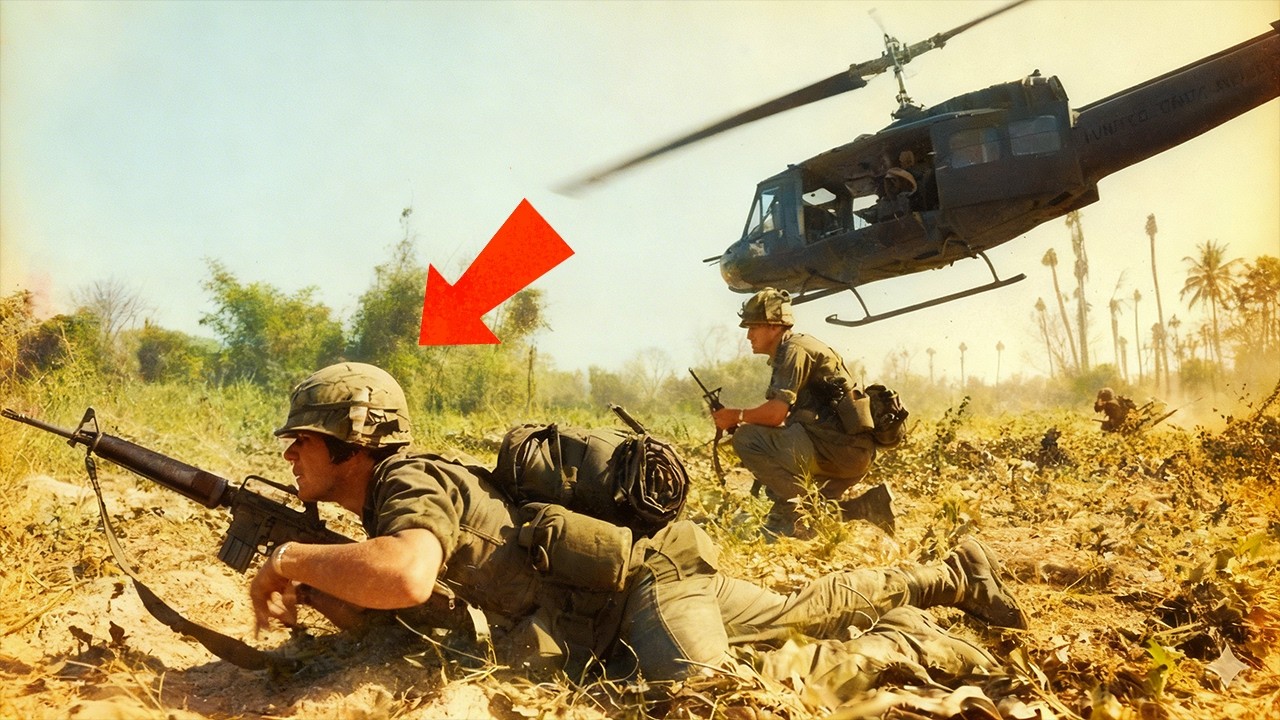
By 1965, Captain Ed Freeman was the executive officer of Company A 229th Assault Helicopter Battalion, First Cavalry Division Airmobile, stationed at Camp Radcliffe and K Vietnam. His commander was Major Brucele. call sign ancient serpent 6 shortened to snake. Freeman andrandle had been close for 10 years. They had met in a mapping unit, flown together around the world, built the kind of trust that only comes from sharing a cockpit over hostile terrain.
When Freeman processed through Fort Benning for his Vietnam assignment,Randle personally pulled him from the line. You’re my exo, he said. That was that. Freeman was the oldest man in his company, 36 years old at Ayad Drang. He was also the only one who had been in combat before Vietnam, Korea, Pork Chop Hill, 14 out of 257.
He knew what the men on the ground were feeling when the bullets started flying. He knew it in his bones. I put him in there, Freeman would say later. And it’s a soldier’s trust. On the morning of November 14th, 1965, Freeman lifted off as Crannle’s wingman, 16 UH1D Hueies, unarmed transport helicopters, what the crews called slicks, heading toward a clearing at the foot of the Chupong Massie.
Their mission, insert the first battalion, Seventh Cavalry Regiment, into the Ayadrang Valley. The seventh cavalry. Kuster’s old unit. Same designation, same regimental colors, different century, different war. Freeman remembered it clearly. We made four landings and not a shot was fired. I thought, “Cakewalk! Beautiful. No one’s killing me today.” He paused.
And the fifth time we landed, they had arrived. Landing zone X-ray sat at the eastern base of the Chupong, a flat clearing roughly 100 meters long, shaped like a misshapen football field. [snorts] Room for eight helicopters at a time. Around it, low trees, dense jungle, a dry creek bed to the west. In the center, a large termite mound that would become Lieutenant Colonel Hal Moore’s command post.
200 m away, three North Vietnamese Army regiments were dug into the mountain. The Chupong Massiff straddled the Cambodian border, honeycombed with tunnels, storage bunkers, and the headquarters of the B3 fieldfront. The NVA’s best troops in the central highlands lived inside that mountain. The 66th Regiment, near full strength at 1500 men, had arrived just 4 days earlier.
They wanted to fight Americans. They had not been able to find any. At 10:48 on the morning of November 14th, the first troops of the first battalion, 7th cavalry touched down at X-ray. Lieutenant Colonel Harold G. Hal Moore’s command group with Bravo Company. Moore looked around, listened. It was ominously quiet, he recalled.
At approximately, 1100 hours, a PAVN deserter from the 33rd regiment stumbled into American lines. Interrogators asked him what was on the mountain. Three battalions, he said, North Vietnamese regulars. They wanted very much to kill Americans. They were about to get their chance. At 12:15, the first shots cracked across the creek bed.
B Company patrols northwest of the perimeter came under fire. The Battle of Eadrang had begun. Within minutes, Second Lieutenant Henry Herrick’s second platoon, Bravo Company, pursued fleeing enemy soldiers into the jungle and became separated from the main force, the Lost Platoon. In 25 minutes, five dead, including Heric, 13 wounded.
Sergeant Ernie Savage, suddenly in command, pulled the survivors into a tight perimeter and called for help that would not come for hours. By 1300, two NVA companies from the 9inth Battalion, 66th Regiment launched a full assault from the Chu Pong slopes, then another wave, then another. The fighting became close, desperate, hand-to-hand in places.
Moore pulled his companies into a tight defensive perimeter around the termite mound. Artillery at Firebase Falcon, 5 mi northeast, began pouring shells into the treeine. They would fire over 4,000 rounds before it was over. And the helicopters kept flying. Freeman was at the controls of a Bellh1D Irakcoy, the D model with its wider cabin, just entering service that year.
No rockets, no heavy weapons. The door gunner’s M60 machine gun was the only thing between Freeman’s crew and the enemy. He was flying a school bus into a shooting gallery. The first four lifts went clean. The fifth did not. At approximately 1,400 hours, the first eight helicopters of the fifth lift descended into X-ray under devastating fire.
NVA forces had closed to within 100 m of the perimeter. AK-47s, machine guns, 60 millimeter mortars, 81 millimeter mortars, RPGs. Every approach vector was covered. Crannle’s aircraft took rounds through the cabin. Three men aboard were killed. Three more wounded. His crew chief was shot through the neck. His radio operator died in the cargo bay.
Freeman’s helicopter absorbed 50some rounds. He counted them later. More keyed his radio. No more helicopters can come into landing zone X-ray. You can’t survive. The second flight of eight aircraft aborted. The LZ was closed. Freeman heard it. Every pilot heard it. They looked at each other. Jesus. Freeman recalled thinking.
I knew having been in a war. You got to have a lot of ammunition. On the ground, 400 American soldiers were surrounded by more than 2,000 NVA troops from three regiments. They were almost out of ammunition. The temperature had reached 100° and they were running out of water. Critically wounded men were bleeding out on the LZ.
The dedicated medevac helicopters, the crews specifically trained and equipped for casualty evacuation, called off their mission. Division policy required a cold LZ for 5 minutes before they could land. No enemy fire for 5 minutes. At X-ray, the fire never stopped. Not for 5 seconds. The medevac crews evacuated two casualties before they pulled out.
45 minutes later, Moore’s voice came back on the radio. He needed one volunteer. Someone to bring ammunition, water, medical supplies, someone to fly the wounded out, the men who would die if they stayed. The medevac pilots wouldn’t fly. They had their orders. Every transport pilot had been ordered not to fly. Moore had closed the LZ himself, but Moore was asking one volunteer.
In the silence that followed, Captain Ed Freeman, 36 years old, survivor of Pork Chop Hill, the man they said was too tall to fly, keyed his mic. I was the oldest man in my organization, and I was the only one who had been in combat prior to that. So, I was in command and I said, “I got it.” And I took off.
Freeman’s crew refused to let him go alone. As he walked toward his helicopter, his co-pilot climbed in, then his crew chief, then his door gunner. Freeman told them to get out. “No, sir,” they said. “We’re going with you. We’re a crew.” Freeman turned to warrant officer 1, Frank Marino, his co-pilot. A young man, a man who had never seen combat before Vietnam.
“This may be the longest day of your life,” Freeman said. “Yes, sir,” Marino replied. “I know that.” Freeman looked at him. Frank, it may be the last day of your life. Yes, sir. I know that. Freeman nodded. Then buckle in. We’re out of here. The Huey lifted off alone. The only volunteer and banked toward landing zone X-ray. Behind him,Randle’s helicopter rose to join.
The two aircraft element that had flown together for a decade was flying together again into a landing zone that every other pilot had been ordered to avoid.Randle Crannle made a tactical decision that would save lives in minutes. He relocated their base of operations from PlayMe to Artillery Firebase Falcon, approximately 5 mi northeast of X-ray.
Shorter flight, faster turnaround. Each round trip now took roughly 13 minutes each direction, 26 minutes total. On approach, Freeman could see enemy soldiers in the tree line. Sometimes they were close enough that the rotor wash moved the vegetation around them. Tracers rose from the chupong slopes like glowing ropes curving toward the helicopter.
The airframe shuddered as rounds punched through the aluminum skin. He landed. Crew chiefs threw out crates of ammunition, plastic jugs of water, bags of medical supplies. Wounded soldiers were loaded into the cabin. Men with holes in them, men missing pieces, men who would die in the next hour if they didn’t get to a surgeon.
Freeman lifted off, flew to Falcon, unloaded the wounded, loaded more supplies, flew back again. Again, again. He flew 14 separate volunteer missions after Moore closed the LZ 14 times into a landing zone surrounded by three NVA regiments. The Medal of Honor citation would use that number 14. President Bush would later say at least 21 times.
The higher count included the troop insertion lifts before the LZ was closed. Both numbers were correct. Neither captured what it felt like. Freeman hot refueled without shutting down, hovering while ground crews pumped fuel into the tanks, rotors still turning so he could get back faster. He went through three different helicopters as each became too shot up to fly.
Enemy fire knocked out his radios repeatedly. He called ahead to Firebase Falcon to have replacement aircraft waiting. Between runs, he ate C-rations in the cockpit. There was no time to stop. All flights were into a small emergency landing zone within 100 to 200 m of the defensive perimeter. NVA soldiers were actively engaging the Americans the entire time.
The fire never stopped. Freeman was hit four times that day. Rounds through the legs, rounds through the left arm. He told no one. He kept flying. Colonel John Harren, commanding company B on the ground, watched the helicopters come in. His men were dying. The ammunition was almost gone. And then the sound of rotors coming back when no one else would come.
One of the principal reasons my company survived one of the largest and fiercest battles of the Vietnam War. Haron said later, was the critical support provided by the aviators of Company A 229th Aviation Battalion. These helicopter crews were our lifeline. He added, “Every one of the 12 who were wounded survived becauseRandle and Freeman evacuated them.
” Colonel Ramon Tony Nadal, another company commander at X-ray, put it more bluntly. Without their support, both by resupplying us with ammo and bringing reinforcements, we might well have been overrun. By nightfall, the situation had stabilized barely. Moore’s battalion held the perimeter. The lost platoon was still surrounded but alive.
The NVA had thrown wave after wave against the American lines and been thrown back at terrible cost on both sides and Freeman was still flying. At 10:30 that night, he recalled, “I made the last trip into there.” He paused, guided by a kid holding a flashlight. A flashlight in the middle of three NVA regiments. That was the beacon that brought Freeman’s helicopter home.
The colonel came out and says, “Don’t come back. I got enough to last me until daylight.” Freeman flew back to Falcon. He finally told someone he’d been hit. At daylight, he said, “I was repeating the process.” The tactical logic of what Freeman and Crannle did was simple, even if the execution was not. The medevac crews weren’t cowards.
They were following division policy, a policy written for normal conditions, where waiting for a cold LZ made sense. But there were no normal conditions at X-ray. 400 men surrounded, ammunition critical, wounded dying. The policy didn’t account for that. Freeman understood something the policymakers didn’t.
That the men on the ground had no other option. And that when there is no other option, you make one. Of the 31 helicopter loads of ammunition and supplies that reached LZ X-ray after Moore closed it, Freeman and Crannle brought in 28. Freeman personally evacuated an estimated 30 seriously wounded soldiers. The citation would note that some of them would not have survived had he not acted.
His flights, the citation continued, had a direct impact on the battle’s outcome by providing the engaged units with timely supplies of ammunition critical to their survival, without which they would almost surely have gone down with much greater loss of life. That is not editorializing. That is the official language of the Medal of Honor citation.
Freeman’s commanding officer nominated him for the Medal of Honor after the paperwork was not submitted within the 2-year statutory deadline then in place for the award. The nomination was disregarded. Freeman received the distinguished flying cross instead. He would wait 36 years for his country to get it right.
Freeman continued flying combat missions in Vietnam after a drang. He logged over 1,400 combat hours total. He was promoted to major. After his tour, he served as an instructor pilot and flight safety officer at Fort Walters, Texas, teaching the next generation how to fly helicopters into places no one should go. He retired from the Army in 1967.
23 years of combined service, Navy and Army, two wars, one battlefield commission, and more flight hours than most pilots accumulate in three careers. Freeman settled in Idaho, his wife Barbara’s home state, the Treasure Valley, mountains and rivers and open sky. He flew helicopters for the US Department of the Interior for another 20 years, fighting wildfires, hurting wild horses, conducting wildlife censuses.
He retired from government flying in 1991, 22,000 total flight hours. The man they said was too tall to fly. The campaign to restore Freeman’s Medal of Honor was led by Bruce Kandle. For decades,Randle pushed. He gathered testimony. He lobbied. He refused to let it go. My boss, Brucele, he called me. Freeman recalled. Says, Ed, I’m recommending you for the Medal of Honor.
I said, don’t waste your time, Bruce. You know, we’re talking 30some years here. He said, no, I’m going to do it. In 1995, Congress removed the two-year deadline for Medal of Honor nominations. The door reopened. Senator John McCain provided critical political support, pushing Freeman’s nomination through Congress in approximately 2 weeks.
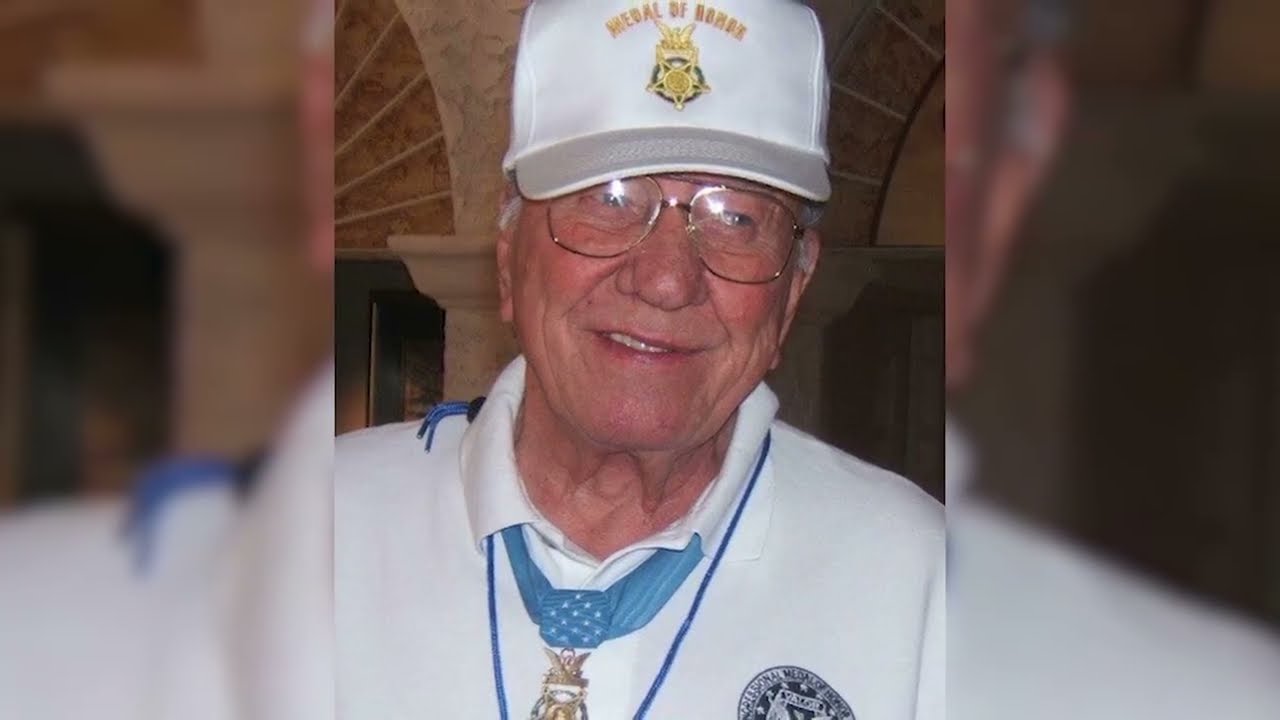
There was a complication. Both Freeman andRandle were being considered for the same Medal of Honor for the same actions on the same day at the same landing zone. WhenRandle learned this, he asked that his own name be withdrawn. He wanted Freeman to receive it first. Freeman got his Medal of Honor in 2001.Randle received his in 2007.
Their rivalry, of course, continued. Ed was the second best helicopter pilot in the army at the time,Randle said. Freeman’s response, Bruce is a good pilot, don’t get me wrong, but he is the second best pilot. For 60 years, two old army pilots who loved each other argued over who was better. They never settled it. On July 16th, 2001, Captain Ed W.
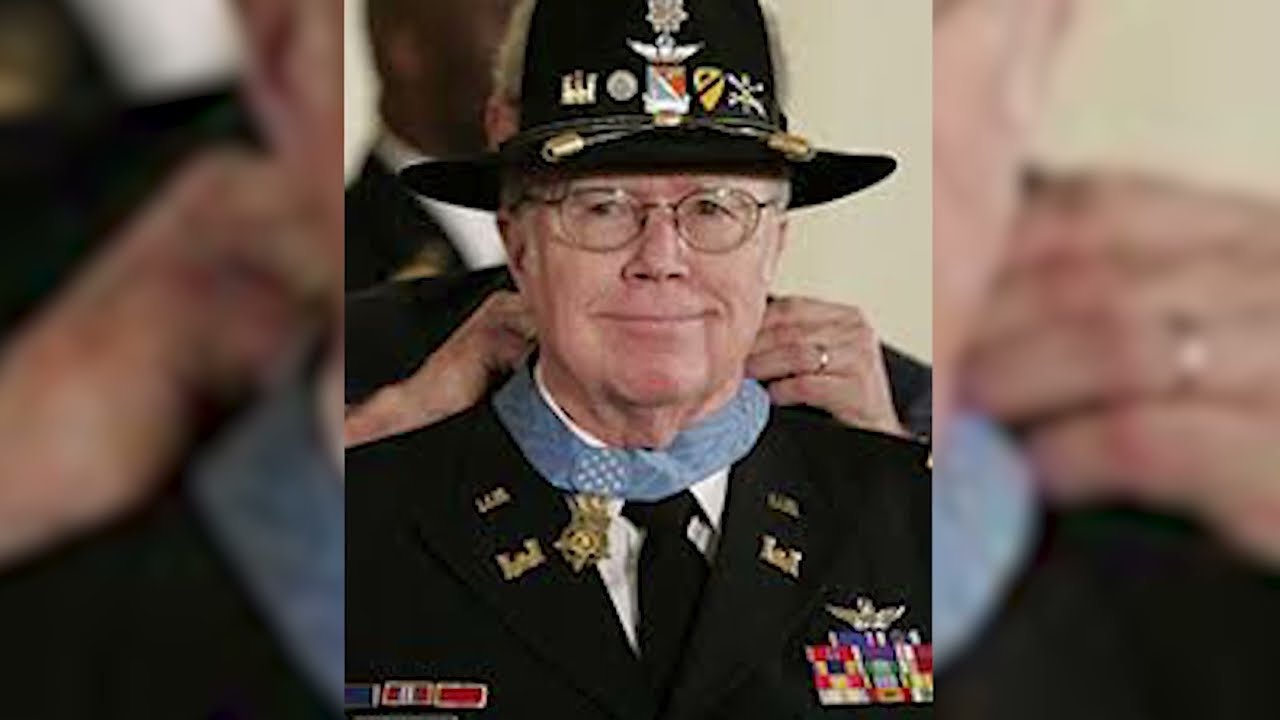
Freeman stood in the East Room of the White House. He was 73 years old. Over 50 Medal of Honor recipients were present. Bruce Crannle was there. President George W. Bush, presenting the first Medal of Honor of his presidency, placed the medal around Freeman’s neck. The man at the controls, Bush said, flew through the gunfire not once, not 10 times, but at least 21 times.
That single helicopter brought the water, ammunition, and supplies that saved many lives on the ground. And the same pilot flew more than 70 wounded soldiers to safety. Bush paused. He served his country and his comrades to the fullest, rising above and beyond anything the army or the nation could have ever asked. Then the president of the United States shook Ed Freeman’s hand and said four words. Good job.
Too tall. Freeman described the moment later. I can’t hardly describe the feeling that I had when he hung that medal and took two paces back and saluted the president of the United States. Ed Freeman died on August 20th, 2008 at the age of 80, complications from Parkinson’s disease. He is buried at the Idaho State Veteran Cemetery in Boisee, not Arlington.
He turned down a full dress hero’s funeral at the National Cemetery. He wanted to be buried close to the rivers he fished and the mountains he flew through in his second life. His wife Barbara died the following year. Married 54 years. Joe Galloway, the UPI correspondent who had been on the ground at X-Ray, who had co-written the book with Hal Moore, who had carried the Bronze Star as the only civilian so honored in Vietnam, wrote Freeman’s Farewell.
For the better part of 60 years, two old army pilots who loved each other argued over many a meal and drink as to which of them was the second best pilot in the world. Their argument over which of them is the best pilot in the whole world, sadly came to an end this week when our friend and comrade in arms, Major Ed, too tall to fly Freeman, slipped the surirly bonds of Earth and headed off to Fiddler’s Green, where the souls of departed cavalry men gather by dispensation of God himself.
Galloway added, “Now too tall.” Ed Freeman, a much larger than life-siz hero and a much better friend than we deserved, is gone, and we are left with too large a hole in our hearts and in our dwindling ranks. Someone once asked Freeman if he thought he had done something special that day at Drang. He answered with the understatement that defines the greatest soldiers.
I done my job and I done it well. Return to landing zone X-ray. November 14th, 1965. The fifth lift has just been cut to pieces. Moore’s voice on the radio. No more helicopters. The LZ is closed. 400 men are surrounded. They are almost out of ammunition. The wounded are bleeding out. The medevac crews won’t fly.
There is no solution within standard operating procedure. And then rotors coming back. when everyone else had been ordered away. The men dying on that Elza did not know the pilot’s name. They did not know he had survived Pork Chop Hill as one of 14 out of 257. They did not know he had been told he was too tall to fly.
They did not know he had been hit four times and told no one. They did not know he would wait 36 years for his medal and never complain. They only knew the sound, the sound of a Huey engine descending through the gunfire when no one else would come. Ed Freeman turned down Arlington. His gravestone reads, “What mattered most to him.
” Edw Freeman, Medal of Honor, Major USA Kovn, US Navy, WWI, November 20, 1927, August 20, 2008. Too tall, loving husband, father, grandpa. Not hero. Not 14 missions. Husband, father, grandpa. Too tall. The man they said couldn’t fly. 22,000 hours in the air. 14 missions into a landing zone that everyone else had been ordered to avoid.
Three helicopters shot out from under him. Four wounds he never mentioned. 36 years waiting for his country to remember. And when they asked him about it, Ed Freeman said what he had always said. The same thing he told Frank Marino before they lifted off together into the guns. It’s a soldier’s trust.
THE COBRA MASSACRE 1944: 2200 German Elite Soldiers ERASED in One Morning
At 0938 on July 25th, 1944, Lieutenant General Fritz Boline was at his command post south of the San Lo Perier road in Normandy, France, when the first wave of Allied fighter bombers arrived. He had been expecting them. The attack had been scheduled for the previous day, then cancelled for weather, and German signals intelligence had given him enough warning that he had told his battalion commanders the bombardment was coming.
He had told them to keep their men in their positions. He had told them the positions were solid. The defenses were prepared. The division had held the American line for 7 weeks and would hold it again. The Panzer Lair Division had been built from demonstration and training units, the best equipment, the best instructors, the men who were supposed to show the rest of the Vermacht what excellence looked like.
Bioline had commanded it since January. He knew what it could do. 600 fighter bombers came first, hitting strong points and artillery positions along a strip 300 yd wide. Then 1,800 heavy bombers, B17 Flying fortresses, and B-24 Liberators from the American 8th Air Force arrived over the target area. Then a third wave of medium bombers, 3,000 aircraft in total, carrying 3,300 tons of bombs, concentrated on a rectangle 3 mi wide and 1 mile deep that contained the positions Bane had told his men to hold.
To understand what 3,300 tons of bombs did to the Pansa Lair Division, it helps to understand what the Panza division was before July 25th. Not in July when it arrived at the San Lopeier road reduced and exhausted, but in the concept that had produced it. The division had been assembled in late 1943 and early 1944 from the Vermach’s demonstration and training units.
the formations whose purpose in the peaceime and early war army was to serve as the standard against which other units were measured. Its officers and NCOs were men who had been selected specifically because they could demonstrate technique because they could show a platoon of newly trained soldiers what correct execution looked like.
Its equipment when the division was first organized was the newest Germany had. The Panther tank, the most capable German medium tank of the war in quantities that exceeded what most German armored divisions could field. Its authorized strength was 15,000 men and 200 tanks and armored vehicles. It had been in combat since January of 1944, fighting in northern France and Belgium and Luxembourg before D-Day and in Normandy from the first week after the landings.
The Panza lair that arrived at Bolin’s command post in the first days of July was not the division that had existed on paper in January. It was what remained of it after 6 months of combat. 2,200 men, 45 tanks and armored vehicles, the fraction of the authorized strength that the fighting had not yet consumed.
Bioline had received orders from Fonluga to hold his three-mile front along the St. Lier road. He had the force available to him. He positioned it correctly in accordance with the doctrine. A division commander with his experience and the training his men had received applied to the terrain available. The positions were solid.
The defenses were prepared. He told his men to hold. 48 hours later, Boline reported to Field Marshall Fonluga that the Panza division had been finally annihilated. Its armor was wiped out. Its personnel were either casualties or missing. All headquarters records were lost. The division that had held the American front for 7 weeks, authorized at 15,000 men and 200 tanks at full strength, already reduced to 2,200 men and 45 armored vehicles before the bombing began, had ceased to exist as a coherent fighting force between 0938 and midday
on a single July morning. The German 7th Army reported seven ruptures in the front line by the following day. By July 28th, American armor had encircled the German forces on the Cottonine Peninsula. By August 1st, Patton’s third army had been unleashed through the gap. The road to Paris was open.
It was not a battle. It was an erasia. The Panzer division had been the most capable German armored formation on the Western Front. It had been designed and equipped and staffed specifically to be that. What happened to it on July 25th, 1944 was not a tactical defeat or a battlefield reversal. It was the deliberate application of 3,300 tons of high explosive to a three-mile rectangle of Norman farmland that contained the men and machines Boline had positioned there in a single morning from an altitude at which the men below had no
means of response and no means of escape. The division was not outfought. It was erased and the eraser of it opened the breach through which the entire German position in France subsequently collapsed. The decision that produced that eraser was made not in a German headquarters but in an American one by Lieutenant General Omar Bradley who in the seventh week of the Normandy campaign flew to England to personally request from the Allied Air Forces the largest tactical bombing operation in the history of the war. He
told them he wanted bomb craters every 16 ft across his chosen point of attack. He told them he wanted it to be the biggest thing in the world. He told them he was going to walk the infantry through the rubble before the smoke cleared. He also told them with the specific precision that the request required exactly how the bombers needed to approach the target in order not to kill the American soldiers they were bombing over.
The bombers did not approach the target the way Bradley had specified. The men who died because of that, 111 Americans killed, 490 wounded, including Lieutenant General Leslie McNair, the highest ranking American officer killed in action in the entire European theater, who was in a foxhole watching the operation as an observer when the errant bombs arrived, paid the cost of a decision that was correct in its conception and catastrophic in one of its executions, and that produced, regardless of that cost, the outcome it had been designed to produce. This is
the story of Operation Cobra, of the seven weeks of stalemate that made it necessary and the two hours that made it irreversible. of the Panza Leair Division, the finest German armored formation in France, and what happened to the men inside it when 3,000 aircraft arrived over their positions on the morning of July 25th.
of Fritz Biolin, who commanded those men, who had told them to hold their positions, and who reported afterward what holding those positions had cost, and of what the erasure of that division produced, the breach through which Patton drove, the pocket that formed at Filelets, the road that opened to Paris, and the chain that runs from a single July morning in Normandy to the shape of the war’s ending.
Subscribe before we go further. Drop your city in the comments right now. London, Paris, Normandy, wherever you are watching from. If your family was connected to this campaign in any uniform, this story is yours. Tell us you’re here. Then stay. To understand why Operation Cobra was necessary and why it had to be that large, you need to understand what 7 weeks in the Norman Bokeage had done to the Allied campaign and what it was doing to the men fighting it. D-Day had been June 6th.
The plan in its broad outlines had assumed a steady allied advance inland from the beaches. The capture of Kong within days, a breakout into the open country south of Normandy by early July. None of this happened on schedule. The Bokehage, the hedro country of Normandy, with its thick earn banks four to 6 ft high, topped by impenetrable root systems dividing the Norman countryside into a maze of small fields and sunken lanes, had transformed every tactical equation.
and the Allied planners had built their breakout assumptions around a Sherman tank that could operate freely in open country became a target in the bokeh where the hedgeros canalized its movement and the Germans had learned to position anti-tank guns and panzerasts at angles that exposed the tank’s thinner side and belly armor. An infantry company that could advance quickly across open ground found itself in the Bokehage fighting for individual hedgeross one at a time at casualty rates that consumed battalions in the time it took to advance a mile. The
scale of the bokeh problem was not fully understood before D-Day because the aerial photographs that Allied planners had used to study the Norman terrain did not convey the height and density of the hedge at ground level. A photograph taken from 20,000 ft shows green rectangles.
A soldier on the ground sees a wall. The wall is earthen, reinforced by centuries of root growth, effectively impermeable to small arms fire, wide enough at the base to drive a vehicle through only at the specific gap that someone had built into it years before, and that the defenders now covered with a weapon.
Every field in Normandy was its own problem. Every gap in every hedger was a potential ambush. Every sunken lane between two hedger row lines was a corridor that could be covered from above by a machine gun positioned at the bank and that could not be taken without a specific assault that cost specific men. American engineers developed a solution in the weeks after D-Day.
A device welded to the front of Sherman tanks from the steel of the German beach obstacles. a set of cutting teeth that allowed the tank to drive through the base of a hedge row rather than attempting to climb over it, which exposed the belly. The device worked. It arrived in quantity in late July and was deployed in the Cobra breakthrough.
But it arrived after 7 weeks of fighting without it. 7 weeks during which the Boaz had been costing the American armies more men per mile of advance than any of the planning documents had predicted. 7 weeks during which the stalemate that Bradley feared had been accumulating casualty by casualty in fields that the maps measured in hundreds of acres and the men measured in dead.
The German units defending Normandy had been fighting in the Boage since June 6th and had learned its geometry with the thoroughess of men whose lives depended on the knowledge. They positioned machine guns to cover the gaps in hedgerros through which infantry had to pass. They dug tank positions into the base of hedro banks where the profile was invisible until an attacker was within 50 yards.
They moved between fields at night through gaps they had prepared and the attackers had not found. The Panza lea division holding a three-mile front along the Sanlur Perier road had mastered this kind of fighting. A mobile defense that traded ground for time, that used the terrain to negate the Allied advantage in numbers and air power, that inflicted casualties at a rate the American divisions pressing against it found deeply discouraging.
By mid July, General Bradley had written privately that the Allies faced the possibility of a World War I type stalemate. More than a million Allied soldiers were ashore in France, wedged into a bridge head that had not yet broken out, burning fuel and ammunition and men at rates that the campaign’s planners had not anticipated for this phase.
The British and Canadians had been pressing toward Car for 7 weeks and had taken it at enormous cost. Patton’s third army was assembled behind the American lines, waiting for the moment it was designed for. Open country speed, the ability to drive hundreds of miles in days. And the moment was not arriving because the bokeage was there and the German divisions defending it were there and no amount of tactical pressure was moving them at the rate the operation required.
Bradley’s solution was not tactical. It was architectural. He would not fight his way through the bokeh position by position and hedro by hedger. He would remove it. 3,000 aircraft carrying 3,300 tons of bombs would hit a 3mx onem rectangle of Norman countryside so thoroughly that nothing inside it would be capable of organized resistance when the American infantry walked through.
The gap would be open, the armor would drive through. Patton would have his open country. The plan required the bombers to approach parallel to the front line east to west along the Sanl Perier road so that any bomb falling short or long would stay within the target rectangle rather than landing on American positions to the north.
This was the specific instruction Bradley gave the eighth air force. The bombers did not fly east to west. They flew north to south perpendicular to the front line. The approach their pilots and navigators considered technically standard and which they regarded as necessary for accuracy. Perpendicular meant that any bomb falling short of the target by a small margin would land on the American soldiers who were waiting one mile north of the target for the bombardment to end so they could attack.
On July 24th, the first attempt weather cancellation, but some bombers were already on route and did not receive the recall in time. Those bombers flew their perpendicular approach. Bombs fell short. 25 Americans killed 131 wounded. Bradley was furious. He told the Air Force the perpendicular approach was unacceptable and that tomorrow, July 25th, the bombers would fly parallel east to west, as he had originally specified, the bombers flew perpendicular again.
Bradley learned this when the first bombs of the July 25th attack landed short in the positions of the American 30th Infantry Division and killed and wounded soldiers who had been told to pull back 1,100 m from the front line specifically to be safe from Allied bombs that fell short. The smoke and dust from the initial strikes was drifting north on the wind.
And the following waves of bombers were using that smoke as a visual reference for the target, which meant each successive wave was aiming at a point slightly north of where the previous wave had hit, which was already north of the target, which put the aim points progressively closer to the American positions rather than at the German ones.
By the time the bombardment was complete, 111 Americans were dead. Lieutenant General Leslie McNair was among them, killed in a foxhole forward of the division positions where he had gone as an observer under a cover identity that was part of an Allied deception operation. He was the highest ranking American officer to die in combat in the European theater.
Subscribe now. Drop your city below. If your family was in those positions on July 25th or flying those aircraft or at the German end of what they were dropping, tell us. Tell us you’re here. On the German side of the Sando Perier road, the bombing was not falling short. Boline had positioned his men and told them to hold. They held.
The Panza layers grenaders stayed in their foxholes and their prepared positions as the first fighter bombers worked the area as the heavy bombers arrived in their waves as the ground shook with detonations that individual survivors later described as indistinguishable from an earthquake sustained for hours. They held because their orders said to hold and because the training of a German infantry formation in 1944 was built around the principle that positions are held regardless of what is happening around them. That the defense
does not break under bombardment, that the man in the foxhole keeps the foxhole. The bombs kept coming. Bioline described it afterward in memoirs, in postwar interrogations, in the documents that historians have worked from for eight decades. The bombers came as if on a conveyor belt. Back and forth the carpets were laid, artillery positions were wiped out, tanks overturned and buried, infantry positions flattened, all roads and tracks destroyed.
By midday, the entire area looked like a landscape of the moon. Bomb craters touching rimto- rim across what had been 3 mi of Norman farmland. All signal communications had been cut. No command was possible. What the bombing looked like from inside a foxhole in the Panza positions is recorded in the accounts of the men who survived it and in the reports Boline filed and in the interrogation records of German prisoners taken in the days following the attack.
A soldier who had been in the panzelia positions when the bombers arrived and was still alive when the Americans came through described the experience in terms that did not map onto any previous training or combat experience. The bombing was not artillery. Artillery has a rhythm, a pattern, a gap between impacts that allows a trained infantryman to track its movement and understand when the next round is coming.
3,000 aircraft arriving in waves for 2 hours and 25 minutes produced something that had no rhythm. The impacts came continuously from every direction at frequencies that prevented the brain from organizing them as discrete events. Men who had been through artillery bombardment said it was not comparable.
The ground did not shake between impacts because there were no gaps between impacts. The ground simply shook. Several of Biolin’s men went mad during the bombardment. He reported this without emphasis in the factual language of a commander accounting for casualties. They had left their foxholes and rushed into the open and been killed by shell splinters.
This is what certain kinds of sustained bombardment produce in certain proportions of the men under them. A point past which the nervous system’s capacity to organize experience breaks down entirely and the man does something that makes no tactical sense because the tactical sense has been destroyed by what is happening around him.
The Panza had been a formation built from the Vermach’s best soldiers. The men who went mad were not its worst soldiers. They were the ones who reached that threshold first. his grenaders held. When clues ordered him to report on the situation after the bombing, Boline gave the answer that became one of the most quoted phrases of the Normandy campaign.
Out in front, he said, “Everyone is holding out. Everyone, my grenaders and my engineers and my tank crews, they are all holding their ground. Not a single man is leaving his post. They are lying silent in their foxholes because they are dead.” He said over 70% of his soldiers were out of action, dead, wounded, crazed, or numb.
He placed the losses specifically, approximately 50% from bombing, 30% from the artillery that followed the bombing, 20% from other causes. The 12 tanks he had operational before the bombing was the number he had left after it. On the American side, the accounting was different in scale, but not in kind. The war correspondent Ernie Pile was in the positions of the 30th Infantry Division when the bombs fell short on July 25th.
He wrote afterward that it was the most sustained horrible thing he had ever gone through. American soldiers dug their hands into the Norman soil, trying to find men who had been buried alive by the concussive force of near misses, pulling them free while the next wave of bombers was still audible on the horizon.
The soldiers of the 30th division who had been buried and freed and ordered forward into the attack in the hours following were asked to do what armies have always asked of men who have just survived something unservivable to stand up, orient on the enemy and advance. Lieutenant General Leslie McNair was found in the rubble after the bombing.
He had been in a forward foxhole undercover identity as part of an Allied deception operation designed to convince the Germans that additional American forces were building up near Calala. He had come to Normandy to observe the largest tactical air operation in the history of the war. The bomb that killed him was American.
He was buried in a temporary military cemetery in Normandy with a temporary marker under a false name because his rank and his presence in Normandy were classified. The army announced his death 2 days later. He was the highest ranking American officer killed in action in the European theater of operations.
Bradley was informed of McNair’s death and the full extent of the friendly fire casualties. On the same afternoon he was receiving the first reports from the front. reports that suggested the bombing had not achieved the breakthrough it was designed to produce. At 1100 hours, the American infantry had moved forward into the crater field and encountered machine gun fire and surviving German artillery.
By evening, the advance had covered 2 km. Bradley was uncertain. Eisenhower, who had come to Normandy for the day, returned to England that evening and wrote that he was determined never again to use heavy bombers in support of ground troops. The German prisoners told the American interrogators they were still shocked by the bombing.
The German soldiers in the positions who were still capable of firing were doing so on reflex and training, not on the basis of any coherent defensive plan because there was no coherent defensive plan. The communications network that would have conveyed such a plan had been destroyed by noon. The men firing were the ones who had survived and were in positions that still had weapons and who pointed those weapons at the Americans coming through the craters because that was what the training said to do.
Collins gambled. On the afternoon of July 25th, before the infantry had cleared its objectives, before the situation on the ground was anything close to the clean breakthrough the plan had described, he ordered his armored exploitation force to advance. Anyway, the second armored division drove south through positions that were still being contested.
The fourth armored division entering combat for the first time pushed toward coupenses. The armor moved through the rubble of the bombing past the stalled infantry into the depth of the German positions because Collins had looked at the intelligence coming from the front and understood that what was holding was not a coherent defense.
It was the final reflex of a formation that had been destroyed and had not yet entirely stopped firing. The German prisoners confirmed this. American interrogators who processed German soldiers captured in the first hours of the breakout reported consistently that the men were still in shock from the bombing. Not physically incapacitated, but mentally disrupted in ways that prevented coordinated response.
A German soldier could still fire a rifle. What he could not do in the immediate aftermath of a bombardment that had destroyed his communications network and killed the officers above him and buried or scattered the men around him was receive and execute a tactical order that required coordination with other soldiers in other positions.
The defense that Collins armor drove through on July 26th was the defense of individual men with individual weapons in individual positions, each one fighting in isolation because the organizational structure that would have connected them had ceased to exist. By July 27th, 2 days after the bombing, organized German resistance across the seven core front had collapsed.
The German 7th Army reported seven ruptures in the line from east to west. By July 28th, the second armored had encircled the German forces retreating around Coutans, trapping the remnants of units that had been holding the western front of Normandy for 7 weeks. Biolin’s command post was overrun by American tanks.
He escaped on foot through a field. German units that had been conducting coherent defensive operations in the Boage for 2 months were now dispersed across the Norman countryside, moving by night to avoid American air power, attempting to reach lines that were themselves in the process of dissolving. The German 7th Army that had held Normandy for 7 weeks ceased within 4 days of Cobra’s launch to be an army in any operational sense.
The Panza division, which Boline reported as finally annihilated, filed no further coherent battle reports. Its armor was gone. Its records were gone. The officers who had survived the bombing and the subsequent American advance were either casualties captured or scattered across the Norman countryside, trying to reach German lines on foot.
The formation that had held the American front since the first weeks of June that had been the operational core of the German defense in the western sector of Normandy was written out of the German order of battle. What the breach produced is the other half of this story. Patton’s third army was activated on August 1st. It had been assembled behind the American lines for weeks, waiting for exactly this, a gap through which it could operate at the speed that armor is designed to operate at in open country without the hedgeross that had made every mile of
advance cost what the preceding seven weeks had cost. The Third Army drove south through Britany east toward the interior of France, moving in days the distances that the Boage fighting had made unimaginable. The German command structure, already disrupted by the speed of the Cobra breakout, could not respond to Patton’s movement at the pace it was happening.
Bradley saw the geometry of the map on August 8th. The Germans at Mortaine, where Hitler had ordered his Panza divisions to attack west in the operation lutish counterattack, had their backs to the Allied armies closing from north and south. The Canadians were coming south from Filelets. Patton was swinging north from the south.
The gap between them was the last exit for every German soldier in western Normandy. The filet’s pocket formed. 80 to 100,000 German soldiers were trapped in it. Between 10 and 15,000 of them died inside it. The road to Paris opened on August 25th, 31 days after the Panza division ceased to exist as a coherent formation.
The chain from Cobra to Fal to Paris is direct. The bombing of July 25th did not win the war in France in a morning. It opened the breach. What followed through the breach, the armor pattern, the encirclement, the pocket, the road to Paris was what the breach made possible. And the breach was what the destruction of the Panza division made inevitable.
Once Collins sent the armor through positions where the defense was still technically present but had lost under 3,300 tons of bombs the organizational coherence that makes a defense a defense rather than a collection of individual men firing from individual positions at whatever appears in front of them. Bioline survived the war.
He gave his testimony in post-war interrogations and wrote his memoir and said what he saw with the precision of a professional soldier describing an event whose military significance he understood completely and whose human cost he had watched from a position close enough to be accurate. He had commanded a division of 15,000 men built from the Vermach’s best instructors and its finest equipment.
He had brought 2,200 of them to the San Lopeier road in July of 1944. He had told them to hold their positions because the orders said to hold and because the Panza lair held. They held. They were lying in their foxholes because they were dead. What Eisenhower had written that he would never again use heavy bombers in support of ground troops did not survive contact with what Cobra actually produced.
By the time the extent of the breakout became clear, the question of whether the cost was justified by the outcome was answered by the American command with a specific arithmetic. 111 Americans killed by friendly bombs against a German armored division annihilated. A front line collapsed across seven points simultaneously and a breakout that opened the road to Paris within 4 weeks.
The arithmetic did not make the 111 men less dead. It documented what their deaths and the deaths of the German soldiers on the other side of the San Lopeier road had purchased. The Panza division was reconstituted in name from the Cadres and survivors who reached German lines after the breakout. It fought in subsequent engagements in the Lraine campaign in the autumn of 1944 in the Arden’s offensive in December on the Rine in the spring of 1945.
The formation that carried the name in those battles was not the formation that had held the American front in Normandy. It was a designation, a chain of command, new men filling positions that the previous men had vacated by dying without the institutional knowledge that those men had accumulated by surviving and fighting together.
The Panza lair that fought in the Arden had the name of the formation Bioline had commanded in Normandy. It did not have the men. He died in January of 1970 in West Germany at the age of 67. The Norman farmland south of Slow where the bombing fell has been agricultural land again for eight decades. The bomb craters filled in.
The hedge grew back. The village of Lashapelonjuger, which American accounts described as erased by the concentrated bombing at the center of the target rectangle, exists today in the Marsh department of Normandy. Its population in the summer of 1944 had been living under German occupation since 1940 and experienced the Allied bombing not as liberation but as destruction of their homes.
This is the complexity that attaches to every tactical decision in this campaign that did not limit its effects to combatants and no decision in Normandy limited its effects to combatants. The roads through which American armor drove after Collins gave the order are roads again. The men who were in those positions on July 25th, German and American, are recorded in unit histories and in the casualty lists that military bureaucracies maintain and in the documents that Bioline signed and the accounts that the American soldiers who survived the
friendly bombing gave to army historians in the weeks that followed. 111 Americans killed by their own bombs. An unknown number of Germans killed by those same bombs. Estimates range from 1,00 to 2,500 dead in the Panza lair positions alone, depending on the source, in positions they had held correctly, in the way their training specified, against an attack that their training had not been built to survive.
The distinction between dying in a position you held correctly and dying in a position you abandoned is one that military culture invests with enormous significance. The men of the Panza lair who died on July 25th died in their foxholes. As Bioline reported, they were there when the bombs arrived. They were thereafter.
That is what holding means in the language of an army. And it is what Bioline meant when he told von Kluger that everyone was holding out. The holding did not change the outcome. It documented the character of the men who did it in a report that has been read by military historians for eight decades and that says in the specific language a German general used to his superior on the afternoon of July 25th, 1944.
What it looked like to be on the receiving end of the biggest thing in the world. Drop your city in the comments below. Tell us if your family was connected to this operation, American, German, British, French, in the air, or on the ground, or in the Norman villages, caught between both. Tell us if you have been to the Norman countryside south of St.
Low, where the Bage still grows and the fields are quiet, and there is nothing visible that tells you what 3,000 aircraft did there in a single July morning. Tell us if you knew this story before today. The men who held their positions on July 25th deserve to have someone know what holding them cost. Every comment is evidence that someone does.
Note: Some content was generated using AI tools (ChatGPT) and edited by the author for creativity and suitability for historical illustration purposes.