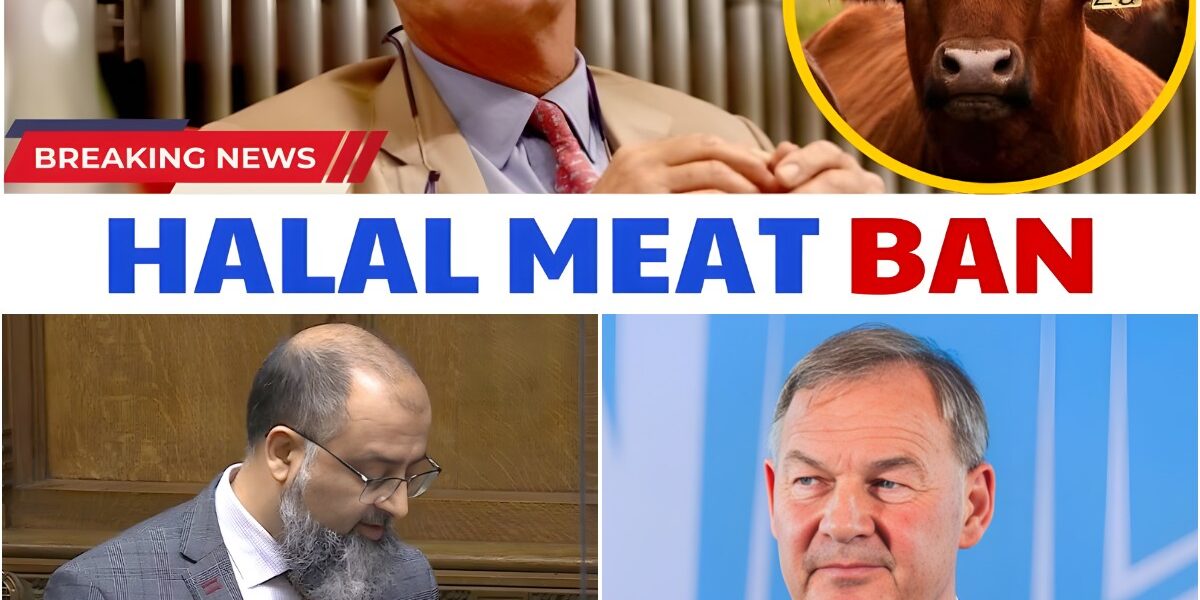
Rupert Lowe Advocates Ban on Non-Stun Slaughter Amid Ongoing UK Petition Efforts. n1

Rupert Lowe Advocates Ban on Non-Stun Slaughter Amid Ongoing UK Petition Efforts.
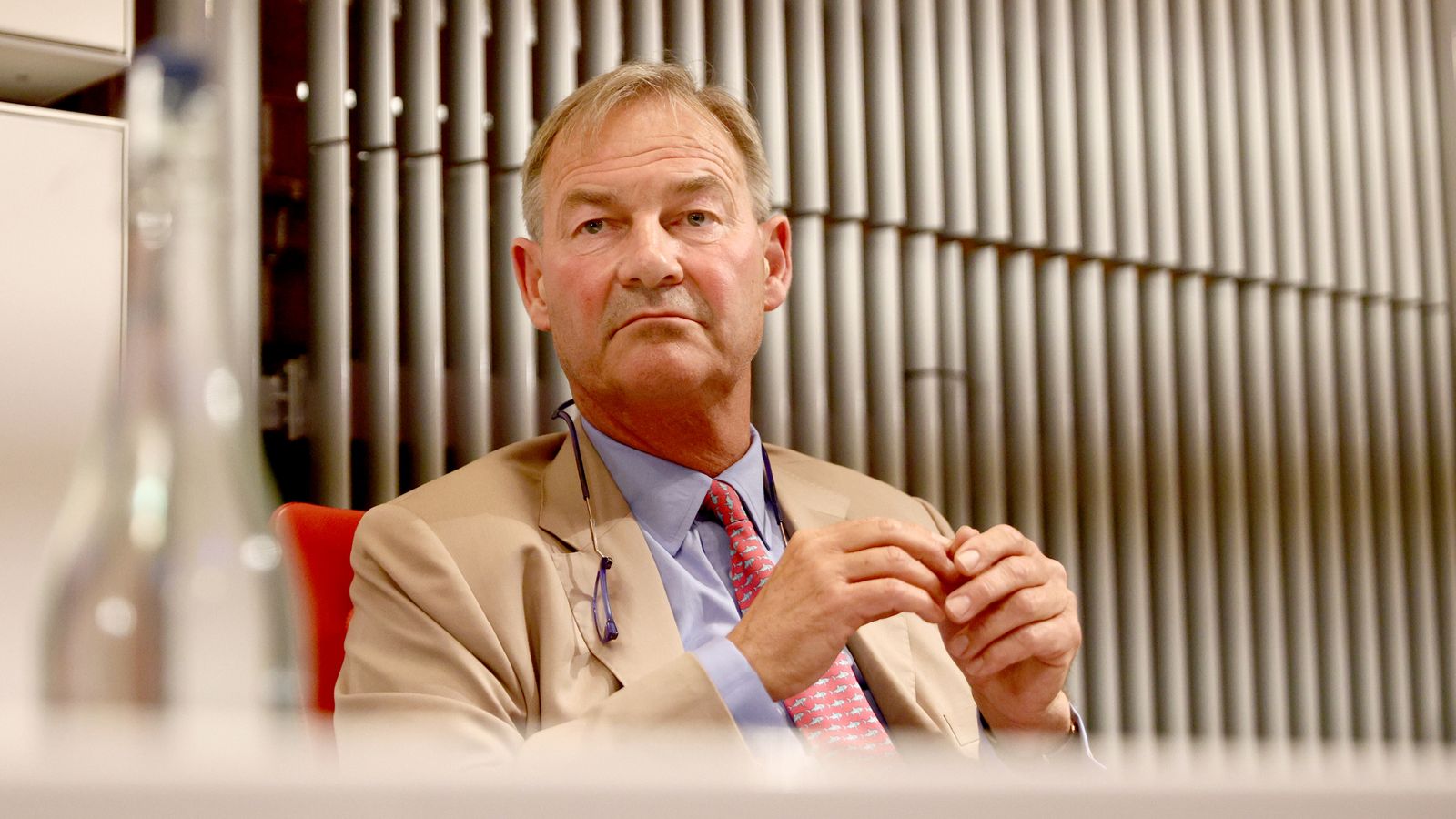
Independent MP Rupert Lowe has emerged as a prominent voice in the United Kingdom’s debate over non-stun slaughter practices, particularly in relation to halal and kosher meat production. Lowe, who now leads the Restore Britain party after his departure from Reform UK, has repeatedly called for the removal of religious exemptions that permit animals to be slaughtered without pre-stunning, framing the issue primarily as one of animal welfare rather than religious practice.
The discussion has been fuelled by a parliamentary petition from earlier in 2025 that gathered over 109,000 signatures, surpassing the threshold required to trigger a Westminster Hall debate. The petition, titled “Ban non-stun slaughter in the UK,” described the practice as inconsistent with modern animal welfare standards and urged the government to introduce mandatory stunning for all slaughter methods. While the petition addressed non-stun slaughter generally, much of the public and parliamentary attention focused on halal methods, where a proportion of animals may be slaughtered without stunning to meet religious requirements.
In a Westminster Hall debate held on June 9, 2025, Lowe spoke forcefully on the matter. Drawing on his background as a farmer, he argued that current exemptions create a two-tier system in abattoirs, where economic incentives lead to wider adoption of non-stun methods due to lower costs and regulatory differences. He claimed that millions of British consumers unknowingly consume halal meat as a result of inadequate labelling and supply chain practices, describing this as morally unacceptable. Lowe called for a complete ban on both halal and kosher non-stun slaughter, asserting that animal welfare should take precedence and that religious exemptions amount to state-endorsed practices falling below UK standards.
Lowe has maintained this position consistently since the debate. In subsequent statements and social media posts, he has reiterated that a Restore Britain government would outlaw non-stun slaughter on day one, removing religious exemptions entirely. He has emphasised that Britain should treat animals with care, decency, and compassion, rejecting what he terms barbaric methods that allow conscious slaughter. Lowe has also advocated for mandatory clear labelling of meat by slaughter method as an interim step, suggesting that public awareness and consumer choice could effectively limit the practice even before a full ban.
The issue has proven divisive in Parliament. During the 2025 debate, Muslim MPs defended religious slaughter practices, arguing that a ban would infringe on freedom of religion and risk stoking social division. They pointed to existing safeguards in halal methods, including swift cutting techniques designed to minimise suffering, and noted that many animals slaughtered for halal consumption are pre-stunned where permitted by religious interpretation. Jewish community representatives similarly highlighted the importance of shechita, the kosher method, which requires non-stunned slaughter to meet traditional standards, and warned that restrictions could undermine religious liberty.

Veterinary and animal welfare organisations have offered mixed perspectives. Groups such as the RSPCA have long campaigned for mandatory pre-stunning across all slaughter, citing evidence that it reduces pain and distress. However, they have also acknowledged the religious context and called for better labelling rather than outright bans in some statements. The British Veterinary Association has supported stunning as the default but recognised the need to balance welfare with cultural and religious considerations.
Public opinion polling has shown consistent majorities favouring mandatory stunning, with surveys indicating broad support for animal welfare improvements. However, the debate has also highlighted tensions between animal rights priorities and protections for minority religious practices. Critics of Lowe’s approach have described it as exclusionary, arguing that targeting specific methods disproportionately affects Muslim and Jewish communities while potentially overlooking welfare issues in conventional slaughter.
Lowe’s advocacy has extended beyond Parliament. He has used social media platforms to highlight the scale of non-stun slaughter, referencing estimates that a portion of halal meat enters the general food chain without pre-stunning. He has also noted that other MPs have begun discussing similar restrictions, suggesting a gradual normalisation of the idea. In one post, he linked the push to broader policy successes, such as public support for mass deportations, framing persistent campaigning as key to shifting political consensus.
Restore Britain’s platform has incorporated the ban as a core animal welfare commitment. The party positions itself as representing traditional British values, including humane treatment of livestock, and contrasts its stance with what it describes as reluctance from larger parties to address the issue due to electoral considerations. Reform UK has stated it would not pursue a ban, focusing instead on labelling and consumer choice, while the Conservative position has remained less defined in public statements.
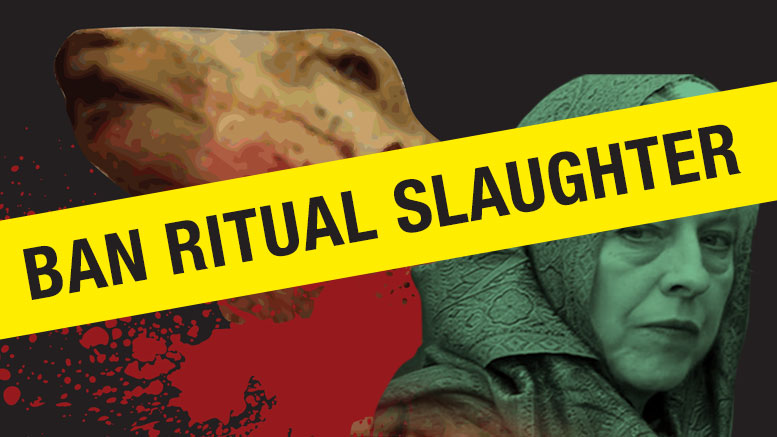
The government has maintained that current regulations provide adequate protections, with religious exemptions permitted under the Welfare of Animals at the Time of Killing regulations. Officials have emphasised that halal and kosher meat must meet hygiene and welfare standards, and that labelling improvements could be considered. However, no legislative changes to remove exemptions have been proposed.
The debate has also touched on economic aspects. Non-stun methods can involve higher costs in some contexts, but proponents of reform argue that labelling would empower consumers to avoid such products, potentially reducing demand. Muslim and Jewish organisations have expressed concern that a ban could limit access to religiously compliant food, affecting community needs and potentially driving underground practices.
As the issue remains live in public discourse, Lowe continues to press for action through parliamentary mechanisms, including early day motions and social media campaigns. A separate early day motion tabled in June 2025, which Lowe signed, called for a review of the legislative framework, restrictions on non-stun practices, and mandatory labelling. While it attracted limited support, it contributed to ongoing attention on the topic.
Broader implications include potential effects on food supply chains, religious freedoms, and inter-community relations. Any move toward a ban would require primary legislation, likely facing significant opposition on human rights grounds under the European Convention on Human Rights, which the UK continues to incorporate domestically.
For now, the discussion reflects wider societal conversations about balancing animal welfare standards with cultural and religious diversity. Lowe’s persistent advocacy has kept the matter visible, particularly within right-of-centre circles, while prompting responses from faith communities and welfare advocates. Whether it translates into policy change will depend on shifting parliamentary majorities and public pressure in future sessions.