
What Korean and Chinese Soldiers Said When They First Fought British Forces
A packed carrier plane with a detachable fuselage. In September 1950, the last corner of South Korea, still free from enemy control, was a tiny pocket of land pressed against the sea near the city of Busan. The North Korean army had swept down the entire peninsula in just 3 months, swallowing everything in its path.
Over 150,000 enemy soldiers now squeezed against a shrinking rectangle of ground barely 50 mi wide and the exhausted American and South Korean troops inside that pocket were running out of time. Then something no one expected appeared at the harbor. Ships carrying soldiers who looked nothing like the Americans already bleeding in the hills began to dock at the Busan waterfront.
These men wore different helmets and carried different rifles. They moved off the gang planks with a calm, steady discipline that made the Americans stop and stare. And they did not rush. They did not shout. They walked like men who had done this many times before and fully intended to do it again.
These were the soldiers of the 27th British Commonwealth Brigade, shipped directly from Hong Kong and ready for war. Among them marched two legendary regiments with histories stretching back hundreds of years. The first battalion of the Middle Sex Regiment carried the nickname the Dieards. Earned on a blood soaked battlefield in Spain in 1811 when their wounded commander, shot through the neck and lying in the dirt, screamed at them to die hard and never give up.
Beside them came the first battalion of the Argal and Southerntherland Highlanders. Scottish soldiers whose ancestors had charged across battlefields from India to France with bagpipes wailing and bayonets fixed. Many of these men had already fought in the worst battles of the Second World War.
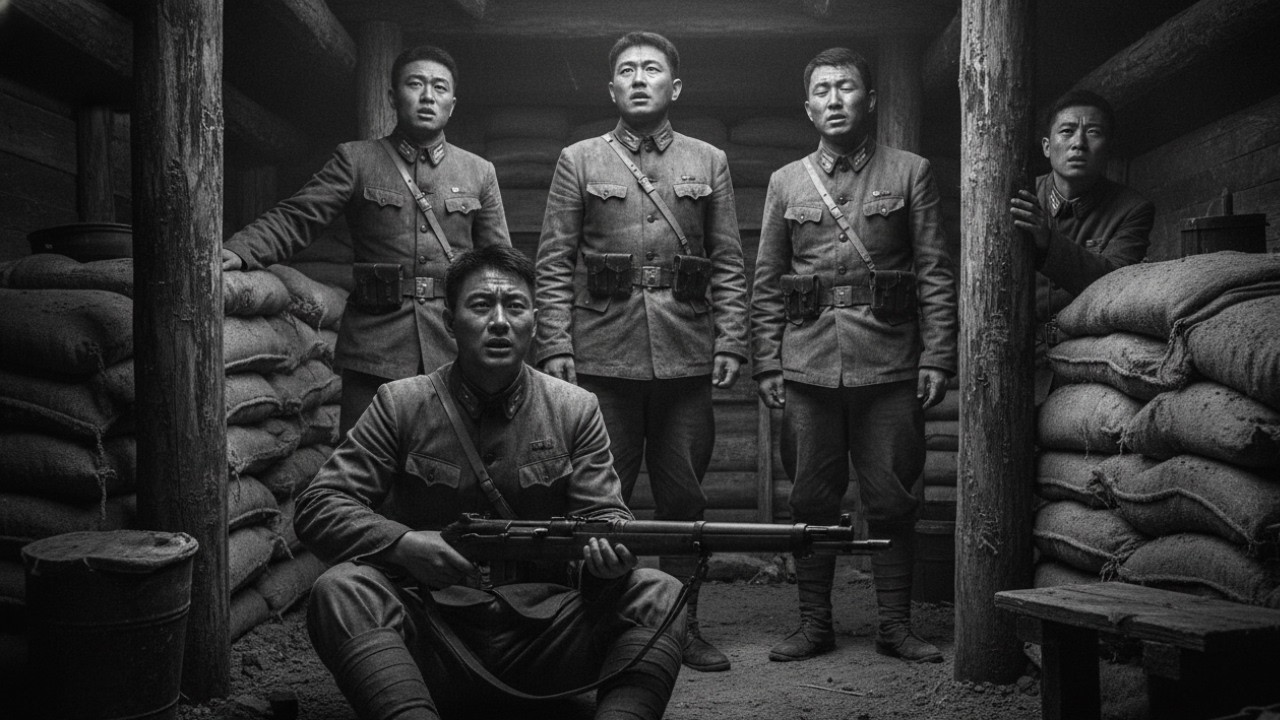
Some had survived the jungles of Burma. Others had fought their way through Italy and across North Africa. They were not fresh recruits learning to fight. They were veterans who already knew exactly what war looked like. And they had come to Korea carrying that knowledge in their bones. North Korean intelligence officers barely noticed their arrival.
Reports dismissed them as just another batch of American reinforcements. Nothing special, nothing to worry about. This was a mistake that would cost them dearly because these British soldiers did not fight the way the North Koreans expected. When they found the enemy, they did something that no one on the other side was prepared for.
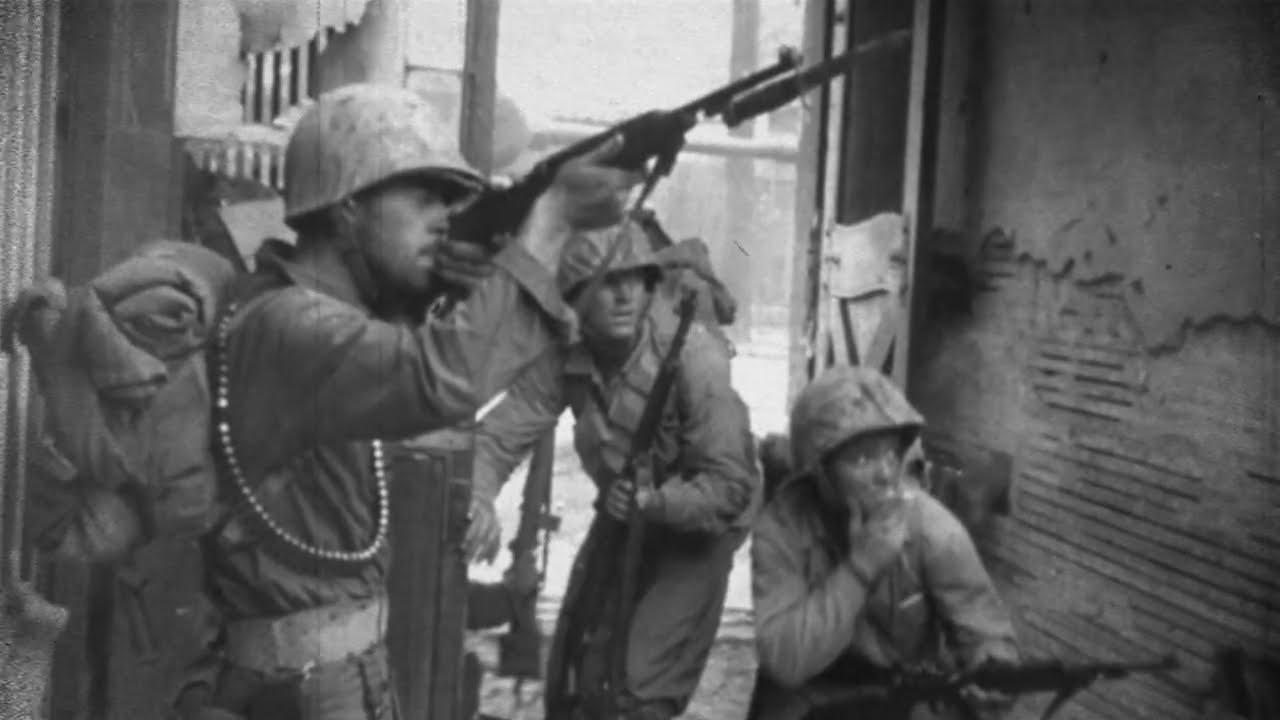
They fixed long steel bayonets to the ends of their rifles and charged straight at the enemy positions, screaming as they ran. Within weeks, captured North Korean soldiers began telling their interrogators something strange. These new troops were not like the Americans. They were something different, something more dangerous, something harder to predict, and harder to stop.
And when the massive Chinese army secretly crossed the border later that fall, sending over 300,000 fresh soldiers pouring into Korea, those Chinese troops would soon discover the same terrifying truth for themselves. What was it about these British soldiers, their weapons, their tactics, and their sheer stubborn refusal to back down that shook two entire armies to their core? To understand why these British soldiers fought the way they did, you have to understand where they came from and what had shaped them. The British
army in 1950 was not a peacetime force learning how to fight. It was an army forged in the fires of the Second World War, tested across every continent on Earth, and still carrying the scars and lessons of battles that had ended only 5 years earlier. The men of the Argyle and Southerntherland Highlanders belonged to a Scottish regiment more than 200 years old.
Built on a tradition that prized one thing above all else, closing the distance with the enemy and finishing the fight face to face. Their training did not begin with calling for help from planes or artillery. It began with the bayonet. They practiced charging, stabbing, and fighting at arms length until it became as natural as breathing.
In the jungles of Burma during the Second World War, uh where thick trees blocked air support and tanks could not move. This skill had kept them alive when nothing else could. The Middle Sex regiment brought a different but equally deadly specialty. They were masters of the Vicar’s medium machine gun, a heavy water- cooled weapon that could pour a stream of bullets into an advancing enemy with terrifying accuracy for hours without stopping.
The Vicers had been used since the First World War, and the Middle Sex crews knew every secret it held. They could set up fields of fire that turned open ground into a killing zone, and they had the patience and discipline to hold their triggers until the enemy was close enough that every single round found its mark.
Where the Argals were the sword, the Middle Sex were the wall that nothing could break through. And this combination of aggressive close combat and disciplined defensive firepower was the beating heart of British infantry tactics. And it stood in sharp contrast to the way the Americans fought. American doctrine in 1950 leaned heavily on overwhelming firepower delivered from a distance.
When American units met the enemy, the standard response was to pull back. call in air strikes and artillery barges and then advance once the ground ahead had been blasted apart. It was effective when it worked, but it created a pattern the enemy could study and exploit. The North Koreans learned to attack at night when American planes could not fly.
They learned to hug close to American positions so that artillery could not fire without hitting friendly troops. They built their entire war plan around these weaknesses. And for three bloody months, it worked. But no one in the North Korean or Chinese command had studied British tactics. No intelligence briefings warned them about bayonet charges or Vicar’s gun lines.
No training exercises prepared their soldiers for an enemy that would run toward them instead of away. And that ignorance was about to cost them dearly. The first real test came on a steep rocky hill numbered 282 on the 23rd of September 1950. The Inchon landings had just broken the siege of Busan, and United Nations forces were finally pushing north after months of being trapped.
The Argyle and Southerntherland Highlanders were tasked with taking a series of hills overlooking the Nakong River, and Hill 282 stood directly in their path. North Korean soldiers had dug themselves deep into the rocky summit and building fighting positions that looked down on every approach. They had beaten back previous attempts to take the hill and felt confident they could hold it against whatever came next.
They had no idea that the men climbing toward them through the morning mist were not Americans. Major Kenneth Mure led the assault. He was a career soldier, calm and experienced, the kind of officer who led from the front rather than shouting orders from behind. As his men moved up the slope, the North Koreans opened fire from above, sending bullets cracking through the air and kicking up dirt around the advancing Highlanders.
What happened next would have seemed insane to anyone watching from a distance. Instead of pulling back to call for air support or artillery, Major Mure ordered his men to fix bayonets. The sharp click of steel locking onto rifle barrels rippled down the line. Then the pipers began to play. The high wailing scream of Scottish bag pipes cut through the gunfire and echoed off the hillside.
A sound unlike anything the North Korean defenders had ever heard in their lives. And then the Argyles charged. They ran uphill straight into the teeth of enemy fire. Voices raw and wild. Bayonets leveled at the trenches above. The North Koreans, who had been trained to expect cautious probing attacks, followed by long pauses for bombardment, froze.
Some broke and ran before the Highlanders even reached them. Others stood and fought, but were overwhelmed in brutal hand-to-hand combat that lasted only minutes. The hill was taken, lost to a fierce counterattack, and then taken again when Major Mure gathered every man still standing and led a second charge back up the blood soaked slope.
During that final push, Major Mure was hit by enemy fire and killed. He died on the hill he had taken twice in a single day, and he would later receive the Victoria Cross, the highest honor a British soldier can earn. When the fighting ended and prisoners were brought in for questioning, the captured North Korean soldiers said things their interrogators had never heard before.
These troops did not fight like Americans. They came straight at us with knives on their rifles. We did not expect men to run toward us. The confusion and fear in their words was real, and it was only the beginning. As October arrived and United Nations forces raced deeper into North Korea, pushing toward the Chinese border, the Argyles kept fighting with the same terrifying aggression, overwhelming retreating enemy units near the town of Chongju in what some called the last true cavalrystyle charge in British
army history. But the North Koreans were not the real danger ahead. A far larger army was already crossing the border and they were about to learn the same hard lesson. The Chinese came in late October 1950 and they came like a flood. Over 300,000 soldiers of the People’s Volunteer Army crossed the Yalu River under cover of darkness.
Moving through frozen mountain passes without vehicles, without heavy equipment, carrying everything they needed on their backs. They moved so quietly and in such perfect discipline that United Nations intelligence had almost no idea they were there until it was far too late. When they finally struck, the entire war changed overnight.
American and South Korean units that had been racing north toward the Chinese border were suddenly hit from every direction by waves of enemy soldiers appearing out of the darkness, blowing bugles and whistles, firing rifles and throwing grenades in numbers that seemed impossible. The result was chaos. Entire American regiments broke apart under the pressure.
The longest retreat in United States military history began as thousands of soldiers fled south in what became known as the big bugout. Roads clogged with vehicles, wounded men, and shattered units stretched for miles as the Chinese offensive rolled forward like a wall of ice.
But when the Chinese hit the British positions near the town of Pacchon in early November, something different happened. The Middle Sex Regiment and the Argyle and Southerntherland Highlanders were dug in along a stretch of ground that the Chinese needed to push through and the attack came exactly the way the Chinese had planned it.
Darkness fell, temperatures dropped below freezing. And then the night exploded with the sound of bugles, whistles, and thousands of voices screaming as wave after wave of Chinese infantry charged toward the British lines. It was the same tactic that had shattered American units across the peninsula.
Against the British, it ran straight into a wall. The Middle Sex machine gun crews held their fire with a patience that bordered on cruelty. They sat behind their vicar’s guns in the freezing darkness, watching the waves of Chinese soldiers surge closer and closer, and they waited. They waited until the enemy was so close they could hear individual voices.
so close that missing was almost impossible. And then they opened fire. The vicar’s guns roared to life and cut through the advancing ranks like scythes through wheat. Rows of men fell and more came behind them, and they fell, too. The disciplined, sustained fire created a killing ground in front of the British positions that the Chinese could not cross no matter how many men they threw into it.
And then came the moment that stunned the Chinese completely. When the pressure on certain sections of the line grew too intense, when ammunition began to run low and the sheer weight of numbers threatened to break through, the British did not do what the Chinese expected. They did not retreat. They did not call for help and wait.
Instead, officers shouted a command that echoed down the frozen trenches, and the British soldiers fixed bayonets and countercharged directly into the oncoming Chinese assault. They ran forward, screaming into the mass of enemy soldiers, and they fought hand-to-h hand in the bitter cold with rifle butts and steel blades. The Chinese soldiers, who had been trained to expect their night attacks to cause panic and withdrawal, were thrown into confusion by an enemy that attacked them back in the middle of their own assault.
Captured Chinese soldiers taken in the days after Pacchon told their interrogators. things that sent ripples through the intelligence community. They described the British as more fierce than the Americans. They said these soldiers did not panic under night attacks. They said the bayonet charges were terrifying in a way they had not been prepared for because no one in their training had warned them that any Western army would willingly close to hand-to-hand range.
Chinese afteraction reports written by field commanders used a specific phrase to describe the British that roughly translated to more vicious. And these reports began circulating up the chain of command with an urgent warning attached. These were not the same kind of enemy. These troops required different tactics, greater numbers, and far more caution.
But the full weight of what the Chinese had just learned would not become clear until the following spring when an even larger Chinese offensive would crash into a thin line of British soldiers on the banks of the Imjin River. And what happened there would burn the British reputation so deeply into Chinese military memory that it would never be forgotten.
Pause for a second. If this story stayed with you, you’ll fit in here. Subscribe to Battle of Britain’s stories and join a community that cares about the details and the people behind them. Thanks for being here. On we go. In the weeks and months that followed the fighting at Pachchon, something unusual began to appear in captured Chinese and North Korean documents.
The Chinese People’s Volunteer Army was writing about the British, not as a footnote buried inside larger reports about the United Nations forces, but as a separate and specific subject that demanded its own warnings, its own analysis, and its own set of instructions for how to survive against them. Chinese tactical bulletins issued to frontline units in early 1951 contained detailed guidance that set the British apart from every other enemy force in Korea.
Maria commanders were warned that British units would counterattack even when heavily outnumbered. A behavior that did not fit the patterns Chinese officers had been trained to exploit. The standard ratio of three attacking soldiers for every one defender, which had worked against American positions, was flagged as not enough when facing British troops.
Reports noted that the British fought effectively at night, which stripped away one of the Chinese army’s greatest advantages since their entire offensive doctrine was built around darkness. And the bayonet charges received special attention. Officers were told to prepare their men for the psychological shock of an enemy that would charge directly into them with bladed weapons because the effect on morale had already proven devastating in earlier engagements.
The North Korean intelligence painted a similar picture. Documents captured later in the war showed that the North Koreans had created a separate classification for British Commonwealth forces, rating them differently from the Americans in almost every category. They were listed as more aggressive in attack, more stubborn in defense, and far more dangerous in close combat.
These were not compliments written for propaganda purposes. They were survival warnings passed down to soldiers who needed to know what they were about to face. The cost of earning this reputation was written in blood. British casualties mounted steadily through the brutal winter of 1950 and into 1951. Frostbite ravaged men fighting in temperatures that dropped to 30° below zero, turning fingers black and making rifle bolts so cold they burned bare skin on contact.
Exhaustion ground down even the toughest veterans as constant Chinese pressure forced endless cycles of fighting, withdrawing, digging in, and fighting again. The retreat from North Korea was a nightmare of frozen roads, ambushed convoys, and desperate rear guard actions fought in blinding snow. And yet, even in the middle of all this suffering, the British did something that baffled the enemy almost as much as the bayonet charges.
They brewed tea. Multiple Chinese and North Korean accounts from this period mention with a mixture of confusion and grudging respect that British soldiers would set up small stoves and make tea during pauses in the fighting, sometimes while mortar rounds were still falling nearby. To the Chinese, who valued endurance and sacrifice above all else, this small ritual was either a sign of extraordinary calm under pressure or complete madness.
They could not decide which and it appeared in report after report as though enemy intelligence officers simply could not stop writing about it. As the war ground into its second year and the front lines began to harden, fresh British reinforcements arrived to join the fight. The 29th Infantry Brigade landed in Korea carrying new regimental colors and old fighting traditions.
Among them marched the Glostershare Regiment, a unit whose roots stretched back to the 1690s and whose soldiers wore a badge on both the front and back of their caps. A unique distinction earned in a long ago battle where they had fought enemies coming from both directions at once. The Chinese would soon learn why that badge existed.
Because in just a few short months, the Glousters would be surrounded on a frozen hilltop above the Imjin River, outnumbered more than 10 to one. and they would fight in a way that the Chinese army would study and write about for the next 70 years. On the night of April 22nd, 1951, the Chinese launched their massive spring offensive and sent over 700,000 soldiers crashing into the United Nations line across the width of Korea.
It was the largest single attack of the entire war, and it aimed to break through the Allied defenses and recapture the capital city of Seoul. Standing directly in the path of this tidal wave was the 29th British Infantry Brigade. Roughly 4,000 men spread thin along the banks of the Imjin River. Among them, he’s holding a stretch of hills on the far left of the brigade’s position where the 750 soldiers of the Glstersha regiment.
The Chinese 63rd Army, more than 10,000 strong, hit the Glouester’s position that first night. Thousands of soldiers forded the shallow river in the darkness and surged up the hills toward the British trenches. The Glousters fought them back with rifle fire, grenades, and bayonets through the night and into the dawn.
When the sun rose, the hillsides were covered with Chinese dead. But more kept coming. By the second day, the Glousters had been pushed back to a single hill, number 235, soon to be known forever as Gloucester Hill. They were completely surrounded. No reinforcements could reach them. Ammunition was running dangerously low and still they refused to break.
Chinese commanders on the ground could not understand what was happening. Their intelligence told them this was a small force. Yet it was absorbing regiment after regiment and refusing to collapse. Convinced they must be facing a much larger formation than reported, they committed additional units to the assault, pulling soldiers away from other sectors and disrupting their own carefully planned timetable.
Every hour the Glousters held was an hour the Chinese offensive fell further behind schedule, and every failed attack cost them hundreds more men. For 3 days and three nights, the Glousters held Gloucester Hill. They fought until their ammunition was nearly gone, then fixed bayonets and counteratt attacked into the Chinese ranks to buy more time.
They sang regimental songs between assaults. Their drum major reportedly sounded calls on his bugle that the Chinese initially mistook for their own signal horns, adding confusion to the chaos of battle. When the order to attempt a breakout finally came on the morning of April 25th, only 169 men out of roughly 750 made it back to friendly lines.
The rest were killed, wounded, or captured. But those three days changed the course of the battle. The Chinese 63rd Army had been so badly mauled and so thoroughly delayed by the Gloucester stand that their entire section of the spring offensive stalled. soul did not fall, the line held. Military historians would later conclude that the sacrifice at Glouester Hill alongside the Australian stand at Capyong during those same desperate days broke the momentum of the largest Chinese attack of the war. After
the spring offensives ground to a halt, Chinese tactical manuals were rewritten. For the first time, they formally separated British Commonwealth forces into their own category, distinct from the Americans, and rated them as the most dangerous enemy they faced in close combat.
The men who had earned that distinction were mostly dead or sitting in Chinese prison camps. But the words their enemies wrote about them would outlast them all. Lieutenant Colonel James Power Khn was the commanding officer of the Glostershare Regiment at the Immun River and he was the kind of leader who never asked his men to do anything he would not do himself.
During those three terrible days on Glouester Hill, he moved between positions under constant fire, organizing defenses, unalling exhausted soldiers, and personally directing counterattacks against a force that dwarfed his own many times over. When the final breakout attempt failed and the survivors were overrun, Carne was captured along with hundreds of his men and marched north into Chinese prisoner of war camps.
What followed was a different kind of battle that lasted more than 2 years. The Chinese subjected their prisoners to intense political education sessions designed to break their will and turn them into propaganda tools. Carne refused every attempt. He would not sign statements. He would not read scripts.
He would not cooperate in any way. His captives placed him in solitary confinement for months at a time, locked in a tiny space with barely enough food to survive, hoping isolation would shatter what force could not. It did not work. Khn endured it all in silence. And his quiet, unbreakable stubbornness earned something unexpected from his captives.
They began to respect him. Guards who had been ordered to break him spoke about him after the war with something close to admiration. He was awarded the Victoria Cross for his leadership at the Imjin and his resistance in captivity and he returned home a living symbol of everything the Chinese had warned their soldiers about. Lieutenant Philip Curtis never came home at all.
During the fighting at the Imjin, Curtis led an attack on a Chinese position that was pouring fire into his men. He was hit and badly wounded, but kept moving forward. He reached the enemy bunker alone and fought hand-to-h hand with the soldiers inside before a grenade killed him. He was 24 years old. The Victoria Cross he received was presented to his family, not to him, because the kind of courage he showed that night was the kind that does not leave room for survival.
Chinese soldiers who witnessed his final charge described it in terms that mixed horror with something that sounded very much like awe. One man running alone and bleeding into a fortified position held by dozens was not something their training had prepared them to see. Private Bill Speakman stood 6 ft and 6 in tall and fought like a man twice that size.
During the Battle of United Hills in November 1951, Chinese forces launched a massive assault against his company’s position. When the grenades ran out, Speakman grabbed empty beer bottles, ration tins, rocks, anything he could throw and and hurled them at the advancing Chinese soldiers while roaring at the top of his lungs.
Then he fixed his bayonet and led charge after charge into the enemy ranks despite being wounded by shrapnel. Chinese soldiers who survived that night left accounts describing a giant of a man who seemed impossible to stop. A figure so large and so furious that he seemed less like a single soldier and more like a force of nature.
Speakman received the Victoria Cross and lived to old age carrying shrapnel in his body for the rest of his life. Beyond the famous names, there were hundreds of ordinary British soldiers whose stories were never written down, but who left their mark on the enemy’s memory just the same.
The Argyles pipers who played their bagpipes during charges, filling the Korean hills with a wailing. The otherworldly sound that Chinese veterans decades later still described as one of the most unsettling things they heard during the entire war. The machine gun crews of the Middle Sex regiment who held their positions through freezing nights, feeding ammunition belts into their vicar’s guns with fingers blackened by frostbite.
The medics who crawled between wounded men under fire. The signalers who kept communication lines running while shells burst around them. The cooks who somehow kept tea brewing in the middle of battles that seemed like the end of the world. None of them set out to become legends.
They were simply soldiers doing what their training and their traditions demanded. And the enemy, watching from the other side of the wire, took note of every single one of them. In the official military histories of the Chinese people’s volunteer army, stored in archives and studied in militarymies across China, the British forces in Korea receive a level of attention that far outweighs their small numbers.
The battle of the Imjin River is examined in detail as a case study in defensive combat. And the Gloucester’s stand on hill 235 is acknowledged as one of the most determined last stands of the entire war. These are not western accounts written to flatter British pride. They are Chinese documents written by Chinese officers for Chinese soldiers.
And the respect buried inside them is all the more powerful because it was never meant to be seen by the people. It described secret intelligence reports from the People’s Volunteer Army released years later British Commonwealth forces among the most effective opponents they faced in Korea, especially in defensive fighting and close combat.
That assessment shaped how China thought about Western armies for decades after the guns fell silent. Today, in a quiet valley along the Imjin River in South Korea, a stone memorial stands on the ground where the Glousters fought and died. It is called Gloucester Valley, and every year, British and South Korean veterans and their families gather there to remember what happened on those hills in April 1951.
South Korean communities near the battle sites maintain the memorials with care, tending the ground as though the men who bled there were their own. Korean school children learn about the battle in their classrooms. And the bond between British veterans families and the local Korean people who live in the shadow of those hills has grown stronger with every passing year rather than fading with time.
In London, the Korean War Memorial stands as a reminder of the more than 1,000 British soldiers who never came home. At the National Memorial Arboritum in Staferture, trees grow in neat rows above plaques bearing the names of the fallen, and the wind through their branches sounds, if you listen closely enough, almost like distant pipes.
The legacy of what the British did in Korea reached beyond memory and into practice. The performance of British infantry in close combat reinforced the value of bayonet training in a modern army, and the British military continues to teach bayonet drill to this day. one of the few major western forces that still considers it an essential skill.
The lessons of the Imjin, of Pacchon, of Hill 282 echo through decades of British military doctrine because they proved something that technology and firepower alone could never replace. There is a power in the willingness to close the distance with your enemy and fight him face to face that no amount of bombs or bullets can match.
The Korean War is often called the forgotten war. And within that forgotten war, the British contribution is doubly lost, overshadowed by the sheer scale of American involvement and buried beneath the passing of years. But in the faded pages of captured enemy documents, in the handwritten warnings passed between Chinese commanders, in the voices of aging veterans recorded decades later in small apartments in Beijing and Shanghai of the memory survives.
A Chinese veteran of the Korean War was interviewed late in his life. When asked who the toughest opponents he faced were, he answered without a moment of hesitation. The British, he said, and their bayonets. Then he paused and added one more thing. And that strange music they played while they were attacking.
The enemy remembered even when the allies forgot. And perhaps that is the truest measure of what those soldiers were worth. Not the medals pinned to their chests or the speeches made in their honor, but the quiet, reluctant respect written in the words of the men who tried to kill them and could Not.
Note: Some content was generated using AI tools (ChatGPT) and edited by the author for creativity and suitability for historical illustration purposes.