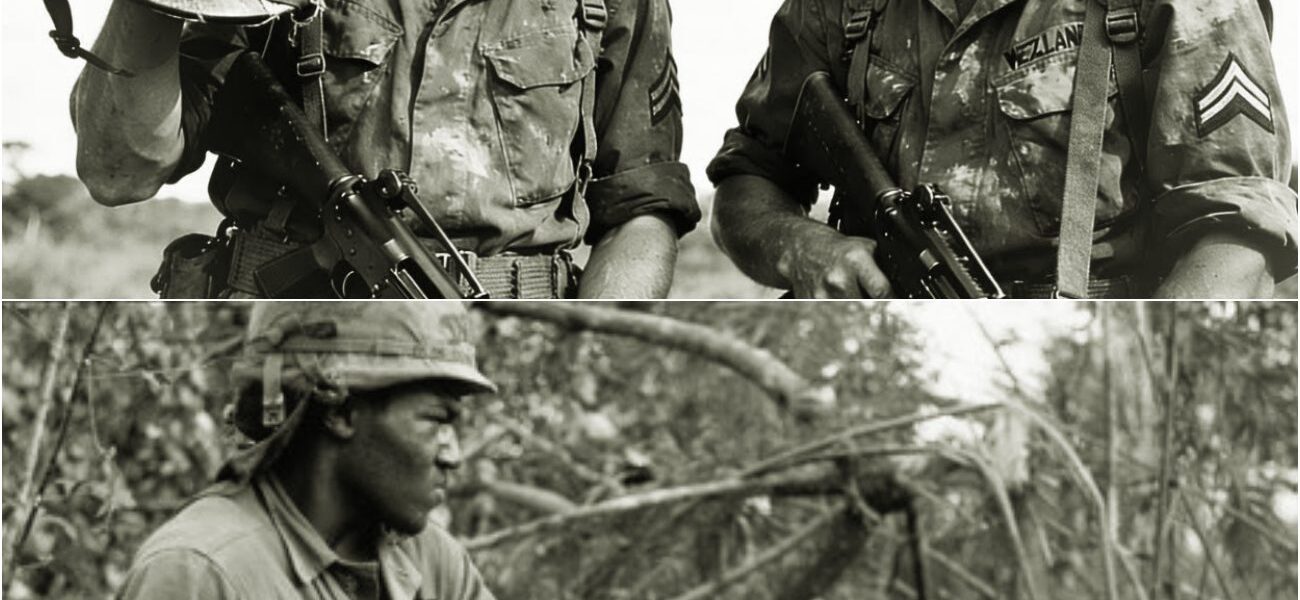

Why NVA Feared New Zealand SAS — But Not American or Korean Troops
December 1968, Fuok Toui Province. A captured Vietkong diary contained something that chilled Allied intelligence officers to the bone. Detailed tactical countermeasures for American patrols, Korean sweeps, Australian operations. But for the New Zealanders, just a single desperate warning.
Withdraw immediately if suspected in area. We never hear them until artillery falls. So, what made 35 New Zealand soldiers more terrifying to battleh hardened NVA commanders than entire American battalions? And why did enemy units literally rewrite their doctrine just to avoid fourman Kiwi patrols? The jungle stretched endlessly in every direction, a living wall of green that pressed in from all sides.
The air hung thick and wet, so heavy you could almost drink it. 95% humidity turned every breath into work. Turned every movement into a battle against your own sweat soaked uniform. The heat never stopped, not even at night. It just changed from blazing to suffocating. In this maze of tangled vines and towering trees, you could barely see 3 m ahead.
The jungle decided everything here. It decided who lived and who died. By late 1968, something strange was happening in the intelligence reports coming out of southern Vietnam. The war had been grinding on for years. And by now, the North Vietnamese Army and Vietkong knew their enemy well. They had thick folders of information on American tactics.
They knew when the Americans would patrol, how many men they would send, what routes they preferred. They could hear American units from a kilometer away. The sound of 150 men crashing through the jungle like a slowm moving storm. The Vietkong had detailed notes on the Korean capital, Division 2. The Koreans were fierce, aggressive, always attacking.
They moved fast and hit hard with entire battalions. 500 meters out, you could hear them coming. Even the Australians, professional and careful, could be tracked. Their platoon of 30 to 40 men moved with discipline, but they still made noise. At 200 m, a good listener could pick them up. But in December 1968, Allied intelligence officers found something in a captured Vietkong base camp near Longhai that made them stop cold.
It was a diary worn and water stained, filled with tactical notes and observations. Page after page detailed how to counter American patrols, how to ambush Korean operations, how to avoid Australian infantry. The writer had been meticulous, professional, clearly an experienced soldier. Then came the entry about the New Zealanders. It was short, just a few lines, but those lines changed everything the intelligence officers thought they understood about this war.
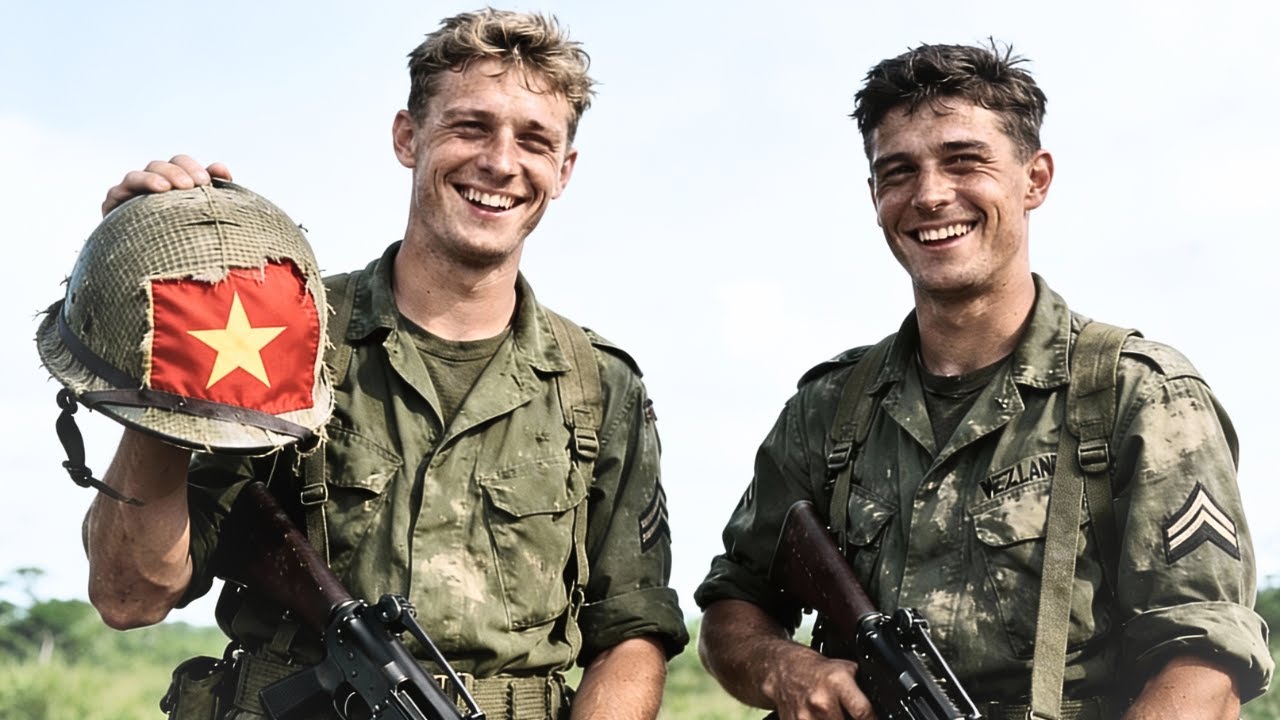
The entry read, “We can hear the Americans from 1 kilometer. We can hear the Koreans from 500 m. The Australians maybe 200 meters. The New Zealanders, we never hear them. They are already behind us. The New Zealand SAS had been in Vietnam since November 1968. At any given time, there were only 35 to 40 of them in the entire country.
Compared to the half million American troops, compared to the Korean divisions, compared to the Australian task force, the New Zealanders were barely a footnote. Fourman patrols. That was their method. Just four men inserted into the deepest, darkest parts of the jungle. They would stay out there for 14 days, sometimes 3 weeks.
No resupply, no backup, just four men and the jungle and the enemy somewhere in between. The operational area they worked was a nightmare of terrain. Triple canopy jungle where the trees grew so thick overhead that even at noon the ground stayed in twilight. Wait. A while vines covered with tiny hooks that grabbed at every piece of equipment tore at skin made every meter forward a small battle.
The sounds never stopped. Cicotas screamed day and night. A wall of noise that could hide footsteps or betray them. The smell was rot and growth mixed together. Vegetation decaying even as new plants exploded from the ground. Every man carried 30 kg of equipment, radio, ammunition, rations for 2 weeks, water purification tablets, medical supplies.
The weight cut into shoulders, rubbed skin raw, made you feel every step. The enemy knew this ground like they knew their own hands. The 274th Vietkong Regiment operated in this area. So did the D445 Provincial Battalion. North Vietnamese Army units filtered down from the Ho Chi Min trail.
Experienced soldiers who had been fighting for years. These were not amateurs. These were professionals who had survived American bombing, Korean aggression, Australian operations. They had learned. They had adapted. They had detailed intelligence on every Allied force in the region. They knew American radio procedures by heart. They could predict when and where American patrols would move.
Americans traveled in large groups, company-sized elements of 120 to 150 men. They covered 4 to 6 km per day. They moved with purpose and noise and the confidence of superior firepower. Security came from numbers. If you got hit, you had a 100 rifles to fire back. The Vietkong could set their watches by American patrol patterns.
The Koreans were different, but just as predictable. They ran aggressive search and destroy missions with entire battalions. They moved fast, hit hard, and never backed down from a fight. The Vietkong learned to avoid them when possible, to hit them with ambushes when necessary, but always the Koreans could be heard, could be tracked, could be anticipated.
Even the Australians, more professional than the Americans, more careful in their movements, still followed conventional doctrine. Platoon strength patrols established routes, scheduled operations. They were good, disciplined, dangerous, but they were predictable. The New Zealanders were something else entirely, something the enemy did not understand and could not predict.
Four men who moved through the jungle like smoke. Four men who could watch an enemy base camp for a week and never be detected. four men who somehow violated every rule the Vietkong had learned about how Allied forces operated. The intelligence reports kept coming in throughout late 1968 and early 1969. Captured documents, interrogation of prisoners, all telling the same impossible story.

Standing orders were being issued to Vietkong units. If you suspect New Zealand SAS in your area, withdraw immediately. Do not engage. Do not investigate. Just leave. This made no sense to conventional military thinking. Withdraw from four men. The Vietkong had fought company-sized American units to a standstill. They had bloodied Korean battalions.
Why would they run from four soldiers? The answer lay in something deeper than firepower or numbers. It lay in a fundamental difference in how the New Zealanders approached jungle warfare. While every other Allied force brought the tactics of conventional war into the jungle, the New Zealanders had learned something different.
Something forged in the jungles of Malaya in the 1950s, refined in Borneo in the 1960s, perfected now in the green hell of Vietnam. They had learned that in the jungle the silent hunter beats the loud army every single time. They had learned that four invisible men were worth more than 400 visible ones.
They had learned that the jungle was not the enemy. The jungle was the weapon. And by December 1968, the Vietkong was starting to understand this too. That was why the fear was spreading through their ranks. That was why the warnings were being written. That was why experienced soldiers who had faced American firepower and Korean aggression were now telling each other to run from men they had never even seen.
The difference started with a simple number. American patrols moved four to six kilometers per day through the jungle. They had places to be, objectives to reach, ground to cover. Speed meant security. Movement meant you were harder to ambush. This was the doctrine taught at every training base, written in every field manual. Keep moving. Stay aggressive.
Own the terrain through constant pressure. A typical American patrol included 30 to 40 men, sometimes more. They carried M16 rifles, M60 machine guns, M79 grenade launchers. They had radios that could call in artillery, air strikes, helicopter gunships. If they hit trouble, help was always just minutes away.
7 days in the field, then back to base. Hot food, showers, rest, then out again. This was how modern armies fought. The Korean approach was even more aggressive. Entire battalions would sweep through areas, sometimes 500 men moving together. They covered ground fast, sometimes 8 km in a day. Their philosophy was simple and brutal.
Find the enemy, fix them in place, destroy them with overwhelming force. The Koreans did not sneak. They announced their presence like thunder and dared anyone to stand against them. When they found the enemy, the fight was short and violent. Superior firepower won battles. This had been proven in every war.
Speed and strength together were unstoppable. The Australians brought professional discipline to the jungle. They were not as aggressive as the Koreans, not as numerous as the Americans, but they were careful and methodical. Platoon strength patrols of 30 to 40 men moved through assigned areas on planned routes.
They maintained noise discipline better than the Americans. Moved with more caution than the Koreans. Their training was excellent. Their soldiers were volunteers. Korea men who took pride in their work. They stayed out 7 to 10 days, sometimes longer. They killed enemy soldiers. found weapons caches, disrupted Vietkong operations. By any measure, they were effective.
Then there were the New Zealanders doing everything backwards. Four men per patrol. Not 40, not 400, just four. They moved one to two kilometers per day. Sometimes less. Sometimes they would stay in the same position for 2 or 3 days just watching, just listening. 14 days in the field was standard. Sometimes 21 days, 3 weeks living in the jungle with only what they carried on their backs.
No resupply drops, no helicopter visits, nothing that would give away their position. The patrol formation was precise and purposeful. The lead man was the tracker. He moved 5 m ahead of the others, reading the ground like a book. Every bent leaf meant something. Every scuff mark in the dirt told a story. A broken spiderweb showed someone had passed through.
Crushed vegetation had a timeline. Fresh damage was bright green inside. Hours old damage started to brown. Day old damage was dry and dead. The tracker could tell how many men had passed, which direction they were heading, how long ago they had been there. This was not guesswork. This was a skill learned through years of training and experience.
5 m behind the tracker came the second man providing security. His job was to watch everything except the ground. He scanned the jungle ahead to the sides up into the canopy. His rifle was always ready. He was the first line of defense if contact came suddenly. 5 meters behind him came the patrol commander.
He made every tactical decision. When to move, when to stop, when to observe, when to call in artillery. He carried the weight of four lives and the success of the mission. He trusted his tracker to read the ground and his security man to watch for danger. His job was to think, to plan, to choose. 5 meters behind the commander came the signaler with the radio.
The PRC25 radio was wrapped in foam padding to prevent any metallic clicks or rattles. Every piece of equipment was taped down, tied down, silenced, cantens wrapped in socks, dog tags taped together, weapons maintained obsessively to prevent any squeak or rattle. Even their rations were different. 1,800 calories per day, half what American soldiers ate.
Less food meant less weight, less waste to bury, less smell to give them away. This approach violated everything conventional military training taught. Fire superiority was the foundation of modern tactics. If you made contact with the enemy, you won by shooting more bullets faster. But fire superiority meant nothing if the enemy never knew you were there in the first place.
American doctrine said speed and aggression kept you safe. But the New Zealanders proved that patience and invisibility were better protection than any amount of firepower. The training that produced these soldiers was brutal and specific. New Zealand SS selection took place in the Hunua ranges.
dense forest south of Oakland. Candidates learned to move through thick bush without breaking spiderw webs. This was not a metaphor or an exaggeration. Instructors would string webs across paths and require men to pass through without disturbing them. If the web broke, you failed that exercise. The lesson was simple.
If you break a spiderweb, you leave sign. If you leave sign, the enemy can track you. If the enemy can track you, you are already dead. Veterans of the Malayan emergency in the 1950s taught the tracking skills. They had spent years hunting communist insurgents through jungle even thicker than Vietnam.
They learned to identify boot treads by their pattern, to age footprints by moisture content and insect activity, to read bent grass and disturbed moss. These skills were passed down like treasured knowledge, refined over years, practiced until they became instinct. The soldiers learned to live on almost nothing. They brewed tea without creating smoke by using tiny heat tablets in shielded stoves.
They could communicate entirely through hand signals. More than 200 different signals covering every tactical situation. Enemy spotted. How many? Which direction? What weapons? Danger close. Fall back. Advance. Hold position. All in absolute silence. The psychological challenge was perhaps the hardest part.
Every instinct, every bit of training, every fiber of aggressive military culture said to attack when you found the enemy, to close with them and destroy them. This was what soldiers did. This was what courage looked like. But the New Zealand SAS taught their men to do the opposite. to watch and wait, to gather information, to call in artillery instead of engaging directly, to let the enemy walk past within meters and never fire a shot.
One SAS trooper described the feeling years later. He said, “Every part of your training tells you to fight. Every part of your pride says attack.” Sitting silent while armed enemies pass close enough to touch feels like cowardice. It feels wrong in your bones. But then you see the results. You see the artillery fall exactly on target because you had time to plot perfect coordinates.
You see enemy positions destroyed because you countered every bunker, every fighting position, every soldier. You see intelligence maps built from days of patient observation. You see kill ratios that make no sense by conventional standards. And you understand that feeling wrong and being right are not the same thing.
The results came quickly. In their first 3 months of operations, New Zealand SAS patrols called in artillery and air strikes that killed an estimated 143 Vietkong and North Vietnamese Army soldiers. New Zealand casualties in the same period, zero. No deaths, no serious wounds. The kill ratio was almost meaningless because it missed the real point.
The intelligence they gathered was priceless. February 26th, 1971, 4:30 in the morning. No Tao Mountain Complex. The jungle was at its darkest just before dawn. That deep black when even the stars seemed to give up, trying to push light through the canopy. Four men lay perfectly still in the undergrowth, so motionless they could have been dead except for the slow, controlled breathing.
They had been in this exact position for 6 days. 144 hours of watching, listening, counting, mapping. Sergeant Norm commanded the patrol. His call sign was 23 Bravo. For almost a week, he had observed an enemy position that grew more important with each passing hour. The bunker complex spread out 400 m ahead, invisible in the darkness, but burned into Norm’s memory like a photograph.
He had countered more than 60 North Vietnamese Army soldiers. He had watched their routines, timed their guard changes, noted their patrol patterns, three ammunition caches carefully hidden, but not carefully enough. Mortar positions dug into the hillside with interlocking fields of fire. And the prize, the structure that made this week of patient watching worthwhile, a suspected battalion headquarters.
Norm had photographed it through a telephoto lens. The images captured on film that would be developed back at base, analyzed by intelligence officers, added to the growing map of enemy positions. But now came the decision that every patrol commander faced eventually. Extract quietly with the intelligence or call fire and destroy what they had found. The intelligence was valuable.
The photographs, the counts, the detailed observations, all of it would help future operations. But 60 enemy soldiers, three ammunition caches, mortar positions, and a battalion headquarters represented a target too valuable to ignore. Norm made his choice. At 4:45 in the morning, he whispered into the radio handset pressed against his ear.
His voice was so quiet that his own men lying 5 m away could barely hear him. But 12 km to the south at the fire base where the 161st battery Royal New Zealand artillery waited, the message came through clear. Fire mission grid reference 842 635 enemy bunker complex 60 plus North Vietnamese Army request mixed high explosive and white phosphorus.
Estimate target location to my position 400 m bearing 085. The four men of 23 Bravo pressed themselves into the earth. They had done this before, but it never became routine. Calling artillery when you are 400 m from the impact point requires absolute faith in mathematics, radio communication, and the skill of men you cannot see.
One wrong number, one confused coordinate, one error in reading the map, and the shells fall on you instead of the enemy. At 452, the radio crackled softly. Shot over. The first ranging round was in the air. Somewhere in the darkness above, a 105 mm high explosive shell arked through the sky. 30 seconds later, the jungle erupted.
The explosion was a physical force, a hammer blow of sound and pressure that rattled through the ground. Birds exploded from the canopy, screaming in panic. Monkeys howled and from 400 meters away came shouting in Vietnamese, voices sharp with confusion and fear. Norm’s voice stayed calm, almost bored. Fire for effect. At 455, the real bombardment began.
36 rounds in rapid succession. High explosive and white phosphorus alternating in a deadly rhythm. The mountain seemed to come apart. Each explosion was a flash of light that turned night into day for a split second, then plunged everything back into darkness. The sound was continuous, overlapping detonations that merged into a rolling thunder that shook the air itself.
Secondary explosions began almost immediately. The ammunition caches cooking off, adding their own violence to the barrage. Mortar rounds exploding in their storage bunkers. Small arms ammunition popping off like strings of firecrackers. White phosphorous shells burst and spread, burning chemicals that stuck to everything they touched, creating fires that could not be pulled out with water.
The smell reached the patrol position, even 400 m away. Burning wood, burning chemicals, burning propellant, and underneath it all, something else they tried not to think about. The four men stayed frozen in place. Moving now would be suicide. The jungle was awake and chaos reigned 400 m away. But between the patrol and the target, there might be enemy soldiers who had fled the bombardment.
There might be patrols coming to investigate. There might be anything. So they remained still, weapons ready, eyes scanning the darkness while the mountain burned. At 5:03, the barrage stopped. The silence that followed was almost worse than the noise. Ears rang. The jungle had gone quiet. Every animal shocked into stillness. Smoke drifted through the trees, carrying the bitter smell of high explosive and the garlic-like stench of white phosphorus.
Norm waited 5 minutes, 10 minutes, 15, listening for any sound of organized response, any indication that the enemy was regrouping, searching for whoever had called in the fire. Nothing, just the crackle of flames and the occasional secondary explosion as more ammunition cooked off in the heat.
At 5:30, as the first gray light of dawn began to filter through the canopy, Norm gave the signal to move. The patrol rose from their positions like ghosts, slow and careful, every movement deliberate. They did not head toward the destroyed bunker complex. That would be checked later by a conventional infantry unit with the firepower to handle any survivors.
Instead, they moved away, beginning their extraction. 6 km of enemy controlled territory lay between them and the pickup point. Two days of careful movement, two days of being even more invisible than they had been for the past week. They moved in their standard formation. Tracker first, reading the ground for any sign of enemy presence.
Security man watching everything except the dirt. Patrol commander making decisions. Signaler with the radio maintaining listening watch but transmitting nothing unless absolutely necessary. One kilometer per day. Rest often watch constantly. Trust nothing. The jungle swallowed them as completely as if they had never existed.
Behind them the bunker complex burned. ahead of them. Extraction and safety waited, but only if they maintained absolute discipline. One mistake, one careless sound, one piece of bad luck, and four men alone in enemy territory would not survive long enough to tell what they had accomplished. Two days later, an Australian infantry platoon moved carefully up the mountain to assess the damage.
What they found was devastation. 47 confirmed North Vietnamese Army soldiers dead. Three bunkers completely destroyed. Ammunition scattered everywhere. Unexloded mortar rounds half buried in the dirt. The battalion headquarters was a smoking crater. Papers and documents had been blown across a 50 m area. Intelligence officers would spend days piecing together the information, building a picture of enemy organization and plans.
The patrol report was filed with the usual professional brevity. No contact with enemy forces. Artillery fire mission successful. Patrol extracted without incident. But in the weeks that followed, captured documents and prisoner interrogations told a different story. An afteraction report written by a surviving North Vietnamese officer made its way through intelligence channels.
The translation was clinical and cold, but the fear underneath the words was clear. Unknown. Allied observation team directed accurate artillery fire on battalion command post. No contact made with observation team. No warning received of their presence. recommend all units increase security patrols and avoid static positions in grid squares exists x-ray Sierra 84 through86 suspected New Zealand special forces operating an area that phrase suspected New Zealand special forces began appearing more and more in captured documents throughout 1971
not confirmed not identified suspected because no one ever saw No one ever heard them. They were there and then artillery fell and then they were gone. And the only evidence they had ever existed was the destruction they left behind. The psychological impact spread through Vietkong and North Vietnamese units like a disease.
Units that had fought American battalions to a standstill, that had bloodied Korean regiments that had survived years of war, began to fear positions that felt too quiet. Soldiers on guard duty strained their ears for sounds that never came. Commanders issued orders to avoid certain areas entirely, not because of enemy strength, but because of enemy invisibility.
The jungle had always been their ally, their protection, their advantage. Now four-man teams of New Zealanders had turned the jungle into a weapon pointed at their throats. And there was no defense against an enemy you could not see, could not hear, could not predict. The lessons spread slowly through the Allied forces in Vietnam, but they spread unevenly, broken by pride and doctrine and the simple human resistance to admitting that smaller could be better.
American special forces advisers came to watch the New Zealand SAS train and operate. They took notes, asked questions, tried to understand how four men could dominate terrain that company-sized elements struggled to control. Some of them got it. They saw the value in patience over aggression, in invisible observation over visible presence.
They took these ideas back to their own units, tried to implement what they had learned. But changing military culture is like turning an aircraft carrier. The momentum of established doctrine does not shift easily. The Australian SAS squadron, already professional and skilled, adopted similar patrol structures. They reduced team sizes, extended time in the field, emphasized tracking and fieldcraft over firepower. The results showed quickly.
Their kill ratios improved. Their casualty rates dropped. Intelligence quality went up. But even among the Australians, the purest form of the New Zealand method faced resistance. 14 days in the field seemed excessive. Moving only one kilometer per day felt too passive. The pressure to show results, to produce body counts, to demonstrate aggressive action pushed even the best units toward compromise.
Regular infantry units tried smaller patrols with mixed results. Reducing numbers was easy. Maintaining the noise discipline that made small patrols effective was nearly impossible for soldiers trained in conventional tactics. A four-man team making the same amount of noise as a 40-man platoon gained nothing from reduced size.
They just became easier targets. The New Zealand approach was not just about numbers. It was about a complete change in mindset, in training, in every small habit that conventional soldiers never even thought about. The way you walked, the way you breathed, the way you held your weapon, the way you opened a ration pack.
Everything had to be relearned from the ground up. The statistics told their own story, cold and clear as mathematics. Approximately 500 enemy soldiers killed by New Zealand SAS directed artillery and air strikes between 1968 and 1971. New Zealand SAS combat deaths in the same period, zero, not one. The kill ratio was meaningless as a number because the denominator was zero.
But as proof of concept, it was absolute. The patrols identified 80% of major enemy positions in their operational areas, base camps, supply caches, headquarters, bunker complexes, infiltration routes. The intelligence maps they built became the foundation for larger operations by conventional forces. The enemy response was documented in captured papers, prisoner interrogations, and postwar testimony.
North Vietnamese army and Vietkong units changed their tactics specifically to counter the threat they could not see. Standing orders prohibited static positions in areas where New Zealand SAS were known or suspected to operate. Units rotated positions more frequently, never staying in one place long enough for extended observation.
Security patrols increased in frequency and range. All of this took energy, resources, and time away from offensive operations. The fear of invisible watchers calling down artillery disrupted enemy planning as effectively as actual artillery strikes. But here was the cruel irony, the bitter truth that no amount of tactical excellence could overcome.
The New Zealand SAS numbered 35 to 40 men in country at any given time. Four-man patrols, even operating continuously, could only cover so much ground. Even if every patrol achieved perfect results, even if they never took a single casualty, even if they killed 10 enemies for every one of their own, they could not hold territory.
They could not control populations. They could not stop the flow of supplies down the Ho Chi Min trail. They could not prevent Vietkong from returning to villages the moment conventional forces left. They were a scalpel in a war that required a hammer or perhaps required no hammer at all.
The villages the allies secured by day remained contested at night. The trails the patrols monitored with such care stayed active because there were thousands of kilometers of trails and only a handful of fourman teams. The North Vietnamese army kept coming, kept fighting, kept replacing losses, kept adapting. The Vietkong kept organizing in villages, kept collecting taxes, kept recruiting.
The war ground on month after month, year after year, and tactical brilliance at the small unit level could not change strategic failure at the national level. By 1972, the New Zealand forces began withdrawing from Vietnam. The fire bases they had operated from fell silent. Firebase Courtney, Firebase Tarakan, the artillery positions that had sent thousands of shells screaming toward targets identified by invisible watchers were abandoned.
The jungle began reclaiming them immediately. Vines grew over. sandbag walls. Roots broke through concrete. The monsoon rains washed away the scars of human presence. Within months, you could walk through these places and barely know that armies had lived and fought there. The bunker complexes destroyed by New Zealand directed fire missions were rebuilt.
The trails they had watched so carefully grew over but remained active underneath the new growth. Farmers working their fields years later would find shell casings, unexloded ordinance, scraps of equipment, physical reminders of violence that had solved nothing in the end. But the lessons survived in ways the fire bases did not. The New Zealand SAS template became part of special operations doctrine around the world.
At Fort Bragg in North Carolina, where American special forces trained, instructors taught reduced team sizes and extended duration operations. At Heraford in England, where the British SAS made their home, the emphasis on patience and fieldcraft over firepower became doctrine. At Papakura in New Zealand, where the next generation of SAS soldiers learned their trade, the standards remained brutally high.
The fourman patrol structure, the intelligence-driven precision fires, the absolute noise discipline, all of it echoed forward through decades. When American forces went to Iraq and Afghanistan in the early 2000s, the fingerprints of Vietnam era New Zealand tactics were everywhere. Navy Seal reconnaissance teams operated in small numbers, establishing observation posts and calling in precision strikes.
Delta Force worked in minimal footprints, gathering intelligence rather than seeking direct combat. The lesson had been learned, even if it took 30 years to fully sink in. Sometimes the quietest soldiers make the loudest impact. Sometimes invisibility is worth more than firepower. The philosophical lesson cut even deeper than tactics.
The New Zealand SAS had proven something that contradicted everything modern military forces wanted to believe. They proved that small numbers of highly trained soldiers given time and freedom to operate could achieve results far beyond their size. They proved that patience beat aggression in certain environments. They proved that intelligence was more valuable than body count.
They proved all of this with statistics that could not be argued with and none of it mattered strategically. They won every tactical engagement. They never lost a man to enemy action. They were so effective that the enemy changed doctrine just to avoid them. And the war was still lost not by them, not because of anything they did wrong or failed to do right, but because tactical excellence cannot overcome strategic confusion.
Because winning battles does not mean winning wars. Because sometimes you can do everything perfectly and still lose because the victory you are fighting for does not exist. By the mid 1970s, the jungle had reclaimed almost everything. The fire bases were gone. The base camps were overgrown.
The villages were just villages again. Farmers planted rice in bomb craters. Children played in bunkers. The jungle, patient and eternal, had swallowed the war. But somewhere in a file cabinet at Papakura, in training manuals at Heraford and Fort Bragg, in the memories of men who had walked those trails, the truth remained. You can fight what you can see.
You can predict what you can hear, but you cannot fight ghosts. You cannot predict silence. You cannot prepare for an enemy who is already watching you, already counting your numbers, already plotting coordinates for artillery that will fall without warning. The North Vietnamese Army feared the New Zealanders, not because of their numbers or their weapons, but because they understood a truth that transcended tactics and strategy.
In the jungle, the hunter who moves like shadow will always beat the army that moves like thunder. And sometimes knowing you are being hunted by something you cannot see is more terrifying than any amount of firepower directed at you from positions you can target. That fear, that psychological weight was the New Zealander’s greatest weapon.
And unlike artillery shells and rifle bullets, fear never runs out of ammunition.
Note: Some content was generated using AI tools (ChatGPT) and edited by the author for creativity and suitability for historical illustration purposes.