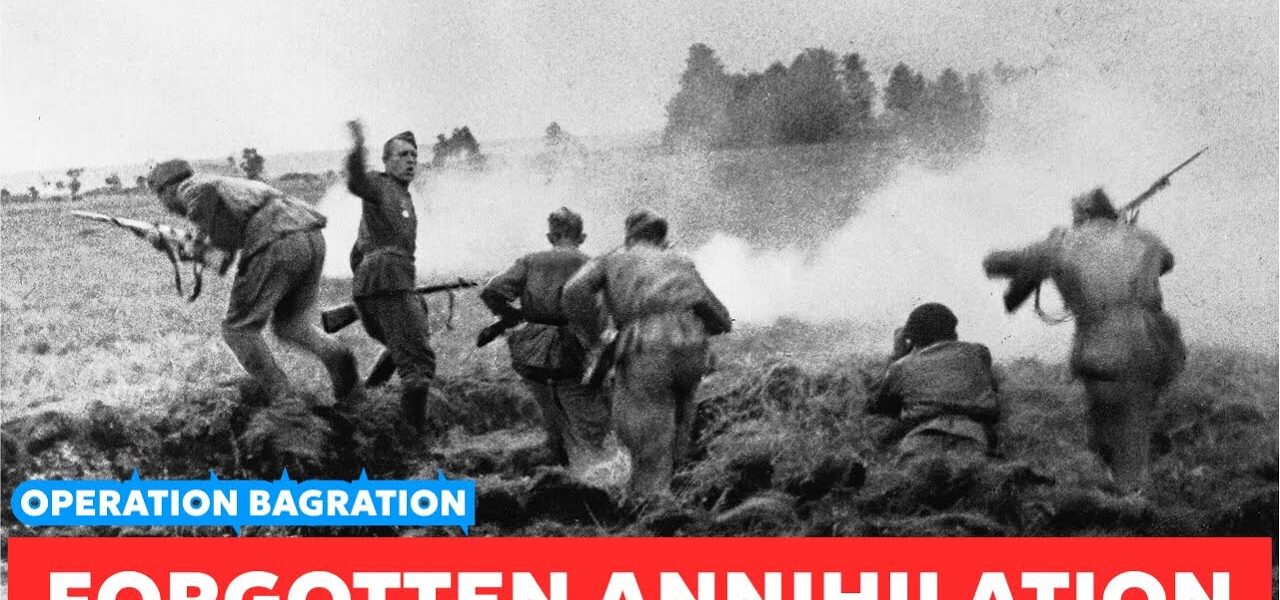

On June 23rd, 1944, German commanders in Bellarus went to bed confident. Their defensive lines would hold for months. By breakfast, their entire front had ceased to exist. While history books obsess over D-Day, they’ve somehow forgotten something bigger. The moment 2.4 million Soviet soldiers made half a million Germans simply disappear. This isn’t just another World War II battle.
This is the story of how the Red Army pulled off the greatest magic trick in military history. By June 1944, the German army group center held Bellarus like a massive fist, punching into Soviet territory. They called it the Bellarusian balcony. Hitler turned their cities into fortresses. Vitabs, Orcha, Mogalev, Boisk, each one a Fester Pla, a fortress that must never fall.
Field marshal Ernst Bush commanded these forces. Half a million combat troops, 300,000 support personnel. They controlled the main road to Moscow. They’d held this ground for three years. German intelligence was absolutely certain about one thing. The next Soviet attack would come in Ukraine. Their reconnaissance planes photographed massive Soviet buildups there.
Thousands of tanks, hundreds of artillery pieces. Radio chatter buzzed with preparation orders. So Hitler sent his reserves south. Every spare division went to Ukraine. In Minsk, German officers attended the opera. They hosted dinner parties. One colonel wrote to his wife, “The Russians are finished.
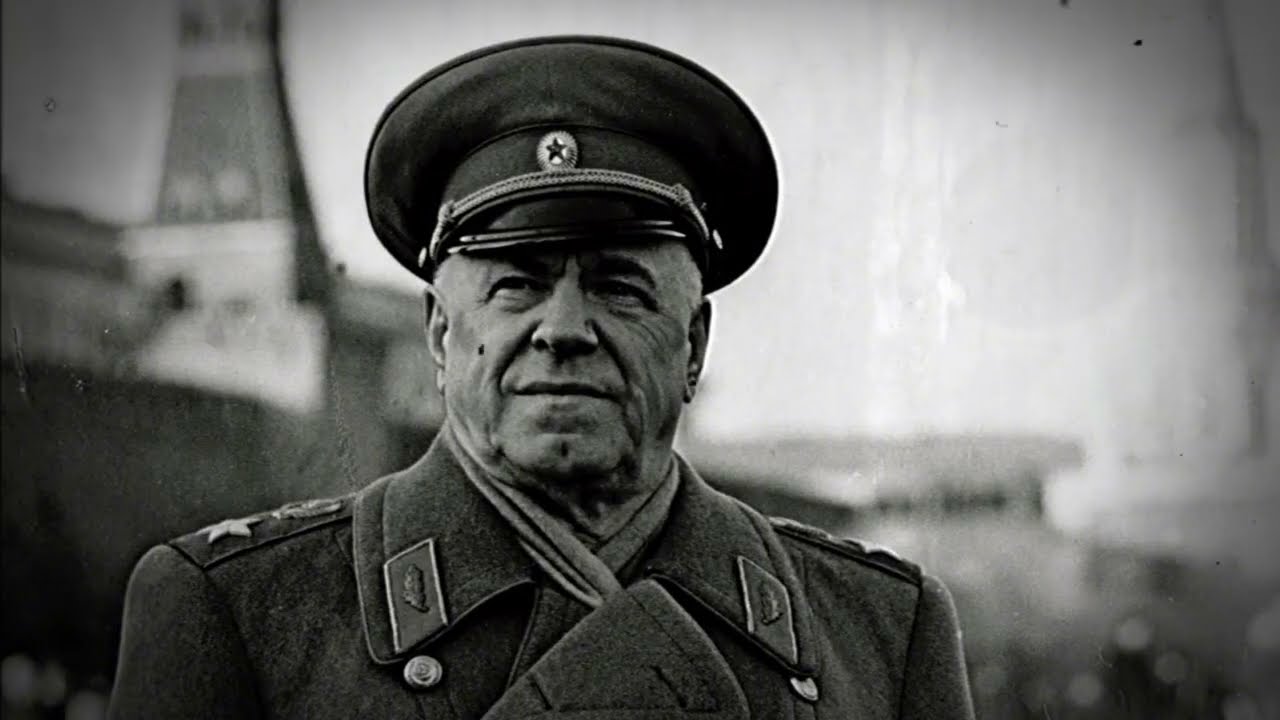
We see them massing in the south, but they’re too weak to attack us here. But here’s what the Germans didn’t know. Right then, 1.7 million Soviet soldiers were hiding in the Bellarusian forests. They were less than 30 m from German lines. Marshall Constantine Roasovski commanded them in the north. Marshall Georgie Zhukov coordinated the entire operation. They’d been assembling for three months.
The Germans had built their entire defense on a lie they didn’t know they’d been told. How do you hide 2.4 million soldiers, 5,200 tanks, and 70,000 vehicles from German reconnaissance. The Soviets had spent three years perfecting the answer. They called it Masiraovka, the art of military deception. Every night, Soviet tanks moved forward. Before dawn, soldiers swept away every track with pine branches.
German reconnaissance flights at sunrise saw only pristine snow. Colonel General Sergey Stmenenkco personally checked these sweeping operations. One mist track could expose everything. In Ukraine, where Germans expected the attack, Soviet engineers built an entire fake army.
They constructed 85,000 dummy vehicles, inflatable tanks that looked real from 5,000 ft, wooden artillery pieces, fake fuel dumps made from painted barrels. They even created phantom headquarters. Radio operators transmitted fake orders in codes they knew Germans had broken. Send more ammunition to sector 12. Tank battalion 45 needs fuel. All lies. But German intelligence wrote it all down. Meanwhile, the real Soviet forces maintained total radio silence.
Not one transmission. Partisan fighters like Cedar Kovac cut German phone lines behind enemy lines. They reported every German position back to Moscow. But Germans couldn’t call for help when the attack came. Soviet soldiers couldn’t even write letters home.
One private Mikail Frolaf later remembered, “For 2 months, my mother thought I was dead. We couldn’t send any word. We just waited in the forests, invisible.” German reconnaissance took thousands of photos. They showed massive Soviet forces in Ukraine, empty forests in Bellarus. A German intelligence officer later admitted, “We photographed exactly what they wanted us to see. We were blind, deaf, and dumb.
” On June 22nd, exactly 3 years after Hitler invaded Russia, Soviet reconnaissance units probed German lines. Just small attacks, nothing serious. German commanders laughed. They called it symbolic harassment. They were wrong. June 23rd, 1944. 4 a.m. The forest exploded. 170 Soviet divisions attacked simultaneously across 450 mi.
The artillery barrage was so intense that German soldiers 20 m behind the front couldn’t hear each other scream. Soviet tank columns didn’t stop for German strong points. They flowed around them like water around rocks. Within hours, entire German divisions were cut off, surrounded, trapped. Field Marshall Bush grabbed his phone. He called Hitler’s headquarters. We need permission to retreat now. Hitler’s response was one word.
No mine furer. We’ll lose the entire army group. Every fortress city must hold. Not one step back. By noon, Soviet tanks had penetrated 20 miles. By nightfall, 35 miles. The German Third Panzer Army, elite tank units, found themselves encircled at VBSK. General Friedrich Golvitzer commanded 35,000 men there. Within 48 hours, only 8,000 remained alive.
The Luftwafa scrambled to help, but Soviet fighters ruled the skies. 6,000 Soviet aircraft against 40 operational German fighters. German pilot Hans Rudell wrote, “We took off with 12 planes. Three came back.” Marshall Roasovski’s tanks reached speeds the Germans couldn’t believe.
50 miles in three days, faster than the Germans had moved during their 1941 invasion. One German officer radioed. They’re everywhere. Behind us, beside us. How did they get here so fast? Private Wilhelm Hoffman of the 267th Infantry Division kept a diary. His June 25th entry. Russians appeared from nowhere. Captain Miller shot himself rather than surrender. We’re running west. Those who can’t run are left behind.
At Bob Ruisk, 70,000 Germans found themselves in a closing trap. General Jordan commanded them. He requested permission to break out while there was still time. Hitler’s response. Boisk is a fortress. Fortresses don’t retreat. Hitler stared at his maps in East Prussia. He saw his fortress cities as immovable rocks that would break the Soviet wave. He was wrong.
They became tombs. At Bob Bruisque, Soviet artillery turned the city into hell. One German soldier, Private Hines K, wrote his last letter. The entire city burns. Russians shell us every minute. We have no food, no medical supplies. The wounded scream all night. Command says, “Hold. Hold what? There’s nothing left.” General Jordan knew his men would die if they stayed.
On June 27th, he disobeyed Hitler. He ordered a breakout. 35,000 men tried to escape the Bob Ruisk pocket. Soviet tanks and aircraft slaughtered them in the open fields. Only 15,000 made it out alive. The Soviet forces filmed the aftermath. Mountains of German corpses, burned out tanks.
One Soviet cameraman wrote, “I’ve filmed three years of war. I’ve never seen destruction like this. Vitbsk fell on June 26th. Orcha on June 27th. Mgaleith on June 28th. Each fortress city Hitler demanded must hold forever fell in days. Then came the biggest prize. Minsk.
Minsk was Army Group Cent’s main supply hub. Every bullet, every gallon of fuel, every bandage passed through there. On July 3rd, just 11 days after the offensive began, Soviet tanks entered the city. 100,000 Germans were now trapped east of Minsk. They had no supplies, no fuel, no hope. Field Marshall Bush flew to Hitler’s headquarters. He begged, “Let them retreat while there’s still time.” Hitler fired him on the spot.
He brought in Field Marshall Model, the Furer’s fireman. But even Model couldn’t put out this fire. He arrived to find Army Group Center had lost 31 of its 47 generals. They were either dead or captured. Model sent one message to Hitler. The army group no longer exists as a fighting force. In two weeks, proud Vermach divisions that had conquered France, Yugoslavia, and Greece were reduced to starving bands of survivors. They threw away their weapons.
They stripped dead Soviet soldiers for food. They stumbled west, trying to reach German lines that no longer existed. Stalin wanted the world to see what the Red Army had done. On July 17th, 1944, Moscow witnessed something unprecedented. 57,000 German prisoners marched through the capital streets. They walked 20 a breast. The column took 90 minutes to pass. These weren’t ordinary soldiers.
They included 19 generals. Men who once commanded entire armies. Soviet citizens lined the streets. Some spat. Some threw stones. Most just stared in silence. These were the invaders who had killed 27 million Soviet people. Now they shuffled through Moscow like ghosts. Journalist Vasilei Gman watched from Red Square. They walked with their eyes down.
No pride left, no hope, just endless gray columns of the defeated. After the prisoners passed, street cleaning trucks followed. They sprayed water and disinfectant on the pavement. They were washing away the Nazi stain. The symbolism was clear. The German invasion was being erased. The numbers were staggering.
In 5 weeks, Operation Bagrashian had destroyed Army Group Center completely. 450,000 Germans killed, wounded or captured. 31 divisions eliminated. The Vermach lost more men in 5 weeks than in 5 months at Stalingrad. Soviet forces advanced 450 mi. They liberated all of Bellarus. They reached Poland’s borders. For the first time since 1941, Soviet soldiers stood on the edge of German territory.
A captured German general, Friedrich Golvitzer, told his interrogators, “We never imagined such deception was possible. You made us look exactly where you wanted. When we finally saw the truth, it was too late. The Red Army had transformed. The force that nearly collapsed in 1941 was now unstoppable. They’d turned German tactics against them. Blitzkrieg, encirclement, deep penetration.
But with Soviet improvements, deception on a massive scale and overwhelming force. Private Mikail Frolaf, who had hidden in the forest for months, finally wrote to his mother, “We did it, mama. We destroyed them all. Berlin is next.” Operation Bation achieved what Stalingrad and Kursk had begun. It broke the Vermach’s spine. It proved the Red Army had become Earth’s most powerful military force.
Yet today, every school child knows about D-Day. The greatest land battle of the war remains largely forgotten in the West. Perhaps because it reminds us of an uncomfortable truth. The war’s outcome wasn’t decided on Normy’s beaches. It was decided in the forests of Bellarus where Soviet mastery of deception and overwhelming force created a trap so perfect that an entire German army group simply vanished into history. The Germans went to bed confident. They woke up to annihilation.
In 23 days, half a million men ceased to exist. All because they looked exactly where Stalin wanted them to look. If you enjoyed this story, subscribe for more World War II history.