After Kursk: Operation Kutuzov — The Orel Trap That Ended Germany’s Offense | Part 1

July 12th, 1943, 3:00 in the morning. Field Marshal Walter Mod is asleep somewhere behind the German lines near Kursk. His 9inth Army locked in a brutal grinding match against Soviet defenses. For 7 days, his panzers have advanced just 4 km into the deepest defensive system ever constructed, and he believes the worst is behind him.
He is catastrophically wrong. 150 km to the north, 3,000 Soviet guns open fire simultaneously. The barrage is so intense that the ground trembles 5 km behind Red Army lines. Artillery crews work in mechanical rhythm, shells screaming toward German positions every 16 seconds. The sound builds from individual cracks into a sustained roar that compresses the air itself.
If you’re interested in how wars are actually decided by logistics, math, and doctrine, subscribe now, turn on notifications, and stay tuned for more in-depth World War II analysis. Let’s continue. Operation Coutuzoff has begun. Named after the field marshal who destroyed Napoleon’s Grand Arme, this offensive would accomplish something the German high command believed impossible.
It would turn a defensive victory at Korsk into a strategic catastrophe for the Vermacht. It would force the abandonment of the oral salient and it would mark the moment when the German army in the east stopped attacking forever. This is the story of that offensive and the beginning of the end for Nazi Germany on the Eastern front.
To understand what happened at Ourel, we need to understand what was happening at Kursk. By June 1943, the Vermach faced a strategic conundrum that would define the remainder of the war near the destruction of the Sixth Army at Stalenrad 5 months earlier had cost Germany 300,000 men and shattered the myth of invincibility.
The Red Army, bloodied but unbroken, now held the initiative across the eastern front. German high command needed a victory, not merely for tactical advantage, but to demonstrate that the Vermach remained capable of offensive operations that could dictate the tempo of the war. The Corsk salient presented what appeared to be an irresistible target.
A 200 km wide bulge in Soviet lines offered the classic Pinsir opportunity. If German forces struck simultaneously from north and south, they could trap hundreds of thousands of Soviet troops in a pocket, replicating the great encirclements of 1941. Yet, the operation contained fatal contradictions from its very conception. General Hines Gderion, Inspector General of Armored Troops, warned explicitly against launching the attack.
His concerns centered on the new Panther and Tiger tanks, machines that offered qualitative superiority over Soviet armor, but existed in insufficient numbers. Each delay meant exposing German preparations while Soviet defenses deepened. The Panthers rushed into production suffered mechanical failures that kept maintenance crews working through the night.
Adolf Hitler vacasillated through May and June, postponing the operation repeatedly to accumulate more armor. Each week of delay allowed Soviet intelligence to confirm German intentions. Marshall Guorgi Jukov positioned reserves behind the salient, preparing not merely to defend, but to launch counter offensives that would exploit German overextension.
And that is exactly what happened. Between April and July 1943, Zhukov’s forces transformed the Kursk salient into the most heavily fortified position on Earth. Trench systems snaked across the step in eight successive defensive belts, some extending to depths of 240 km. The first belt alone incorporated anti-tank ditches 3 m deep.
Their excavated earth piled into berms for concealed gun positions. The ground itself became deception with dummy positions outnumbering real ones, drawing fire toward empty trenches. The cellular structure of this defensive network was the POP, the anti-tank strong point. Each POP consisted of four to six anti-tank guns positioned in mutually supporting arcs surrounded by infantry trenches, mortar pits, and pre-registered artillery fire zones.
An engineer cited these strong points to channel advancing panzers into predetermined killing corridors where overlapping fields of fire could engage armor at ranges exceeding 1,000 m. By July, the salient had ceased to be merely terrain. It had become an engineered killing zone. Every meter of earth calculated to exact maximum cost from the attackers.
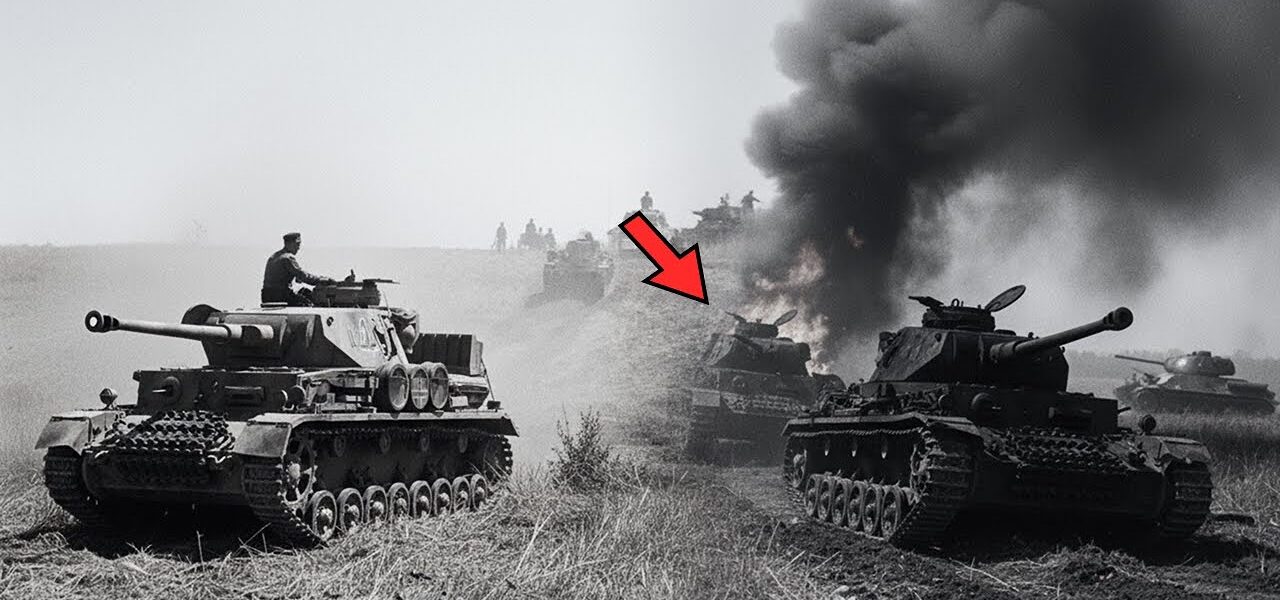
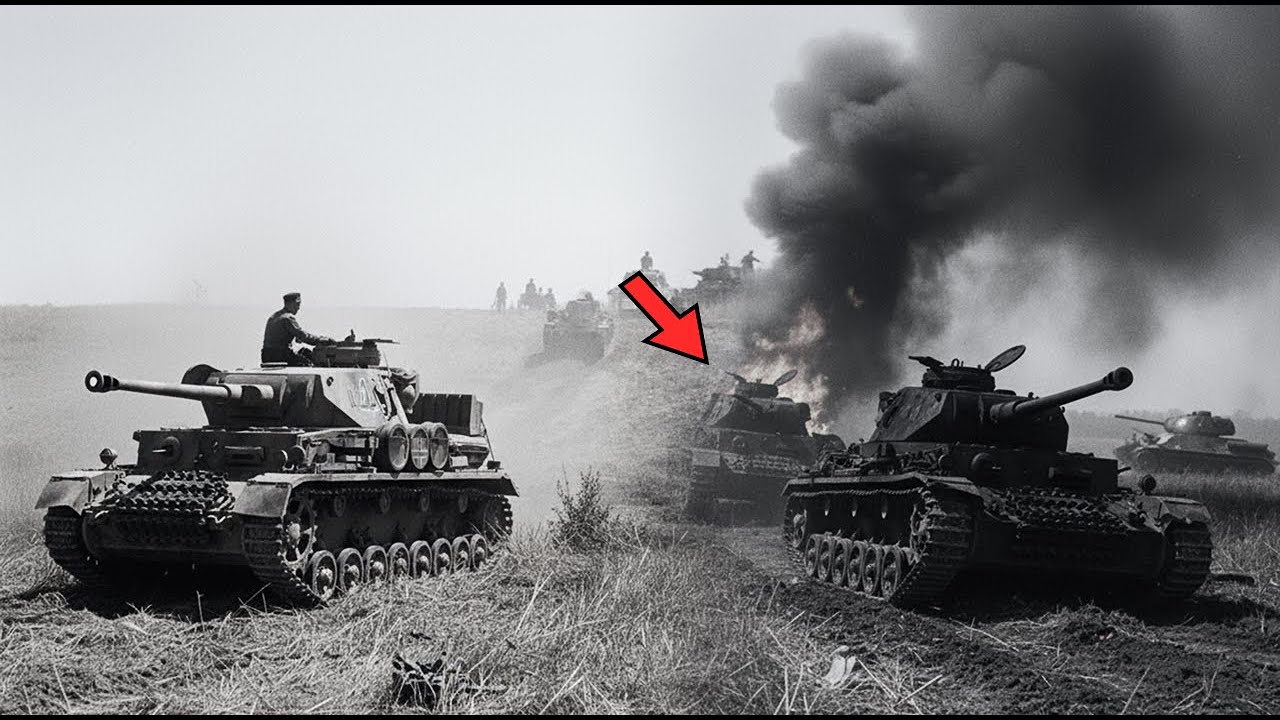
When operation Citadel, the German offensive, finally launched on July 5th, Model’s 9inth Army in the North Ground forward were just 4 km in the first day, losing 200 of 300 tanks in the process. a catastrophic 67% casualty rate in 24 hours. The mathematics were brutal. 4 km purchased with 200 tanks yields 500 m per 100 vehicles lost.
For 7 days, the fighting continued on German forces inched forward through the defensive belts, suffering horrific losses for every meter gained. By July 11th, Model’s advance sat frozen 12 mi short of its objective at Ooan. The northern Pinsir had failed, but the Soviets were not content with mere defense. At 0320 hours on July 12th, 1943, Marshall Constantine Roofski unleashed Operation Coutuz.
3,000 guns and mortars erupted along the Western Front’s sector opposite the oral salient. The barrage opened not with a single signal, but as a rolling wave of detonations, artillery batteries firing in sequence. Crews serving the 152 mm howitzers worked in mechanical rhythm. Load, fire, recoil, reload. The strategic timing was deliberate.
While Model’s 9inth Army remained committed to its offensive thrust southward, the formations holding the oral salient northern and eastern faces consisted primarily of infantry divisions. They lacked the concentrated armor necessary to counterattack Soviet breakthrough attempts because those panzer divisions were fighting 30 km to the south.
The artillery preparation targeted communication nodes, supply dumps, and identified headquarters positions. Soviet reconnaissance had mapped German defensive works with precision born from 5 days of constant contact. Every strong point along the salient boundary received dedicated fire missions. The barrage lifted at 0600 hours.
Soviet rifle divisions advanced behind T34 tanks employing standard combined arms doctrine refined through two years of calculated adaptation. The western front committed 11 armies to the operation and the Brians front launched its own supporting attack the following day applying pressure from the east. The strategic calculus was simple.
Model could not simultaneously attack southward toward Kursk and defend Oral’s lengthening perimeter. Something had to give. On July 13th, as Hitler formally canceled Operation Citadel following the Allied landings in Sicily, Field Marshall Model confronted a catastrophe unfolding 150 km north of his cork positions.
The Soviet second phase of operation coutuzoff crashed against the second panzer army’s overextended defensive line along the oral salient. Model faced an impossible equation. His northern flank was disintegrating while his armored spearheads remained committed 40 km deep in Soviet defenses. The mathematics of crisis dictated his response.
By July 15th, model stripped every available Panzer unit from 9inth Army’s assault formations, redirecting them northward to shore up second Panzer Army’s collapsing positions. The Soviet 50th Army and 20th Tank Corps exploited gaps that widened hourly. Each German division held frontages exceeding 20 km, triple the recommended defensive density.
Soviet infiltration tactics transformed company-sized bridge heads into regimental strong points overnight. As General Friedrich Wilhelm von Melanton observed, a Russian bridge head occupied by a company in the evening is sure to be occupied by at least a regiment the following morning and during the night will become a formidable fortress.
The Panzer units model redirected arrived depleted and mechanically compromised. SA battalions that departed their assembly areas with 96 operational tanks now counted 40. The desperate journey north consumed fuel and broke down machines that had already been pushed beyond their engineering limits at Kursk.
By July 18th, Model’s redeployment proved insufficient. The 9inth Army withdrew to its July 5th starting positions, abandoning every meter of ground purchased with a week of offensive operations. 5 days of territorial gains evaporated in hours. Supply dumps that took weeks to position were dismantled or burned. Artillery pieces that fired thousands of rounds from carefully surveyed positions were limbered up and withdrawn.
The retreat exposed second Panzer Army’s southern flank. Model’s gamble to reinforce the northern front merely delayed collapse rather than prevented it. Were the armor committed to plug gaps arrived peacemeal, feeding divisions into defensive battles that consumed them faster than they could reconstitute. The air war over the oral salient produced a tactical contradiction that defined the entire campaign.
At 0720 hours on July 13th, Freya radar stations detected incoming Soviet formations at 15,000 meters. Yaggish 51 and 54 scrambled BF- 109 G6s from airfields near Oral, climbing to intercept IL2 Sturmovix escorted by Yak 9ines and L5s. The resulting engagement produced the highest single day kill total over the oral salient.
94 confirmed Soviet aircraft destroyed. Luftwafa pilots exploited the IL2’s vulnerabilities during its attack runs when the aircraft committed to lowaltitude passes and could not maneuver defensively. While on the Sturmavik’s rear gunner and heavy armor protected against light caliber fire, but 20 mm cannon rounds from diving Mess proved lethal at close range.
Yet here is the paradox. Despite suffering catastrophic aircraft losses, the Soviet attack formations accomplished their objectives. IL2s equipped with 37 mm underwing cannons penetrated Panther engine decks and destroyed transport vehicles. Each aircraft that reached its target delivered ordinance before interception.
The price paid in machines and crews became strategically acceptable when measured against armor destroyed and columns disrupted. The air battle demonstrated victory conditions divorced from tactical success. Luftvafa pilots returned to base with confirmed kills. The Stormix did not return. Uh but their wreckage littered the roads alongside destroyed Panthers and burned transport trucks.
The retreat continued under contested skies where shooting down aircraft failed to prevent those aircraft from completing their attacks. The strategic calculation accepted losses as operational cost rather than operational failure. Soviet factories beyond the eurals produced aircraft faster than German workshops could repair damaged fighters.
The mathematics of attrition favored the Red Army even in apparent defeat. On July 18th, the German 9th Army abandoned its forward positions and began retracing its advance routes. The withdrawal was methodical. Rear guards covered the pullback while engineers destroyed bridges and mined roads behind retreating columns.
The spatial geometry reversed completely. Our villages that required combined arms assaults to capture were vacated without a shot. Soviet commanders inherited German entrenchments, complete with communication wire and firing positions. The tactical advantages purchased with blood became Soviet assets by default. By July 20th, the German second Panzer army disengaged from the front near Oral, retreating toward the city’s defensive positions.
The withdrawal became contagious. One sector’s pullback exposed adjacent units to envelopment, forcing sequential retreats. Soviet commanders exploited every gap, inserting reconnaissance units into abandoned sectors before German rear guards could establish new defensive lines. On July 23rd, German forces in the southern protrusion returned to their original jumping off points.
Operation Citadel’s territorial ledger balanced at zero. to every captured trench, every seized crossroad, every forward observation post reverted to Soviet control. The offensive that Hitler believed would demonstrate restored German initiative instead demonstrated the Vermach’s inability to hold contested ground. The physical evidence of failure accumulated in reverse.
Minefields that German engineers had cleared were receded by Soviet sappers. Tank hulks that had marked German advances now marked German retreats. German engineers wired demolition charges beneath the rail junctions east of Oral on July 26th. Supply dumps ignited in controlled fires as rear echelon units loaded the last functional trucks with communications equipment and ammunition stocks. year.
The city that had anchored vermocked operations in the central sector since October 1941 emptied in accordance with Model’s phased withdrawal plan. The withdrawal targeted the Hagen position, a prepared defensive line running west of the oral salient. German field commanders had spent weeks surveying this ground, designating strong points anchored on elevated terrain and natural obstacles.
The shorter line would require fewer troops to hold. critical. After three weeks of attrition had reduced German infantry companies to platoon strength, Soviet forces pursued with mechanized formations rather than allowing an unopposed withdrawal. The fourth tank army committed the 11th tank corps and sixth guard’s mechanized corps against Boloff on July 26th attempting to penetrate the corridor before German forces completed their evacuation.
MIL2 Sturmovix. Their 37 millimeter underwing cannons effective against retreating columns maintained pressure on roads clogged with withdrawing vehicles. The aerial attacks compounded mechanical losses already plaguing German armor. Panther tanks, their engines prone to fires and breakdowns, littered approach routes, abandoned when repair became impossible under Soviet artillery fire.
The Soviet advance built momentum through the first week of August. Multiple armies converged on the contracting pocket from the north, east, and south. German rear guards sacrificed mobility for delay trading space to buy hours for the main force to reach prepared positions. By August 4th, Soviet reconnaissance elements probed the outskirts of Oral proper.
On August 5th, forward battalions from the Brians front entered the city center. Yas the liberation came not through dramatic assault, but through the culmination of sustained operational pressure. The Vermacht had already departed, leaving demolished infrastructure and a depopulated urban landscape behind the retreating columns.
That night, August 5th, 1943, something unprecedented happened in Moscow. 120 guns fired a salute over the Soviet capital, their thunder echoing across the city in celebration. It was the first artillery salute of the war ordered by Stalin himself to mark the liberation of Oral and Belgar. The distinction would establish a precedent.
Major urban liberations now received proportional artillery recognition, creating a graduated hierarchy of strategic significance. The salute marked more than the recapture of a city. It marked a permanent shift in the war’s character. Our operation coutus achieved its strategic objective. The oral salient jutting 150 km into Soviet lines since October 1942 no longer existed.
The Vermacht had been forced into a general withdrawal across the central sector. Soviet forces now held operational initiative dictating the tempo and direction of future operations. The Red Army had transitioned from defensive operations to sustained offensive action across multiple fronts. The butcher bill told the story of what this cost.
German losses in the oral salient alone reached 200,000 men killed, wounded or missing. 500 tanks destroyed or abandoned, including dozens of the vaunted Tiger and Elephant heavy armor. The second Panzer Army, which Field Marshall von Klug had warned faced imminent collapse, was lost 2/3 of its effective strength.
Soviet casualties ran far higher. Red Army casualty returns documented over 800,000 men lost during the defensive phase and counteroffensives combined. Tank losses exceeded 6,000 machines. The price of stopping the German thrust, then driving westward to liberate Oral, emptied entire armies. But here was the critical difference.
German factories could not replace these losses. Soviet factories could and did. Monthly German tank production in late 1943 averaged 600 vehicles. Soviet factories produced 2,000 monthly. The arithmetic of attrition permitted only one German response. Elastic defense, fighting withdrawals, temporary stabilization of breakthrough sectors.
Or field marshal von Klug’s words to Hitler carried the weight of strategic collapse. The situation for the second Panzer army is soon to become serious due to danger of breakthrough. The offensive machine that rolled across France in 40 days, that drove to the gates of Moscow in 5 months, now dedicated its remaining strength to retreat and fortification.
From August 1943 forward, German strategic planning abandoned conquest. Every decision would serve one purpose, postponing the inevitable westward march of Soviet medium tanks and the artillery salvos that would eventually sound not in Moscow, but in Berlin. Adolf Hitler’s earlier admission to his staff crystallized into strategic reality.
Whenever I think of the attack, my stomach turns over. The furer who built his military reputation on offensive audacity now presided over defensive disintegration. The Vermach possessed sufficient strength to delay to exact casualties to make the Soviets pay for each kilometer. It no longer possessed the strength to reverse direction.
The Red Army, bloodied but unbroken at the war’s outset, now held not just the initiative, but the future itself. The strategic conundrum Germany faced in June 1943 had been answered definitively. And the answer was retreat. But the story of the post Kursk offensives does not end here. While Operation Cout hammered the oral salient in the north, an even larger blow was falling in the south.
Operation Rumansf launched with 6,000 guns on August 3rd, would drive 112 kilometers in 4 days, mom sever critical German supply lines, and liberate the great industrial city of Karkov. That is the story we will tell next time. If you enjoyed this story, hit subscribe for more World War II historical deep dives every week. Thanks for watching.